

Beef, brisket, flat half, separable lean and fat, trimmed to 1/8" fat, choice, raw
Whole food · Beef Products
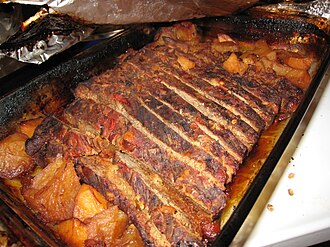
Photo: Wikipedia
This is a premium cut of beef brisket, specifically the leaner flat half, trimmed to a thin layer of fat. When raw, it's a deep, ruby red with fine marbling that promises rich, beefy flavor and a tender, succulent texture once slow-cooked. Nutritionally, it's a powerhouse of protein and healthy fats, with virtually no carbohydrates.
Calorie split: 27% protein · 0% carbs · 73% fat
↓ Full nutrition💚 Why it's loved
People adore brisket for its unparalleled depth of flavor when cooked low and slow, transforming from a tough cut into melt-in-your-mouth tenderness. It's the star of celebratory meals and comfort food traditions across many cultures, prized for its ability to absorb smoky, savory, and sweet seasonings.
⚠️ Watch-outs & how to enjoy it better
As a fatty cut, it's calorie-dense and high in saturated fat, which may concern those monitoring heart health or calorie intake. To counteract this, practice portion control, trim excess visible fat before cooking, and pair it with fiber-rich vegetables like roasted Brussels sprouts or a vinegar-based slaw to balance the meal. Ensure it's cooked to a safe internal temperature to eliminate any foodborne risks.
Key benefits
- Excellent source of high-quality protein for muscle maintenance and growth.
- Rich in essential minerals like iron, zinc, and B vitamins (especially B12).
- Provides conjugated linoleic acid (CLA), a fatty acid studied for potential health benefits.
- Zero carbs and sugar, making it suitable for ketogenic and low-carb diets.
- The intramuscular fat (marbling) contributes to flavor and helps keep meat moist during cooking.
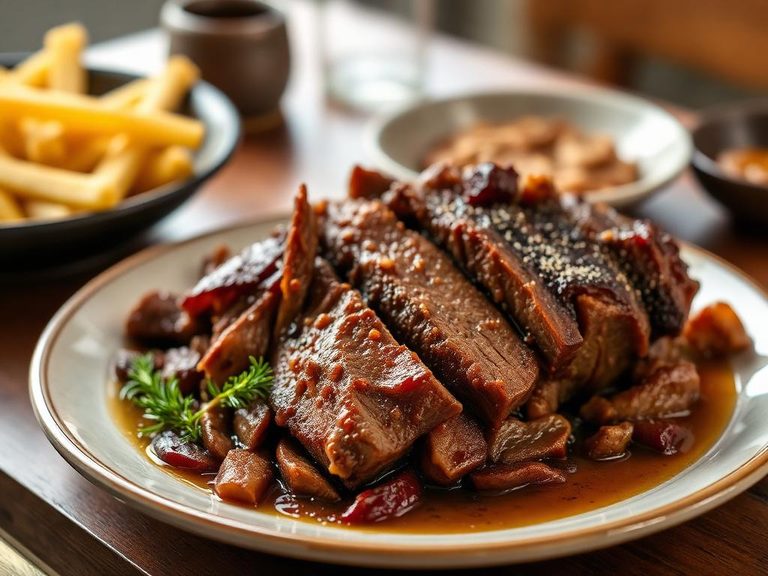
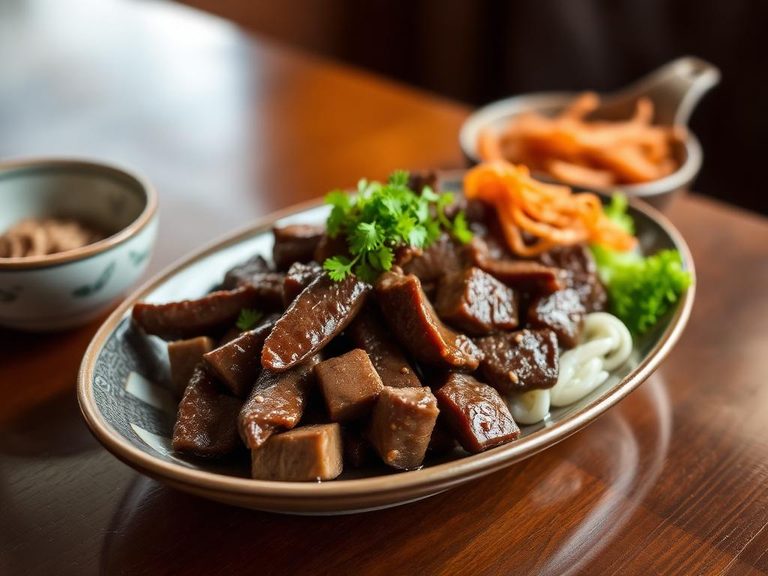
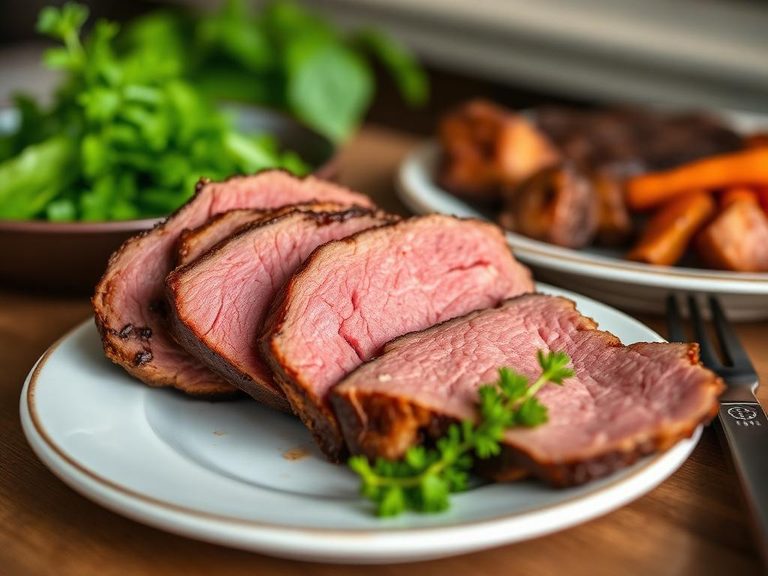
🍽️ Popular dishes

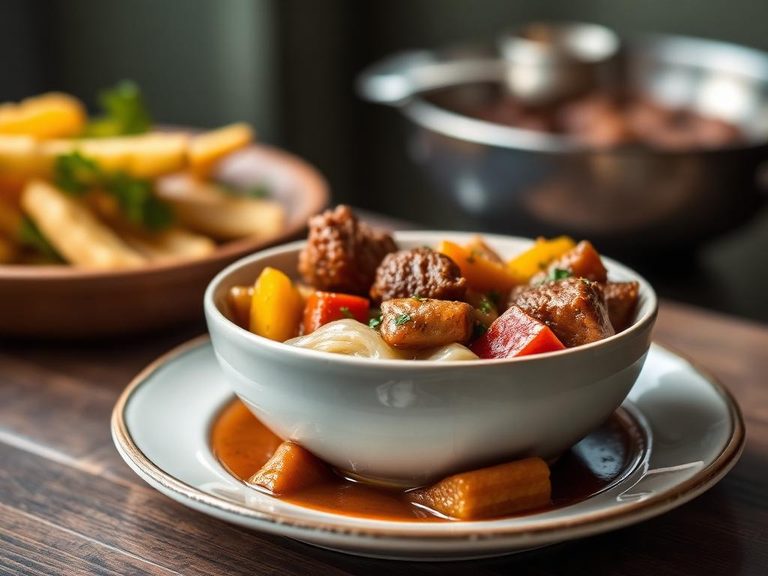
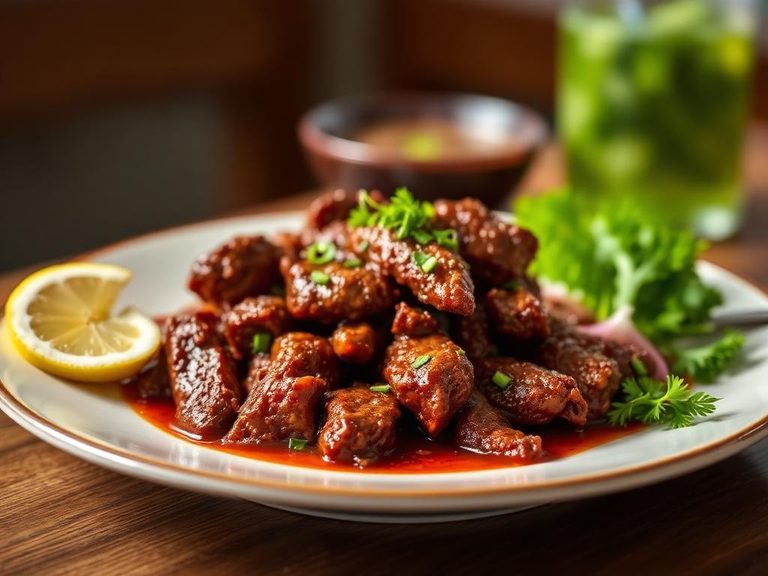
🌍 Where it's eaten
💡 Did you know?
The word 'brisket' comes from the Middle English 'brusket,' meaning the lower part of the breast, and it's one of the nine primal cuts of beef, coming from the breast or lower chest of the cow.
Full nutrition (USDA data · scales with serving)
| Water | 58.8 g |
| Energy | 278 kcal |
| Energy | 1162 kj |
| Protein | 18.1 g |
| Total lipid (fat) | 22.1 g |
| Ash | 0.82 g |
| Carbohydrate, by difference | 0.12 g |
| Fiber, total dietary | 0.00 g |
| Total Sugars | 0.00 g |
| Calcium, Ca | 15.0 mg |
| Iron, Fe | 1.7 mg |
| Magnesium, Mg | 19.0 mg |
| Phosphorus, P | 166 mg |
| Potassium, K | 281 mg |
| Sodium, Na | 61.0 mg |
| Zinc, Zn | 4.4 mg |
| Copper, Cu | 0.08 mg |
| Manganese, Mn | 0.01 mg |
| Selenium, Se | 19.3 ug |
| Vitamin C, total ascorbic acid | 0.00 mg |
| Thiamin | 0.06 mg |
| Riboflavin | 0.14 mg |
| Niacin | 4.1 mg |
| Pantothenic acid | 0.53 mg |
| Vitamin B-6 | 0.40 mg |
| Folate, total | 10.0 ug |
| Folic acid | 0.00 ug |
| Folate, food | 10.0 ug |
| Folate, DFE | 10.0 ug |
| Choline, total | 75.7 mg |
| Betaine | 11.1 mg |
| Vitamin B-12 | 1.7 ug |
| Vitamin B-12, added | 0.00 ug |
| Vitamin A, RAE | 0.00 ug |
| Retinol | 0.00 ug |
| Carotene, beta | 0.00 ug |
| Carotene, alpha | 0.00 ug |
| Cryptoxanthin, beta | 0.00 ug |
| Vitamin A, IU | 0.00 iu |
| Lycopene | 0.00 ug |
| Lutein + zeaxanthin | 0.00 ug |
| Vitamin E (alpha-tocopherol) | 0.44 mg |
| Vitamin E, added | 0.00 mg |
| Tocopherol, beta | 0.00 mg |
| Tocopherol, gamma | 0.00 mg |
| Tocopherol, delta | 0.00 mg |
| Vitamin K (phylloquinone) | 1.8 ug |
| Alcohol, ethyl | 0.00 g |
| Caffeine | 0.00 mg |
| Theobromine | 0.00 mg |
Fat & fatty acid profile (per 100g)
| Fatty acids, total saturated | 8.9 g |
| SFA 4:0 | 0.00 g |
| SFA 6:0 | 0.00 g |
| SFA 8:0 | 0.00 g |
| SFA 10:0 | 0.07 g |
| SFA 12:0 | 0.05 g |
| SFA 14:0 | 0.70 g |
| SFA 16:0 | 5.4 g |
| SFA 18:0 | 2.7 g |
| Fatty acids, total monounsaturated | 9.5 g |
| MUFA 16:1 | 1.1 g |
| MUFA 18:1 | 8.4 g |
| MUFA 20:1 | 0.03 g |
| MUFA 22:1 | 0.00 g |
| Fatty acids, total polyunsaturated | 0.84 g |
| PUFA 18:2 | 0.54 g |
| PUFA 18:3 | 0.27 g |
| PUFA 18:4 | 0.00 g |
| PUFA 20:4 | 0.04 g |
| PUFA 20:5 n-3 (EPA) | 0.00 g |
| PUFA 22:5 n-3 (DPA) | 0.00 g |
| PUFA 22:6 n-3 (DHA) | 0.00 g |
| Cholesterol | 91.0 mg |
Amino acid profile (per 100g)
| Tryptophan | 0.12 g |
| Threonine | 0.72 g |
| Isoleucine | 0.82 g |
| Leucine | 1.4 g |
| Lysine | 1.5 g |
| Methionine | 0.47 g |
| Cystine | 0.23 g |
| Phenylalanine | 0.72 g |
| Tyrosine | 0.58 g |
| Valine | 0.90 g |
| Arginine | 1.2 g |
| Histidine | 0.58 g |
| Alanine | 1.1 g |
| Aspartic acid | 1.6 g |
| Glutamic acid | 2.7 g |
| Glycine | 1.1 g |
| Proline | 0.86 g |
| Serine | 0.71 g |
| Hydroxyproline | 0.19 g |
FAQ
What's the best way to cook this cut of brisket?
Brisket is a tough cut that requires slow, moist heat to break down collagen. Methods include braising in liquid (like in a Dutch oven), smoking for many hours at a low temperature, or using a slow cooker. It's not ideal for quick, high-heat cooking like grilling.
Is the 'choice' grade important?
Yes, 'choice' is a USDA beef grade indicating good marbling and tenderness, sitting above 'select' but below 'prime.' For brisket, this marbling is crucial for flavor and moisture during the long cooking process, making 'choice' a reliable, high-quality choice for home cooks.
How do I slice it correctly?
Always slice brisket against the grain (perpendicular to the direction the muscle fibers run). This shortens the fibers, making each bite much more tender. For the flat cut, the grain is usually straightforward to identify.
Nutrient density (calculated · NRF9.3)
Nutrient Rich Foods index: beneficial nutrients (protein, fiber, vitamins, minerals) minus saturated fat, added sugar & sodium, per 100 kcal.
NRF9.3 index — Fulgoni, Keast & Drewnowski, 2009. Computed from USDA nutrients.
Weight-loss friendliness (composite index)
Energy density 2.78 kcal/g · 26% calories from protein · 0.0 g fiber · 0.0 g sugar per 100 g.
Composite of energy density (Rolls et al., 1999), protein & fiber satiety, minus sugar. A calculated heuristic — ranks satiety-per-calorie, not a clinical measure.
Dietary load (calculated from USDA values)
Potential renal acid load. Positive = acid-forming, negative = alkaline-forming.
Sodium-to-potassium ratio: 0.22 (lower is better — aim for ≤ 1)
Sodium:potassium per WHO potassium guidance. Computed from USDA nutrients.