

Beef, brisket, flat half, separable lean and fat, trimmed to 0" fat, choice, cooked, braised
Whole food · Beef Products

Photo: Wikipedia
This is a lean, flat cut of beef brisket, slow-braised to tender perfection, resulting in a rich, beefy flavor and a melt-in-your-mouth texture. With a robust 32.21g of protein and a modest 9.24g of fat per 100g, it's a powerhouse of nutrition without being overly heavy. The braising process breaks down connective tissue, transforming a tough cut into a succulent, deeply savory dish.
Calorie split: 61% protein · 0% carbs · 39% fat
↓ Full nutrition💚 Why it's loved
People adore this cut for its profound, beefy flavor and the satisfying, fork-tender texture that only slow braising can achieve. It's a cultural staple in many cuisines, from Jewish holiday tables to American barbecue joints, celebrated for its ability to absorb rich sauces and seasonings.
⚠️ Watch-outs & how to enjoy it better
While lean, it can still be high in saturated fat and cholesterol, so those with specific heart health concerns should practice portion control. To counteract this, pair it with fiber-rich vegetables like roasted carrots or a fresh, acidic slaw to balance the richness and aid digestion.
Key benefits
- Excellent source of high-quality protein for muscle maintenance and repair
- Rich in iron and zinc, essential for immune function and energy levels
- Provides B vitamins, particularly B12, crucial for nerve health and red blood cell formation
- Low in carbohydrates, making it suitable for low-carb and ketogenic diets
- The slow-cooking method makes it highly digestible and tender
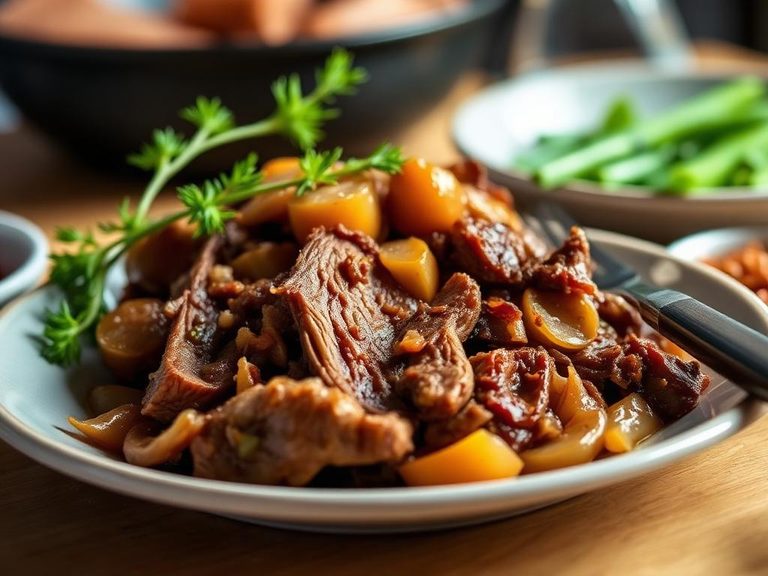
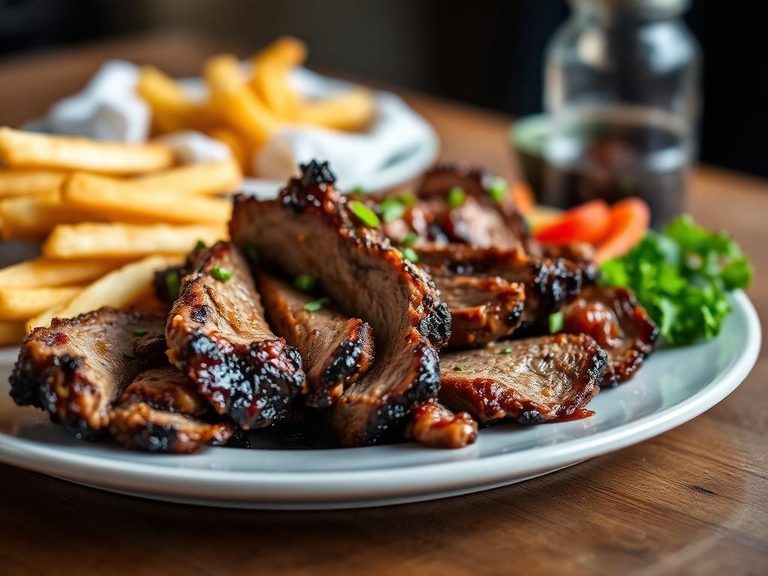
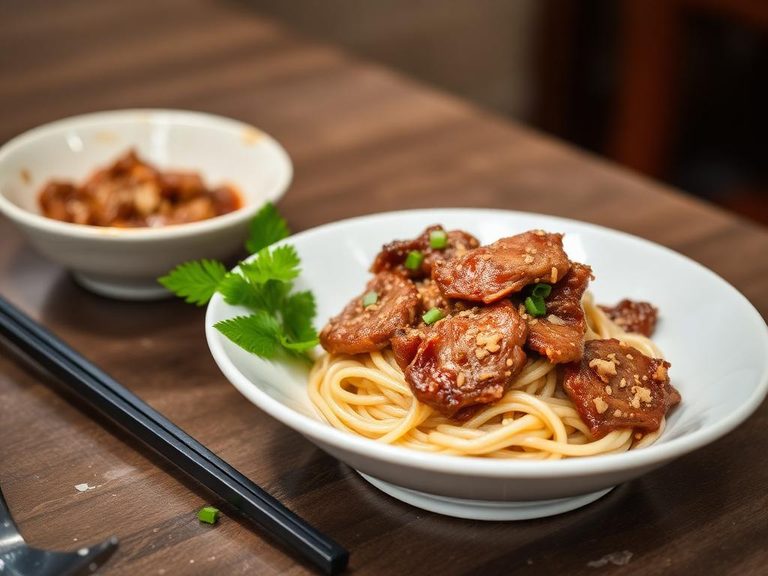
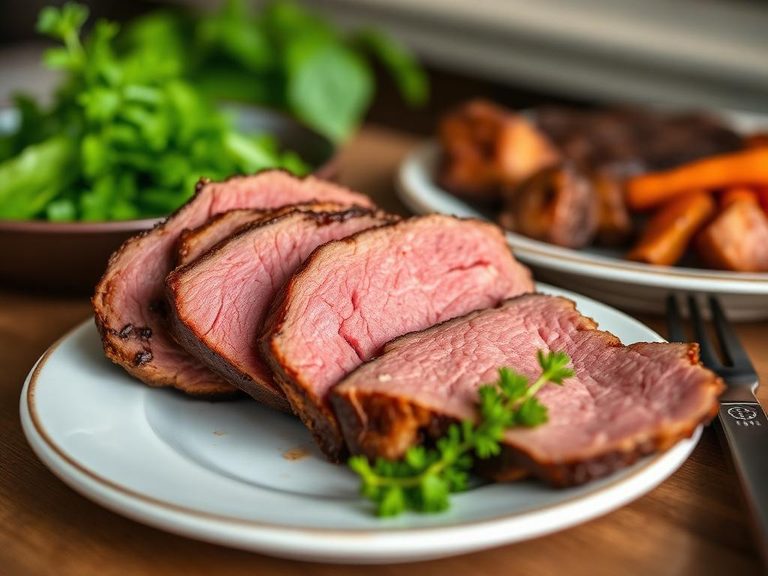
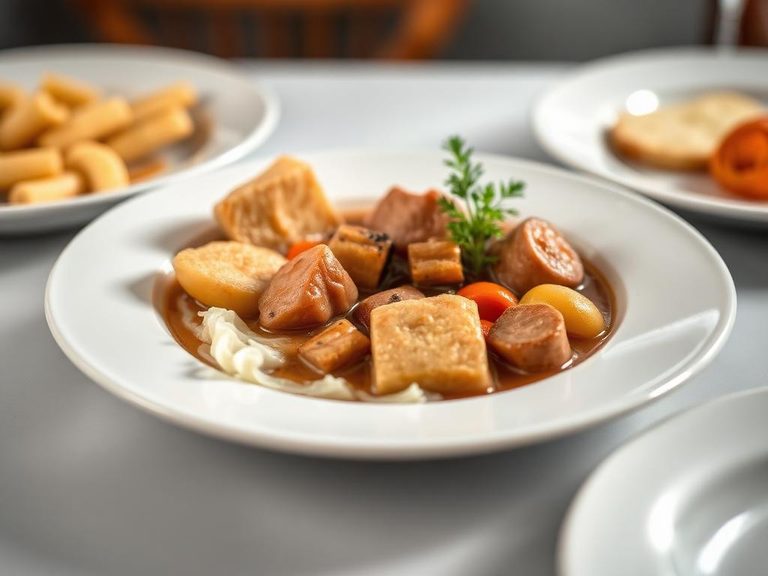
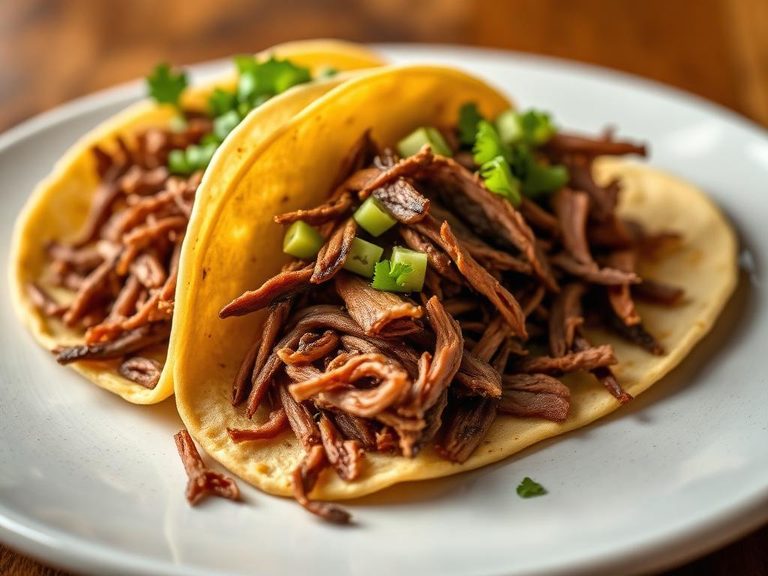
🍽️ Popular dishes
🌍 Where it's eaten
💡 Did you know?
The flat half of the brisket is the more uniform, leaner section, making it ideal for slicing against the grain for maximum tenderness, while the point half is fattier and often preferred for burnt ends or pulled beef.
Full nutrition (USDA data · scales with serving)
| Water | 58.4 g |
| Energy | 221 kcal |
| Energy | 924 kj |
| Protein | 32.2 g |
| Total lipid (fat) | 9.2 g |
| Ash | 1.1 g |
| Carbohydrate, by difference | 0.00 g |
| Fiber, total dietary | 0.00 g |
| Total Sugars | 0.00 g |
| Calcium, Ca | 17.0 mg |
| Iron, Fe | 2.8 mg |
| Magnesium, Mg | 21.0 mg |
| Phosphorus, P | 191 mg |
| Potassium, K | 254 mg |
| Sodium, Na | 52.0 mg |
| Zinc, Zn | 7.2 mg |
| Copper, Cu | 0.12 mg |
| Manganese, Mn | 0.01 mg |
| Selenium, Se | 29.3 ug |
| Vitamin C, total ascorbic acid | 0.00 mg |
| Thiamin | 0.06 mg |
| Riboflavin | 0.21 mg |
| Niacin | 4.5 mg |
| Pantothenic acid | 0.63 mg |
| Vitamin B-6 | 0.31 mg |
| Folate, total | 10.0 ug |
| Folic acid | 0.00 ug |
| Folate, food | 10.0 ug |
| Folate, DFE | 10.0 ug |
| Choline, total | 123 mg |
| Betaine | 16.1 mg |
| Vitamin B-12 | 2.6 ug |
| Vitamin B-12, added | 0.00 ug |
| Vitamin A, RAE | 0.00 ug |
| Retinol | 0.00 ug |
| Carotene, beta | 0.00 ug |
| Carotene, alpha | 0.00 ug |
| Cryptoxanthin, beta | 0.00 ug |
| Vitamin A, IU | 0.00 iu |
| Lycopene | 0.00 ug |
| Lutein + zeaxanthin | 0.00 ug |
| Vitamin E (alpha-tocopherol) | 0.44 mg |
| Vitamin E, added | 0.00 mg |
| Tocopherol, beta | 0.00 mg |
| Tocopherol, gamma | 0.00 mg |
| Tocopherol, delta | 0.00 mg |
| Vitamin K (phylloquinone) | 1.6 ug |
| Alcohol, ethyl | 0.00 g |
| Caffeine | 0.00 mg |
| Theobromine | 0.00 mg |
Fat & fatty acid profile (per 100g)
| Fatty acids, total saturated | 3.6 g |
| SFA 4:0 | 0.00 g |
| SFA 6:0 | 0.00 g |
| SFA 8:0 | 0.00 g |
| SFA 10:0 | 0.02 g |
| SFA 12:0 | 0.02 g |
| SFA 14:0 | 0.29 g |
| SFA 16:0 | 2.2 g |
| SFA 18:0 | 1.1 g |
| Fatty acids, total monounsaturated | 4.0 g |
| MUFA 16:1 | 0.38 g |
| MUFA 18:1 | 3.6 g |
| MUFA 20:1 | 0.02 g |
| MUFA 22:1 | 0.00 g |
| Fatty acids, total polyunsaturated | 0.34 g |
| PUFA 18:2 | 0.23 g |
| PUFA 18:3 | 0.09 g |
| PUFA 18:4 | 0.00 g |
| PUFA 20:4 | 0.02 g |
| PUFA 20:5 n-3 (EPA) | 0.00 g |
| PUFA 22:5 n-3 (DPA) | 0.00 g |
| PUFA 22:6 n-3 (DHA) | 0.00 g |
| Cholesterol | 92.0 mg |
Amino acid profile (per 100g)
| Tryptophan | 0.21 g |
| Threonine | 1.3 g |
| Isoleucine | 1.5 g |
| Leucine | 2.6 g |
| Lysine | 2.7 g |
| Methionine | 0.84 g |
| Cystine | 0.42 g |
| Phenylalanine | 1.3 g |
| Tyrosine | 1.0 g |
| Valine | 1.6 g |
| Arginine | 2.1 g |
| Histidine | 1.0 g |
| Alanine | 2.0 g |
| Aspartic acid | 2.9 g |
| Glutamic acid | 4.8 g |
| Glycine | 2.0 g |
| Proline | 1.5 g |
| Serine | 1.3 g |
| Hydroxyproline | 0.34 g |
FAQ
What is the difference between the flat and point of a brisket?
The flat is the leaner, more uniform cut, ideal for slicing. The point is fattier and more marbled, often used for burnt ends or pulled beef due to its richer flavor.
How do I ensure my braised brisket is tender?
The key is low and slow cooking. Braise at a low temperature (around 300°F/150°C) for several hours, until the internal temperature reaches 195-205°F (90-96°C) and the meat is easily pierced with a fork.
Is brisket a healthy cut of beef?
When trimmed of excess fat and braised, it's a nutritious source of protein, iron, and B vitamins. However, it's still red meat, so moderation is advised, and it's best paired with vegetables for a balanced meal.
Nutrient density (calculated · NRF9.3)
Nutrient Rich Foods index: beneficial nutrients (protein, fiber, vitamins, minerals) minus saturated fat, added sugar & sodium, per 100 kcal.
NRF9.3 index — Fulgoni, Keast & Drewnowski, 2009. Computed from USDA nutrients.
Weight-loss friendliness (composite index)
Energy density 2.21 kcal/g · 58% calories from protein · 0.0 g fiber · 0.0 g sugar per 100 g.
Composite of energy density (Rolls et al., 1999), protein & fiber satiety, minus sugar. A calculated heuristic — ranks satiety-per-calorie, not a clinical measure.
Dietary load (calculated from USDA values)
Potential renal acid load. Positive = acid-forming, negative = alkaline-forming.
Sodium-to-potassium ratio: 0.20 (lower is better — aim for ≤ 1)
Sodium:potassium per WHO potassium guidance. Computed from USDA nutrients.