

Crustaceans, crayfish, mixed species, wild, raw
Whole food · Finfish and Shellfish Products

Photo: Wikipedia
Wild crayfish, often called crawfish or crawdads, are small freshwater crustaceans with a sweet, delicate flavor and a firm, succulent texture similar to lobster but milder. They are exceptionally lean, delivering a massive 15.97g of protein per 100g for only 77 calories, with virtually no fat or carbohydrates. Their clean, oceanic taste makes them a prized ingredient in rustic, flavorful dishes across the globe.
Calorie split: 88% protein · 0% carbs · 12% fat
↓ Full nutrition💚 Why it's loved
People adore crayfish for their sweet, lobster-like flavor that is both rich and subtle, making them a versatile canvas for bold seasonings. Their communal, hands-on eating experience, especially in a classic boil, fosters a strong sense of cultural tradition and social gathering.
⚠️ Watch-outs & how to enjoy it better
As a shellfish, crayfish are a common allergen and should be avoided by those with crustacean allergies. They are also high in sodium when prepared in traditional boils, and their shells contain trace amounts of purines, which can be a concern for individuals with gout. To mitigate sodium, you can boil them in unsalted water and season lightly at the table, or opt for steaming methods.
Key benefits
- Extremely high in lean protein for muscle repair and satiety.
- Very low in calories, making it ideal for weight management.
- Naturally carb-free and sugar-free, suitable for ketogenic and low-carb diets.
- Rich in essential minerals like selenium, copper, and vitamin B12.
🍽️ Popular dishes
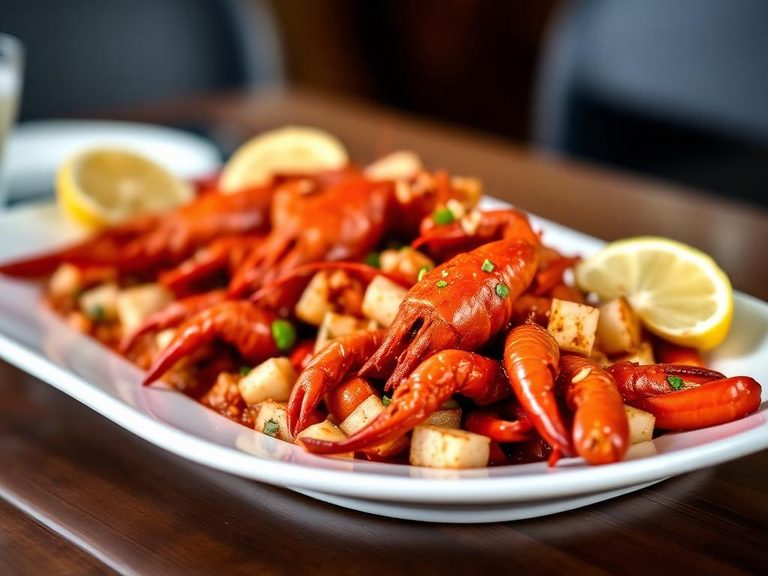
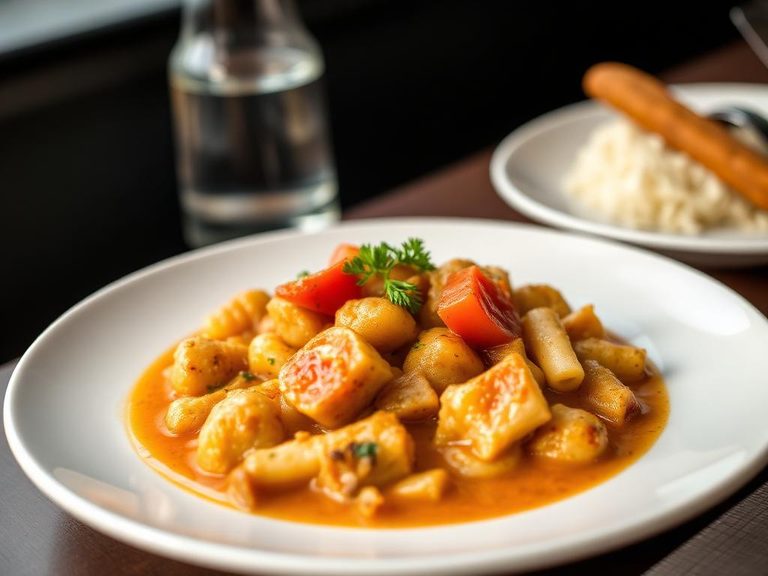
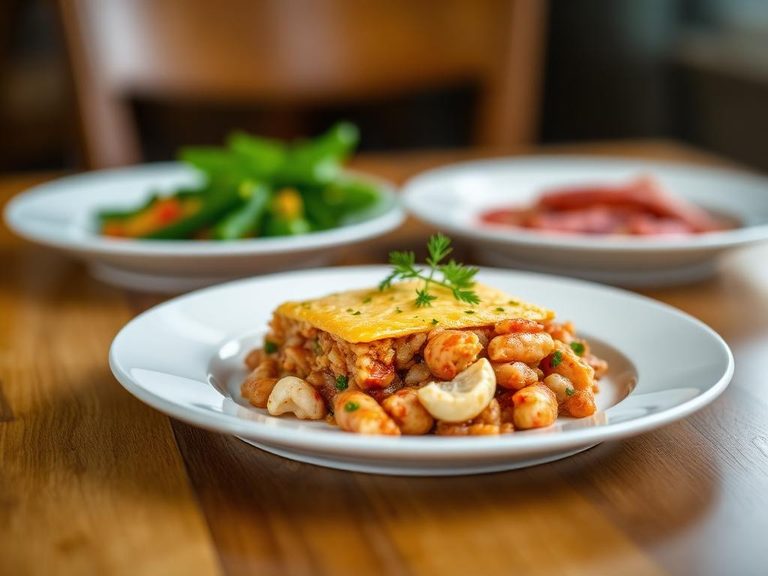
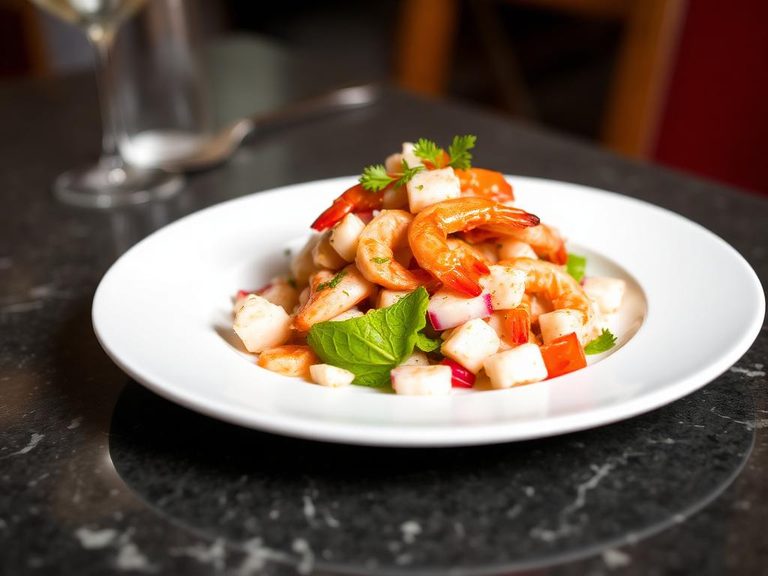
🌍 Where it's eaten
💡 Did you know?
The largest crayfish species, the Tasmanian Giant Freshwater Crayfish, can weigh over 5 kg and live for more than 40 years, making it one of the longest-lived freshwater invertebrates on Earth.
Full nutrition (USDA data · scales with serving)
| Water | 82.2 g |
| Energy | 77.0 kcal |
| Energy | 322 kj |
| Protein | 16.0 g |
| Total lipid (fat) | 0.95 g |
| Ash | 1.3 g |
| Carbohydrate, by difference | 0.00 g |
| Fiber, total dietary | 0.00 g |
| Total Sugars | 0.00 g |
| Calcium, Ca | 27.0 mg |
| Iron, Fe | 0.84 mg |
| Magnesium, Mg | 27.0 mg |
| Phosphorus, P | 256 mg |
| Potassium, K | 302 mg |
| Sodium, Na | 58.0 mg |
| Zinc, Zn | 1.3 mg |
| Copper, Cu | 0.42 mg |
| Manganese, Mn | 0.23 mg |
| Selenium, Se | 31.6 ug |
| Vitamin C, total ascorbic acid | 1.2 mg |
| Thiamin | 0.07 mg |
| Riboflavin | 0.03 mg |
| Niacin | 2.2 mg |
| Pantothenic acid | 0.55 mg |
| Vitamin B-6 | 0.11 mg |
| Folate, total | 37.0 ug |
| Folic acid | 0.00 ug |
| Folate, food | 37.0 ug |
| Folate, DFE | 37.0 ug |
| Choline, total | 80.9 mg |
| Vitamin B-12 | 2.0 ug |
| Vitamin B-12, added | 0.00 ug |
| Vitamin A, RAE | 16.0 ug |
| Retinol | 16.0 ug |
| Carotene, beta | 0.00 ug |
| Carotene, alpha | 0.00 ug |
| Cryptoxanthin, beta | 0.00 ug |
| Vitamin A, IU | 53.0 iu |
| Lycopene | 0.00 ug |
| Lutein + zeaxanthin | 0.00 ug |
| Vitamin E (alpha-tocopherol) | 2.9 mg |
| Vitamin E, added | 0.00 mg |
| Vitamin D (D2 + D3), International Units | 0.00 iu |
| Vitamin D (D2 + D3) | 0.00 ug |
| Vitamin D3 (cholecalciferol) | 0.00 ug |
| Vitamin K (phylloquinone) | 0.10 ug |
| Alcohol, ethyl | 0.00 g |
| Caffeine | 0.00 mg |
| Theobromine | 0.00 mg |
Fat & fatty acid profile (per 100g)
| Fatty acids, total saturated | 0.16 g |
| SFA 4:0 | 0.00 g |
| SFA 6:0 | 0.00 g |
| SFA 8:0 | 0.00 g |
| SFA 10:0 | 0.00 g |
| SFA 12:0 | 0.00 g |
| SFA 14:0 | 0.00 g |
| SFA 16:0 | 0.10 g |
| SFA 18:0 | 0.04 g |
| Fatty acids, total monounsaturated | 0.17 g |
| MUFA 16:1 | 0.03 g |
| MUFA 18:1 | 0.11 g |
| MUFA 20:1 | 0.01 g |
| MUFA 22:1 | 0.02 g |
| Fatty acids, total polyunsaturated | 0.29 g |
| PUFA 18:2 | 0.05 g |
| PUFA 18:3 | 0.03 g |
| PUFA 18:4 | 0.01 g |
| PUFA 20:4 | 0.04 g |
| PUFA 20:5 n-3 (EPA) | 0.10 g |
| PUFA 22:5 n-3 (DPA) | 0.01 g |
| PUFA 22:6 n-3 (DHA) | 0.04 g |
| Cholesterol | 114 mg |
Amino acid profile (per 100g)
| Tryptophan | 0.22 g |
| Threonine | 0.64 g |
| Isoleucine | 0.77 g |
| Leucine | 1.3 g |
| Lysine | 1.4 g |
| Methionine | 0.45 g |
| Cystine | 0.18 g |
| Phenylalanine | 0.67 g |
| Tyrosine | 0.53 g |
| Valine | 0.75 g |
| Arginine | 1.4 g |
| Histidine | 0.33 g |
| Alanine | 0.90 g |
| Aspartic acid | 1.6 g |
| Glutamic acid | 2.7 g |
| Glycine | 0.96 g |
| Proline | 0.53 g |
| Serine | 0.63 g |
FAQ
What is the difference between crayfish, crawfish, and crawdad?
They are all the same animal, with regional names: 'crawfish' is common in Louisiana and the Southern US, 'crayfish' is used in scientific and international contexts, and 'crawdad' is a colloquial term in parts of the Midwest and West.
How do you eat a whole crayfish?
Twist the head from the tail, suck the juices from the head (optional), peel the shell from the tail to reveal the meat, and discard the vein. The claws and legs can also be cracked for small bits of meat.
Are wild crayfish safe to eat?
Yes, but they should be sourced from clean, unpolluted waters. Wild crayfish are filter feeders, so they can accumulate contaminants from their environment. Always cook them thoroughly to kill any potential bacteria or parasites.
Nutrient density (calculated · NRF9.3)
Nutrient Rich Foods index: beneficial nutrients (protein, fiber, vitamins, minerals) minus saturated fat, added sugar & sodium, per 100 kcal.
NRF9.3 index — Fulgoni, Keast & Drewnowski, 2009. Computed from USDA nutrients.
Weight-loss friendliness (composite index)
Energy density 0.77 kcal/g · 83% calories from protein · 0.0 g fiber · 0.0 g sugar per 100 g.
Composite of energy density (Rolls et al., 1999), protein & fiber satiety, minus sugar. A calculated heuristic — ranks satiety-per-calorie, not a clinical measure.
Dietary load (calculated from USDA values)
Potential renal acid load. Positive = acid-forming, negative = alkaline-forming.
Sodium-to-potassium ratio: 0.19 (lower is better — aim for ≤ 1)
Sodium:potassium per WHO potassium guidance. Computed from USDA nutrients.