

Yogurt, fruit, low fat, 10 grams protein per 8 ounce, fortified with vitamin D
Whole food · Dairy and Egg Products
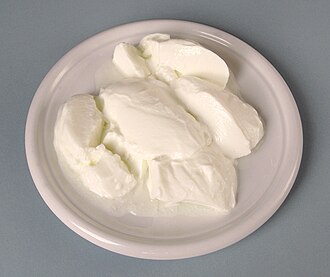
Photo: Wikipedia
This is a smooth, creamy, low-fat fruit yogurt, typically flavored with strawberry, raspberry, or peach, and fortified with vitamin D. Its texture is light yet satisfying, with a balanced sweetness from the fruit and a subtle tang from the live cultures. A key nutrition highlight is its high protein content (10g per 8 oz serving), making it a more substantial snack than many other fruit yogurts.
Calorie split: 17% protein · 74% carbs · 9% fat
↓ Full nutrition💚 Why it's loved
People love it for its perfect balance of creamy tang and fruity sweetness, offering a refreshing and convenient snack or breakfast component. Its versatility makes it ideal for smoothies, parfaits, or simply enjoying straight from the container.
⚠️ Watch-outs & how to enjoy it better
The significant sugar content (19g per 100g) can cause a rapid blood-sugar spike, especially for those with insulin sensitivity or diabetes. To counteract this, pair it with a source of healthy fat or additional protein (like nuts or seeds) and practice portion control by choosing a single-serving cup. Those with lactose intolerance should opt for lactose-free versions.
Key benefits
- Excellent source of high-quality protein for muscle maintenance and satiety.
- Fortified with vitamin D, which supports bone health and immune function.
- Contains live probiotic cultures that may support gut microbiome health.
- Provides a convenient, portable source of calcium and B vitamins.
- Low in fat while still offering a creamy, satisfying texture.
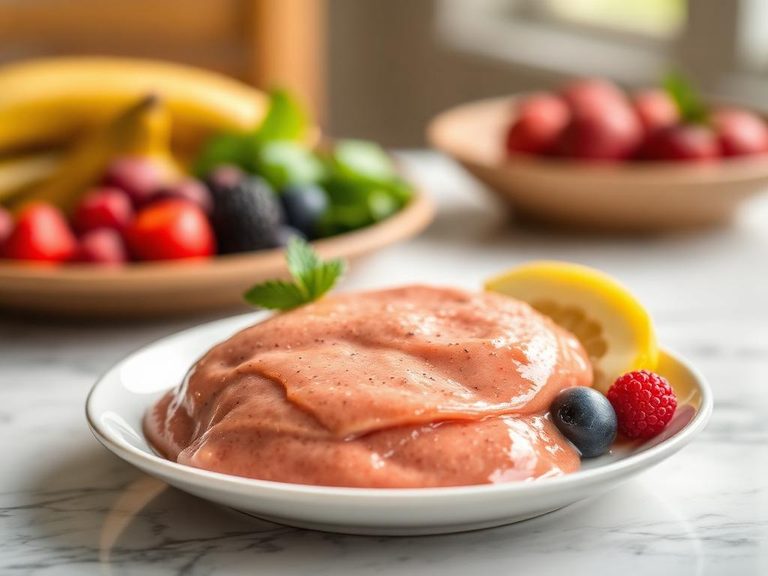
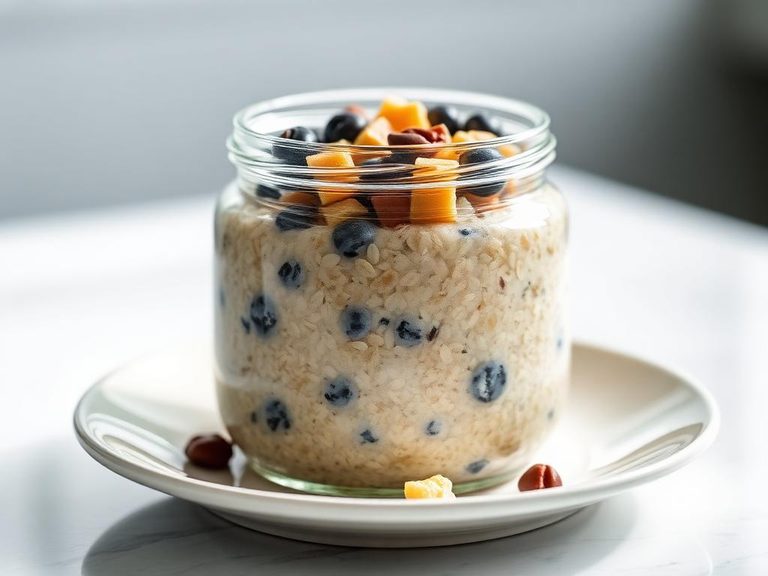
🍽️ Popular dishes




🌍 Where it's eaten
💡 Did you know?
The specific combination of high protein and vitamin D fortification in this style of yogurt is a relatively modern innovation, designed to mimic the nutritional profile of more traditional, strained Greek yogurt while using a fruit-on-the-bottom format popularized in North America.
Full nutrition (USDA data · scales with serving)
| Water | 74.5 g |
| Energy | 102 kcal |
| Energy | 426 kj |
| Protein | 4.4 g |
| Total lipid (fat) | 1.1 g |
| Ash | 1.0 g |
| Carbohydrate, by difference | 19.1 g |
| Fiber, total dietary | 0.00 g |
| Total Sugars | 19.1 g |
| Calcium, Ca | 152 mg |
| Iron, Fe | 0.07 mg |
| Magnesium, Mg | 15.0 mg |
| Phosphorus, P | 119 mg |
| Potassium, K | 195 mg |
| Sodium, Na | 58.0 mg |
| Zinc, Zn | 0.74 mg |
| Copper, Cu | 0.08 mg |
| Manganese, Mn | 0.07 mg |
| Selenium, Se | 3.1 ug |
| Fluoride, F | 9.0 ug |
| Vitamin C, total ascorbic acid | 0.70 mg |
| Thiamin | 0.04 mg |
| Riboflavin | 0.18 mg |
| Niacin | 0.10 mg |
| Pantothenic acid | 0.49 mg |
| Vitamin B-6 | 0.04 mg |
| Folate, total | 9.0 ug |
| Folic acid | 0.00 ug |
| Folate, food | 9.0 ug |
| Folate, DFE | 9.0 ug |
| Choline, total | 14.0 mg |
| Betaine | 0.80 mg |
| Vitamin B-12 | 0.47 ug |
| Vitamin B-12, added | 0.00 ug |
| Vitamin A, RAE | 10.0 ug |
| Retinol | 10.0 ug |
| Carotene, beta | 2.0 ug |
| Carotene, alpha | 0.00 ug |
| Cryptoxanthin, beta | 0.00 ug |
| Vitamin A, IU | 36.0 iu |
| Lycopene | 0.00 ug |
| Lutein + zeaxanthin | 0.00 ug |
| Vitamin E (alpha-tocopherol) | 0.02 mg |
| Vitamin E, added | 0.00 mg |
| Vitamin D (D2 + D3), International Units | 52.0 iu |
| Vitamin D (D2 + D3) | 1.3 ug |
| Vitamin D3 (cholecalciferol) | 1.3 ug |
| Vitamin K (phylloquinone) | 0.10 ug |
| Alcohol, ethyl | 0.00 g |
| Caffeine | 0.00 mg |
| Theobromine | 0.00 mg |
Fat & fatty acid profile (per 100g)
| Fatty acids, total saturated | 0.70 g |
| SFA 4:0 | 0.03 g |
| SFA 6:0 | 0.02 g |
| SFA 8:0 | 0.01 g |
| SFA 10:0 | 0.03 g |
| SFA 12:0 | 0.04 g |
| SFA 14:0 | 0.11 g |
| SFA 16:0 | 0.29 g |
| SFA 18:0 | 0.10 g |
| Fatty acids, total monounsaturated | 0.30 g |
| MUFA 16:1 | 0.02 g |
| MUFA 18:1 | 0.25 g |
| MUFA 20:1 | 0.00 g |
| MUFA 22:1 | 0.00 g |
| Fatty acids, total polyunsaturated | 0.03 g |
| PUFA 18:2 | 0.02 g |
| PUFA 18:3 | 0.01 g |
| PUFA 18:4 | 0.00 g |
| PUFA 20:4 | 0.00 g |
| PUFA 20:5 n-3 (EPA) | 0.00 g |
| PUFA 22:5 n-3 (DPA) | 0.00 g |
| PUFA 22:6 n-3 (DHA) | 0.00 g |
| Cholesterol | 4.0 mg |
Amino acid profile (per 100g)
| Tryptophan | 0.03 g |
| Threonine | 0.18 g |
| Isoleucine | 0.24 g |
| Leucine | 0.44 g |
| Lysine | 0.39 g |
| Methionine | 0.13 g |
| Cystine | 0.04 g |
| Phenylalanine | 0.24 g |
| Tyrosine | 0.22 g |
| Valine | 0.36 g |
| Arginine | 0.13 g |
| Histidine | 0.11 g |
| Alanine | 0.19 g |
| Aspartic acid | 0.35 g |
| Glutamic acid | 0.86 g |
| Glycine | 0.10 g |
| Proline | 0.52 g |
| Serine | 0.27 g |
FAQ
How does the protein content compare to regular fruit yogurt?
This yogurt has about double the protein (10g per 8 oz) compared to many standard fruit-flavored yogurts, which often have 4-6g per serving. The higher protein comes from added milk protein concentrate or the use of strained yogurt.
Is the sugar all from the fruit?
No. While some sugar comes from the added fruit or fruit puree, a significant portion is typically added sugar (like cane sugar or high-fructose corn syrup) used to sweeten the yogurt base and balance the tartness.
Why is it fortified with vitamin D?
Vitamin D is added because it's crucial for calcium absorption and bone health, and many people have insufficient levels from sun exposure alone. Fortifying dairy products is a common public health strategy to improve population-wide intake.
Nutrient density (calculated · NRF9.3)
Nutrient Rich Foods index: beneficial nutrients (protein, fiber, vitamins, minerals) minus saturated fat, added sugar & sodium, per 100 kcal.
NRF9.3 index — Fulgoni, Keast & Drewnowski, 2009. Computed from USDA nutrients.
Weight-loss friendliness (composite index)
Energy density 1.02 kcal/g · 17% calories from protein · 0.0 g fiber · 19.1 g sugar per 100 g.
Composite of energy density (Rolls et al., 1999), protein & fiber satiety, minus sugar. A calculated heuristic — ranks satiety-per-calorie, not a clinical measure.
Dietary load (calculated from USDA values)
Potential renal acid load. Positive = acid-forming, negative = alkaline-forming.
Sodium-to-potassium ratio: 0.30 (lower is better — aim for ≤ 1)
Sodium:potassium per WHO potassium guidance. Computed from USDA nutrients.