

Turkey, light or dark meat, smoked, cooked, with skin, bone removed
Whole food · Poultry Products
This is rich, savory turkey meat, smoked to a deep amber hue and cooked until tender. Its flavor is a compelling blend of sweet, smoky, and salty, with a texture that is moist and slightly firm, especially in the dark meat. Nutritionally, it's a powerhouse of lean protein with virtually no carbohydrates.
Calorie split: 56% protein · 0% carbs · 44% fat
↓ Full nutrition💚 Why it's loved
People adore it for its deep, smoky flavor that elevates any meal, from simple sandwiches to holiday feasts. It's incredibly versatile, serving as a flavorful protein base for salads, soups, and casseroles, and carries a strong cultural association with comfort food and celebrations.
⚠️ Watch-outs & how to enjoy it better
The smoking process can significantly increase sodium content, which may be a concern for those monitoring salt intake. The skin, while flavorful, adds saturated fat and calories. To counteract this, choose leaner cuts, limit portion sizes, and pair it with high-fiber vegetables or a potassium-rich side like sweet potatoes to help balance sodium levels.
Key benefits
- Excellent source of complete protein (28.1g per 100g)
- Very low in carbohydrates and sugars
- Provides essential B vitamins like niacin and B6
- Good source of minerals like selenium and phosphorus
- Skin-on version adds healthy fats and flavor
🍽️ Popular dishes

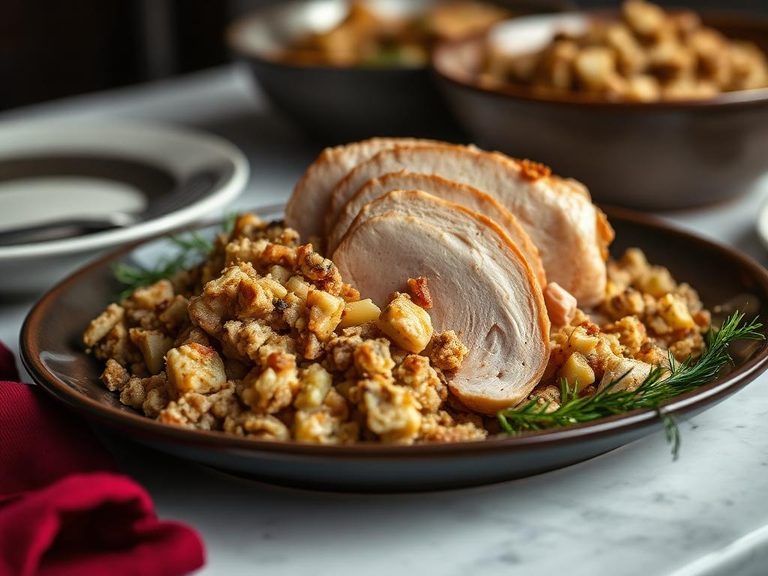

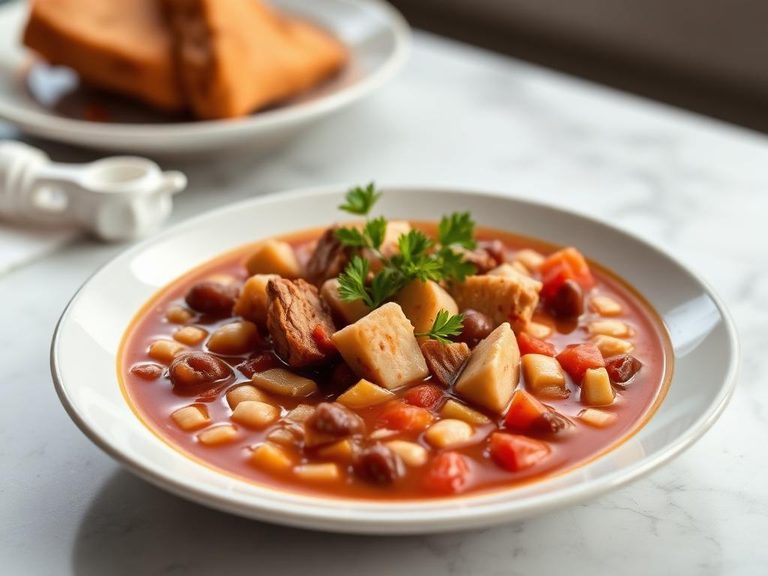
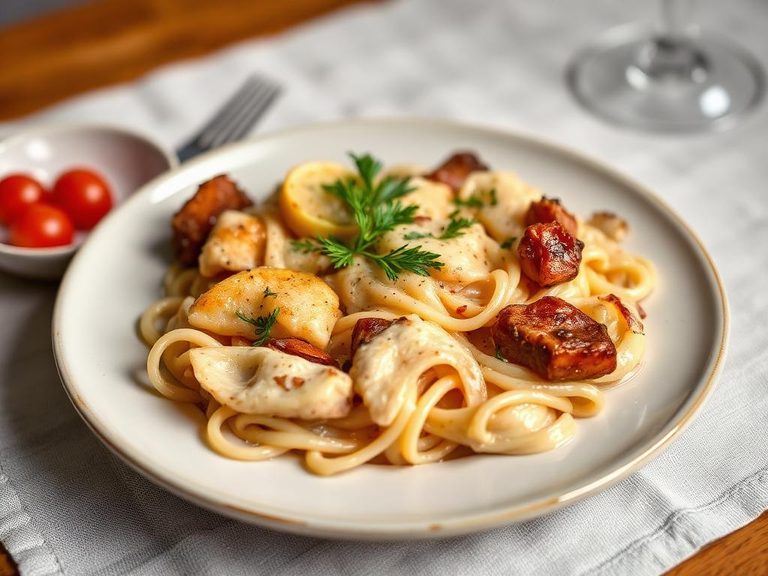
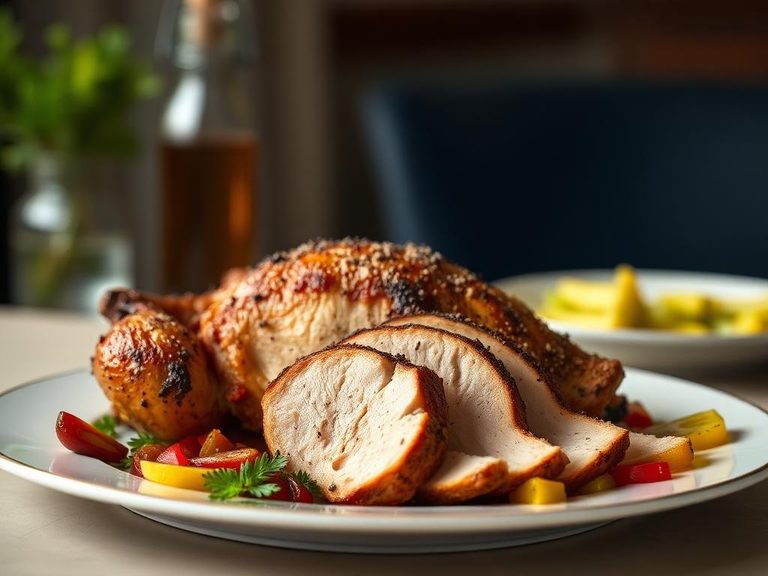
🌍 Where it's eaten
💡 Did you know?
The tradition of smoking turkey is believed to have been popularized in the American South, where it was a practical method for preserving meat before refrigeration, and the distinct flavor became a beloved culinary hallmark.
Full nutrition (USDA data · scales with serving)
| Water | 61.7 g |
| Energy | 208 kcal |
| Energy | 870 kj |
| Protein | 28.1 g |
| Total lipid (fat) | 9.7 g |
| Ash | 0.50 g |
| Carbohydrate, by difference | 0.00 g |
| Fiber, total dietary | 0.00 g |
| Total Sugars | 0.00 g |
| Calcium, Ca | 26.0 mg |
| Iron, Fe | 1.8 mg |
| Magnesium, Mg | 25.0 mg |
| Phosphorus, P | 203 mg |
| Potassium, K | 280 mg |
| Sodium, Na | 996 mg |
| Zinc, Zn | 3.0 mg |
| Copper, Cu | 0.09 mg |
| Selenium, Se | 30.3 ug |
| Vitamin C, total ascorbic acid | 0.00 mg |
| Thiamin | 0.06 mg |
| Riboflavin | 0.18 mg |
| Niacin | 5.1 mg |
| Vitamin B-6 | 0.41 mg |
| Folate, total | 7.0 ug |
| Folic acid | 0.00 ug |
| Folate, food | 7.0 ug |
| Folate, DFE | 7.0 ug |
| Choline, total | 69.9 mg |
| Betaine | 5.9 mg |
| Vitamin B-12 | 0.35 ug |
| Vitamin B-12, added | 0.00 ug |
| Vitamin A, RAE | 0.00 ug |
| Retinol | 0.00 ug |
| Carotene, beta | 0.00 ug |
| Carotene, alpha | 0.00 ug |
| Cryptoxanthin, beta | 0.00 ug |
| Vitamin A, IU | 0.00 iu |
| Lycopene | 0.00 ug |
| Lutein + zeaxanthin | 0.00 ug |
| Vitamin E (alpha-tocopherol) | 0.34 mg |
| Vitamin E, added | 0.00 mg |
| Vitamin D (D2 + D3), International Units | 1.0 iu |
| Vitamin D (D2 + D3) | 0.00 ug |
| Vitamin D3 (cholecalciferol) | 0.00 ug |
| Vitamin K (phylloquinone) | 0.00 ug |
| Vitamin K (Dihydrophylloquinone) | 0.00 ug |
| Alcohol, ethyl | 0.00 g |
| Caffeine | 0.00 mg |
| Theobromine | 0.00 mg |
Fat & fatty acid profile (per 100g)
| Fatty acids, total saturated | 2.8 g |
| SFA 4:0 | 0.00 g |
| SFA 6:0 | 0.00 g |
| SFA 8:0 | 0.00 g |
| SFA 10:0 | 0.00 g |
| SFA 12:0 | 0.01 g |
| SFA 14:0 | 0.07 g |
| SFA 16:0 | 1.7 g |
| SFA 18:0 | 0.70 g |
| Fatty acids, total monounsaturated | 3.2 g |
| MUFA 16:1 | 0.52 g |
| MUFA 18:1 | 2.6 g |
| MUFA 20:1 | 0.02 g |
| MUFA 22:1 | 0.01 g |
| Fatty acids, total polyunsaturated | 2.5 g |
| PUFA 18:2 | 2.1 g |
| PUFA 18:3 | 0.11 g |
| PUFA 18:4 | 0.00 g |
| PUFA 20:4 | 0.20 g |
| PUFA 20:5 n-3 (EPA) | 0.00 g |
| PUFA 22:5 n-3 (DPA) | 0.03 g |
| PUFA 22:6 n-3 (DHA) | 0.04 g |
| Cholesterol | 82.0 mg |
Amino acid profile (per 100g)
Estimated from Turkey, mechanically deboned, from turkey frames, raw — USDA does not publish this profile for Turkey.
| Tryptophan | 0.11 g |
| Threonine | 0.64 g |
| Isoleucine | 0.50 g |
| Leucine | 1.1 g |
| Lysine | 1.2 g |
| Methionine | 0.37 g |
| Cystine | 0.10 g |
| Phenylalanine | 0.55 g |
| Tyrosine | 0.47 g |
| Valine | 0.54 g |
| Arginine | 0.87 g |
| Histidine | 0.50 g |
| Alanine | 0.87 g |
| Aspartic acid | 1.4 g |
| Glutamic acid | 2.2 g |
| Glycine | 0.78 g |
| Proline | 0.65 g |
| Serine | 0.62 g |
FAQ
Is smoked turkey healthier than regular cooked turkey?
It can be, as it's often lower in fat if the skin is removed, but it's typically much higher in sodium due to the curing and smoking process. Regular roasted turkey is generally lower in salt.
How can I reduce the sodium in smoked turkey?
You can soak the turkey in cold water for a few hours before cooking, or look for low-sodium varieties. Rinsing the meat before use can also help remove some surface salt.
Is the skin on smoked turkey safe to eat?
Yes, the skin is safe to eat, but it adds extra fat and calories. If you're watching your fat intake, you can easily remove it.
What's the best way to store leftover smoked turkey?
Store it in an airtight container in the refrigerator for up to 3-4 days, or freeze it for up to 2-3 months for best quality.
Nutrient density (calculated · NRF9.3)
Nutrient Rich Foods index: beneficial nutrients (protein, fiber, vitamins, minerals) minus saturated fat, added sugar & sodium, per 100 kcal.
NRF9.3 index — Fulgoni, Keast & Drewnowski, 2009. Computed from USDA nutrients.
Weight-loss friendliness (composite index)
Energy density 2.08 kcal/g · 54% calories from protein · 0.0 g fiber · 0.0 g sugar per 100 g.
Composite of energy density (Rolls et al., 1999), protein & fiber satiety, minus sugar. A calculated heuristic — ranks satiety-per-calorie, not a clinical measure.
Dietary load (calculated from USDA values)
Potential renal acid load. Positive = acid-forming, negative = alkaline-forming.
Sodium-to-potassium ratio: 3.56 (lower is better — aim for ≤ 1)
Sodium:potassium per WHO potassium guidance. Computed from USDA nutrients.