

Turkey, all classes, leg, meat and skin, cooked, roasted
Whole food · Poultry Products
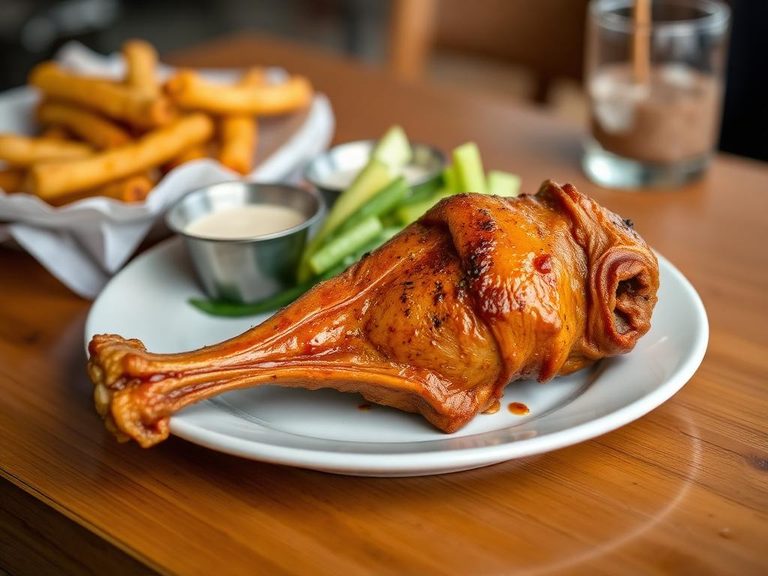
This is the succulent, dark meat from a turkey's leg, roasted to a deep, savory brown with skin that can be crisp or tender depending on preparation. The meat is rich, moist, and has a more pronounced, gamey flavor than breast meat, with a satisfyingly firm yet tender texture. Nutritionally, it's a powerhouse of complete protein with minimal carbohydrates.
Calorie split: 56% protein · 0% carbs · 44% fat
↓ Full nutrition💚 Why it's loved
People love roasted turkey leg for its deeply savory, umami-rich flavor and the satisfying contrast between the tender meat and the flavorful skin. It's a centerpiece of holiday feasts and a beloved, hearty street food at fairs and festivals.
⚠️ Watch-outs & how to enjoy it better
The dark meat and skin are higher in fat and calories than breast meat, which may be a concern for strict calorie or fat intake goals. The skin can also be high in sodium if heavily seasoned or brined. To manage this, you can remove the skin before eating and pair the meat with fibrous vegetables to balance the meal.
Key benefits
- Excellent source of complete protein for muscle maintenance and repair.
- Rich in essential minerals like selenium and phosphorus.
- Contains B vitamins, particularly niacin (B3) and B6, for energy metabolism.
- Provides iron in a highly absorbable heme form.
- A good source of zinc for immune function.
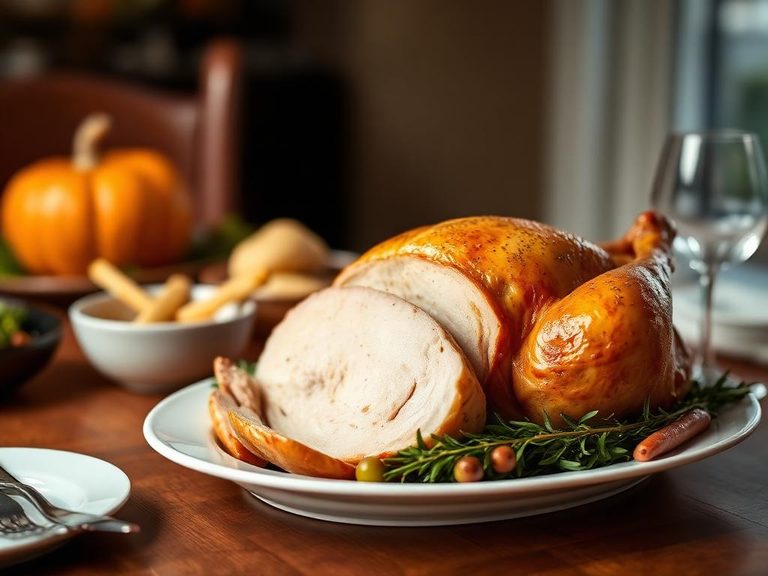
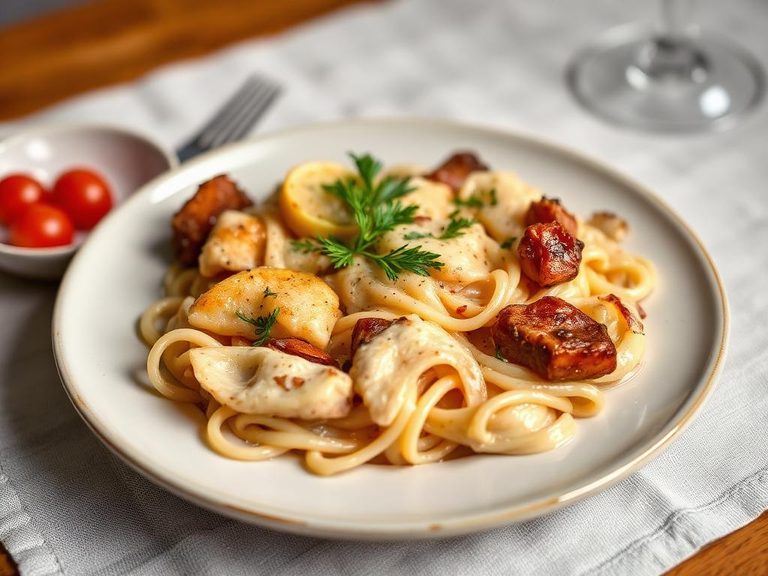
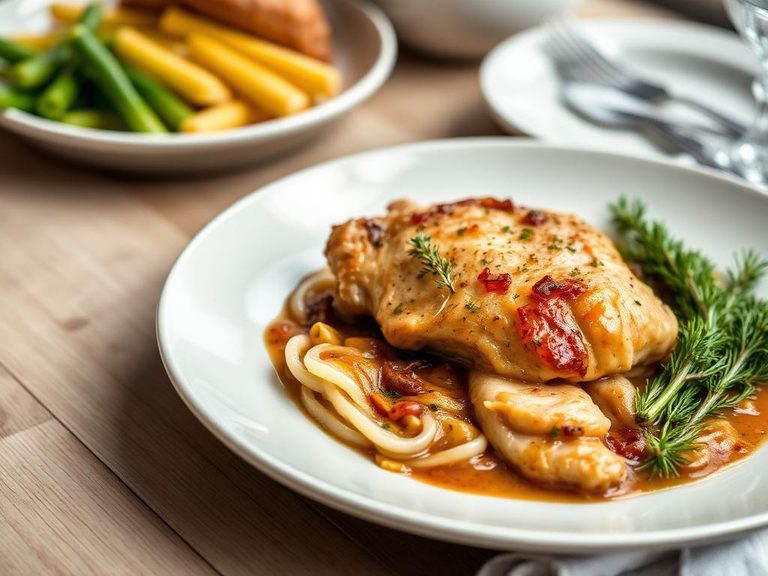
🍽️ Popular dishes

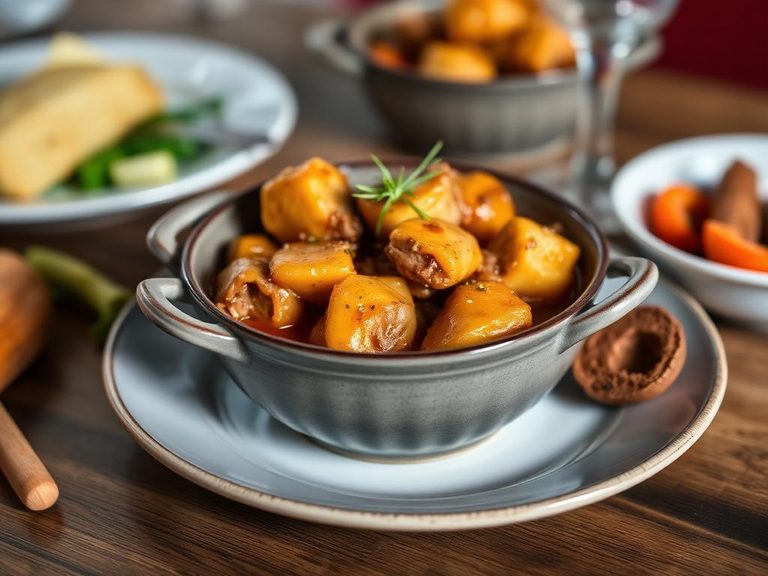
🌍 Where it's eaten
💡 Did you know?
A single roasted turkey leg can weigh over a pound (450g), making it a popular and dramatic handheld food at Renaissance fairs and theme parks.
Full nutrition (USDA data · scales with serving)
| Water | 61.2 g |
| Energy | 208 kcal |
| Energy | 870 kj |
| Protein | 27.9 g |
| Total lipid (fat) | 9.8 g |
| Ash | 0.99 g |
| Carbohydrate, by difference | 0.00 g |
| Fiber, total dietary | 0.00 g |
| Total Sugars | 0.00 g |
| Calcium, Ca | 32.0 mg |
| Iron, Fe | 2.3 mg |
| Magnesium, Mg | 23.0 mg |
| Phosphorus, P | 199 mg |
| Potassium, K | 280 mg |
| Sodium, Na | 77.0 mg |
| Zinc, Zn | 4.3 mg |
| Copper, Cu | 0.15 mg |
| Manganese, Mn | 0.02 mg |
| Selenium, Se | 37.8 ug |
| Vitamin C, total ascorbic acid | 0.00 mg |
| Thiamin | 0.06 mg |
| Riboflavin | 0.24 mg |
| Niacin | 3.6 mg |
| Pantothenic acid | 1.2 mg |
| Vitamin B-6 | 0.33 mg |
| Folate, total | 9.0 ug |
| Folic acid | 0.00 ug |
| Folate, food | 9.0 ug |
| Folate, DFE | 9.0 ug |
| Choline, total | 70.8 mg |
| Betaine | 6.0 mg |
| Vitamin B-12 | 0.36 ug |
| Vitamin B-12, added | 0.00 ug |
| Vitamin A, RAE | 0.00 ug |
| Retinol | 0.00 ug |
| Carotene, beta | 0.00 ug |
| Carotene, alpha | 0.00 ug |
| Cryptoxanthin, beta | 0.00 ug |
| Vitamin A, IU | 0.00 iu |
| Lycopene | 0.00 ug |
| Lutein + zeaxanthin | 0.00 ug |
| Vitamin E (alpha-tocopherol) | 0.62 mg |
| Vitamin E, added | 0.00 mg |
| Vitamin D (D2 + D3), International Units | 4.0 iu |
| Vitamin D (D2 + D3) | 0.10 ug |
| Vitamin D3 (cholecalciferol) | 0.10 ug |
| Vitamin K (phylloquinone) | 0.00 ug |
| Vitamin K (Dihydrophylloquinone) | 0.00 ug |
| Alcohol, ethyl | 0.00 g |
| Caffeine | 0.00 mg |
| Theobromine | 0.00 mg |
Fat & fatty acid profile (per 100g)
| Fatty acids, total saturated | 3.1 g |
| SFA 4:0 | 0.00 g |
| SFA 6:0 | 0.00 g |
| SFA 8:0 | 0.00 g |
| SFA 10:0 | 0.00 g |
| SFA 12:0 | 0.01 g |
| SFA 14:0 | 0.07 g |
| SFA 16:0 | 1.8 g |
| SFA 18:0 | 0.82 g |
| Fatty acids, total monounsaturated | 2.9 g |
| MUFA 16:1 | 0.46 g |
| MUFA 18:1 | 2.3 g |
| MUFA 20:1 | 0.03 g |
| MUFA 22:1 | 0.02 g |
| Fatty acids, total polyunsaturated | 2.7 g |
| PUFA 18:2 | 2.3 g |
| PUFA 18:3 | 0.11 g |
| PUFA 18:4 | 0.00 g |
| PUFA 20:4 | 0.24 g |
| PUFA 20:5 n-3 (EPA) | 0.00 g |
| PUFA 22:5 n-3 (DPA) | 0.03 g |
| PUFA 22:6 n-3 (DHA) | 0.05 g |
| Cholesterol | 85.0 mg |
Amino acid profile (per 100g)
| Tryptophan | 0.31 g |
| Threonine | 1.2 g |
| Isoleucine | 1.4 g |
| Leucine | 2.2 g |
| Lysine | 2.6 g |
| Methionine | 0.79 g |
| Cystine | 0.30 g |
| Phenylalanine | 1.1 g |
| Tyrosine | 1.1 g |
| Valine | 1.5 g |
| Arginine | 2.0 g |
| Histidine | 0.85 g |
| Alanine | 1.8 g |
| Aspartic acid | 2.7 g |
| Glutamic acid | 4.5 g |
| Glycine | 1.6 g |
| Proline | 1.2 g |
| Serine | 1.2 g |
FAQ
Is turkey leg meat healthier than turkey breast?
It's a trade-off. Leg meat has more fat and calories but also more iron, zinc, and B vitamins. Breast meat is leaner and higher in protein per calorie. Both are excellent choices depending on your dietary goals.
How do I keep roasted turkey leg moist?
Brining the leg in a saltwater solution before cooking helps it retain moisture. Roasting at a moderate temperature (around 325°F/165°C) and using a meat thermometer to avoid overcooking are key. Letting it rest after cooking allows juices to redistribute.
Can I eat the skin?
Yes, the skin is edible and adds significant flavor and fat. If you're watching fat or calorie intake, simply remove it. For crispier skin, pat the leg dry thoroughly before roasting and consider a final high-heat blast.
Nutrient density (calculated · NRF9.3)
Nutrient Rich Foods index: beneficial nutrients (protein, fiber, vitamins, minerals) minus saturated fat, added sugar & sodium, per 100 kcal.
NRF9.3 index — Fulgoni, Keast & Drewnowski, 2009. Computed from USDA nutrients.
Weight-loss friendliness (composite index)
Energy density 2.08 kcal/g · 54% calories from protein · 0.0 g fiber · 0.0 g sugar per 100 g.
Composite of energy density (Rolls et al., 1999), protein & fiber satiety, minus sugar. A calculated heuristic — ranks satiety-per-calorie, not a clinical measure.
Dietary load (calculated from USDA values)
Potential renal acid load. Positive = acid-forming, negative = alkaline-forming.
Sodium-to-potassium ratio: 0.28 (lower is better — aim for ≤ 1)
Sodium:potassium per WHO potassium guidance. Computed from USDA nutrients.