

Tamales (Navajo)
Whole food · American Indian/Alaska Native Foods

Photo: Wikipedia
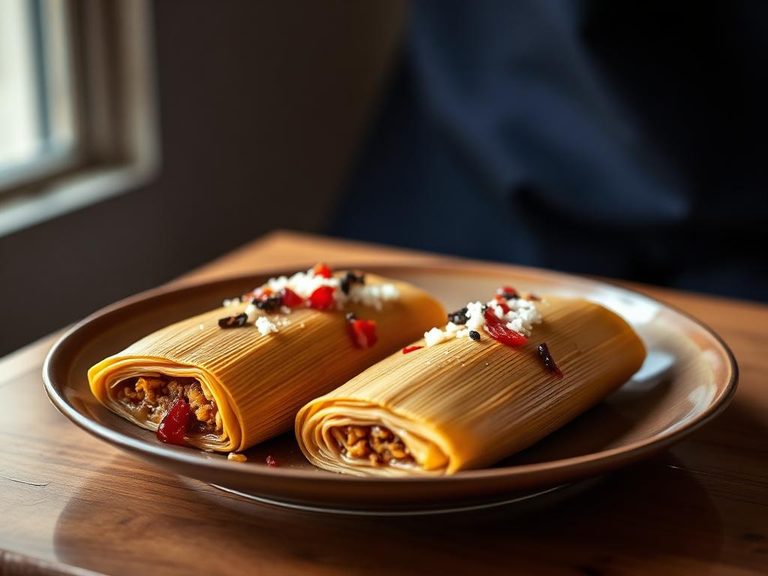
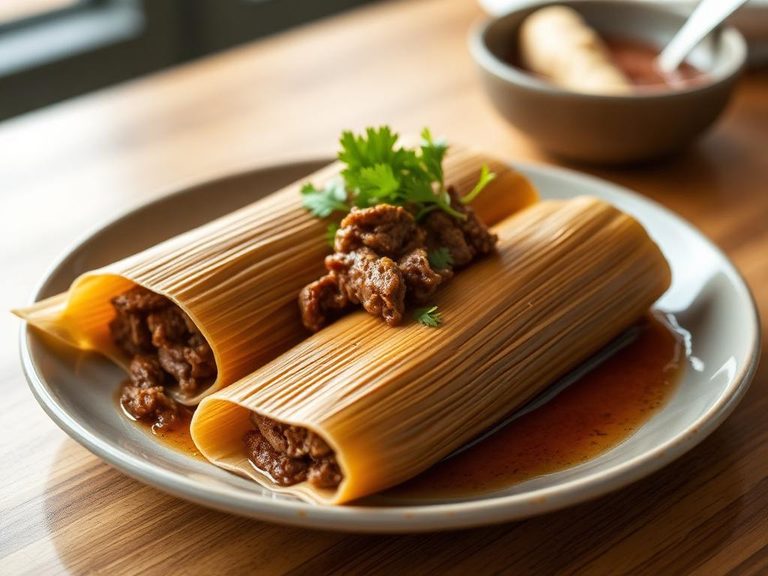
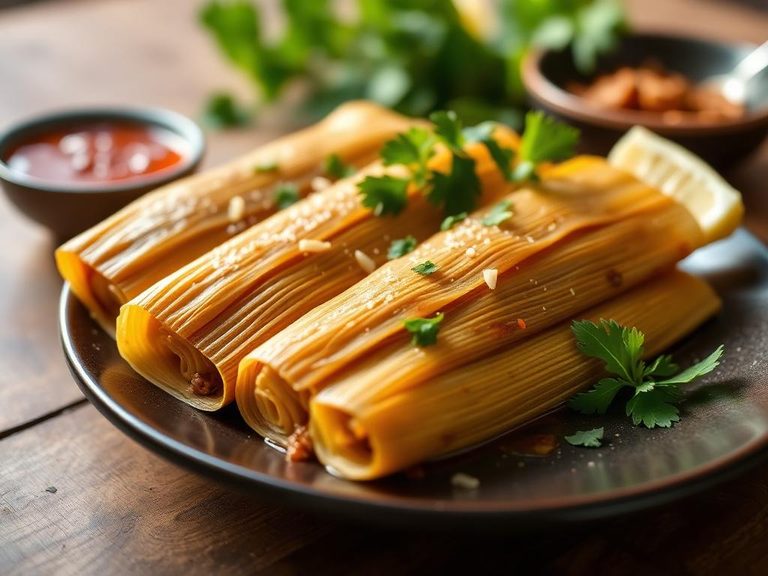
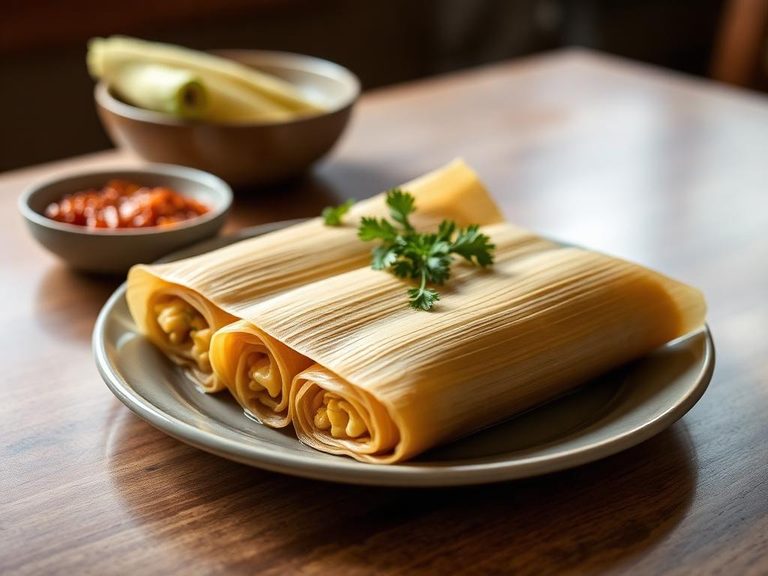
Navajo tamales are a hearty, savory dish made with a cornmeal dough, often enriched with lard or shortening, and filled with a seasoned meat mixture like beef or mutton, then wrapped in corn husks and steamed. The texture is dense, moist, and slightly crumbly, with a rich, savory flavor from the meat and spices. Nutritionally, they provide a good source of protein and complex carbohydrates for sustained energy.
Calorie split: 16% protein · 47% carbs · 36% fat
↓ Full nutrition💚 Why it's loved
People love Navajo tamales for their comforting, savory flavor and satisfying, dense texture, which makes them a filling and hearty meal. They are also cherished for their cultural significance and role in traditional gatherings and celebrations.
⚠️ Watch-outs & how to enjoy it better
The high fat content from lard or shortening and the dense carbohydrate base can contribute to calorie density, which may be a concern for those monitoring calorie intake or managing blood sugar levels. To counteract this, enjoy them in moderation, pair with a fiber-rich vegetable side, and ensure the meal includes a balance of protein and healthy fats.
Key benefits
- Good source of protein for muscle maintenance
- Provides complex carbohydrates for energy
- Contains dietary fiber for digestive health
- Offers essential minerals like iron and zinc from meat filling
🍽️ Popular dishes
🌍 Where it's eaten
💡 Did you know?
Navajo tamales often use a simpler, heartier dough compared to Mexican tamales, reflecting the ingredients and cooking traditions of the Diné people.
Full nutrition (USDA data · scales with serving)
| Water | 68.1 g |
| Energy | 153 kcal |
| Energy | 639 kj |
| Protein | 6.3 g |
| Total lipid (fat) | 6.1 g |
| Ash | 1.4 g |
| Carbohydrate, by difference | 18.1 g |
| Fiber, total dietary | 3.1 g |
| Total Sugars | 0.99 g |
| Sucrose | 0.40 g |
| Glucose | 0.21 g |
| Fructose | 0.17 g |
| Lactose | 0.00 g |
| Maltose | 0.22 g |
| Galactose | 0.00 g |
| Starch | 12.3 g |
| Calcium, Ca | 29.0 mg |
| Iron, Fe | 1.2 mg |
| Magnesium, Mg | 22.0 mg |
| Phosphorus, P | 99.0 mg |
| Potassium, K | 131 mg |
| Sodium, Na | 427 mg |
| Zinc, Zn | 1.5 mg |
| Copper, Cu | 0.06 mg |
| Manganese, Mn | 0.17 mg |
| Selenium, Se | 6.0 ug |
| Vitamin C, total ascorbic acid | 1.7 mg |
| Thiamin | 0.05 mg |
| Riboflavin | 0.08 mg |
| Niacin | 1.6 mg |
| Pantothenic acid | 0.20 mg |
| Vitamin B-6 | 0.14 mg |
| Folate, total | 15.0 ug |
| Folate, food | 15.0 ug |
| Vitamin B-12 | 0.54 ug |
| Vitamin A, RAE | 0.00 ug |
| Retinol | 0.00 ug |
| Vitamin A, IU | 0.00 iu |
| Vitamin E (alpha-tocopherol) | 0.00 mg |
| Tocopherol, beta | 0.00 mg |
| Tocopherol, gamma | 0.00 mg |
| Tocopherol, delta | 0.00 mg |
| Tocotrienol, alpha | 0.00 mg |
| Tocotrienol, beta | 0.00 mg |
| Tocotrienol, gamma | 0.00 mg |
| Tocotrienol, delta | 0.00 mg |
Fat & fatty acid profile (per 100g)
| Fatty acids, total saturated | 2.4 g |
| SFA 8:0 | 0.00 g |
| SFA 10:0 | 0.00 g |
| SFA 12:0 | 0.00 g |
| SFA 14:0 | 0.17 g |
| SFA 15:0 | 0.02 g |
| SFA 16:0 | 1.4 g |
| SFA 17:0 | 0.06 g |
| SFA 18:0 | 0.74 g |
| SFA 20:0 | 0.01 g |
| SFA 22:0 | 0.00 g |
| Fatty acids, total monounsaturated | 2.7 g |
| MUFA 14:1 | 0.04 g |
| MUFA 15:1 | 0.00 g |
| MUFA 16:1 | 0.19 g |
| MUFA 17:1 | 0.05 g |
| MUFA 18:1 | 2.4 g |
| MUFA 20:1 | 0.03 g |
| Fatty acids, total polyunsaturated | 0.69 g |
| PUFA 18:2 | 0.65 g |
| PUFA 18:3 | 0.03 g |
| PUFA 18:3 n-3 c,c,c (ALA) | 0.03 g |
| PUFA 18:3 n-6 c,c,c | 0.00 g |
| PUFA 20:2 n-6 c,c | 0.00 g |
| PUFA 20:3 | 0.00 g |
| PUFA 20:4 | 0.01 g |
| Cholesterol | 17.0 mg |
Amino acid profile (per 100g)
| Tryptophan | 0.05 g |
| Threonine | 0.24 g |
| Isoleucine | 0.27 g |
| Leucine | 0.57 g |
| Lysine | 0.43 g |
| Methionine | 0.15 g |
| Cystine | 0.08 g |
| Phenylalanine | 0.28 g |
| Tyrosine | 0.20 g |
| Valine | 0.32 g |
| Arginine | 0.39 g |
| Histidine | 0.20 g |
| Alanine | 0.42 g |
| Aspartic acid | 0.56 g |
| Glutamic acid | 1.0 g |
| Glycine | 0.38 g |
| Proline | 0.38 g |
| Serine | 0.27 g |
FAQ
How are Navajo tamales different from Mexican tamales?
Navajo tamales typically have a denser, more bread-like dough made with cornmeal and are often filled with mutton or beef, whereas Mexican tamales use a lighter, fluffier masa dough and can have a wider variety of fillings.
Can Navajo tamales be made vegetarian?
While traditionally meat-based, you can adapt the recipe by using plant-based proteins like beans or lentils as filling, though this changes the traditional flavor profile.
How should I store leftover Navajo tamales?
Store them in an airtight container in the refrigerator for up to 3-4 days, or freeze them for longer storage. Reheat by steaming or microwaving with a damp paper towel to retain moisture.
Nutrient density (calculated · NRF9.3)
Nutrient Rich Foods index: beneficial nutrients (protein, fiber, vitamins, minerals) minus saturated fat, added sugar & sodium, per 100 kcal.
NRF9.3 index — Fulgoni, Keast & Drewnowski, 2009. Computed from USDA nutrients.
Weight-loss friendliness (composite index)
Energy density 1.53 kcal/g · 16% calories from protein · 3.1 g fiber · 1.0 g sugar per 100 g.
Composite of energy density (Rolls et al., 1999), protein & fiber satiety, minus sugar. A calculated heuristic — ranks satiety-per-calorie, not a clinical measure.
Dietary load (calculated from USDA values)
Potential renal acid load. Positive = acid-forming, negative = alkaline-forming.
Sodium-to-potassium ratio: 3.26 (lower is better — aim for ≤ 1)
Sodium:potassium per WHO potassium guidance. Computed from USDA nutrients.