

Squash, summer, crookneck and straightneck, frozen, cooked, boiled, drained, without salt
Whole food · Vegetables and Vegetable Products
This is the humble summer squash, harvested young for its tender skin and mild, buttery flavor. When frozen and boiled, it softens into a delicate, slightly watery texture that absorbs seasonings beautifully. At just 25 calories per 100g, it's a light, nutrient-dense vegetable packed with fiber and natural sugars.
Calorie split: 18% protein · 76% carbs · 6% fat
↓ Full nutrition💚 Why it's loved
People adore it for its mild, versatile flavor that acts as a blank canvas for herbs, spices, and sauces. It's a beloved staple in summer cooking, from Southern U.S. casseroles to Italian ratatouille, symbolizing seasonal abundance.
⚠️ Watch-outs & how to enjoy it better
Its high water content can lead to a mushy texture if overcooked, and the natural sugars, while low, can still contribute to blood sugar rises in large portions. To counteract this, pair it with a protein (like chickpeas or chicken) or a healthy fat (like olive oil or cheese) to slow digestion and add satiety. For best texture, cook just until tender-crisp or sauté to evaporate excess moisture.
Key benefits
- Extremely low in calories, ideal for volume eating
- Good source of dietary fiber for digestive health
- Contains vitamin C and manganese
- Naturally low in fat and cholesterol-free
- Provides quick, gentle energy from natural sugars
🍽️ Popular dishes
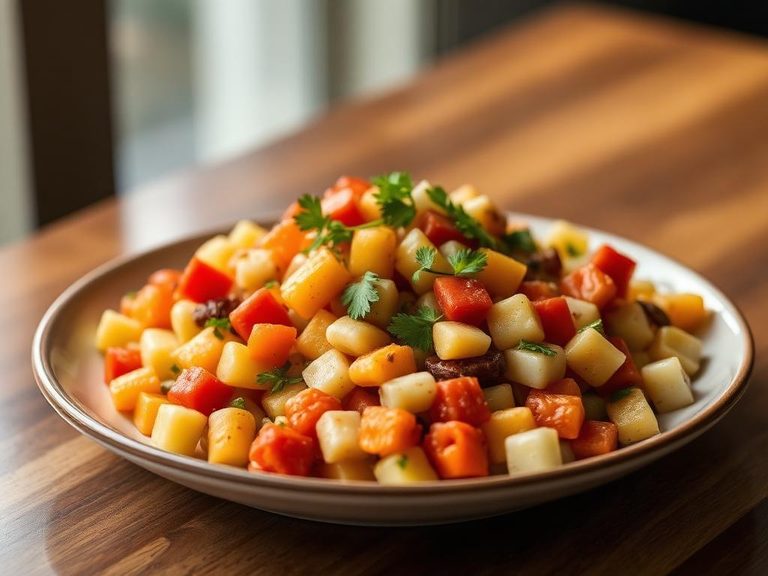
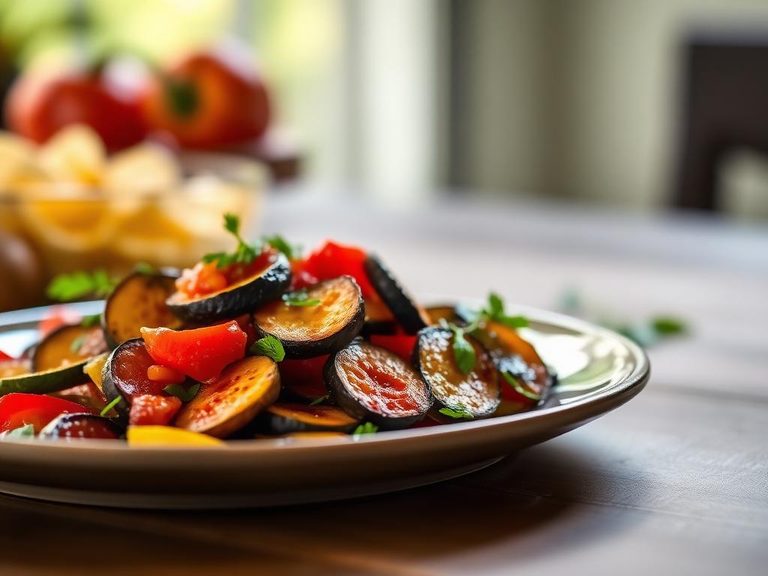
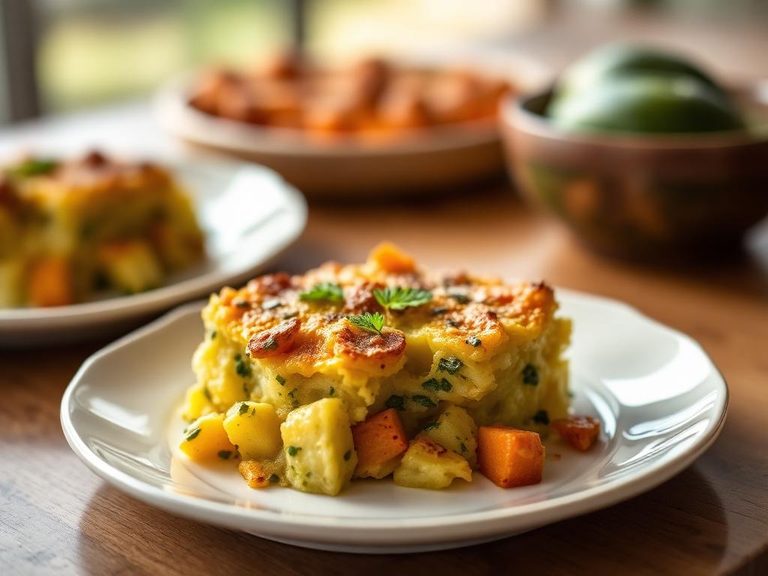

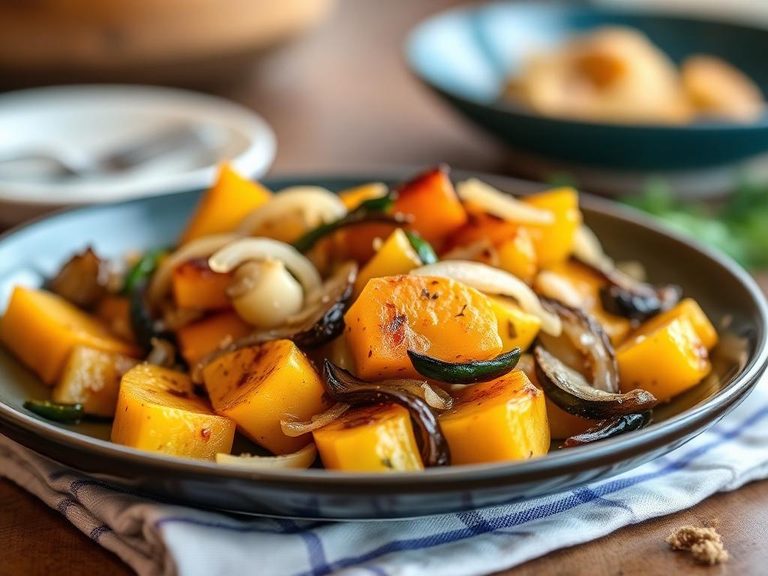
🌍 Where it's eaten
💡 Did you know?
Despite its name, summer squash is botanically a fruit, and the 'crookneck' variety gets its distinctive curved neck from a genetic trait that causes the stem end to grow more slowly than the blossom end.
Full nutrition (USDA data · scales with serving)
| Water | 92.2 g |
| Energy | 25.0 kcal |
| Energy | 105 kj |
| Protein | 1.3 g |
| Total lipid (fat) | 0.20 g |
| Ash | 0.74 g |
| Carbohydrate, by difference | 5.5 g |
| Fiber, total dietary | 1.4 g |
| Total Sugars | 2.3 g |
| Calcium, Ca | 20.0 mg |
| Iron, Fe | 0.52 mg |
| Magnesium, Mg | 27.0 mg |
| Phosphorus, P | 41.0 mg |
| Potassium, K | 253 mg |
| Sodium, Na | 6.0 mg |
| Zinc, Zn | 0.34 mg |
| Copper, Cu | 0.07 mg |
| Manganese, Mn | 0.26 mg |
| Selenium, Se | 0.30 ug |
| Vitamin C, total ascorbic acid | 6.8 mg |
| Thiamin | 0.04 mg |
| Riboflavin | 0.05 mg |
| Niacin | 0.44 mg |
| Pantothenic acid | 0.10 mg |
| Vitamin B-6 | 0.10 mg |
| Folate, total | 13.0 ug |
| Folic acid | 0.00 ug |
| Folate, food | 13.0 ug |
| Folate, DFE | 13.0 ug |
| Choline, total | 9.7 mg |
| Vitamin B-12 | 0.00 ug |
| Vitamin B-12, added | 0.00 ug |
| Vitamin A, RAE | 10.0 ug |
| Retinol | 0.00 ug |
| Carotene, beta | 120 ug |
| Carotene, alpha | 0.00 ug |
| Cryptoxanthin, beta | 0.00 ug |
| Vitamin A, IU | 201 iu |
| Lycopene | 0.00 ug |
| Lutein + zeaxanthin | 388 ug |
| Vitamin E (alpha-tocopherol) | 0.15 mg |
| Vitamin E, added | 0.00 mg |
| Vitamin D (D2 + D3), International Units | 0.00 iu |
| Vitamin D (D2 + D3) | 0.00 ug |
| Vitamin K (phylloquinone) | 5.4 ug |
| Alcohol, ethyl | 0.00 g |
| Caffeine | 0.00 mg |
| Theobromine | 0.00 mg |
Fat & fatty acid profile (per 100g)
| Fatty acids, total saturated | 0.04 g |
| SFA 4:0 | 0.00 g |
| SFA 6:0 | 0.00 g |
| SFA 8:0 | 0.00 g |
| SFA 10:0 | 0.00 g |
| SFA 12:0 | 0.00 g |
| SFA 14:0 | 0.00 g |
| SFA 16:0 | 0.04 g |
| SFA 18:0 | 0.00 g |
| Fatty acids, total monounsaturated | 0.01 g |
| MUFA 16:1 | 0.00 g |
| MUFA 18:1 | 0.01 g |
| MUFA 20:1 | 0.00 g |
| MUFA 22:1 | 0.00 g |
| Fatty acids, total polyunsaturated | 0.08 g |
| PUFA 18:2 | 0.03 g |
| PUFA 18:3 | 0.05 g |
| PUFA 18:4 | 0.00 g |
| PUFA 20:4 | 0.00 g |
| PUFA 20:5 n-3 (EPA) | 0.00 g |
| PUFA 22:5 n-3 (DPA) | 0.00 g |
| PUFA 22:6 n-3 (DHA) | 0.00 g |
| Fatty acids, total trans | 0.00 g |
| Cholesterol | 0.00 mg |
Amino acid profile (per 100g)
| Tryptophan | 0.01 g |
| Threonine | 0.03 g |
| Isoleucine | 0.05 g |
| Leucine | 0.07 g |
| Lysine | 0.07 g |
| Methionine | 0.02 g |
| Cystine | 0.01 g |
| Phenylalanine | 0.04 g |
| Tyrosine | 0.03 g |
| Valine | 0.06 g |
| Arginine | 0.05 g |
| Histidine | 0.03 g |
| Alanine | 0.07 g |
| Aspartic acid | 0.16 g |
| Glutamic acid | 0.14 g |
| Glycine | 0.05 g |
| Proline | 0.04 g |
| Serine | 0.05 g |
FAQ
Is frozen summer squash as nutritious as fresh?
Yes, it's typically flash-frozen at peak ripeness, preserving most vitamins and minerals. The boiling step may leach some water-soluble nutrients like vitamin C, but the fiber and minerals remain largely intact.
How do I prevent it from becoming watery in dishes?
You can salt the slices and let them drain in a colander for 30 minutes before cooking to draw out excess moisture. Alternatively, sauté it over medium-high heat to evaporate water quickly before adding to casseroles or stews.
Can I eat the skin?
Absolutely. The skin of summer squash is thin, tender, and edible, providing extra fiber and nutrients. Just be sure to wash it thoroughly before cooking.
Nutrient density (calculated · NRF9.3)
Nutrient Rich Foods index: beneficial nutrients (protein, fiber, vitamins, minerals) minus saturated fat, added sugar & sodium, per 100 kcal.
NRF9.3 index — Fulgoni, Keast & Drewnowski, 2009. Computed from USDA nutrients.
Weight-loss friendliness (composite index)
Energy density 0.25 kcal/g · 20% calories from protein · 1.4 g fiber · 2.3 g sugar per 100 g.
Composite of energy density (Rolls et al., 1999), protein & fiber satiety, minus sugar. A calculated heuristic — ranks satiety-per-calorie, not a clinical measure.
Dietary load (calculated from USDA values)
Potential renal acid load. Positive = acid-forming, negative = alkaline-forming.
Sodium-to-potassium ratio: 0.02 (lower is better — aim for ≤ 1)
Sodium:potassium per WHO potassium guidance. Computed from USDA nutrients.