

Seaweed, agar, raw
Whole food · Vegetables and Vegetable Products

Photo: Wikipedia
Seaweed, agar, raw is a plant-based gelatin substitute derived from red algae, prized for its neutral taste and uniquely firm, springy texture. It is exceptionally low in calories and virtually fat-free, making it a popular ingredient for creating light, jiggly desserts and savory dishes. Its primary nutritional contribution is a high concentration of soluble fiber.
Calorie split: 7% protein · 92% carbs · 1% fat
↓ Full nutrition💚 Why it's loved
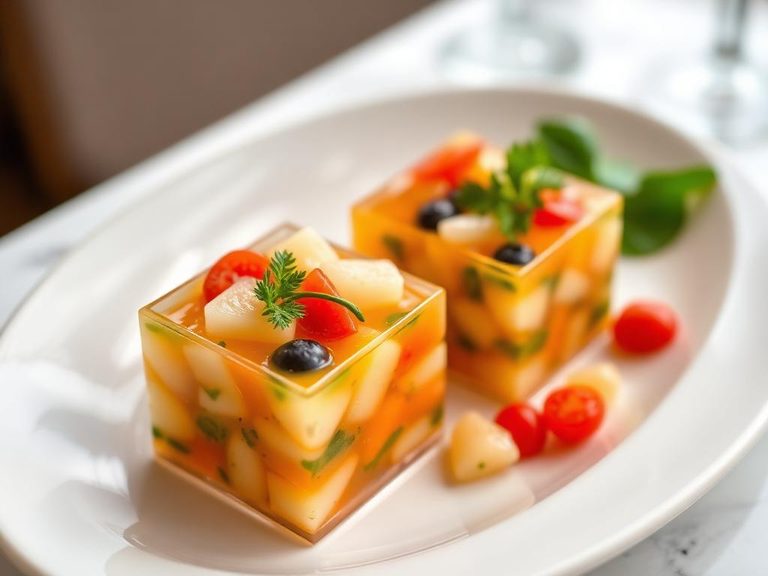
People love agar for its incredible versatility—it can be used to make everything from delicate Japanese wagashi to savory vegetable aspics—and its ability to set firmly at room temperature, unlike animal gelatin.
⚠️ Watch-outs & how to enjoy it better
Agar can cause digestive discomfort like bloating if consumed in large quantities due to its high fiber content. To minimize this, start with small portions and ensure you drink plenty of water. It also contains iodine, so those with thyroid conditions should consult a doctor.
Key benefits
- Excellent source of soluble fiber for gut health
- Very low calorie, fat-free, and cholesterol-free
- Contains trace minerals like iodine and calcium
- Vegan and vegetarian gelatin alternative
- Helps create unique textures in cooking
🍽️ Popular dishes
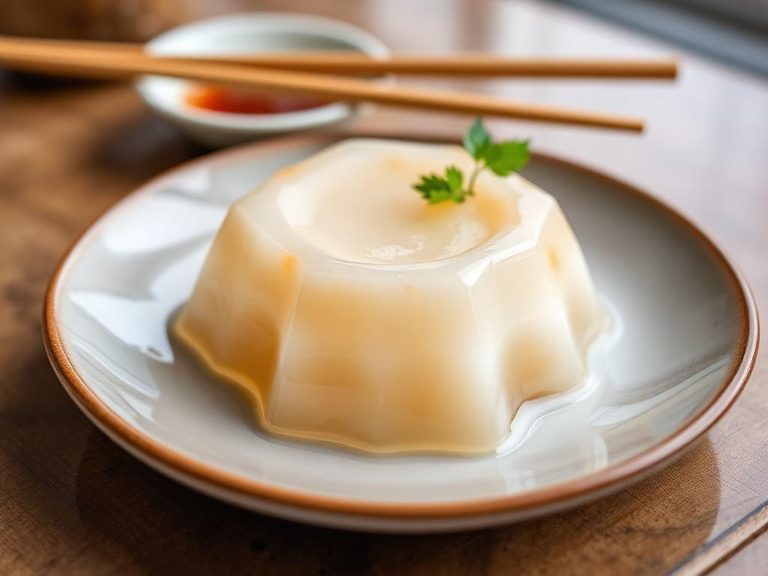
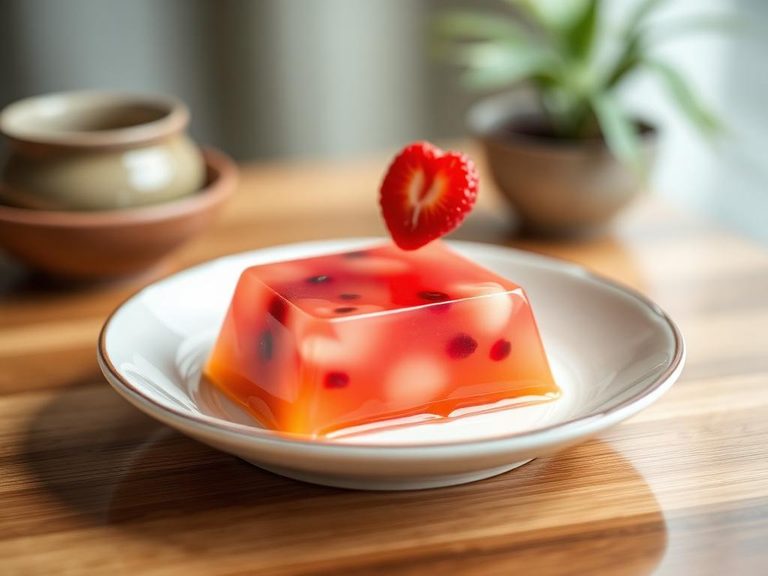
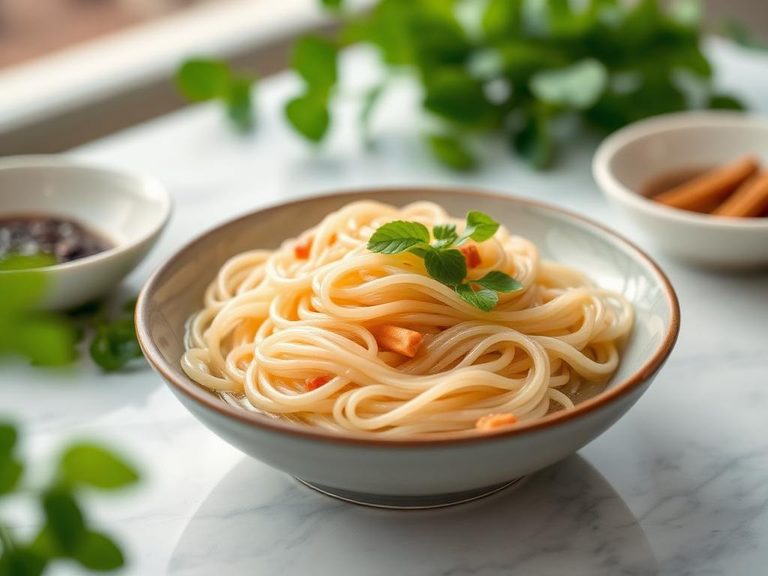
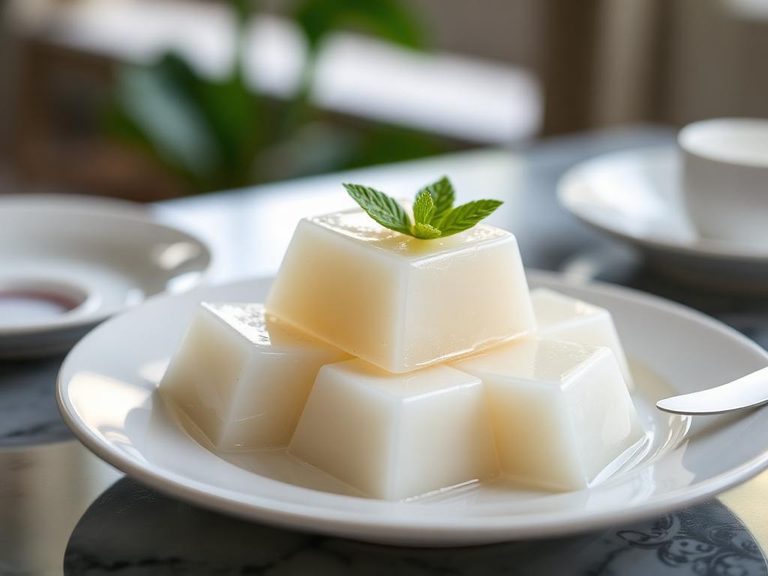
🌍 Where it's eaten
💡 Did you know?
Agar has a much higher melting point than animal gelatin, allowing agar-based desserts to remain solid even on a warm day.
Full nutrition (USDA data · scales with serving)
| Water | 91.3 g |
| Energy | 26.0 kcal |
| Energy | 109 kj |
| Protein | 0.54 g |
| Total lipid (fat) | 0.03 g |
| Ash | 1.4 g |
| Carbohydrate, by difference | 6.8 g |
| Fiber, total dietary | 0.50 g |
| Total Sugars | 0.28 g |
| Calcium, Ca | 54.0 mg |
| Iron, Fe | 1.9 mg |
| Magnesium, Mg | 67.0 mg |
| Phosphorus, P | 5.0 mg |
| Potassium, K | 226 mg |
| Sodium, Na | 9.0 mg |
| Zinc, Zn | 0.58 mg |
| Copper, Cu | 0.06 mg |
| Manganese, Mn | 0.37 mg |
| Selenium, Se | 0.70 ug |
| Vitamin C, total ascorbic acid | 0.00 mg |
| Thiamin | 0.01 mg |
| Riboflavin | 0.02 mg |
| Niacin | 0.06 mg |
| Pantothenic acid | 0.30 mg |
| Vitamin B-6 | 0.03 mg |
| Folate, total | 85.0 ug |
| Folic acid | 0.00 ug |
| Folate, food | 85.0 ug |
| Folate, DFE | 85.0 ug |
| Choline, total | 6.0 mg |
| Vitamin B-12 | 0.00 ug |
| Vitamin B-12, added | 0.00 ug |
| Vitamin A, RAE | 0.00 ug |
| Retinol | 0.00 ug |
| Carotene, beta | 0.00 ug |
| Carotene, alpha | 0.00 ug |
| Cryptoxanthin, beta | 0.00 ug |
| Vitamin A, IU | 0.00 iu |
| Lycopene | 0.00 ug |
| Lutein + zeaxanthin | 0.00 ug |
| Vitamin E (alpha-tocopherol) | 0.87 mg |
| Vitamin E, added | 0.00 mg |
| Vitamin D (D2 + D3), International Units | 0.00 iu |
| Vitamin D (D2 + D3) | 0.00 ug |
| Vitamin K (phylloquinone) | 2.3 ug |
| Alcohol, ethyl | 0.00 g |
| Caffeine | 0.00 mg |
| Theobromine | 0.00 mg |
Fat & fatty acid profile (per 100g)
| Fatty acids, total saturated | 0.01 g |
| SFA 4:0 | 0.00 g |
| SFA 6:0 | 0.00 g |
| SFA 8:0 | 0.00 g |
| SFA 10:0 | 0.00 g |
| SFA 12:0 | 0.00 g |
| SFA 14:0 | 0.00 g |
| SFA 16:0 | 0.01 g |
| SFA 18:0 | 0.00 g |
| Fatty acids, total monounsaturated | 0.00 g |
| MUFA 16:1 | 0.00 g |
| MUFA 18:1 | 0.00 g |
| MUFA 20:1 | 0.00 g |
| MUFA 22:1 | 0.00 g |
| Fatty acids, total polyunsaturated | 0.01 g |
| PUFA 18:2 | 0.00 g |
| PUFA 18:3 | 0.00 g |
| PUFA 18:4 | 0.00 g |
| PUFA 20:4 | 0.00 g |
| PUFA 20:5 n-3 (EPA) | 0.01 g |
| PUFA 22:5 n-3 (DPA) | 0.00 g |
| PUFA 22:6 n-3 (DHA) | 0.00 g |
| Fatty acids, total trans | 0.00 g |
| Cholesterol | 0.00 mg |
Amino acid profile (per 100g)
Estimated from Seaweed, Canadian Cultivated EMI-TSUNOMATA, dry — USDA does not publish this profile for Seaweed.
| Tryptophan | 0.16 g |
| Threonine | 0.58 g |
| Isoleucine | 0.56 g |
| Leucine | 0.90 g |
| Lysine | 0.75 g |
| Methionine | 0.25 g |
| Cystine | 0.25 g |
| Phenylalanine | 0.81 g |
| Tyrosine | 0.34 g |
| Valine | 0.66 g |
| Arginine | 0.77 g |
| Histidine | 0.23 g |
| Alanine | 0.81 g |
| Aspartic acid | 1.3 g |
| Glutamic acid | 1.7 g |
| Glycine | 0.67 g |
| Proline | 0.66 g |
| Serine | 0.64 g |
FAQ
What is the difference between agar and gelatin?
Agar is plant-based (from algae), sets firmer, and melts at a higher temperature. Gelatin is animal-based, has a softer, more melt-in-the-mouth texture, and melts at body temperature.
How do I use agar powder or flakes?
Agar must be boiled in liquid for at least 2 minutes to activate its gelling properties. The ratio varies by brand, but a common starting point is 1 teaspoon of powder per 1 cup of liquid for a firm set.
Is agar healthy?
Agar is very low in calories and a good source of soluble fiber. It contains trace minerals, but it's not a significant nutrient source on its own. Its healthiness depends on what you make with it.
Nutrient density (calculated · NRF9.3)
Nutrient Rich Foods index: beneficial nutrients (protein, fiber, vitamins, minerals) minus saturated fat, added sugar & sodium, per 100 kcal.
NRF9.3 index — Fulgoni, Keast & Drewnowski, 2009. Computed from USDA nutrients.
Weight-loss friendliness (composite index)
Energy density 0.26 kcal/g · 8% calories from protein · 0.5 g fiber · 0.3 g sugar per 100 g.
Composite of energy density (Rolls et al., 1999), protein & fiber satiety, minus sugar. A calculated heuristic — ranks satiety-per-calorie, not a clinical measure.
Dietary load (calculated from USDA values)
Potential renal acid load. Positive = acid-forming, negative = alkaline-forming.
Sodium-to-potassium ratio: 0.04 (lower is better — aim for ≤ 1)
Sodium:potassium per WHO potassium guidance. Computed from USDA nutrients.