

Salad dressing, french dressing, commercial, regular, without salt
Whole food · Fats and Oils

Photo: Wikipedia
This is a classic, creamy American salad dressing with a vibrant orange hue and a tangy, slightly sweet flavor profile. It boasts a smooth, pourable texture and is notably high in fat, providing nearly all its 459 calories per 100g from its oil base.
Calorie split: 1% protein · 13% carbs · 86% fat
↓ Full nutrition💚 Why it's loved
People adore its nostalgic, sweet-tangy punch that instantly elevates a simple bowl of greens. Its versatility makes it a go-to dip for fries, onion rings, and a key ingredient in classic dishes like marinated salads.
⚠️ Watch-outs & how to enjoy it better
Its very high fat and added sugar content can contribute to excess calorie intake and may not align with low-fat or low-sugar dietary goals. To counteract this, use it sparingly as a flavor accent rather than a drenching, or opt for a homemade version where you control the oil and sugar. Pairing it with a large, fiber-rich salad and a protein source can help balance the meal.
Key benefits
- Provides quick energy from its carbohydrate content.
- Contains fat-soluble vitamins from its oil base.
- Enhances the palatability of vegetable salads.
- Offers a familiar, comforting flavor for many.
🍽️ Popular dishes
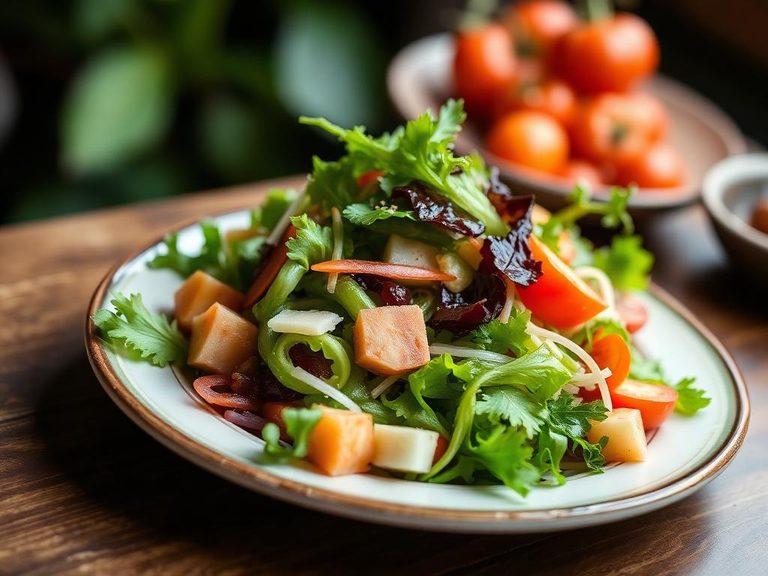
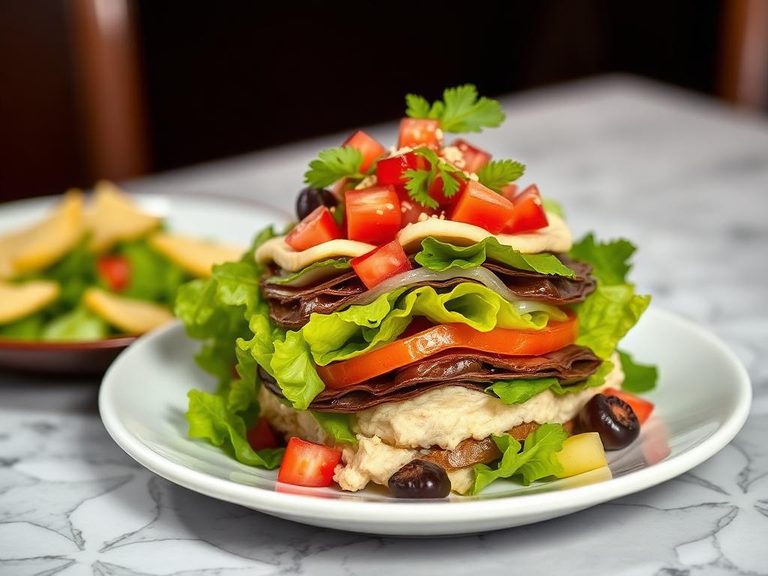

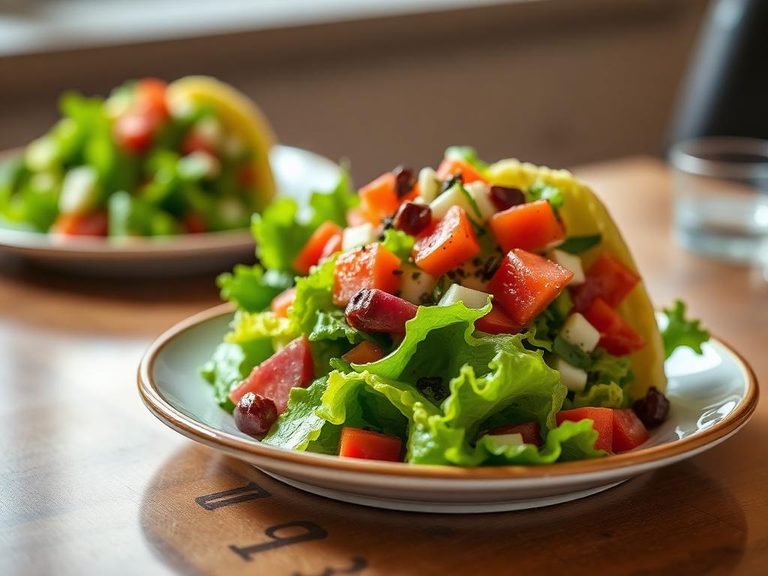
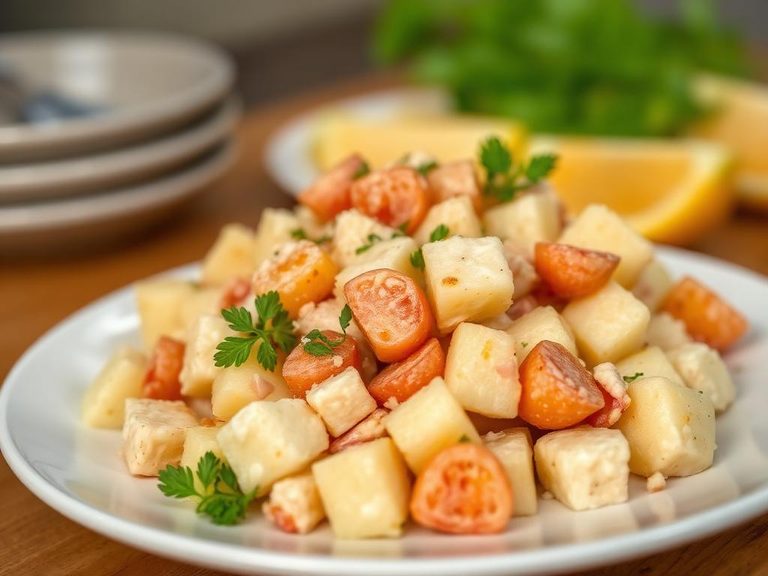

🌍 Where it's eaten
💡 Did you know?
Despite its name, French dressing is not traditionally from France; it's a distinctly American invention that gained popularity in the mid-20th century, with its iconic orange color often coming from paprika.
Full nutrition (USDA data · scales with serving)
| Water | 36.6 g |
| Energy | 459 kcal |
| Energy | 1919 kj |
| Protein | 0.77 g |
| Total lipid (fat) | 44.8 g |
| Ash | 2.3 g |
| Carbohydrate, by difference | 15.6 g |
| Fiber, total dietary | 0.00 g |
| Total Sugars | 15.9 g |
| Sucrose | 3.9 g |
| Glucose | 6.7 g |
| Fructose | 5.4 g |
| Lactose | 0.00 g |
| Maltose | 0.00 g |
| Galactose | 0.00 g |
| Starch | 0.00 g |
| Calcium, Ca | 24.0 mg |
| Iron, Fe | 0.80 mg |
| Magnesium, Mg | 5.0 mg |
| Phosphorus, P | 19.0 mg |
| Potassium, K | 67.0 mg |
| Sodium, Na | 0.00 mg |
| Zinc, Zn | 0.29 mg |
| Copper, Cu | 0.00 mg |
| Manganese, Mn | 0.02 mg |
| Selenium, Se | 0.00 ug |
| Vitamin C, total ascorbic acid | 0.00 mg |
| Thiamin | 0.02 mg |
| Riboflavin | 0.05 mg |
| Niacin | 0.19 mg |
| Pantothenic acid | 0.00 mg |
| Vitamin B-6 | 0.00 mg |
| Folate, total | 0.00 ug |
| Folic acid | 0.00 ug |
| Folate, food | 0.00 ug |
| Folate, DFE | 0.00 ug |
| Vitamin B-12 | 0.00 ug |
| Vitamin A, RAE | 23.0 ug |
| Retinol | 0.00 ug |
| Carotene, beta | 232 ug |
| Carotene, alpha | 0.00 ug |
| Cryptoxanthin, beta | 92.0 ug |
| Vitamin A, IU | 464 iu |
| Lycopene | 373 ug |
| Lutein + zeaxanthin | 0.00 ug |
| Vitamin E (alpha-tocopherol) | 4.1 mg |
| Vitamin K (phylloquinone) | 121 ug |
| Vitamin K (Dihydrophylloquinone) | 0.00 ug |
| Alcohol, ethyl | 0.00 g |
| Caffeine | 0.00 mg |
| Theobromine | 0.00 mg |
Fat & fatty acid profile (per 100g)
| Fatty acids, total saturated | 5.6 g |
| SFA 4:0 | 0.00 g |
| SFA 6:0 | 0.00 g |
| SFA 8:0 | 0.00 g |
| SFA 10:0 | 0.00 g |
| SFA 12:0 | 0.00 g |
| SFA 14:0 | 0.00 g |
| SFA 16:0 | 4.9 g |
| SFA 17:0 | 0.00 g |
| SFA 18:0 | 0.42 g |
| SFA 20:0 | 0.13 g |
| SFA 22:0 | 0.16 g |
| SFA 24:0 | 0.00 g |
| Fatty acids, total monounsaturated | 8.4 g |
| MUFA 14:1 | 0.00 g |
| MUFA 16:1 | 0.00 g |
| MUFA 18:1 | 8.3 g |
| MUFA 20:1 | 0.15 g |
| MUFA 22:1 | 0.00 g |
| Fatty acids, total polyunsaturated | 21.0 g |
| PUFA 18:2 | 18.3 g |
| PUFA 18:3 | 2.7 g |
| PUFA 18:4 | 0.00 g |
| PUFA 20:4 | 0.00 g |
| PUFA 20:5 n-3 (EPA) | 0.00 g |
| PUFA 22:5 n-3 (DPA) | 0.00 g |
| PUFA 22:6 n-3 (DHA) | 0.00 g |
| Cholesterol | 0.00 mg |
Amino acid profile (per 100g)
Estimated from Salad dressing, sesame seed dressing, regular — USDA does not publish this profile for Salad dressing.
| Tryptophan | 0.05 g |
| Threonine | 0.05 g |
| Isoleucine | 0.05 g |
| Leucine | 0.08 g |
| Lysine | 0.14 g |
| Methionine | 0.03 g |
| Cystine | 0.00 g |
| Phenylalanine | 0.09 g |
| Tyrosine | 0.10 g |
| Valine | 0.07 g |
| Arginine | 0.40 g |
| Histidine | 0.03 g |
| Alanine | 0.00 g |
| Aspartic acid | 0.00 g |
| Glutamic acid | 0.46 g |
| Glycine | 0.00 g |
| Proline | 0.00 g |
| Serine | 0.00 g |
FAQ
What is the difference between French and Catalina dressing?
They are very similar, but French dressing is typically creamier and more opaque, while Catalina is often thinner, more translucent, and has a slightly more pronounced tomato and vinegar tang.
Is this dressing gluten-free?
Most commercial brands are gluten-free, but you must always check the label for additives or thickeners that may contain wheat.
Can I use it as a marinade?
Yes, its oil and acid content make it a good base for marinades, especially for chicken or pork. However, its high sugar content means it can cause burning quickly on a grill, so use indirect heat or watch carefully.
Nutrient density (calculated · NRF9.3)
Nutrient Rich Foods index: beneficial nutrients (protein, fiber, vitamins, minerals) minus saturated fat, added sugar & sodium, per 100 kcal.
NRF9.3 index — Fulgoni, Keast & Drewnowski, 2009. Computed from USDA nutrients.
Weight-loss friendliness (composite index)
Energy density 4.59 kcal/g · 1% calories from protein · 0.0 g fiber · 15.9 g sugar per 100 g.
Composite of energy density (Rolls et al., 1999), protein & fiber satiety, minus sugar. A calculated heuristic — ranks satiety-per-calorie, not a clinical measure.
Dietary load (calculated from USDA values)
Potential renal acid load. Positive = acid-forming, negative = alkaline-forming.
Sodium-to-potassium ratio: 0.00 (lower is better — aim for ≤ 1)
Sodium:potassium per WHO potassium guidance. Computed from USDA nutrients.