

Pork, cured, salt pork, raw
Whole food · Pork Products

Photo: Wikipedia
Salt pork is raw, fatty pork belly cured with salt, giving it a dense, waxy texture and a deeply savory, salty flavor. It's a flavor powerhouse, acting as a rich, unctuous base for cooking rather than a standalone protein. Nutritionally, it's almost pure fat, delivering a massive calorie load with minimal protein.
Calorie split: 3% protein · 0% carbs · 97% fat
↓ Full nutrition💚 Why it's loved
People love salt pork for its unparalleled ability to render into a flavorful cooking fat and infuse dishes with a deep, salty savoriness. It's a cornerstone of rustic, comfort-food traditions, valued for transforming simple ingredients.
⚠️ Watch-outs & how to enjoy it better
Its extremely high sodium and saturated fat content make it unsuitable for frequent consumption, especially for those monitoring blood pressure or heart health. To mitigate, use it sparingly as a flavoring agent, not a main ingredient, and balance it with large portions of unsalted vegetables, legumes, or whole grains.
Key benefits
- Exceptionally high in energy (calories) for a small volume.
- Provides essential fatty acids and fat-soluble vitamins like D.
- Acts as a primary flavoring and cooking fat in many traditional dishes.
- Long shelf life when properly stored due to the curing salt.
🍽️ Popular dishes
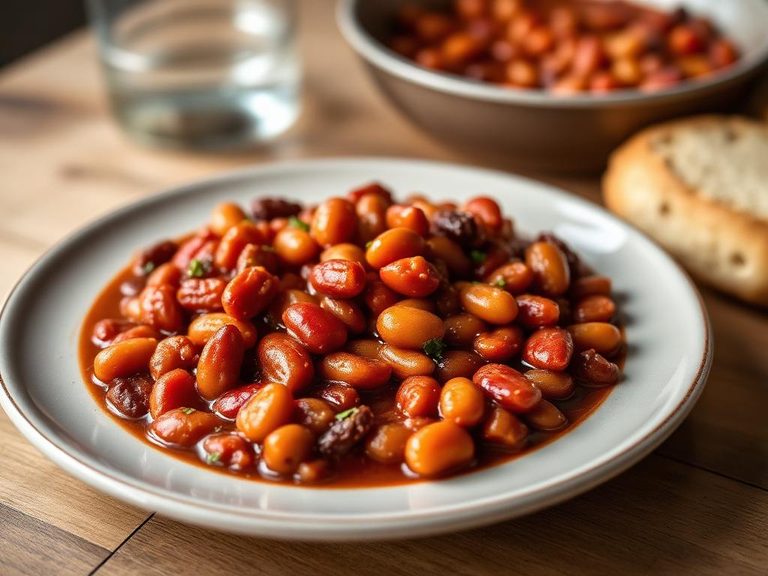
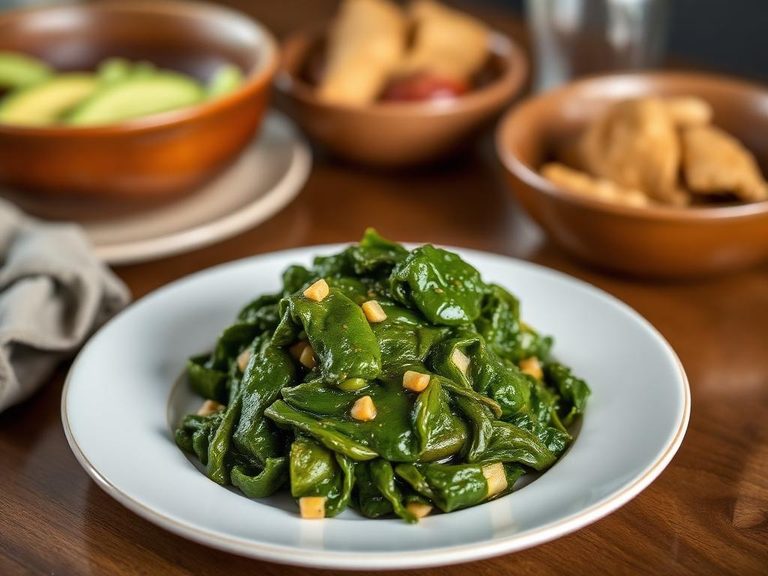

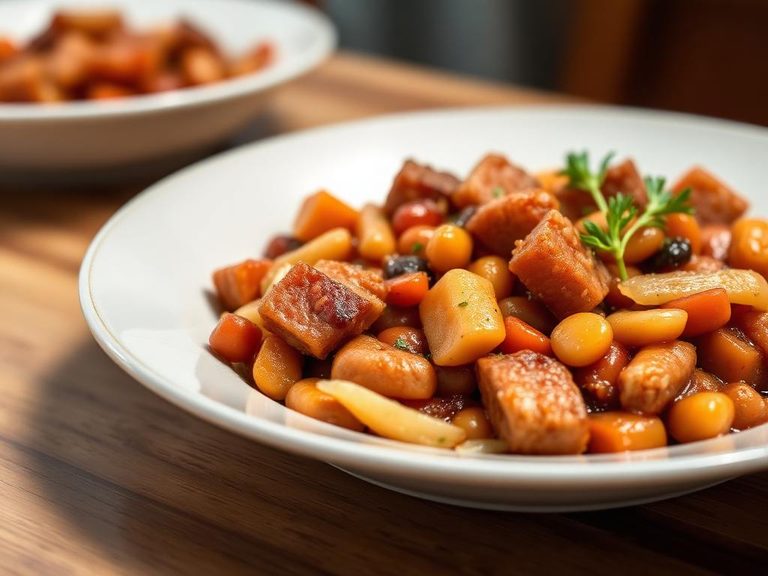
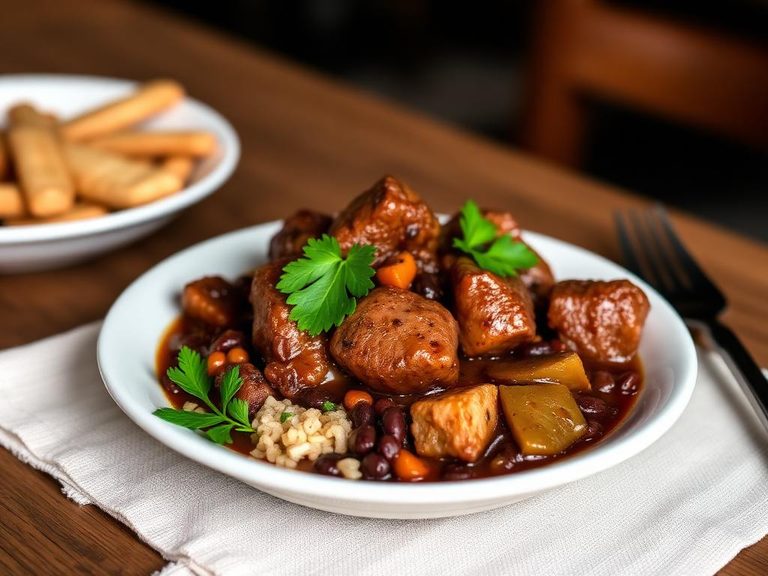
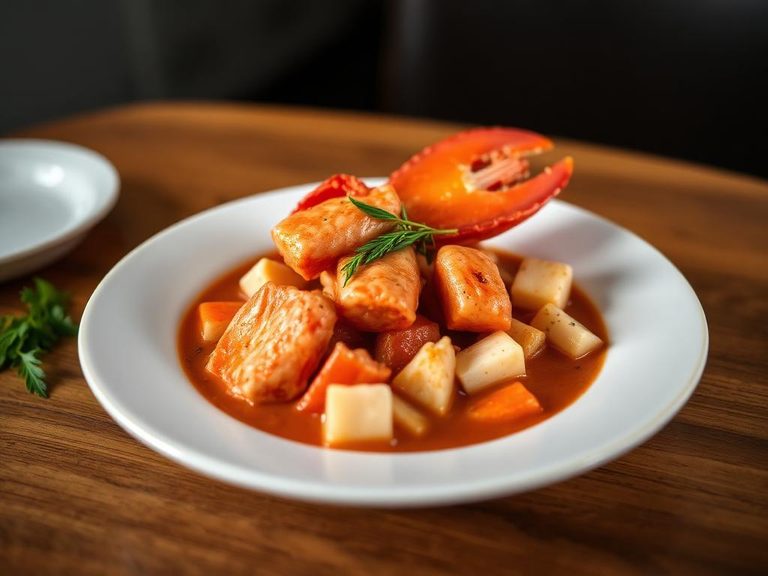
🌍 Where it's eaten
💡 Did you know?
Historically, salt pork was a crucial provision for sailors on long voyages and a staple currency in trade, its value sometimes rivaling that of rum.
Full nutrition (USDA data · scales with serving)
| Water | 11.0 g |
| Energy | 748 kcal |
| Energy | 3130 kj |
| Protein | 5.0 g |
| Total lipid (fat) | 80.5 g |
| Ash | 3.6 g |
| Carbohydrate, by difference | 0.00 g |
| Fiber, total dietary | 0.00 g |
| Total Sugars | 0.00 g |
| Calcium, Ca | 6.0 mg |
| Iron, Fe | 0.44 mg |
| Magnesium, Mg | 7.0 mg |
| Phosphorus, P | 52.0 mg |
| Potassium, K | 66.0 mg |
| Sodium, Na | 2684 mg |
| Zinc, Zn | 0.90 mg |
| Copper, Cu | 0.05 mg |
| Manganese, Mn | 0.01 mg |
| Selenium, Se | 5.8 ug |
| Vitamin C, total ascorbic acid | 0.00 mg |
| Thiamin | 0.21 mg |
| Riboflavin | 0.06 mg |
| Niacin | 1.6 mg |
| Pantothenic acid | 0.20 mg |
| Vitamin B-6 | 0.08 mg |
| Folate, total | 1.0 ug |
| Folic acid | 0.00 ug |
| Folate, food | 1.0 ug |
| Folate, DFE | 1.0 ug |
| Choline, total | 19.3 mg |
| Betaine | 1.3 mg |
| Vitamin B-12 | 0.29 ug |
| Vitamin B-12, added | 0.00 ug |
| Vitamin A, RAE | 0.00 ug |
| Retinol | 0.00 ug |
| Carotene, beta | 0.00 ug |
| Carotene, alpha | 0.00 ug |
| Cryptoxanthin, beta | 0.00 ug |
| Vitamin A, IU | 0.00 iu |
| Lycopene | 0.00 ug |
| Lutein + zeaxanthin | 0.00 ug |
| Vitamin E (alpha-tocopherol) | 0.00 mg |
| Vitamin E, added | 0.00 mg |
| Vitamin D (D2 + D3), International Units | 9.0 iu |
| Vitamin D (D2 + D3) | 0.20 ug |
| Vitamin D3 (cholecalciferol) | 0.20 ug |
| Vitamin K (phylloquinone) | 0.00 ug |
| Vitamin K (Dihydrophylloquinone) | 0.00 ug |
| Alcohol, ethyl | 0.00 g |
| Caffeine | 0.00 mg |
| Theobromine | 0.00 mg |
Fat & fatty acid profile (per 100g)
| Fatty acids, total saturated | 29.4 g |
| SFA 4:0 | 0.00 g |
| SFA 6:0 | 0.00 g |
| SFA 8:0 | 0.00 g |
| SFA 10:0 | 0.00 g |
| SFA 12:0 | 0.16 g |
| SFA 14:0 | 1.1 g |
| SFA 16:0 | 17.7 g |
| SFA 18:0 | 10.3 g |
| Fatty acids, total monounsaturated | 37.9 g |
| MUFA 16:1 | 2.5 g |
| MUFA 18:1 | 34.9 g |
| MUFA 20:1 | 0.00 g |
| MUFA 22:1 | 0.00 g |
| Fatty acids, total polyunsaturated | 9.4 g |
| PUFA 18:2 | 8.6 g |
| PUFA 18:3 | 0.65 g |
| PUFA 18:4 | 0.00 g |
| PUFA 20:4 | 0.08 g |
| PUFA 20:5 n-3 (EPA) | 0.00 g |
| PUFA 22:5 n-3 (DPA) | 0.00 g |
| PUFA 22:6 n-3 (DHA) | 0.00 g |
| Cholesterol | 86.0 mg |
| Phytosterols | 0.00 mg |
Amino acid profile (per 100g)
| Tryptophan | 0.02 g |
| Threonine | 0.17 g |
| Isoleucine | 0.13 g |
| Leucine | 0.35 g |
| Lysine | 0.42 g |
| Methionine | 0.07 g |
| Cystine | 0.04 g |
| Phenylalanine | 0.19 g |
| Tyrosine | 0.08 g |
| Valine | 0.24 g |
| Arginine | 0.52 g |
| Histidine | 0.06 g |
| Alanine | 0.28 g |
| Aspartic acid | 0.42 g |
| Glutamic acid | 0.69 g |
| Glycine | 0.36 g |
| Proline | 0.27 g |
| Serine | 0.19 g |
FAQ
What's the difference between salt pork and bacon?
Salt pork is cured with salt but is raw and unsmoked, with a higher fat-to-meat ratio. Bacon is cured, often smoked, and typically sliced thinner for direct frying.
Do I need to rinse salt pork before cooking?
Yes, it's standard practice to rinse or soak salt pork in cold water for a few hours to remove excess surface salt and reduce the overall sodium in your dish.
How should I store it?
Keep it tightly wrapped in the coldest part of the refrigerator for up to a week, or freeze it for several months. Its high salt content helps preservation, but it is still raw meat.
Nutrient density (calculated · NRF9.3)
Nutrient Rich Foods index: beneficial nutrients (protein, fiber, vitamins, minerals) minus saturated fat, added sugar & sodium, per 100 kcal.
NRF9.3 index — Fulgoni, Keast & Drewnowski, 2009. Computed from USDA nutrients.
Weight-loss friendliness (composite index)
Energy density 7.48 kcal/g · 3% calories from protein · 0.0 g fiber · 0.0 g sugar per 100 g.
Composite of energy density (Rolls et al., 1999), protein & fiber satiety, minus sugar. A calculated heuristic — ranks satiety-per-calorie, not a clinical measure.
Dietary load (calculated from USDA values)
Potential renal acid load. Positive = acid-forming, negative = alkaline-forming.
Sodium-to-potassium ratio: 40.67 (lower is better — aim for ≤ 1)
Sodium:potassium per WHO potassium guidance. Computed from USDA nutrients.