

Peas, edible-podded, frozen, cooked, boiled, drained, without salt
Whole food · Vegetables and Vegetable Products
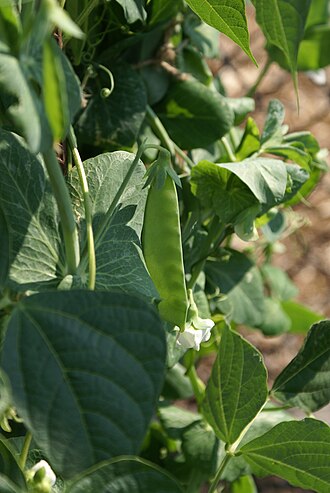
Photo: Wikipedia
These are tender, whole snow peas or sugar snap peas, flash-frozen at peak freshness and boiled until just tender-crisp. They offer a bright, sweet, and grassy flavor with a satisfying snap, and are a low-calorie, high-fiber vegetable packed with vitamin C and plant-based protein.
Calorie split: 26% protein · 67% carbs · 6% fat
↓ Full nutrition💚 Why it's loved
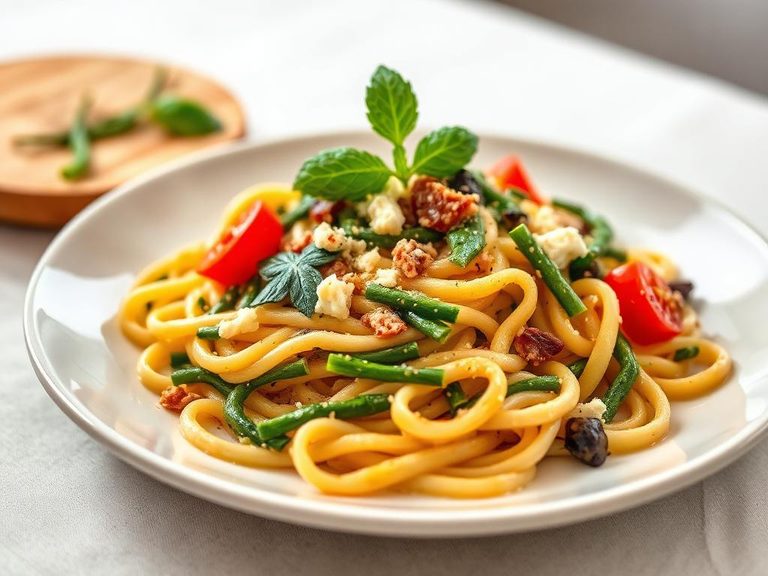
People love them for their vibrant green color, sweet flavor, and versatile crunch that holds up beautifully in stir-fries, pastas, and salads. They are a beloved staple in many cuisines for adding quick, nutritious bulk and a fresh, garden-like taste.
⚠️ Watch-outs & how to enjoy it better
While nutritious, some individuals may experience digestive discomfort like bloating due to their high fiber and oligosaccharide content. To ease digestion, ensure they are cooked thoroughly and introduce them into your diet gradually. Their natural sugars can also cause a modest blood sugar rise; pairing them with a protein (like chicken or tofu) or healthy fat (like sesame oil) can help moderate this effect.
Key benefits
- Excellent source of vitamin C, supporting immune function.
- High in dietary fiber, promoting digestive health.
- Good plant-based protein source for a vegetable.
- Low in calories and fat, suitable for weight management.
- Contains antioxidants like lutein and zeaxanthin for eye health.
🍽️ Popular dishes



🌍 Where it's eaten
💡 Did you know?
Edible-podded peas, like snow peas, are unique because we eat the entire pod and the tiny, undeveloped peas inside, unlike shelling peas where only the seeds are consumed.
Full nutrition (USDA data · scales with serving)
| Water | 86.6 g |
| Energy | 52.0 kcal |
| Energy | 218 kj |
| Protein | 3.5 g |
| Total lipid (fat) | 0.38 g |
| Ash | 0.50 g |
| Carbohydrate, by difference | 9.0 g |
| Fiber, total dietary | 3.1 g |
| Total Sugars | 4.8 g |
| Calcium, Ca | 59.0 mg |
| Iron, Fe | 2.4 mg |
| Magnesium, Mg | 28.0 mg |
| Phosphorus, P | 58.0 mg |
| Potassium, K | 217 mg |
| Sodium, Na | 5.0 mg |
| Zinc, Zn | 0.49 mg |
| Copper, Cu | 0.09 mg |
| Manganese, Mn | 0.28 mg |
| Selenium, Se | 0.80 ug |
| Vitamin C, total ascorbic acid | 22.0 mg |
| Thiamin | 0.06 mg |
| Riboflavin | 0.12 mg |
| Niacin | 0.56 mg |
| Pantothenic acid | 0.86 mg |
| Vitamin B-6 | 0.17 mg |
| Folate, total | 35.0 ug |
| Folic acid | 0.00 ug |
| Folate, food | 35.0 ug |
| Folate, DFE | 35.0 ug |
| Choline, total | 21.0 mg |
| Vitamin B-12 | 0.00 ug |
| Vitamin B-12, added | 0.00 ug |
| Vitamin A, RAE | 66.0 ug |
| Retinol | 0.00 ug |
| Carotene, beta | 760 ug |
| Carotene, alpha | 53.0 ug |
| Cryptoxanthin, beta | 0.00 ug |
| Vitamin A, IU | 1311 iu |
| Lycopene | 0.00 ug |
| Lutein + zeaxanthin | 893 ug |
| Vitamin E (alpha-tocopherol) | 0.47 mg |
| Vitamin E, added | 0.00 mg |
| Vitamin D (D2 + D3), International Units | 0.00 iu |
| Vitamin D (D2 + D3) | 0.00 ug |
| Vitamin K (phylloquinone) | 30.2 ug |
| Alcohol, ethyl | 0.00 g |
| Caffeine | 0.00 mg |
| Theobromine | 0.00 mg |
Fat & fatty acid profile (per 100g)
| Fatty acids, total saturated | 0.07 g |
| SFA 4:0 | 0.00 g |
| SFA 6:0 | 0.00 g |
| SFA 8:0 | 0.00 g |
| SFA 10:0 | 0.00 g |
| SFA 12:0 | 0.00 g |
| SFA 14:0 | 0.00 g |
| SFA 16:0 | 0.06 g |
| SFA 18:0 | 0.01 g |
| Fatty acids, total monounsaturated | 0.04 g |
| MUFA 16:1 | 0.00 g |
| MUFA 18:1 | 0.04 g |
| MUFA 20:1 | 0.00 g |
| MUFA 22:1 | 0.00 g |
| Fatty acids, total polyunsaturated | 0.17 g |
| PUFA 18:2 | 0.14 g |
| PUFA 18:3 | 0.03 g |
| PUFA 18:4 | 0.00 g |
| PUFA 20:4 | 0.00 g |
| PUFA 20:5 n-3 (EPA) | 0.00 g |
| PUFA 22:5 n-3 (DPA) | 0.00 g |
| PUFA 22:6 n-3 (DHA) | 0.00 g |
| Fatty acids, total trans | 0.00 g |
| Cholesterol | 0.00 mg |
Amino acid profile (per 100g)
| Tryptophan | 0.03 g |
| Threonine | 0.12 g |
| Isoleucine | 0.20 g |
| Leucine | 0.29 g |
| Lysine | 0.25 g |
| Methionine | 0.01 g |
| Cystine | 0.04 g |
| Phenylalanine | 0.11 g |
| Tyrosine | 0.12 g |
| Valine | 0.34 g |
| Arginine | 0.17 g |
| Histidine | 0.02 g |
| Alanine | 0.07 g |
| Aspartic acid | 0.29 g |
| Glutamic acid | 0.56 g |
| Glycine | 0.09 g |
| Proline | 0.08 g |
| Serine | 0.16 g |
FAQ
What's the difference between snow peas and sugar snap peas?
Snow peas are flatter with very small, immature peas inside, while sugar snap peas are plumper and rounder with more developed peas. Both have edible pods, but snow peas are often preferred for stir-fries, and sugar snaps for snacking.
How do I keep them from getting mushy when cooking?
Use a quick cooking method like blanching, steaming, or stir-frying over high heat. Cook just until they turn bright green and are tender-crisp, then immediately shock them in ice water to stop the cooking process if not serving right away.
Are frozen peas as nutritious as fresh?
Yes, often more so. Frozen peas are typically blanched and frozen within hours of harvest, which locks in nutrients like vitamin C that can degrade in fresh peas during transport and storage.
Nutrient density (calculated · NRF9.3)
Nutrient Rich Foods index: beneficial nutrients (protein, fiber, vitamins, minerals) minus saturated fat, added sugar & sodium, per 100 kcal.
NRF9.3 index — Fulgoni, Keast & Drewnowski, 2009. Computed from USDA nutrients.
Weight-loss friendliness (composite index)
Energy density 0.52 kcal/g · 27% calories from protein · 3.1 g fiber · 4.8 g sugar per 100 g.
Composite of energy density (Rolls et al., 1999), protein & fiber satiety, minus sugar. A calculated heuristic — ranks satiety-per-calorie, not a clinical measure.
Dietary load (calculated from USDA values)
Potential renal acid load. Positive = acid-forming, negative = alkaline-forming.
Sodium-to-potassium ratio: 0.02 (lower is better — aim for ≤ 1)
Sodium:potassium per WHO potassium guidance. Computed from USDA nutrients.