

Pears, canned, light syrup pack, solids and liquids
Whole food · Fruits and Fruit Juices

Photo: Wikipedia
Pears canned in light syrup are tender, golden-hued fruit segments suspended in a subtly sweet, clear liquid. They offer a soft, melt-in-the-mouth texture with a gentle, familiar pear flavor that's less intense than fresh fruit. Nutritionally, they are a low-calorie, fat-free source of quick energy and some dietary fiber, though the syrup adds about 12 grams of sugar per 100g.
Calorie split: 1% protein · 98% carbs · 0% fat
↓ Full nutrition💚 Why it's loved
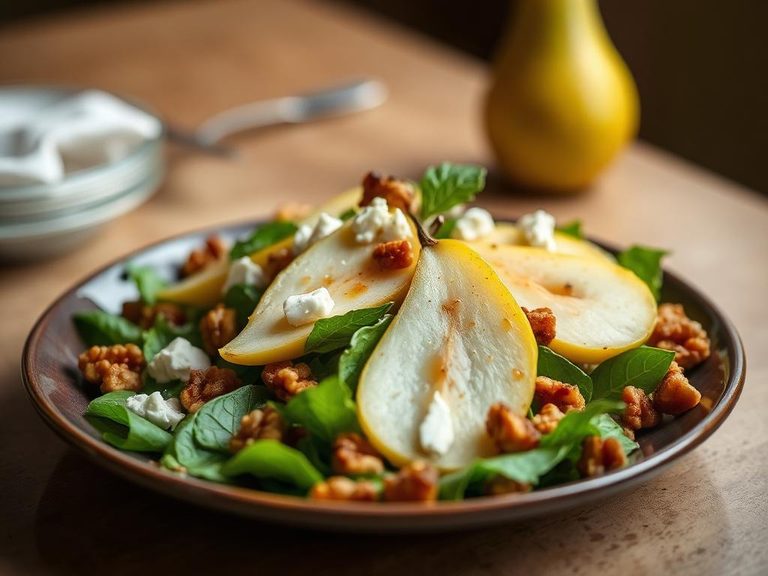
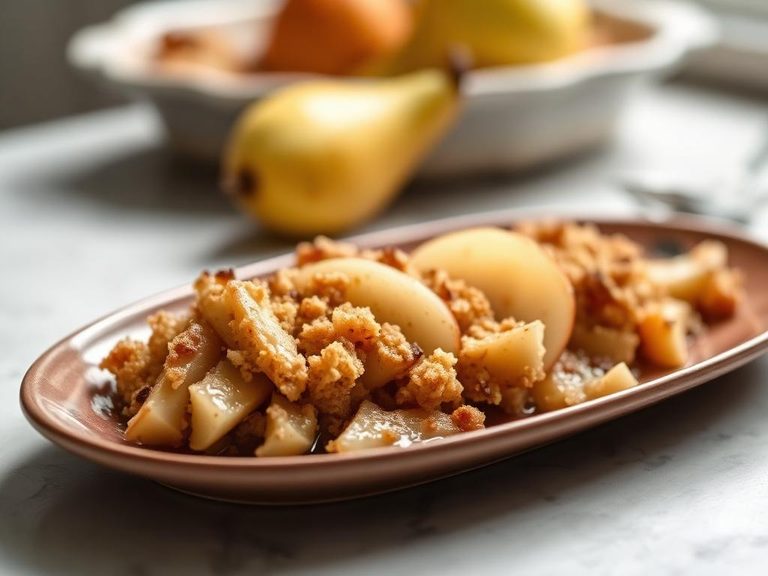
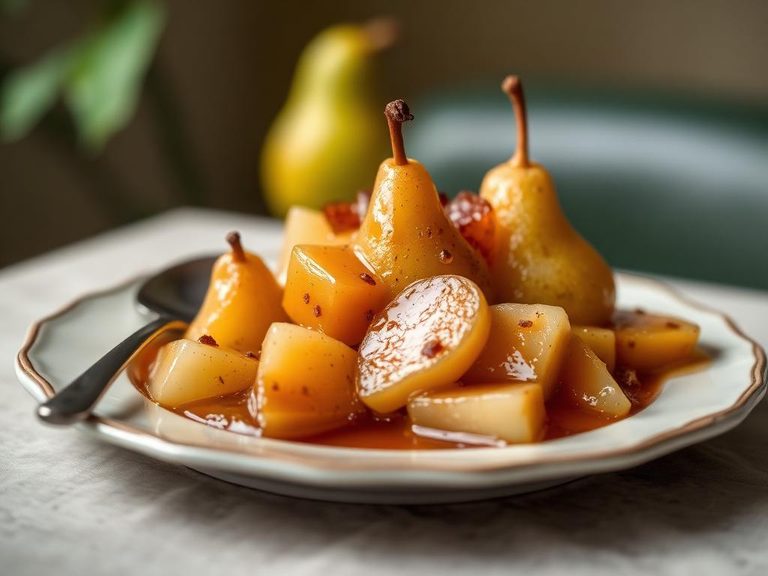
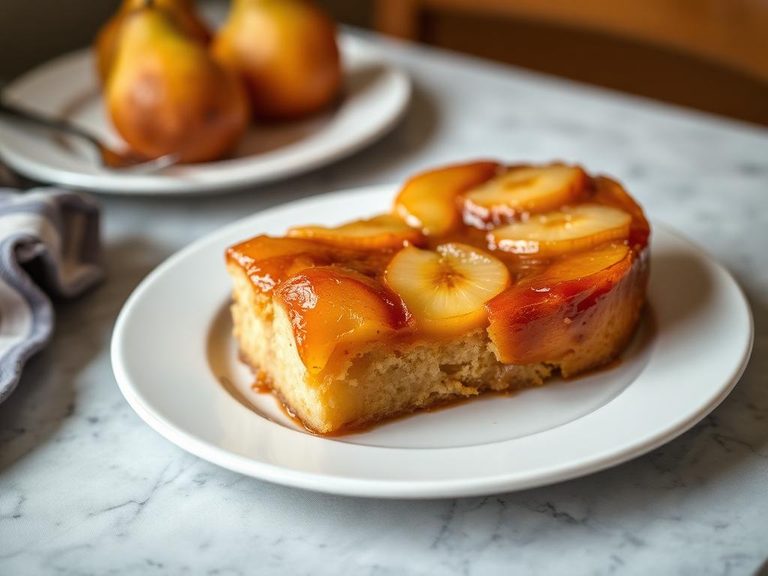
People love canned pears for their consistent, soft texture and sweet, comforting flavor that works perfectly in both desserts and salads. Their long shelf life and convenience make them a staple pantry item for quick snacks, breakfasts, and classic recipes like fruit cocktail or pear pie.
⚠️ Watch-outs & how to enjoy it better
The light syrup adds about 12g of sugar per 100g, which can cause blood-sugar spikes, especially for those with diabetes or insulin resistance. To mitigate this, opt for pears packed in water or 100% juice, or rinse them thoroughly to remove excess syrup. Pairing with a source of protein or healthy fat (like yogurt or nuts) can also help slow sugar absorption.
Key benefits
- Low in calories (57 kcal per 100g) and virtually fat-free
- Provides a quick source of energy from carbohydrates
- Contains dietary fiber (1.6g per 100g) for digestive support
- Convenient, shelf-stable, and ready to eat
- Can be a palatable way to increase fruit intake for those with chewing difficulties
🍽️ Popular dishes

🌍 Where it's eaten
💡 Did you know?
Canned pears are one of the most easily digestible canned fruits, making them a common first food for infants and a recommended food for people recovering from illness or surgery.
Full nutrition (USDA data · scales with serving)
| Water | 84.5 g |
| Energy | 57.0 kcal |
| Energy | 238 kj |
| Protein | 0.19 g |
| Total lipid (fat) | 0.03 g |
| Ash | 0.14 g |
| Carbohydrate, by difference | 15.2 g |
| Fiber, total dietary | 1.6 g |
| Total Sugars | 12.1 g |
| Sucrose | 1.1 g |
| Glucose | 4.8 g |
| Fructose | 5.1 g |
| Maltose | 1.1 g |
| Calcium, Ca | 5.0 mg |
| Iron, Fe | 0.28 mg |
| Magnesium, Mg | 4.0 mg |
| Phosphorus, P | 7.0 mg |
| Potassium, K | 66.0 mg |
| Sodium, Na | 5.0 mg |
| Zinc, Zn | 0.08 mg |
| Copper, Cu | 0.05 mg |
| Manganese, Mn | 0.03 mg |
| Selenium, Se | 0.00 ug |
| Vitamin C, total ascorbic acid | 0.70 mg |
| Thiamin | 0.01 mg |
| Riboflavin | 0.02 mg |
| Niacin | 0.15 mg |
| Pantothenic acid | 0.02 mg |
| Vitamin B-6 | 0.01 mg |
| Folate, total | 1.0 ug |
| Folic acid | 0.00 ug |
| Folate, food | 1.0 ug |
| Folate, DFE | 1.0 ug |
| Choline, total | 3.4 mg |
| Vitamin B-12 | 0.00 ug |
| Vitamin B-12, added | 0.00 ug |
| Vitamin A, RAE | 0.00 ug |
| Retinol | 0.00 ug |
| Carotene, beta | 0.00 ug |
| Carotene, alpha | 0.00 ug |
| Cryptoxanthin, beta | 0.00 ug |
| Vitamin A, IU | 0.00 iu |
| Lycopene | 0.00 ug |
| Lutein + zeaxanthin | 34.0 ug |
| Vitamin E (alpha-tocopherol) | 0.08 mg |
| Vitamin E, added | 0.00 mg |
| Vitamin D (D2 + D3), International Units | 0.00 iu |
| Vitamin D (D2 + D3) | 0.00 ug |
| Vitamin K (phylloquinone) | 0.30 ug |
| Alcohol, ethyl | 0.00 g |
| Caffeine | 0.00 mg |
| Theobromine | 0.00 mg |
Fat & fatty acid profile (per 100g)
| Fatty acids, total saturated | 0.00 g |
| SFA 4:0 | 0.00 g |
| SFA 6:0 | 0.00 g |
| SFA 8:0 | 0.00 g |
| SFA 10:0 | 0.00 g |
| SFA 12:0 | 0.00 g |
| SFA 14:0 | 0.00 g |
| SFA 16:0 | 0.00 g |
| SFA 18:0 | 0.00 g |
| Fatty acids, total monounsaturated | 0.01 g |
| MUFA 16:1 | 0.00 g |
| MUFA 18:1 | 0.01 g |
| MUFA 20:1 | 0.00 g |
| MUFA 22:1 | 0.00 g |
| Fatty acids, total polyunsaturated | 0.01 g |
| PUFA 18:2 | 0.01 g |
| PUFA 18:3 | 0.00 g |
| PUFA 18:4 | 0.00 g |
| PUFA 20:4 | 0.00 g |
| PUFA 20:5 n-3 (EPA) | 0.00 g |
| PUFA 22:5 n-3 (DPA) | 0.00 g |
| PUFA 22:6 n-3 (DHA) | 0.00 g |
| Fatty acids, total trans | 0.00 g |
| Cholesterol | 0.00 mg |
Amino acid profile (per 100g)
| Threonine | 0.01 g |
| Isoleucine | 0.01 g |
| Leucine | 0.01 g |
| Lysine | 0.01 g |
| Methionine | 0.00 g |
| Cystine | 0.00 g |
| Phenylalanine | 0.01 g |
| Tyrosine | 0.00 g |
| Valine | 0.01 g |
| Arginine | 0.00 g |
| Histidine | 0.00 g |
| Alanine | 0.01 g |
| Aspartic acid | 0.04 g |
| Glutamic acid | 0.01 g |
| Glycine | 0.01 g |
| Proline | 0.01 g |
| Serine | 0.01 g |
FAQ
Are canned pears as nutritious as fresh pears?
Canned pears retain most of the vitamins and minerals of fresh pears, but the syrup adds extra sugar and calories. Pears in water or juice are nutritionally closer to fresh. The canning process can slightly reduce heat-sensitive nutrients like vitamin C.
How can I reduce the sugar in canned pears?
You can rinse the pear slices under cold water to remove some surface syrup. Alternatively, look for cans labeled 'in water,' 'in 100% juice,' or 'no sugar added.' You can also dilute the syrup with water or use the syrup in recipes where less sweetness is desired.
Can I use canned pears in baking?
Yes, canned pears are excellent in baking. They are already soft and sweet, making them ideal for pies, crisps, cobblers, and quick breads. Be sure to drain them well to avoid adding excess liquid to your batter or filling.
Nutrient density (calculated · NRF9.3)
Nutrient Rich Foods index: beneficial nutrients (protein, fiber, vitamins, minerals) minus saturated fat, added sugar & sodium, per 100 kcal.
NRF9.3 index — Fulgoni, Keast & Drewnowski, 2009. Computed from USDA nutrients.
Weight-loss friendliness (composite index)
Energy density 0.57 kcal/g · 1% calories from protein · 1.6 g fiber · 12.1 g sugar per 100 g.
Composite of energy density (Rolls et al., 1999), protein & fiber satiety, minus sugar. A calculated heuristic — ranks satiety-per-calorie, not a clinical measure.
Dietary load (calculated from USDA values)
Potential renal acid load. Positive = acid-forming, negative = alkaline-forming.
Sodium-to-potassium ratio: 0.08 (lower is better — aim for ≤ 1)
Sodium:potassium per WHO potassium guidance. Computed from USDA nutrients.