

Onions, frozen, whole, unprepared
Whole food · Vegetables and Vegetable Products

Photo: Wikipedia
These are whole, raw onions that have been peeled and flash-frozen, locking in their pungent, sulfurous aroma and crisp texture before cooking. When thawed and cooked, they soften into a sweet, translucent, and savory base, losing their raw bite but retaining a deep, foundational flavor. Nutritionally, they are a low-calorie, high-fiber ingredient, providing a notable dose of vitamin C and antioxidants like quercetin.
Calorie split: 9% protein · 89% carbs · 1% fat
↓ Full nutrition💚 Why it's loved
People love them for delivering the essential, savory-sweet backbone of countless dishes without the tears and prep work of fresh onions. Their frozen state makes them a perfect, always-available staple for building flavor in soups, stews, and sautés.
⚠️ Watch-outs & how to enjoy it better
Their high fermentable carbohydrate (FODMAP) content can trigger digestive discomfort like bloating in sensitive individuals, and cooking concentrates their natural sugars, which may affect blood sugar. To counteract, use smaller portions, cook them thoroughly to break down fibers, and pair with protein or healthy fats to slow sugar absorption.
Key benefits
- Low-calorie base for adding flavor without fat
- Good source of dietary fiber for digestive health
- Contains quercetin, an antioxidant linked to heart health
- Provides vitamin C, important for immune function
- Convenient, pre-peeled, and reduces food waste
🍽️ Popular dishes
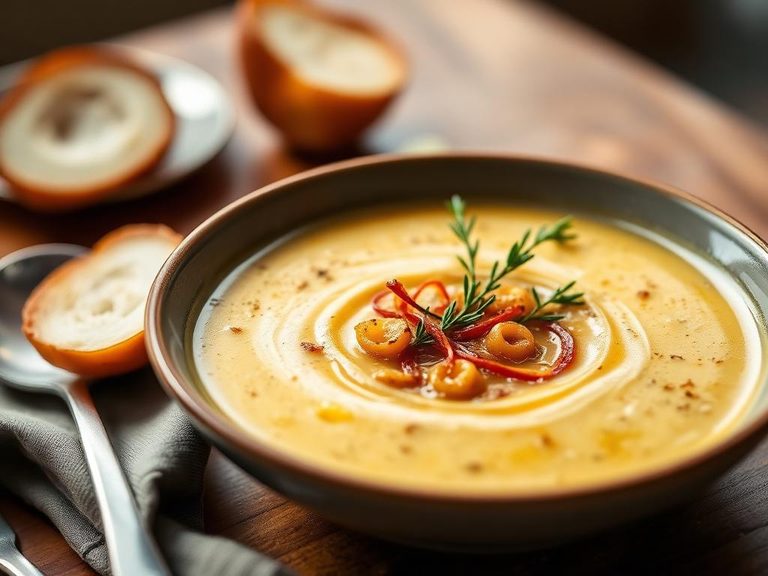
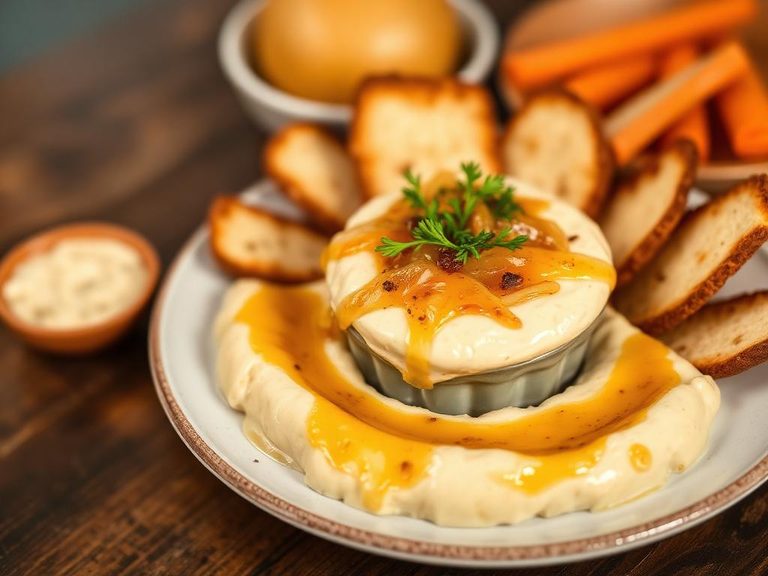
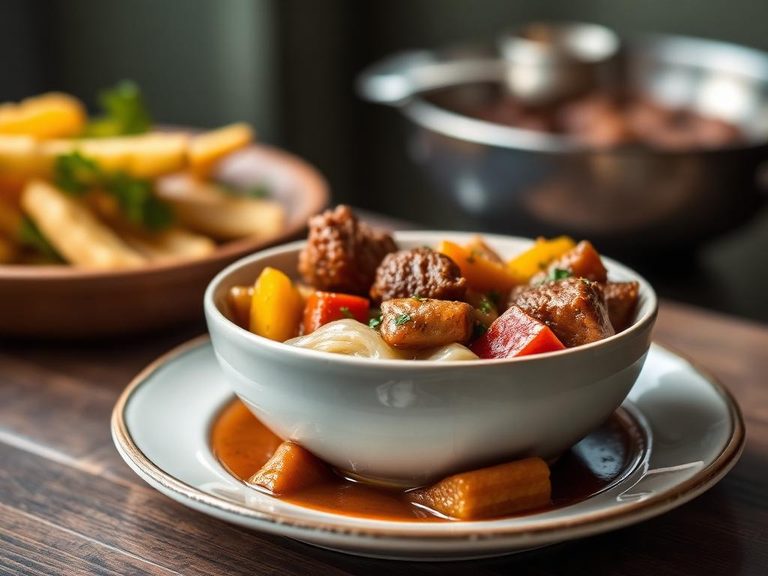
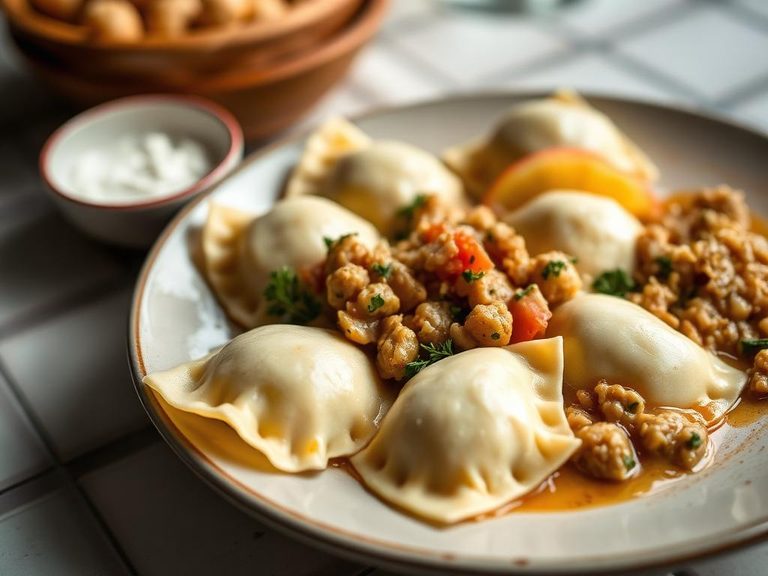
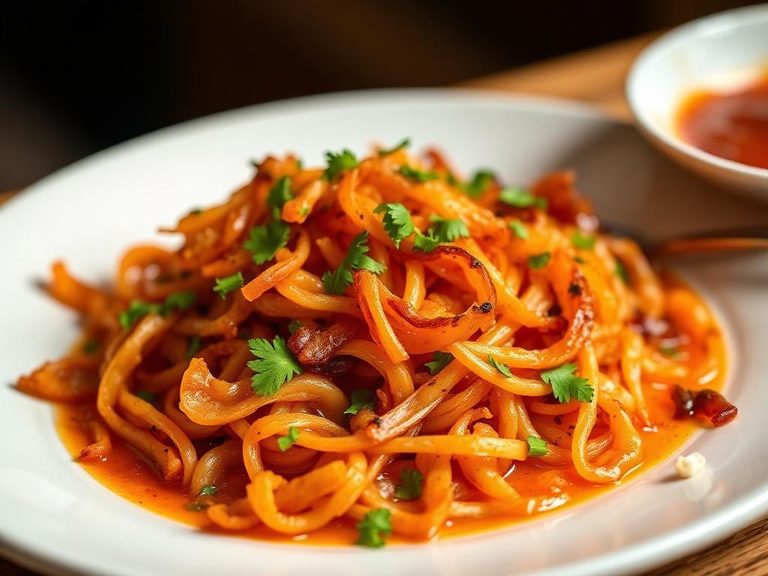
🌍 Where it's eaten
💡 Did you know?
The compounds that make you cry when cutting raw onions are only fully released when the cell walls are damaged; freezing halts this reaction, so thawing a whole frozen onion won't make you tear up.
Full nutrition (USDA data · scales with serving)
| Water | 90.2 g |
| Energy | 35.0 kcal |
| Energy | 148 kj |
| Protein | 0.89 g |
| Total lipid (fat) | 0.06 g |
| Ash | 0.38 g |
| Carbohydrate, by difference | 8.4 g |
| Fiber, total dietary | 1.7 g |
| Total Sugars | 3.8 g |
| Calcium, Ca | 36.0 mg |
| Iron, Fe | 0.46 mg |
| Magnesium, Mg | 10.0 mg |
| Phosphorus, P | 23.0 mg |
| Potassium, K | 142 mg |
| Sodium, Na | 10.0 mg |
| Zinc, Zn | 0.12 mg |
| Copper, Cu | 0.05 mg |
| Manganese, Mn | 0.13 mg |
| Selenium, Se | 0.40 ug |
| Vitamin C, total ascorbic acid | 8.0 mg |
| Thiamin | 0.03 mg |
| Riboflavin | 0.02 mg |
| Niacin | 0.17 mg |
| Pantothenic acid | 0.10 mg |
| Vitamin B-6 | 0.09 mg |
| Folate, total | 21.0 ug |
| Folic acid | 0.00 ug |
| Folate, food | 21.0 ug |
| Folate, DFE | 21.0 ug |
| Choline, total | 5.5 mg |
| Vitamin B-12 | 0.00 ug |
| Vitamin B-12, added | 0.00 ug |
| Vitamin A, RAE | 0.00 ug |
| Retinol | 0.00 ug |
| Carotene, beta | 1.0 ug |
| Carotene, alpha | 0.00 ug |
| Cryptoxanthin, beta | 0.00 ug |
| Vitamin A, IU | 2.0 iu |
| Lycopene | 0.00 ug |
| Lutein + zeaxanthin | 4.0 ug |
| Vitamin E (alpha-tocopherol) | 0.02 mg |
| Vitamin E, added | 0.00 mg |
| Vitamin D (D2 + D3), International Units | 0.00 iu |
| Vitamin D (D2 + D3) | 0.00 ug |
| Vitamin K (phylloquinone) | 0.40 ug |
| Alcohol, ethyl | 0.00 g |
| Caffeine | 0.00 mg |
| Theobromine | 0.00 mg |
Fat & fatty acid profile (per 100g)
| Fatty acids, total saturated | 0.01 g |
| SFA 4:0 | 0.00 g |
| SFA 6:0 | 0.00 g |
| SFA 8:0 | 0.00 g |
| SFA 10:0 | 0.00 g |
| SFA 12:0 | 0.00 g |
| SFA 14:0 | 0.00 g |
| SFA 16:0 | 0.01 g |
| SFA 18:0 | 0.00 g |
| Fatty acids, total monounsaturated | 0.01 g |
| MUFA 16:1 | 0.00 g |
| MUFA 18:1 | 0.01 g |
| MUFA 20:1 | 0.00 g |
| MUFA 22:1 | 0.00 g |
| Fatty acids, total polyunsaturated | 0.03 g |
| PUFA 18:2 | 0.02 g |
| PUFA 18:3 | 0.00 g |
| PUFA 18:4 | 0.00 g |
| PUFA 20:4 | 0.00 g |
| PUFA 20:5 n-3 (EPA) | 0.00 g |
| PUFA 22:5 n-3 (DPA) | 0.00 g |
| PUFA 22:6 n-3 (DHA) | 0.00 g |
| Fatty acids, total trans | 0.00 g |
| Cholesterol | 0.00 mg |
Amino acid profile (per 100g)
| Tryptophan | 0.01 g |
| Threonine | 0.02 g |
| Isoleucine | 0.03 g |
| Leucine | 0.03 g |
| Lysine | 0.04 g |
| Methionine | 0.01 g |
| Cystine | 0.02 g |
| Phenylalanine | 0.02 g |
| Tyrosine | 0.02 g |
| Valine | 0.02 g |
| Arginine | 0.12 g |
| Histidine | 0.01 g |
| Alanine | 0.03 g |
| Aspartic acid | 0.05 g |
| Glutamic acid | 0.14 g |
| Glycine | 0.04 g |
| Proline | 0.03 g |
| Serine | 0.03 g |
FAQ
Do I need to thaw frozen whole onions before cooking?
Not necessarily. For soups, stews, or sauces, you can often add them directly from frozen. For sautéing or caramelizing, thawing first (in the fridge or microwave) will help them cook more evenly and achieve better browning.
How does freezing affect the texture and flavor?
Freezing ruptures the onion's cell walls, so upon thawing, they become softer and release more liquid. They lose the crispness of a fresh raw onion but develop a deeper, sweeter flavor when cooked, making them ideal for long-cooked dishes.
Are frozen onions as nutritious as fresh?
Yes, often more so. Flash-freezing preserves nutrients at their peak. While some water-soluble vitamins like Vitamin C may degrade slightly over time, the overall nutritional profile, including fiber and minerals, remains excellent.
Nutrient density (calculated · NRF9.3)
Nutrient Rich Foods index: beneficial nutrients (protein, fiber, vitamins, minerals) minus saturated fat, added sugar & sodium, per 100 kcal.
NRF9.3 index — Fulgoni, Keast & Drewnowski, 2009. Computed from USDA nutrients.
Weight-loss friendliness (composite index)
Energy density 0.35 kcal/g · 10% calories from protein · 1.7 g fiber · 3.8 g sugar per 100 g.
Composite of energy density (Rolls et al., 1999), protein & fiber satiety, minus sugar. A calculated heuristic — ranks satiety-per-calorie, not a clinical measure.
Dietary load (calculated from USDA values)
Potential renal acid load. Positive = acid-forming, negative = alkaline-forming.
Sodium-to-potassium ratio: 0.07 (lower is better — aim for ≤ 1)
Sodium:potassium per WHO potassium guidance. Computed from USDA nutrients.