

Mollusks, squid, mixed species, raw
Whole food · Finfish and Shellfish Products

Photo: Wikipedia
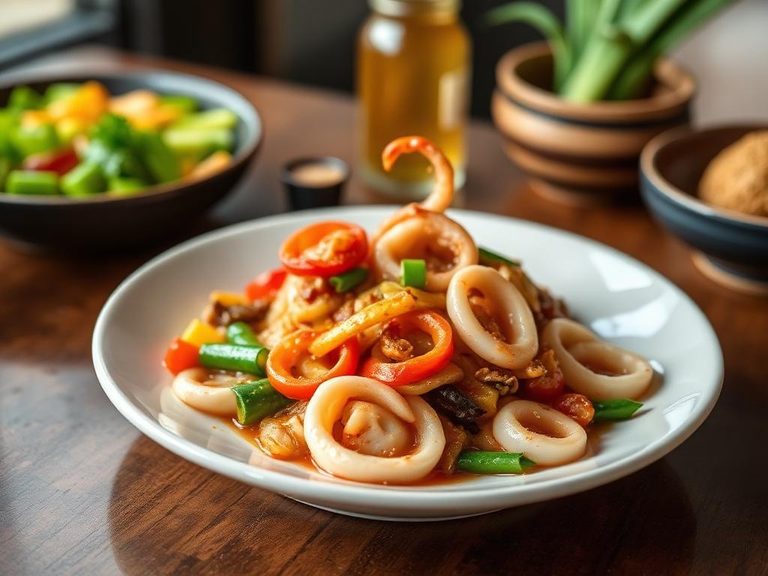
Raw squid, often called calamari or illex squid, is a lean, translucent white flesh with a mild, slightly sweet ocean flavor and a firm, crisp texture when fresh. It's a nutritional powerhouse, delivering a massive 15.58g of high-quality protein per 100g for only 92 calories, with virtually no fat or carbohydrates.
Calorie split: 72% protein · 14% carbs · 14% fat
↓ Full nutrition💚 Why it's loved
People love squid for its unique, satisfying crunch and ability to absorb flavors from marinades and sauces, making it a versatile canvas in the kitchen. Its mild sweetness and lean protein also make it a popular, lighter alternative to heavier meats.
⚠️ Watch-outs & how to enjoy it better
Squid is a common shellfish allergen, and those with allergies must avoid it entirely. When overcooked, it becomes unpleasantly tough and rubbery. To counteract this, cook it very quickly over high heat (like in a hot wok or grill) or very slowly in a braise, and avoid any cooking time in between.
Key benefits
- Exceptionally high in lean protein for muscle maintenance and satiety.
- Very low in calories, making it ideal for weight management diets.
- Rich in selenium, a powerful antioxidant that supports thyroid function.
- Good source of vitamin B12, essential for nerve health and red blood cell formation.
- Contains taurine, an amino acid linked to heart and brain health.
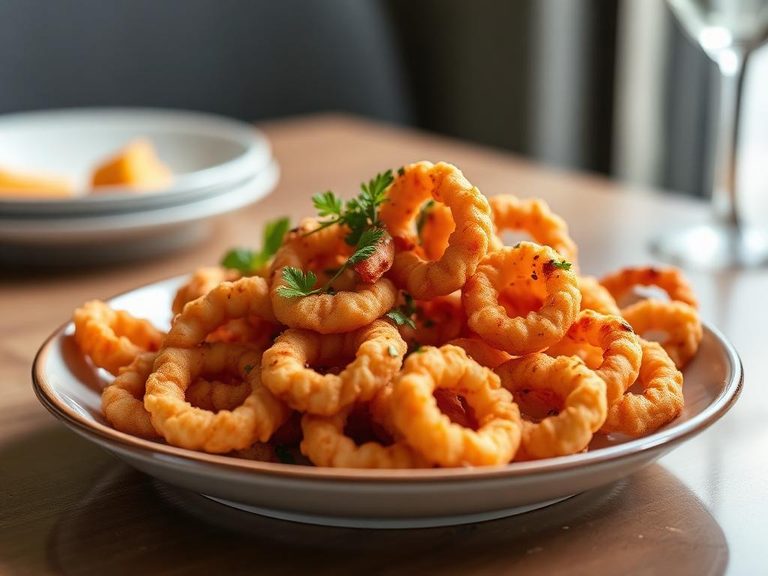
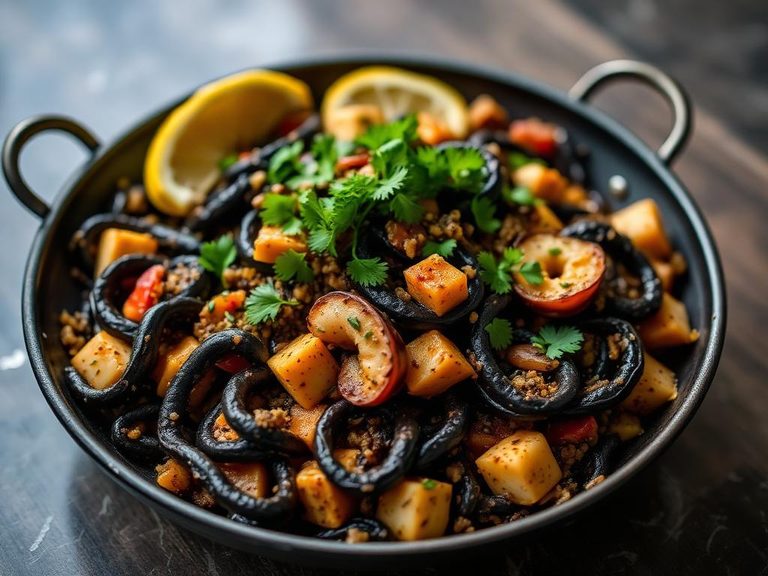
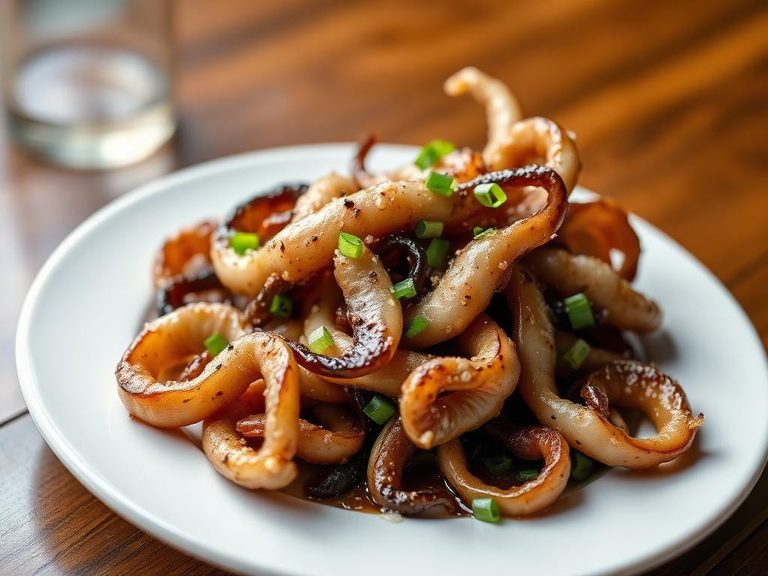
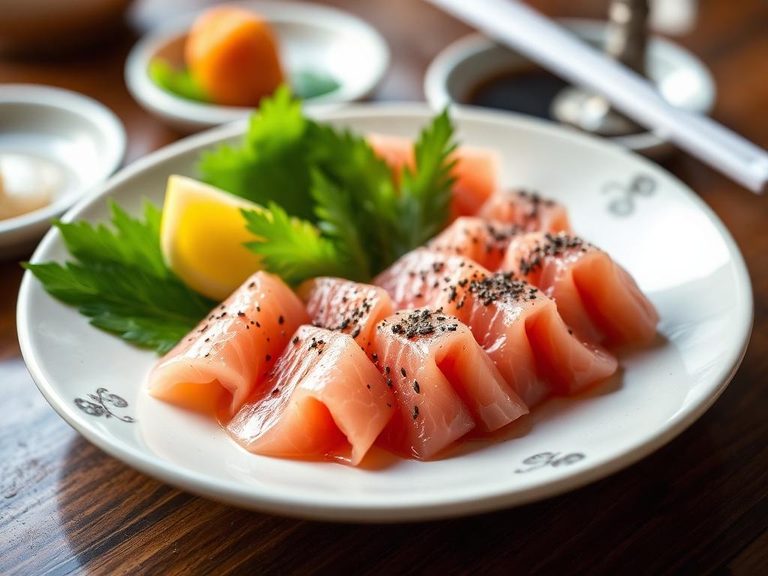
🍽️ Popular dishes
🌍 Where it's eaten
💡 Did you know?
The 'ink' from squid, a natural defense mechanism, is a prized culinary ingredient used to add a deep black color and rich, briny umami flavor to dishes like pasta, risotto, and seafood stews.
Full nutrition (USDA data · scales with serving)
| Water | 78.5 g |
| Energy | 92.0 kcal |
| Energy | 385 kj |
| Protein | 15.6 g |
| Total lipid (fat) | 1.4 g |
| Ash | 1.4 g |
| Carbohydrate, by difference | 3.1 g |
| Fiber, total dietary | 0.00 g |
| Total Sugars | 0.00 g |
| Calcium, Ca | 32.0 mg |
| Iron, Fe | 0.68 mg |
| Magnesium, Mg | 33.0 mg |
| Phosphorus, P | 221 mg |
| Potassium, K | 246 mg |
| Sodium, Na | 44.0 mg |
| Zinc, Zn | 1.5 mg |
| Copper, Cu | 1.9 mg |
| Manganese, Mn | 0.04 mg |
| Selenium, Se | 44.8 ug |
| Vitamin C, total ascorbic acid | 4.7 mg |
| Thiamin | 0.02 mg |
| Riboflavin | 0.41 mg |
| Niacin | 2.2 mg |
| Pantothenic acid | 0.50 mg |
| Vitamin B-6 | 0.06 mg |
| Folate, total | 5.0 ug |
| Folic acid | 0.00 ug |
| Folate, food | 5.0 ug |
| Folate, DFE | 5.0 ug |
| Choline, total | 65.0 mg |
| Vitamin B-12 | 1.3 ug |
| Vitamin B-12, added | 0.00 ug |
| Vitamin A, RAE | 10.0 ug |
| Retinol | 10.0 ug |
| Carotene, beta | 0.00 ug |
| Carotene, alpha | 0.00 ug |
| Cryptoxanthin, beta | 0.00 ug |
| Vitamin A, IU | 33.0 iu |
| Lycopene | 0.00 ug |
| Lutein + zeaxanthin | 0.00 ug |
| Vitamin E (alpha-tocopherol) | 1.2 mg |
| Vitamin E, added | 0.00 mg |
| Vitamin D (D2 + D3), International Units | 0.00 iu |
| Vitamin D (D2 + D3) | 0.00 ug |
| Vitamin D3 (cholecalciferol) | 0.00 ug |
| Vitamin K (phylloquinone) | 0.00 ug |
| Alcohol, ethyl | 0.00 g |
| Caffeine | 0.00 mg |
| Theobromine | 0.00 mg |
Fat & fatty acid profile (per 100g)
| Fatty acids, total saturated | 0.36 g |
| SFA 4:0 | 0.00 g |
| SFA 6:0 | 0.00 g |
| SFA 8:0 | 0.00 g |
| SFA 10:0 | 0.00 g |
| SFA 12:0 | 0.00 g |
| SFA 14:0 | 0.04 g |
| SFA 16:0 | 0.26 g |
| SFA 18:0 | 0.06 g |
| Fatty acids, total monounsaturated | 0.11 g |
| MUFA 16:1 | 0.01 g |
| MUFA 18:1 | 0.05 g |
| MUFA 20:1 | 0.04 g |
| MUFA 22:1 | 0.01 g |
| Fatty acids, total polyunsaturated | 0.52 g |
| PUFA 18:2 | 0.00 g |
| PUFA 18:3 | 0.00 g |
| PUFA 18:4 | 0.01 g |
| PUFA 20:4 | 0.01 g |
| PUFA 20:5 n-3 (EPA) | 0.15 g |
| PUFA 22:5 n-3 (DPA) | 0.00 g |
| PUFA 22:6 n-3 (DHA) | 0.34 g |
| Cholesterol | 233 mg |
Amino acid profile (per 100g)
| Tryptophan | 0.17 g |
| Threonine | 0.67 g |
| Isoleucine | 0.68 g |
| Leucine | 1.1 g |
| Lysine | 1.2 g |
| Methionine | 0.35 g |
| Cystine | 0.20 g |
| Phenylalanine | 0.56 g |
| Tyrosine | 0.50 g |
| Valine | 0.68 g |
| Arginine | 1.1 g |
| Histidine | 0.30 g |
| Alanine | 0.94 g |
| Aspartic acid | 1.5 g |
| Glutamic acid | 2.1 g |
| Glycine | 0.97 g |
| Proline | 0.64 g |
| Serine | 0.70 g |
FAQ
How do I know if raw squid is fresh?
Fresh squid should have a firm, moist body with a pleasant sea smell. Avoid any with a strong fishy odor, slimy texture, or discolored spots. The eyes should be clear and bright.
Can I eat raw squid like sashimi?
Yes, but it must be extremely fresh and prepared by a skilled professional to avoid foodborne illness. It's often scored or sliced very thinly to improve texture. Home consumers should generally cook squid thoroughly.
Why does squid get tough?
Squid muscle fibers tighten and expel moisture rapidly when heated. The key is to cook it either very fast (under 2 minutes) or very slow (over 30 minutes). Any time in between will result in a rubbery texture.
Nutrient density (calculated · NRF9.3)
Nutrient Rich Foods index: beneficial nutrients (protein, fiber, vitamins, minerals) minus saturated fat, added sugar & sodium, per 100 kcal.
NRF9.3 index — Fulgoni, Keast & Drewnowski, 2009. Computed from USDA nutrients.
Weight-loss friendliness (composite index)
Energy density 0.92 kcal/g · 68% calories from protein · 0.0 g fiber · 0.0 g sugar per 100 g.
Composite of energy density (Rolls et al., 1999), protein & fiber satiety, minus sugar. A calculated heuristic — ranks satiety-per-calorie, not a clinical measure.
Dietary load (calculated from USDA values)
Potential renal acid load. Positive = acid-forming, negative = alkaline-forming.
Sodium-to-potassium ratio: 0.18 (lower is better — aim for ≤ 1)
Sodium:potassium per WHO potassium guidance. Computed from USDA nutrients.