

Mollusks, octopus, common, cooked, moist heat
Whole food · Finfish and Shellfish Products

Photo: Wikipedia
The common octopus, when cooked with moist heat, transforms into a tender, succulent delicacy with a mild, slightly sweet flavor and a satisfying, meaty texture. It is a lean protein powerhouse, providing nearly 30 grams of protein per 100 grams with minimal fat and no sugar, making it a nutrient-dense choice for health-conscious eaters. Its unique texture, ranging from firm to melt-in-your-mouth depending on preparation, makes it a versatile ingredient in global cuisines.
Calorie split: 77% protein · 11% carbs · 12% fat
↓ Full nutrition💚 Why it's loved
People love octopus for its unique, tender-yet-firm texture and mild, oceanic sweetness that absorbs flavors beautifully. It's a culinary chameleon, beloved in Mediterranean, Asian, and Latin American cuisines for its ability to be grilled, braised, or served in salads with equal success.
⚠️ Watch-outs & how to enjoy it better
The primary downside is its potential to become rubbery if overcooked, which can deter some diners. Additionally, octopus is a common shellfish allergen, and some individuals may experience digestive discomfort if not properly prepared or if they have sensitivities to seafood. To counteract toughness, tenderize by freezing before cooking or using a pressure cooker; for allergies, always check with a healthcare provider and avoid if sensitive.
Key benefits
- Exceptionally high in lean protein (29.82g per 100g) for muscle maintenance and satiety.
- Low in fat (2.08g) and calories (164 kcal), supporting weight management goals.
- Rich in essential minerals like iron, zinc, and selenium, which support immune function.
- Contains omega-3 fatty acids, which are beneficial for heart and brain health.
- Provides B vitamins (especially B12) crucial for energy metabolism and nervous system health.
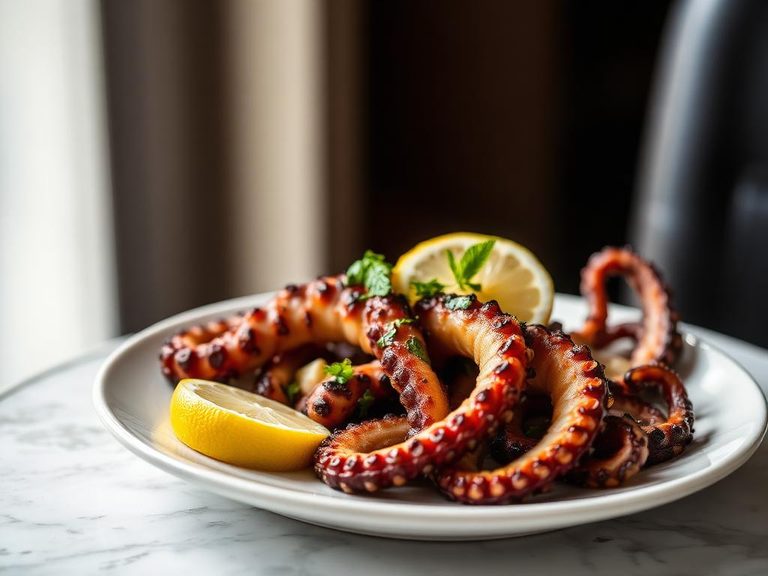
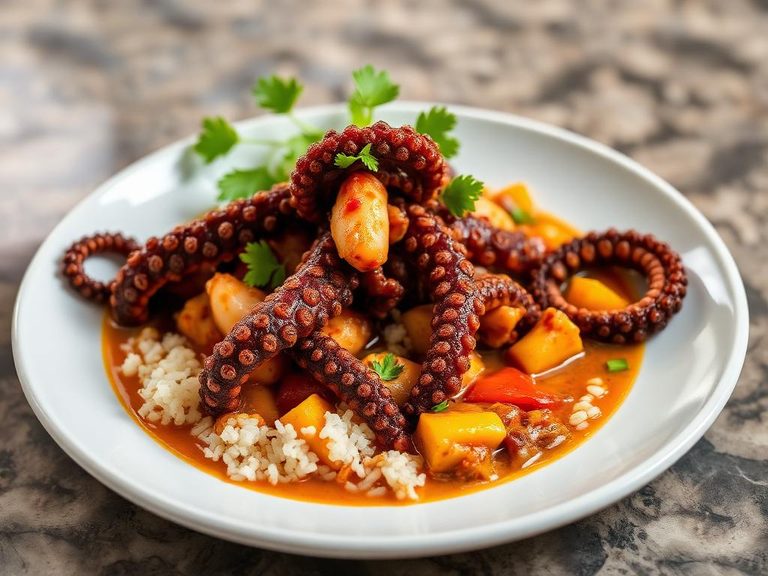
🍽️ Popular dishes
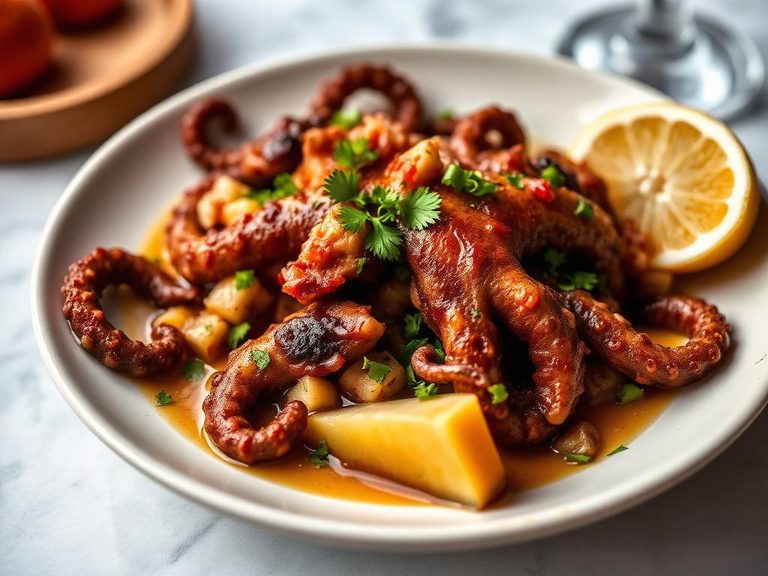
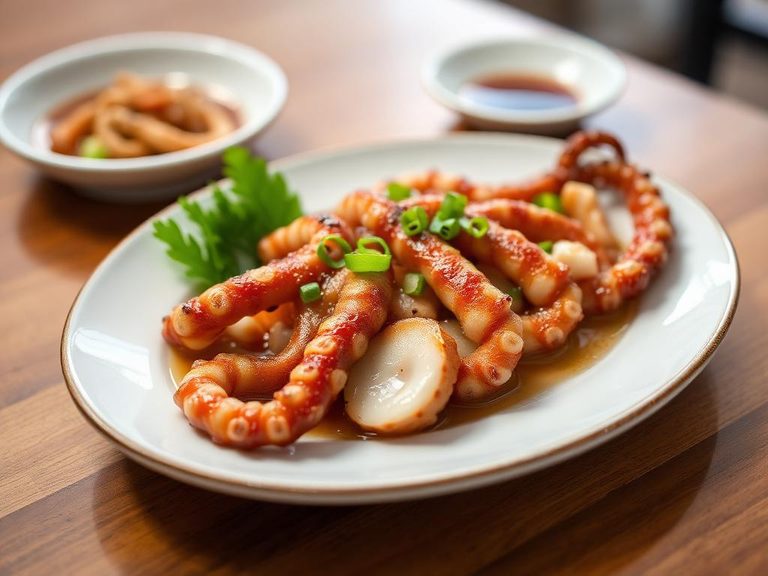
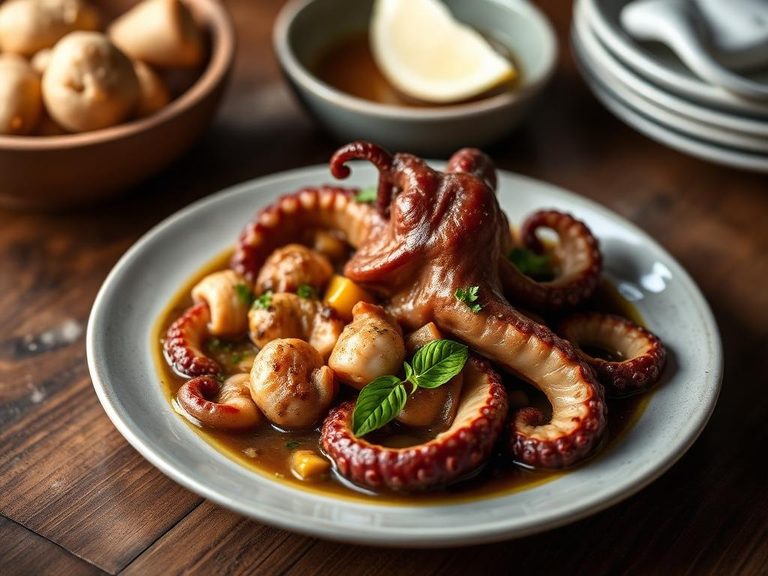
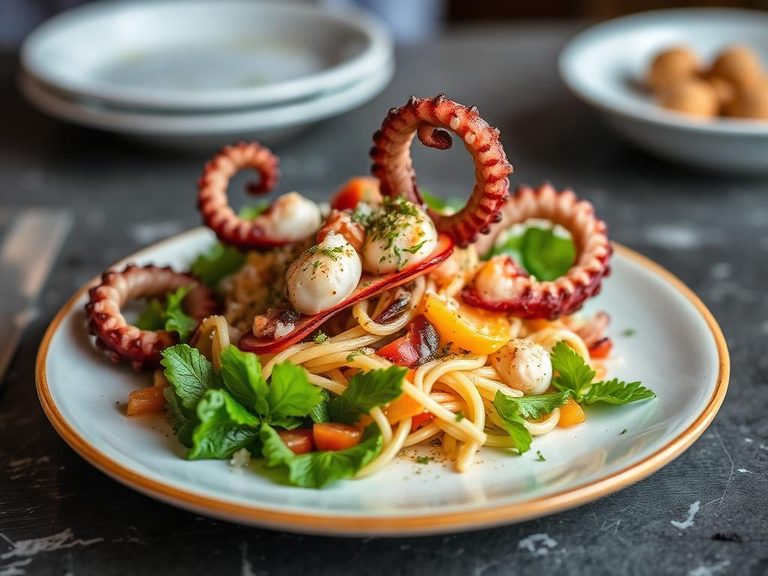
🌍 Where it's eaten
💡 Did you know?
Octopuses have three hearts and blue blood, which helps them efficiently pump oxygen-rich blood through their bodies in cold, low-oxygen ocean environments.
Full nutrition (USDA data · scales with serving)
| Water | 60.5 g |
| Energy | 164 kcal |
| Energy | 686 kj |
| Protein | 29.8 g |
| Total lipid (fat) | 2.1 g |
| Ash | 3.2 g |
| Carbohydrate, by difference | 4.4 g |
| Fiber, total dietary | 0.00 g |
| Total Sugars | 0.00 g |
| Calcium, Ca | 106 mg |
| Iron, Fe | 9.5 mg |
| Magnesium, Mg | 60.0 mg |
| Phosphorus, P | 279 mg |
| Potassium, K | 630 mg |
| Sodium, Na | 460 mg |
| Zinc, Zn | 3.4 mg |
| Copper, Cu | 0.74 mg |
| Manganese, Mn | 0.05 mg |
| Selenium, Se | 89.6 ug |
| Vitamin C, total ascorbic acid | 8.0 mg |
| Thiamin | 0.06 mg |
| Riboflavin | 0.08 mg |
| Niacin | 3.8 mg |
| Pantothenic acid | 0.90 mg |
| Vitamin B-6 | 0.65 mg |
| Folate, total | 24.0 ug |
| Folic acid | 0.00 ug |
| Folate, food | 24.0 ug |
| Folate, DFE | 24.0 ug |
| Choline, total | 81.0 mg |
| Vitamin B-12 | 36.0 ug |
| Vitamin B-12, added | 0.00 ug |
| Vitamin A, RAE | 90.0 ug |
| Retinol | 90.0 ug |
| Carotene, beta | 0.00 ug |
| Carotene, alpha | 0.00 ug |
| Cryptoxanthin, beta | 0.00 ug |
| Vitamin A, IU | 300 iu |
| Lycopene | 0.00 ug |
| Lutein + zeaxanthin | 0.00 ug |
| Vitamin E (alpha-tocopherol) | 1.2 mg |
| Vitamin E, added | 0.00 mg |
| Vitamin D (D2 + D3), International Units | 0.00 iu |
| Vitamin D (D2 + D3) | 0.00 ug |
| Vitamin D3 (cholecalciferol) | 0.00 ug |
| Vitamin K (phylloquinone) | 0.10 ug |
| Alcohol, ethyl | 0.00 g |
| Caffeine | 0.00 mg |
| Theobromine | 0.00 mg |
Fat & fatty acid profile (per 100g)
| Fatty acids, total saturated | 0.45 g |
| SFA 4:0 | 0.00 g |
| SFA 6:0 | 0.00 g |
| SFA 8:0 | 0.00 g |
| SFA 10:0 | 0.00 g |
| SFA 12:0 | 0.00 g |
| SFA 14:0 | 0.05 g |
| SFA 16:0 | 0.30 g |
| SFA 18:0 | 0.10 g |
| Fatty acids, total monounsaturated | 0.32 g |
| MUFA 16:1 | 0.13 g |
| MUFA 18:1 | 0.12 g |
| MUFA 20:1 | 0.05 g |
| MUFA 22:1 | 0.02 g |
| Fatty acids, total polyunsaturated | 0.48 g |
| PUFA 18:2 | 0.02 g |
| PUFA 18:3 | 0.00 g |
| PUFA 18:4 | 0.06 g |
| PUFA 20:4 | 0.08 g |
| PUFA 20:5 n-3 (EPA) | 0.15 g |
| PUFA 22:5 n-3 (DPA) | 0.01 g |
| PUFA 22:6 n-3 (DHA) | 0.16 g |
| Cholesterol | 96.0 mg |
Amino acid profile (per 100g)
| Tryptophan | 0.33 g |
| Threonine | 1.3 g |
| Isoleucine | 1.3 g |
| Leucine | 2.1 g |
| Lysine | 2.2 g |
| Methionine | 0.67 g |
| Cystine | 0.39 g |
| Phenylalanine | 1.1 g |
| Tyrosine | 0.95 g |
| Valine | 1.3 g |
| Arginine | 2.2 g |
| Histidine | 0.57 g |
| Alanine | 1.8 g |
| Aspartic acid | 2.9 g |
| Glutamic acid | 4.1 g |
| Glycine | 1.9 g |
| Proline | 1.2 g |
| Serine | 1.3 g |
FAQ
How do I tenderize octopus before cooking?
Freeze the octopus for at least 24 hours before cooking, or use a pressure cooker. Some cooks also tenderize by pounding it with a mallet or simmering it with a cork in the water.
Is octopus high in cholesterol?
Octopus contains moderate cholesterol (about 48mg per 100g), but it's also low in saturated fat and rich in omega-3s, which can support heart health when consumed in moderation.
Can I eat octopus raw?
While some cuisines serve it raw (like in sushi or sashimi), it's safer to cook it thoroughly to reduce the risk of bacterial or parasitic contamination. Always use fresh, high-quality octopus if consuming raw.
Nutrient density (calculated · NRF9.3)
Nutrient Rich Foods index: beneficial nutrients (protein, fiber, vitamins, minerals) minus saturated fat, added sugar & sodium, per 100 kcal.
NRF9.3 index — Fulgoni, Keast & Drewnowski, 2009. Computed from USDA nutrients.
Weight-loss friendliness (composite index)
Energy density 1.64 kcal/g · 73% calories from protein · 0.0 g fiber · 0.0 g sugar per 100 g.
Composite of energy density (Rolls et al., 1999), protein & fiber satiety, minus sugar. A calculated heuristic — ranks satiety-per-calorie, not a clinical measure.
Dietary load (calculated from USDA values)
Potential renal acid load. Positive = acid-forming, negative = alkaline-forming.
Sodium-to-potassium ratio: 0.73 (lower is better — aim for ≤ 1)
Sodium:potassium per WHO potassium guidance. Computed from USDA nutrients.