

Margarine, regular, 80% fat, composite, stick, without salt, with added vitamin D
Whole food · Fats and Oils

Photo: Wikipedia
This is a solid, stick-form vegetable oil spread, engineered for baking and spreading with a high fat content of 80%. It has a smooth, creamy texture and a mild, neutral flavor, making it a functional fat rather than a flavor star. Nutritionally, it is almost pure fat at 717 kcal per 100g, with negligible protein and carbs, and is fortified with vitamin D.
Calorie split: 0% protein · 0% carbs · 100% fat
↓ Full nutrition💚 Why it's loved
People love it for its practical versatility and affordability, serving as a reliable fat for baking cookies, cakes, and pastries where a solid, neutral fat is needed. Its mild taste and spreadable texture make it a convenient, everyday staple for many households.
⚠️ Watch-outs & how to enjoy it better
The primary concern is its very high calorie and fat density, which can contribute to weight gain if consumed in excess. It may also contain trans fats from partial hydrogenation, which are linked to heart health risks, so checking labels for 'partially hydrogenated oils' is crucial. To counteract, use sparingly, pair with fiber-rich foods like whole-grain toast, and prioritize unsaturated fat sources like olive oil or avocado in your diet.
Key benefits
- High in monounsaturated and polyunsaturated fats from vegetable oils
- Fortified with vitamin D, supporting bone health
- Dairy-free alternative to butter for those with lactose intolerance
- Provides a consistent, solid fat for baking and cooking
- Long shelf life compared to butter
🍽️ Popular dishes




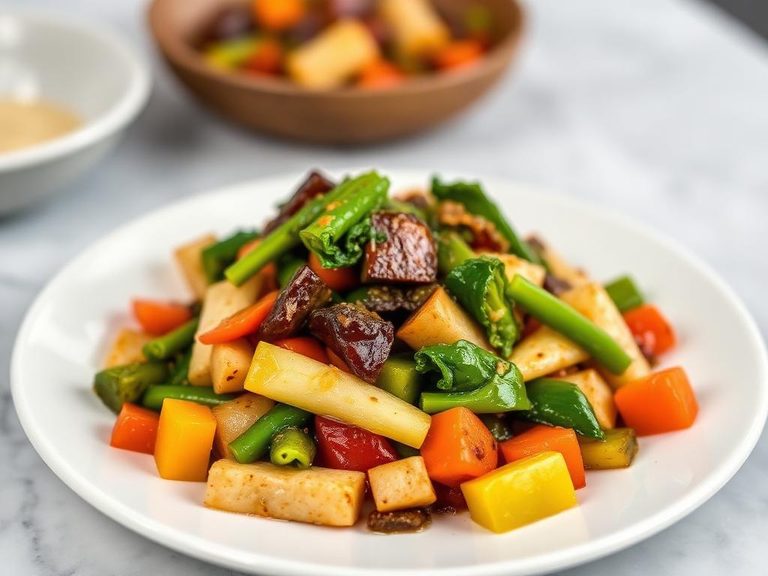
🌍 Where it's eaten
💡 Did you know?
Margarine was originally created in 1869 by French chemist Hippolyte Mège-Mouriès in response to a challenge from Emperor Napoleon III to create a butter substitute for the military and lower classes.
Full nutrition (USDA data · scales with serving)
| Water | 16.5 g |
| Energy | 717 kcal |
| Energy | 2999 kj |
| Protein | 0.16 g |
| Total lipid (fat) | 80.7 g |
| Ash | 1.9 g |
| Carbohydrate, by difference | 0.70 g |
| Fiber, total dietary | 0.00 g |
| Total Sugars | 0.00 g |
| Calcium, Ca | 3.0 mg |
| Iron, Fe | 0.06 mg |
| Magnesium, Mg | 3.0 mg |
| Phosphorus, P | 5.0 mg |
| Potassium, K | 18.0 mg |
| Sodium, Na | 2.0 mg |
| Zinc, Zn | 0.00 mg |
| Copper, Cu | 0.00 mg |
| Selenium, Se | 0.00 ug |
| Vitamin C, total ascorbic acid | 0.20 mg |
| Thiamin | 0.01 mg |
| Riboflavin | 0.04 mg |
| Niacin | 0.02 mg |
| Vitamin B-6 | 0.01 mg |
| Folate, total | 1.0 ug |
| Folic acid | 0.00 ug |
| Folate, food | 1.0 ug |
| Folate, DFE | 1.0 ug |
| Choline, total | 12.4 mg |
| Vitamin B-12 | 0.10 ug |
| Vitamin B-12, added | 0.00 ug |
| Vitamin A, RAE | 819 ug |
| Retinol | 768 ug |
| Carotene, beta | 610 ug |
| Carotene, alpha | 0.00 ug |
| Cryptoxanthin, beta | 0.00 ug |
| Vitamin A, IU | 3577 iu |
| Lycopene | 0.00 ug |
| Lutein + zeaxanthin | 0.00 ug |
| Vitamin E (alpha-tocopherol) | 9.0 mg |
| Vitamin E, added | 0.00 mg |
| Vitamin D (D2 + D3), International Units | 429 iu |
| Vitamin D (D2 + D3) | 10.7 ug |
| Vitamin K (phylloquinone) | 93.0 ug |
| Alcohol, ethyl | 0.00 g |
| Caffeine | 0.00 mg |
| Theobromine | 0.00 mg |
Fat & fatty acid profile (per 100g)
| Fatty acids, total saturated | 15.2 g |
| SFA 4:0 | 0.00 g |
| SFA 6:0 | 0.00 g |
| SFA 8:0 | 0.00 g |
| SFA 10:0 | 0.00 g |
| SFA 12:0 | 0.00 g |
| SFA 14:0 | 0.05 g |
| SFA 16:0 | 8.4 g |
| SFA 18:0 | 6.2 g |
| Fatty acids, total monounsaturated | 38.9 g |
| MUFA 16:1 | 0.04 g |
| MUFA 16:1 c | 0.04 g |
| MUFA 18:1 | 38.7 g |
| MUFA 18:1 c | 24.5 g |
| MUFA 20:1 | 0.13 g |
| MUFA 22:1 | 0.00 g |
| Fatty acids, total polyunsaturated | 24.3 g |
| PUFA 18:2 | 22.3 g |
| PUFA 18:2 n-6 c,c | 21.5 g |
| PUFA 18:3 | 2.0 g |
| PUFA 18:4 | 0.00 g |
| PUFA 20:4 | 0.00 g |
| PUFA 20:5 n-3 (EPA) | 0.00 g |
| PUFA 22:5 n-3 (DPA) | 0.01 g |
| PUFA 22:6 n-3 (DHA) | 0.00 g |
| TFA 16:1 t | 0.00 g |
| TFA 18:1 t | 14.2 g |
| Cholesterol | 0.00 mg |
Amino acid profile (per 100g)
Estimated from Margarine, regular, hard, soybean (hydrogenated) — USDA does not publish this profile for Margarine.
| Tryptophan | 0.01 g |
| Threonine | 0.04 g |
| Isoleucine | 0.05 g |
| Leucine | 0.08 g |
| Lysine | 0.07 g |
| Methionine | 0.02 g |
| Cystine | 0.01 g |
| Phenylalanine | 0.04 g |
| Tyrosine | 0.04 g |
| Valine | 0.06 g |
| Arginine | 0.03 g |
| Histidine | 0.02 g |
| Alanine | 0.03 g |
| Aspartic acid | 0.07 g |
| Glutamic acid | 0.18 g |
| Glycine | 0.02 g |
| Proline | 0.08 g |
| Serine | 0.05 g |
FAQ
Is margarine healthier than butter?
It depends on the type. Regular stick margarine is high in saturated and potentially trans fats, while soft tub margarines often have less saturated fat and more unsaturated fats. Always check the nutrition label for trans fat content and choose varieties with minimal saturated fat.
Can I use margarine for baking?
Yes, stick margarine is excellent for baking, especially in recipes like pie crusts and cookies, where a solid fat is needed. However, its flavor is neutral, so it won't add the rich, buttery taste that butter provides.
Is margarine vegan?
Many margarines are vegan, but not all. Some contain milk derivatives or whey. Always check the ingredients list for dairy components like milk, whey, or casein to ensure it's plant-based.
Nutrient density (calculated · NRF9.3)
Nutrient Rich Foods index: beneficial nutrients (protein, fiber, vitamins, minerals) minus saturated fat, added sugar & sodium, per 100 kcal.
NRF9.3 index — Fulgoni, Keast & Drewnowski, 2009. Computed from USDA nutrients.
Weight-loss friendliness (composite index)
Energy density 7.17 kcal/g · 0% calories from protein · 0.0 g fiber · 0.0 g sugar per 100 g.
Composite of energy density (Rolls et al., 1999), protein & fiber satiety, minus sugar. A calculated heuristic — ranks satiety-per-calorie, not a clinical measure.
Dietary load (calculated from USDA values)
Potential renal acid load. Positive = acid-forming, negative = alkaline-forming.
Sodium-to-potassium ratio: 0.11 (lower is better — aim for ≤ 1)
Sodium:potassium per WHO potassium guidance. Computed from USDA nutrients.