

Lamb, shoulder, whole (arm and blade), separable lean only, trimmed to 1/4" fat, choice, cooked, broiled
Whole food · Lamb, Veal, and Game Products
This is a lean, broiled cut of lamb shoulder, prized for its deep, savory flavor and tender, yet satisfyingly firm texture. It's a protein powerhouse, delivering a substantial 27 grams of protein per 100g with virtually no carbohydrates. The cooking method—broiling—renders excess fat, resulting in a clean, meaty taste with a slight char.
Calorie split: 53% protein · 0% carbs · 47% fat
↓ Full nutrition💚 Why it's loved
People adore it for its robust, distinctive lamb flavor that stands up to bold spices and herbs. Its versatility allows it to be the star of everything from simple grilled skewers to slow-cooked stews, making it a beloved centerpiece in many culinary traditions.
⚠️ Watch-outs & how to enjoy it better
As a red meat, it is higher in saturated fat than poultry or fish, which may be a consideration for some diets. To mitigate this, enjoy it in moderate portions and pair it with fiber-rich vegetables like roasted Brussels sprouts or a fresh, leafy salad to balance the meal.
Key benefits
- Excellent source of high-quality complete protein
- Naturally zero carbohydrates and sugar
- Rich in essential minerals like iron, zinc, and selenium
- Provides B vitamins, especially B12, for energy metabolism
- Trimmed cut offers a leaner option than other lamb preparations
🍽️ Popular dishes
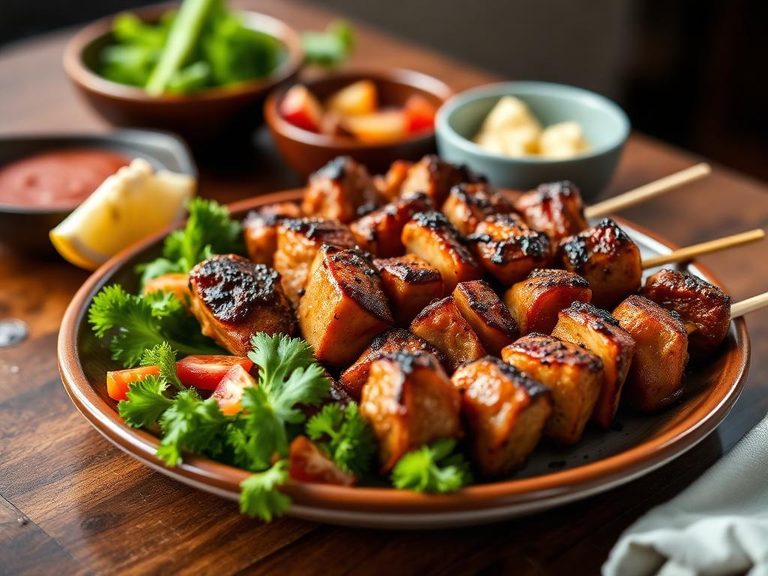
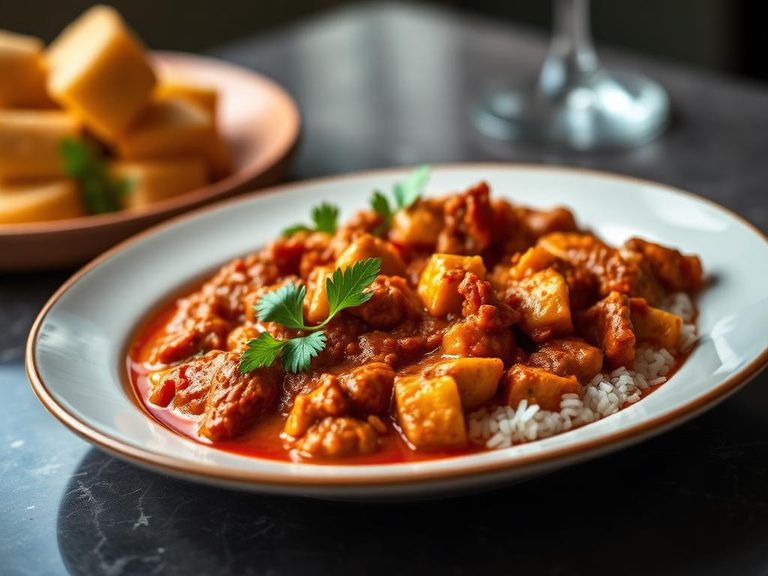
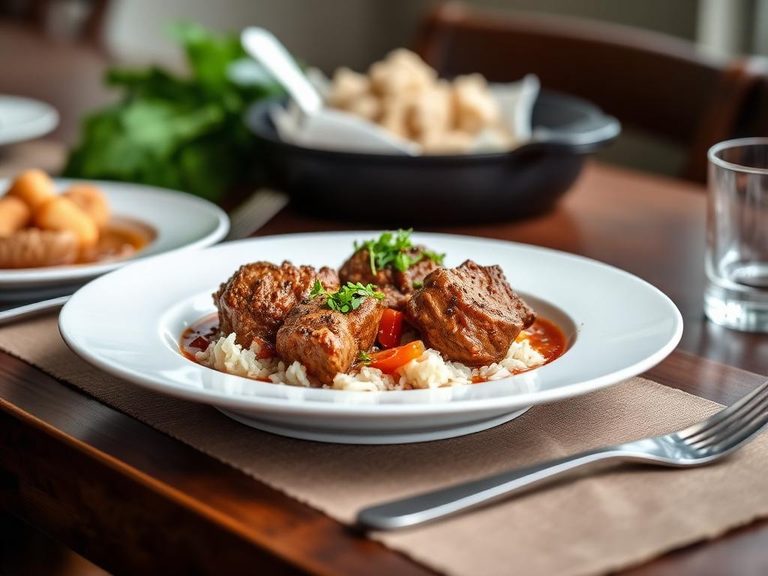
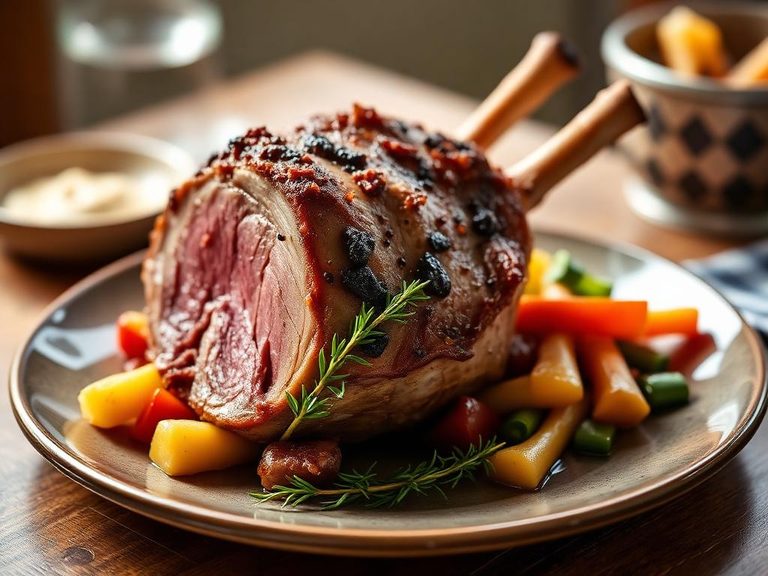
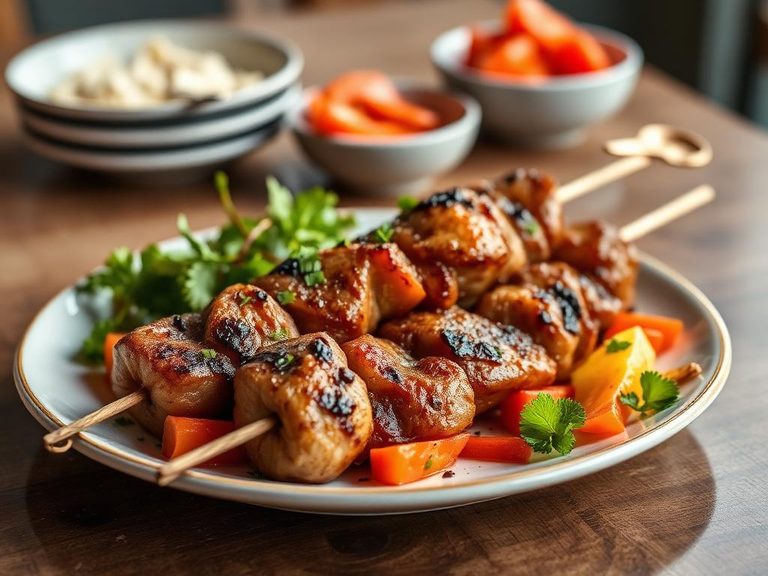
🌍 Where it's eaten
💡 Did you know?
The 'choice' grade for lamb indicates a high level of marbling (intramuscular fat), which enhances flavor and juiciness, even in a trimmed, lean cut like this.
Full nutrition (USDA data · scales with serving)
| Water | 61.4 g |
| Energy | 210 kcal |
| Energy | 879 kj |
| Protein | 27.1 g |
| Total lipid (fat) | 10.5 g |
| Ash | 1.4 g |
| Carbohydrate, by difference | 0.00 g |
| Fiber, total dietary | 0.00 g |
| Total Sugars | 0.00 g |
| Calcium, Ca | 21.0 mg |
| Iron, Fe | 2.2 mg |
| Magnesium, Mg | 29.0 mg |
| Phosphorus, P | 217 mg |
| Potassium, K | 324 mg |
| Sodium, Na | 83.0 mg |
| Zinc, Zn | 6.6 mg |
| Copper, Cu | 0.14 mg |
| Manganese, Mn | 0.03 mg |
| Selenium, Se | 31.3 ug |
| Vitamin C, total ascorbic acid | 0.00 mg |
| Thiamin | 0.10 mg |
| Riboflavin | 0.28 mg |
| Niacin | 6.2 mg |
| Pantothenic acid | 0.69 mg |
| Vitamin B-6 | 0.14 mg |
| Folate, total | 23.0 ug |
| Folic acid | 0.00 ug |
| Folate, food | 23.0 ug |
| Folate, DFE | 23.0 ug |
| Choline, total | 104 mg |
| Betaine | 13.7 mg |
| Vitamin B-12 | 3.1 ug |
| Vitamin B-12, added | 0.00 ug |
| Vitamin A, RAE | 0.00 ug |
| Retinol | 0.00 ug |
| Carotene, beta | 0.00 ug |
| Carotene, alpha | 0.00 ug |
| Cryptoxanthin, beta | 0.00 ug |
| Vitamin A, IU | 0.00 iu |
| Lycopene | 0.00 ug |
| Lutein + zeaxanthin | 0.00 ug |
| Vitamin E (alpha-tocopherol) | 0.20 mg |
| Vitamin E, added | 0.00 mg |
| Vitamin D (D2 + D3), International Units | 2.0 iu |
| Vitamin D (D2 + D3) | 0.10 ug |
| Vitamin D3 (cholecalciferol) | 0.10 ug |
| Vitamin K (phylloquinone) | 5.7 ug |
| Vitamin K (Dihydrophylloquinone) | 0.00 ug |
| Alcohol, ethyl | 0.00 g |
| Caffeine | 0.00 mg |
| Theobromine | 0.00 mg |
Fat & fatty acid profile (per 100g)
| Fatty acids, total saturated | 3.9 g |
| SFA 4:0 | 0.00 g |
| SFA 6:0 | 0.00 g |
| SFA 8:0 | 0.00 g |
| SFA 10:0 | 0.02 g |
| SFA 12:0 | 0.03 g |
| SFA 14:0 | 0.29 g |
| SFA 16:0 | 2.1 g |
| SFA 18:0 | 1.3 g |
| Fatty acids, total monounsaturated | 4.2 g |
| MUFA 16:1 | 0.32 g |
| MUFA 18:1 | 3.8 g |
| MUFA 20:1 | 0.00 g |
| MUFA 22:1 | 0.00 g |
| Fatty acids, total polyunsaturated | 0.94 g |
| PUFA 18:2 | 0.70 g |
| PUFA 18:3 | 0.15 g |
| PUFA 18:4 | 0.00 g |
| PUFA 20:4 | 0.09 g |
| PUFA 20:5 n-3 (EPA) | 0.00 g |
| PUFA 22:5 n-3 (DPA) | 0.00 g |
| PUFA 22:6 n-3 (DHA) | 0.00 g |
| Cholesterol | 93.0 mg |
Amino acid profile (per 100g)
| Tryptophan | 0.32 g |
| Threonine | 1.2 g |
| Isoleucine | 1.3 g |
| Leucine | 2.1 g |
| Lysine | 2.4 g |
| Methionine | 0.70 g |
| Cystine | 0.32 g |
| Phenylalanine | 1.1 g |
| Tyrosine | 0.91 g |
| Valine | 1.5 g |
| Arginine | 1.6 g |
| Histidine | 0.86 g |
| Alanine | 1.6 g |
| Aspartic acid | 2.4 g |
| Glutamic acid | 3.9 g |
| Glycine | 1.3 g |
| Proline | 1.1 g |
| Serine | 1.0 g |
FAQ
Is broiling the same as grilling?
Similar, but broiling uses direct, high heat from above in an oven, while grilling uses heat from below. Both methods are great for creating a flavorful sear on lean lamb.
How can I tell when broiled lamb shoulder is done?
Use a meat thermometer. For medium-rare, aim for 135°F (57°C); for medium, 145°F (63°C). The meat will continue to cook slightly after removal from heat.
Why is my broiled lamb tough?
Lamb shoulder contains connective tissue. While broiling is quick, ensure the meat isn't overcooked. For tougher shoulder cuts, slower cooking methods like braising are often preferred to break down collagen.
Nutrient density (calculated · NRF9.3)
Nutrient Rich Foods index: beneficial nutrients (protein, fiber, vitamins, minerals) minus saturated fat, added sugar & sodium, per 100 kcal.
NRF9.3 index — Fulgoni, Keast & Drewnowski, 2009. Computed from USDA nutrients.
Weight-loss friendliness (composite index)
Energy density 2.10 kcal/g · 52% calories from protein · 0.0 g fiber · 0.0 g sugar per 100 g.
Composite of energy density (Rolls et al., 1999), protein & fiber satiety, minus sugar. A calculated heuristic — ranks satiety-per-calorie, not a clinical measure.
Dietary load (calculated from USDA values)
Potential renal acid load. Positive = acid-forming, negative = alkaline-forming.
Sodium-to-potassium ratio: 0.26 (lower is better — aim for ≤ 1)
Sodium:potassium per WHO potassium guidance. Computed from USDA nutrients.