

Lamb, rib, separable lean only, trimmed to 1/4" fat, choice, cooked, broiled
Whole food · Lamb, Veal, and Game Products

Photo: Wikipedia
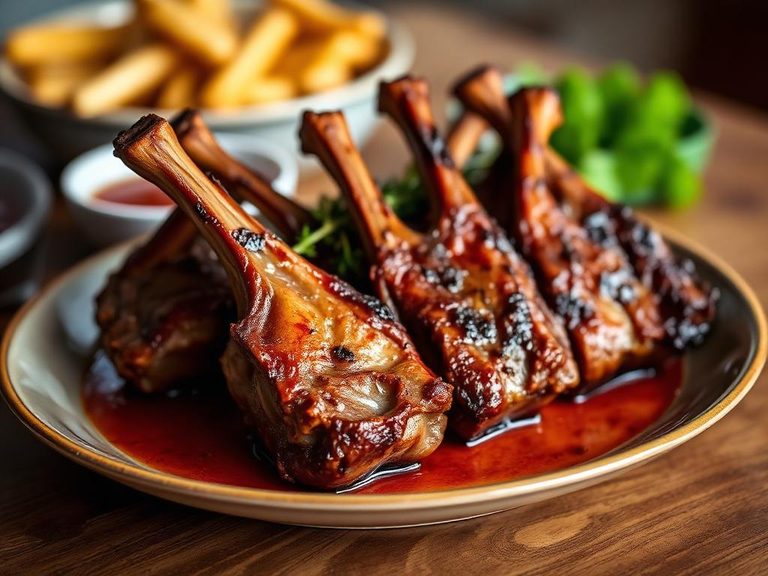
This is a lean cut of lamb rib, broiled to a sizzling finish with a 1/4-inch fat cap, delivering a deep, savory flavor and a firm, meaty texture. It's a protein powerhouse with virtually no carbohydrates, making it a standout for high-protein, low-carb diets. The broiling method renders the fat, creating a delicious, slightly charred exterior while keeping the interior juicy.
Calorie split: 49% protein · 0% carbs · 51% fat
↓ Full nutrition💚 Why it's loved
People love it for its robust, distinctive lamb flavor that is both rich and satisfying, especially when the edges get a crispy char. It's a versatile centerpiece for meals, from simple weeknight dinners to festive roasts, and is deeply embedded in culinary traditions worldwide.
⚠️ Watch-outs & how to enjoy it better
While lean, the cut can still be high in saturated fat, and the strong flavor isn't for everyone. To mitigate this, choose the leanest portions and pair it with fiber-rich vegetables like roasted broccoli or a fresh salad. For those watching sodium, use herbs and spices (like rosemary, garlic, and cumin) instead of salt for seasoning.
Key benefits
- Excellent source of high-quality protein for muscle maintenance.
- Rich in essential minerals like zinc and iron.
- Very low in carbohydrates, suitable for keto and low-carb diets.
- Provides B vitamins, particularly B12, for energy metabolism.
- The cooking method (broiling) helps render excess fat.
🍽️ Popular dishes
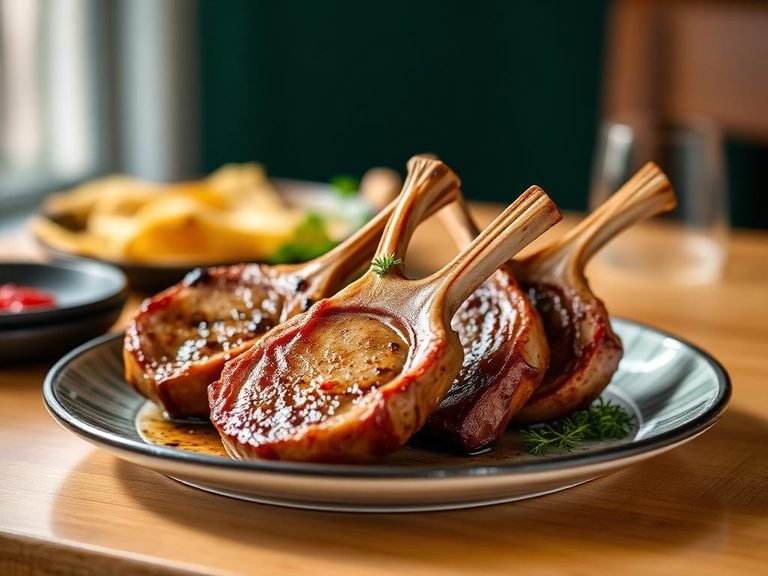
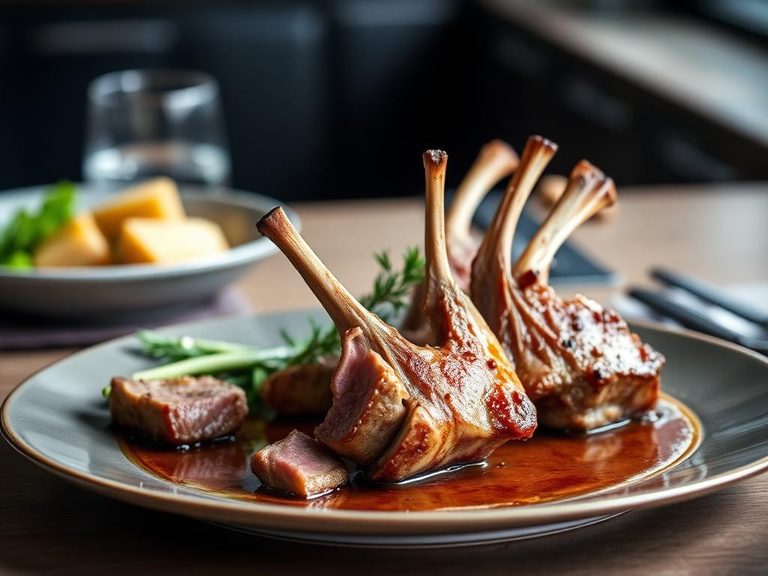
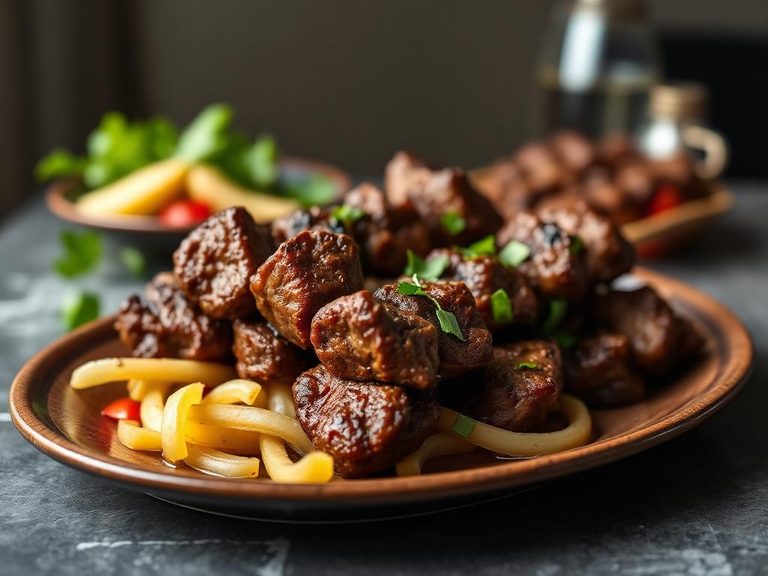
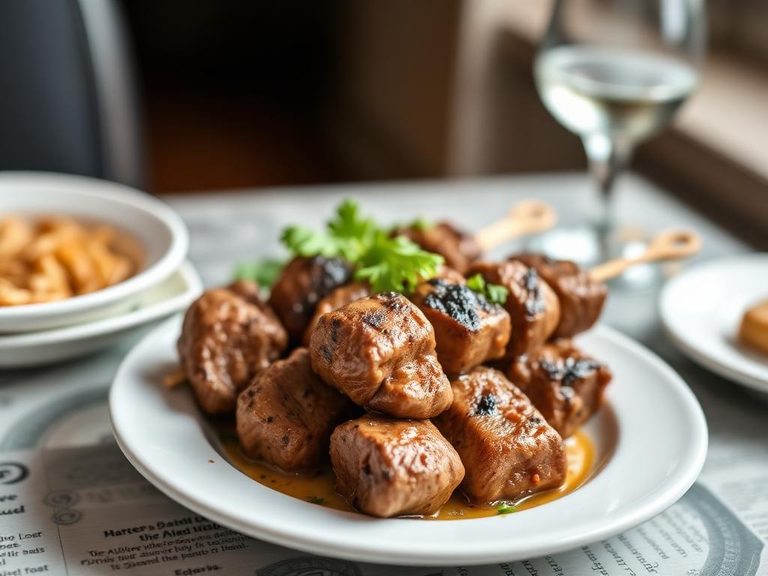
🌍 Where it's eaten
💡 Did you know?
Lamb is one of the oldest meats consumed by humans, with evidence of domestication dating back over 10,000 years to the Fertile Crescent.
Full nutrition (USDA data · scales with serving)
| Water | 58.8 g |
| Energy | 235 kcal |
| Energy | 983 kj |
| Protein | 27.7 g |
| Total lipid (fat) | 12.9 g |
| Ash | 1.4 g |
| Carbohydrate, by difference | 0.00 g |
| Fiber, total dietary | 0.00 g |
| Total Sugars | 0.00 g |
| Calcium, Ca | 16.0 mg |
| Iron, Fe | 2.2 mg |
| Magnesium, Mg | 29.0 mg |
| Phosphorus, P | 213 mg |
| Potassium, K | 313 mg |
| Sodium, Na | 85.0 mg |
| Zinc, Zn | 5.3 mg |
| Copper, Cu | 0.14 mg |
| Manganese, Mn | 0.03 mg |
| Selenium, Se | 31.0 ug |
| Vitamin C, total ascorbic acid | 0.00 mg |
| Thiamin | 0.10 mg |
| Riboflavin | 0.25 mg |
| Niacin | 6.5 mg |
| Pantothenic acid | 0.63 mg |
| Vitamin B-6 | 0.15 mg |
| Folate, total | 21.0 ug |
| Folic acid | 0.00 ug |
| Folate, food | 21.0 ug |
| Folate, DFE | 21.0 ug |
| Choline, total | 104 mg |
| Betaine | 13.7 mg |
| Vitamin B-12 | 2.6 ug |
| Vitamin B-12, added | 0.00 ug |
| Vitamin A, RAE | 0.00 ug |
| Retinol | 0.00 ug |
| Carotene, beta | 0.00 ug |
| Carotene, alpha | 0.00 ug |
| Cryptoxanthin, beta | 0.00 ug |
| Vitamin A, IU | 0.00 iu |
| Lycopene | 0.00 ug |
| Lutein + zeaxanthin | 0.00 ug |
| Vitamin E (alpha-tocopherol) | 0.18 mg |
| Vitamin E, added | 0.00 mg |
| Vitamin D (D2 + D3), International Units | 2.0 iu |
| Vitamin D (D2 + D3) | 0.10 ug |
| Vitamin D3 (cholecalciferol) | 0.10 ug |
| Vitamin K (phylloquinone) | 4.1 ug |
| Vitamin K (Dihydrophylloquinone) | 0.00 ug |
| Alcohol, ethyl | 0.00 g |
| Caffeine | 0.00 mg |
| Theobromine | 0.00 mg |
Fat & fatty acid profile (per 100g)
| Fatty acids, total saturated | 4.7 g |
| SFA 4:0 | 0.00 g |
| SFA 6:0 | 0.00 g |
| SFA 8:0 | 0.00 g |
| SFA 10:0 | 0.02 g |
| SFA 12:0 | 0.03 g |
| SFA 14:0 | 0.34 g |
| SFA 16:0 | 2.5 g |
| SFA 18:0 | 1.5 g |
| Fatty acids, total monounsaturated | 5.2 g |
| MUFA 16:1 | 0.39 g |
| MUFA 18:1 | 4.7 g |
| MUFA 20:1 | 0.00 g |
| MUFA 22:1 | 0.00 g |
| Fatty acids, total polyunsaturated | 1.2 g |
| PUFA 18:2 | 0.89 g |
| PUFA 18:3 | 0.17 g |
| PUFA 18:4 | 0.00 g |
| PUFA 20:4 | 0.12 g |
| PUFA 20:5 n-3 (EPA) | 0.00 g |
| PUFA 22:5 n-3 (DPA) | 0.00 g |
| PUFA 22:6 n-3 (DHA) | 0.00 g |
| Cholesterol | 91.0 mg |
Amino acid profile (per 100g)
| Tryptophan | 0.32 g |
| Threonine | 1.2 g |
| Isoleucine | 1.3 g |
| Leucine | 2.2 g |
| Lysine | 2.4 g |
| Methionine | 0.71 g |
| Cystine | 0.33 g |
| Phenylalanine | 1.1 g |
| Tyrosine | 0.93 g |
| Valine | 1.5 g |
| Arginine | 1.6 g |
| Histidine | 0.88 g |
| Alanine | 1.7 g |
| Aspartic acid | 2.4 g |
| Glutamic acid | 4.0 g |
| Glycine | 1.4 g |
| Proline | 1.2 g |
| Serine | 1.0 g |
FAQ
What does 'separable lean only' mean?
It means the nutritional values are for the meat portion that can be easily separated from the fat, not including the fat cap or connective tissue.
Is broiling a healthy cooking method for lamb?
Yes, broiling is a dry-heat method that allows excess fat to drip away, resulting in a lower-fat final dish compared to frying or pan-searing.
How can I tell if lamb is cooked to the right doneness?
Use a meat thermometer: 145°F (63°C) for medium-rare, 160°F (71°C) for medium, and 170°F (77°C) for well-done. Let it rest for 5-10 minutes after cooking.
What is the difference between lamb and mutton?
Lamb comes from a sheep under one year old, while mutton comes from an older sheep. Lamb is more tender and mild in flavor.
Nutrient density (calculated · NRF9.3)
Nutrient Rich Foods index: beneficial nutrients (protein, fiber, vitamins, minerals) minus saturated fat, added sugar & sodium, per 100 kcal.
NRF9.3 index — Fulgoni, Keast & Drewnowski, 2009. Computed from USDA nutrients.
Weight-loss friendliness (composite index)
Energy density 2.35 kcal/g · 47% calories from protein · 0.0 g fiber · 0.0 g sugar per 100 g.
Composite of energy density (Rolls et al., 1999), protein & fiber satiety, minus sugar. A calculated heuristic — ranks satiety-per-calorie, not a clinical measure.
Dietary load (calculated from USDA values)
Potential renal acid load. Positive = acid-forming, negative = alkaline-forming.
Sodium-to-potassium ratio: 0.27 (lower is better — aim for ≤ 1)
Sodium:potassium per WHO potassium guidance. Computed from USDA nutrients.