

Lamb, loin, separable lean only, trimmed to 1/4" fat, choice, cooked, broiled
Whole food · Lamb, Veal, and Game Products

Photo: Wikipedia
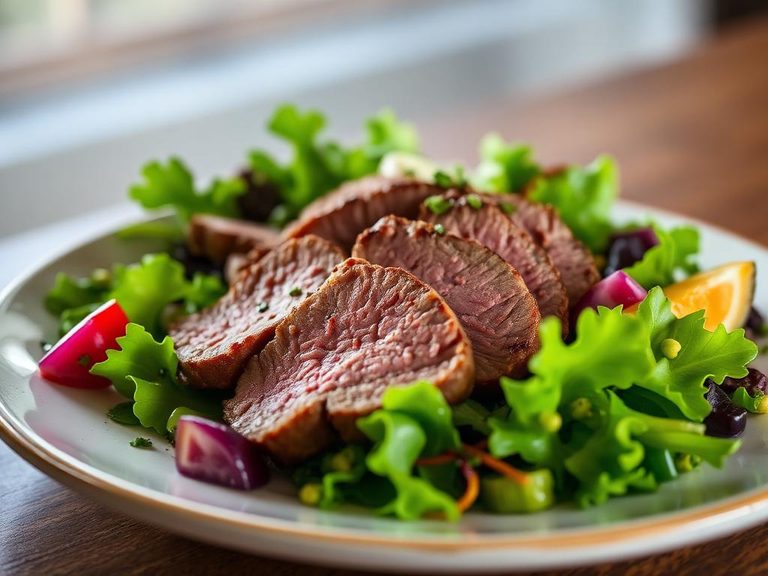
This is a premium cut of lamb, the loin, trimmed to a lean quarter-inch of fat and cooked to a perfect broil. The result is a tender, juicy steak with a rich, slightly gamey flavor and a satisfying, firm texture. It's a protein powerhouse, delivering nearly 30 grams of high-quality protein per 100-gram serving with zero carbohydrates.
Calorie split: 58% protein · 0% carbs · 42% fat
↓ Full nutrition💚 Why it's loved
People cherish this cut for its robust, savory flavor that's more nuanced than beef yet less gamey than some other lamb parts. Its tenderness and quick cooking time make it a versatile star for everything from elegant grilled steaks to hearty Mediterranean salads.
⚠️ Watch-outs & how to enjoy it better
The primary caution is its saturated fat content, which should be considered in moderation for those managing heart health. To counteract this, practice portion control and balance the meal with fiber-rich vegetables like roasted broccoli or a fresh tabbouleh. Additionally, individuals with gout may need to limit intake due to purines; pairing it with water and complex carbs can help.
Key benefits
- Excellent source of complete protein for muscle maintenance.
- Rich in essential minerals like zinc, iron, and selenium.
- Provides B vitamins, particularly B12, for energy metabolism.
- Naturally low in carbohydrates and sugar.
- Contains conjugated linoleic acid (CLA), a type of healthy fat.
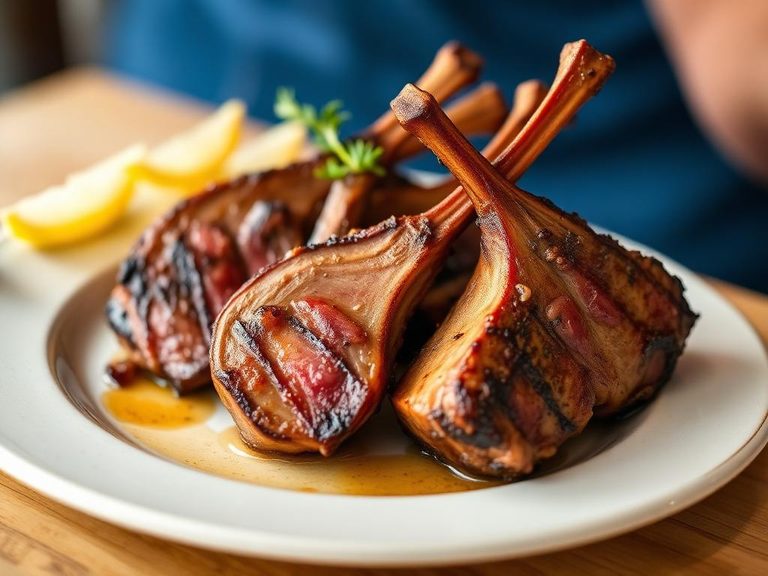
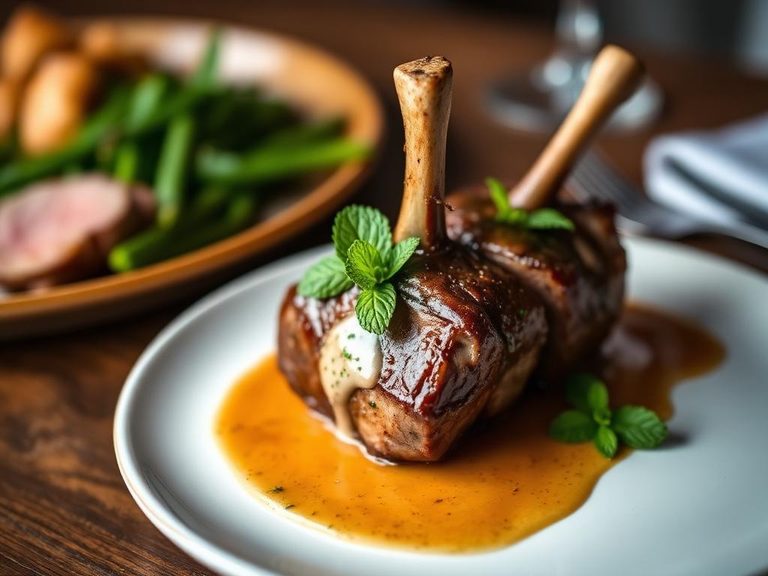
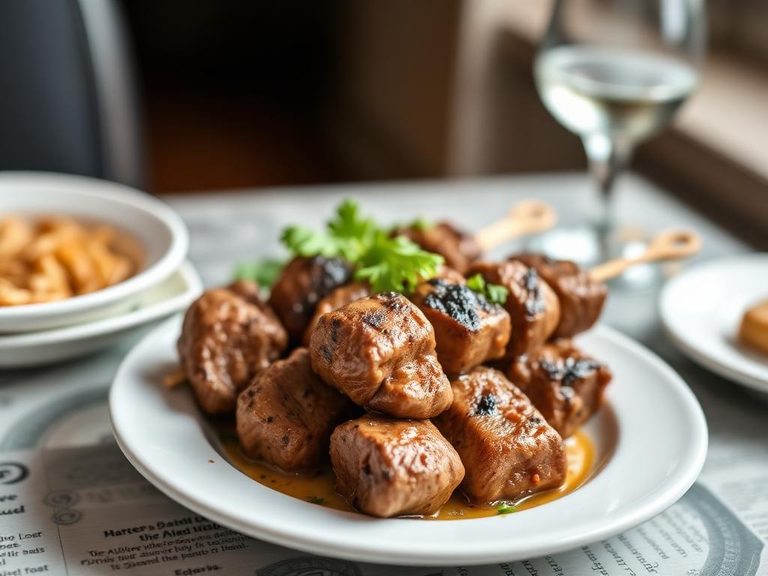
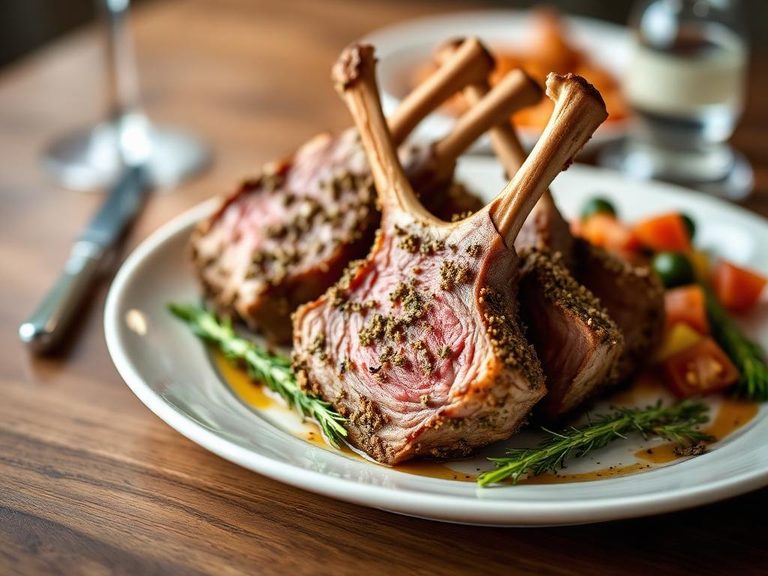
🍽️ Popular dishes
🌍 Where it's eaten
💡 Did you know?
The 'loin' of the lamb is anatomically equivalent to the tenderloin and sirloin area in beef, making it one of the most tender and prized muscles on the animal.
Full nutrition (USDA data · scales with serving)
| Water | 61.0 g |
| Energy | 216 kcal |
| Energy | 904 kj |
| Protein | 30.0 g |
| Total lipid (fat) | 9.7 g |
| Ash | 1.2 g |
| Carbohydrate, by difference | 0.00 g |
| Fiber, total dietary | 0.00 g |
| Total Sugars | 0.00 g |
| Calcium, Ca | 19.0 mg |
| Iron, Fe | 2.0 mg |
| Magnesium, Mg | 28.0 mg |
| Phosphorus, P | 226 mg |
| Potassium, K | 376 mg |
| Sodium, Na | 84.0 mg |
| Zinc, Zn | 4.1 mg |
| Copper, Cu | 0.14 mg |
| Manganese, Mn | 0.03 mg |
| Selenium, Se | 32.8 ug |
| Vitamin C, total ascorbic acid | 0.00 mg |
| Thiamin | 0.11 mg |
| Riboflavin | 0.28 mg |
| Niacin | 6.8 mg |
| Pantothenic acid | 0.66 mg |
| Vitamin B-6 | 0.16 mg |
| Folate, total | 24.0 ug |
| Folic acid | 0.00 ug |
| Folate, food | 24.0 ug |
| Folate, DFE | 24.0 ug |
| Choline, total | 108 mg |
| Betaine | 14.2 mg |
| Vitamin B-12 | 2.5 ug |
| Vitamin B-12, added | 0.00 ug |
| Vitamin A, RAE | 0.00 ug |
| Retinol | 0.00 ug |
| Carotene, beta | 0.00 ug |
| Carotene, alpha | 0.00 ug |
| Cryptoxanthin, beta | 0.00 ug |
| Vitamin A, IU | 0.00 iu |
| Lycopene | 0.00 ug |
| Lutein + zeaxanthin | 0.00 ug |
| Vitamin E (alpha-tocopherol) | 0.16 mg |
| Vitamin E, added | 0.00 mg |
| Vitamin D (D2 + D3), International Units | 2.0 iu |
| Vitamin D (D2 + D3) | 0.10 ug |
| Vitamin D3 (cholecalciferol) | 0.10 ug |
| Vitamin K (phylloquinone) | 3.9 ug |
| Vitamin K (Dihydrophylloquinone) | 0.00 ug |
| Alcohol, ethyl | 0.00 g |
| Caffeine | 0.00 mg |
| Theobromine | 0.00 mg |
Fat & fatty acid profile (per 100g)
| Fatty acids, total saturated | 3.5 g |
| SFA 4:0 | 0.00 g |
| SFA 6:0 | 0.00 g |
| SFA 8:0 | 0.00 g |
| SFA 10:0 | 0.02 g |
| SFA 12:0 | 0.03 g |
| SFA 14:0 | 0.30 g |
| SFA 16:0 | 1.9 g |
| SFA 18:0 | 1.2 g |
| Fatty acids, total monounsaturated | 4.3 g |
| MUFA 16:1 | 0.29 g |
| MUFA 18:1 | 4.0 g |
| MUFA 20:1 | 0.00 g |
| MUFA 22:1 | 0.00 g |
| Fatty acids, total polyunsaturated | 0.64 g |
| PUFA 18:2 | 0.52 g |
| PUFA 18:3 | 0.06 g |
| PUFA 18:4 | 0.00 g |
| PUFA 20:4 | 0.06 g |
| PUFA 20:5 n-3 (EPA) | 0.00 g |
| PUFA 22:5 n-3 (DPA) | 0.00 g |
| PUFA 22:6 n-3 (DHA) | 0.00 g |
| Cholesterol | 95.0 mg |
Amino acid profile (per 100g)
| Tryptophan | 0.35 g |
| Threonine | 1.3 g |
| Isoleucine | 1.4 g |
| Leucine | 2.3 g |
| Lysine | 2.6 g |
| Methionine | 0.77 g |
| Cystine | 0.36 g |
| Phenylalanine | 1.2 g |
| Tyrosine | 1.0 g |
| Valine | 1.6 g |
| Arginine | 1.8 g |
| Histidine | 0.95 g |
| Alanine | 1.8 g |
| Aspartic acid | 2.6 g |
| Glutamic acid | 4.4 g |
| Glycine | 1.5 g |
| Proline | 1.3 g |
| Serine | 1.1 g |
FAQ
How is 'choice' grade different for lamb?
In lamb, 'choice' is not an official USDA grade like in beef. The term is often used commercially to indicate a high-quality cut with good marbling and texture, but the official USDA grades for lamb are Prime, Choice, and Select, with Prime being the highest.
What does 'separable lean only' mean?
It means the nutritional values are for the lean muscle meat only, after all visible external fat has been trimmed away. The 'trimmed to 1/4" fat' note specifies the exact trim level before cooking.
Is broiling the best way to cook this cut?
Broiling is excellent as it uses high, direct heat to quickly sear the outside, locking in juices and creating a flavorful crust while keeping the interior tender. It's ideal for this lean cut to prevent overcooking.
Nutrient density (calculated · NRF9.3)
Nutrient Rich Foods index: beneficial nutrients (protein, fiber, vitamins, minerals) minus saturated fat, added sugar & sodium, per 100 kcal.
NRF9.3 index — Fulgoni, Keast & Drewnowski, 2009. Computed from USDA nutrients.
Weight-loss friendliness (composite index)
Energy density 2.16 kcal/g · 56% calories from protein · 0.0 g fiber · 0.0 g sugar per 100 g.
Composite of energy density (Rolls et al., 1999), protein & fiber satiety, minus sugar. A calculated heuristic — ranks satiety-per-calorie, not a clinical measure.
Dietary load (calculated from USDA values)
Potential renal acid load. Positive = acid-forming, negative = alkaline-forming.
Sodium-to-potassium ratio: 0.22 (lower is better — aim for ≤ 1)
Sodium:potassium per WHO potassium guidance. Computed from USDA nutrients.