

Grapefruit juice, white, frozen concentrate, unsweetened, undiluted
Whole food · Fruits and Fruit Juices
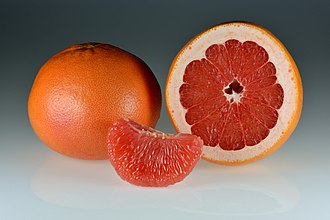
Photo: Wikipedia
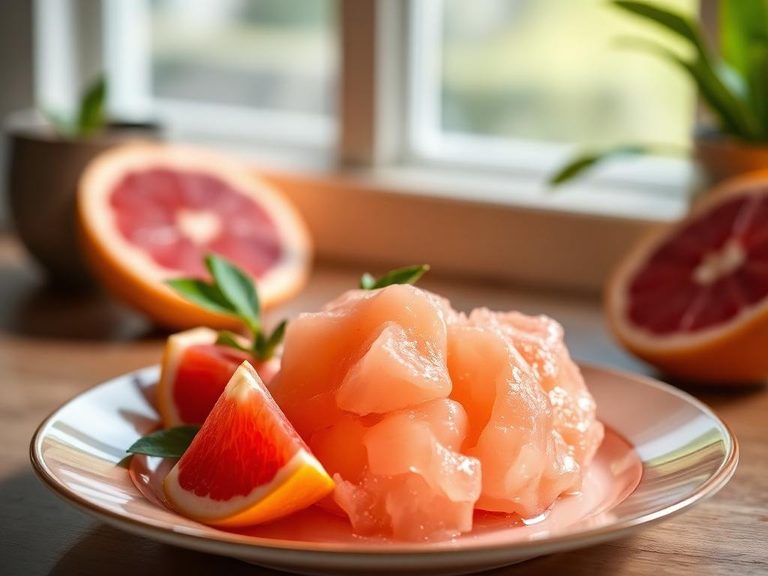
This is a potent, syrupy concentrate of white grapefruit juice, frozen into a solid block. It delivers an intensely tart, bright, and slightly bitter citrus punch with a thick, viscous texture before dilution. Nutritionally, it's a concentrated source of natural sugars and provides a significant dose of vitamin C.
Calorie split: 5% protein · 92% carbs · 3% fat
↓ Full nutrition💚 Why it's loved
People love its bold, unadulterated citrus flavor that can be customized to taste by adding water. It's a nostalgic pantry staple for making classic cocktails, refreshing mocktails, and tangy salad dressings year-round.
⚠️ Watch-outs & how to enjoy it better
The high sugar content can cause rapid blood-sugar spikes, especially when consumed undiluted or in large servings. It contains furanocoumarins, which can interact with certain medications (like some statins and calcium channel blockers). To mitigate, always dilute as directed, practice portion control, and consult a doctor if on specific medications.
Key benefits
- Excellent source of immune-supporting vitamin C.
- Provides quick, natural energy from fruit sugars.
- Contains beneficial plant compounds like flavonoids.
- A versatile base for both sweet and savory recipes.
🍽️ Popular dishes

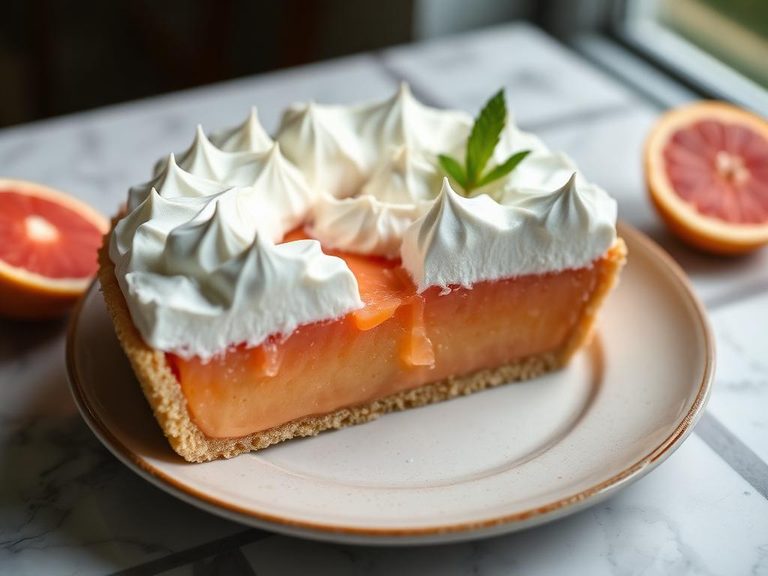
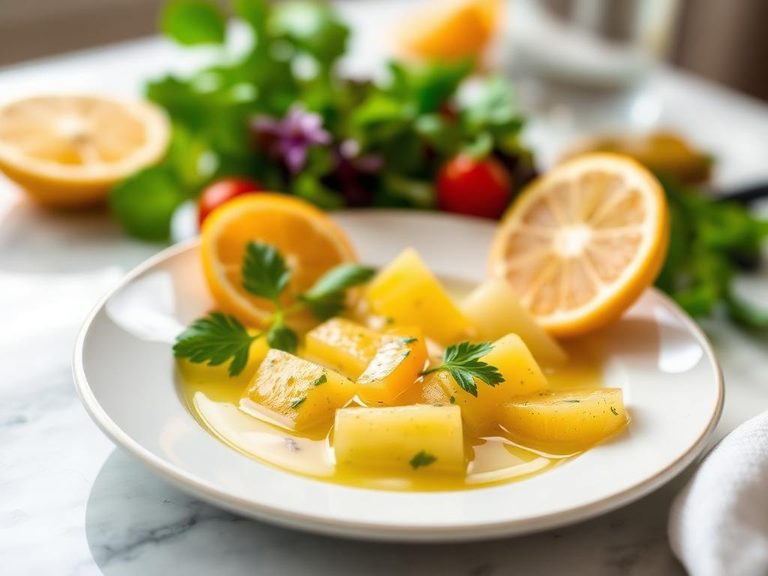
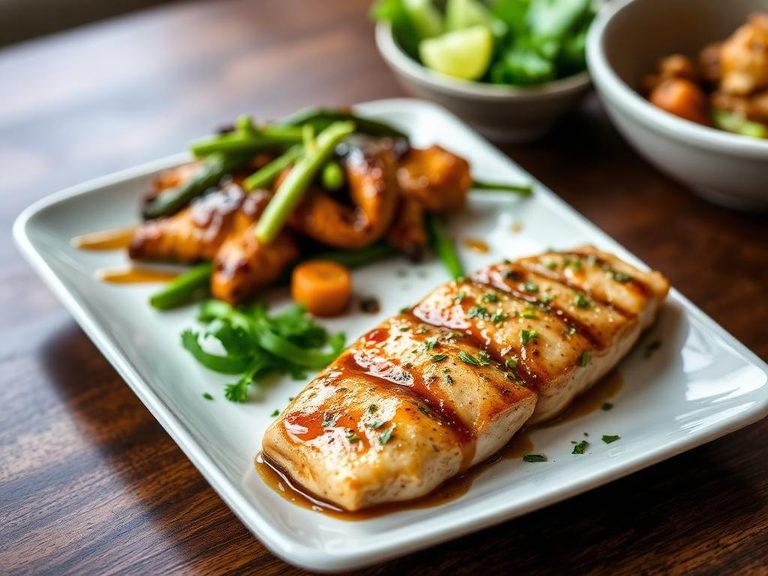
🌍 Where it's eaten
💡 Did you know?
The white grapefruit is actually the original, 'classic' grapefruit variety; the more common pink and red varieties were discovered later as natural mutations.
Full nutrition (USDA data · scales with serving)
| Water | 62.0 g |
| Energy | 146 kcal |
| Energy | 611 kj |
| Protein | 2.0 g |
| Total lipid (fat) | 0.48 g |
| Ash | 0.99 g |
| Carbohydrate, by difference | 34.6 g |
| Fiber, total dietary | 0.40 g |
| Total Sugars | 34.2 g |
| Calcium, Ca | 27.0 mg |
| Iron, Fe | 0.49 mg |
| Magnesium, Mg | 38.0 mg |
| Phosphorus, P | 49.0 mg |
| Potassium, K | 484 mg |
| Sodium, Na | 3.0 mg |
| Zinc, Zn | 0.18 mg |
| Copper, Cu | 0.12 mg |
| Manganese, Mn | 0.07 mg |
| Selenium, Se | 0.30 ug |
| Vitamin C, total ascorbic acid | 120 mg |
| Thiamin | 0.14 mg |
| Riboflavin | 0.08 mg |
| Niacin | 0.77 mg |
| Pantothenic acid | 0.67 mg |
| Vitamin B-6 | 0.15 mg |
| Folate, total | 13.0 ug |
| Folic acid | 0.00 ug |
| Folate, food | 13.0 ug |
| Folate, DFE | 13.0 ug |
| Choline, total | 24.5 mg |
| Vitamin B-12 | 0.00 ug |
| Vitamin B-12, added | 0.00 ug |
| Vitamin A, RAE | 2.0 ug |
| Retinol | 0.00 ug |
| Carotene, beta | 13.0 ug |
| Carotene, alpha | 8.0 ug |
| Cryptoxanthin, beta | 3.0 ug |
| Vitamin A, IU | 31.0 iu |
| Lycopene | 0.00 ug |
| Lutein + zeaxanthin | 34.0 ug |
| Vitamin E (alpha-tocopherol) | 0.14 mg |
| Vitamin E, added | 0.00 mg |
| Vitamin D (D2 + D3), International Units | 0.00 iu |
| Vitamin D (D2 + D3) | 0.00 ug |
| Vitamin K (phylloquinone) | 0.10 ug |
| Alcohol, ethyl | 0.00 g |
| Caffeine | 0.00 mg |
| Theobromine | 0.00 mg |
Fat & fatty acid profile (per 100g)
| Fatty acids, total saturated | 0.06 g |
| SFA 4:0 | 0.00 g |
| SFA 6:0 | 0.00 g |
| SFA 8:0 | 0.00 g |
| SFA 10:0 | 0.00 g |
| SFA 12:0 | 0.00 g |
| SFA 14:0 | 0.00 g |
| SFA 16:0 | 0.06 g |
| SFA 18:0 | 0.00 g |
| Fatty acids, total monounsaturated | 0.06 g |
| MUFA 16:1 | 0.01 g |
| MUFA 18:1 | 0.06 g |
| MUFA 20:1 | 0.00 g |
| MUFA 22:1 | 0.00 g |
| Fatty acids, total polyunsaturated | 0.11 g |
| PUFA 18:2 | 0.09 g |
| PUFA 18:3 | 0.02 g |
| PUFA 18:4 | 0.00 g |
| PUFA 20:4 | 0.00 g |
| PUFA 20:5 n-3 (EPA) | 0.00 g |
| PUFA 22:5 n-3 (DPA) | 0.00 g |
| PUFA 22:6 n-3 (DHA) | 0.00 g |
| Fatty acids, total trans | 0.00 g |
| Cholesterol | 0.00 mg |
Amino acid profile (per 100g)
Estimated from Grapefruit, sections, canned, juice pack, solids and liquids — USDA does not publish this profile for Grapefruit juice.
| Tryptophan | 0.01 g |
| Threonine | 0.01 g |
| Isoleucine | 0.01 g |
| Leucine | 0.01 g |
| Lysine | 0.02 g |
| Methionine | 0.01 g |
| Cystine | 0.01 g |
| Phenylalanine | 0.04 g |
| Tyrosine | 0.01 g |
| Valine | 0.01 g |
| Arginine | 0.08 g |
| Histidine | 0.01 g |
| Alanine | 0.02 g |
| Aspartic acid | 0.13 g |
| Glutamic acid | 0.18 g |
| Glycine | 0.01 g |
| Proline | 0.06 g |
| Serine | 0.03 g |
FAQ
How much water do I add to the concentrate?
Standard instructions are to add 3 cans of cold water to the frozen concentrate can. For a stronger juice, use less water; for a lighter one, use more.
Is this the same as grapefruit juice from the refrigerated section?
No. Frozen concentrate is much more potent and sugar-dense per gram. Refrigerated juice is typically pre-diluted and ready to drink, with a nutrition profile closer to the final diluted product.
Can I use it in baking?
Absolutely. It adds powerful citrus flavor to cakes, glazes, frostings, and marinades. Use it in place of other liquids, but be mindful of its high sugar content when adjusting the recipe.
Nutrient density (calculated · NRF9.3)
Nutrient Rich Foods index: beneficial nutrients (protein, fiber, vitamins, minerals) minus saturated fat, added sugar & sodium, per 100 kcal.
NRF9.3 index — Fulgoni, Keast & Drewnowski, 2009. Computed from USDA nutrients.
Weight-loss friendliness (composite index)
Energy density 1.46 kcal/g · 5% calories from protein · 0.4 g fiber · 34.2 g sugar per 100 g.
Composite of energy density (Rolls et al., 1999), protein & fiber satiety, minus sugar. A calculated heuristic — ranks satiety-per-calorie, not a clinical measure.
Dietary load (calculated from USDA values)
Potential renal acid load. Positive = acid-forming, negative = alkaline-forming.
Sodium-to-potassium ratio: 0.01 (lower is better — aim for ≤ 1)
Sodium:potassium per WHO potassium guidance. Computed from USDA nutrients.