

Game meat, bear, cooked, simmered
Whole food · Lamb, Veal, and Game Products

Photo: Wikipedia
Simmered bear meat is a dense, richly flavored red meat with a texture that can range from tender to slightly coarse depending on the cut and age of the animal. Its taste is often described as a deeper, gamier version of beef, sometimes with a subtle sweetness from a foraged diet. Nutritionally, it is an exceptionally lean and protein-dense food, providing a substantial amount of high-quality protein with zero carbohydrates.
Calorie split: 52% protein · 0% carbs · 48% fat
↓ Full nutrition💚 Why it's loved
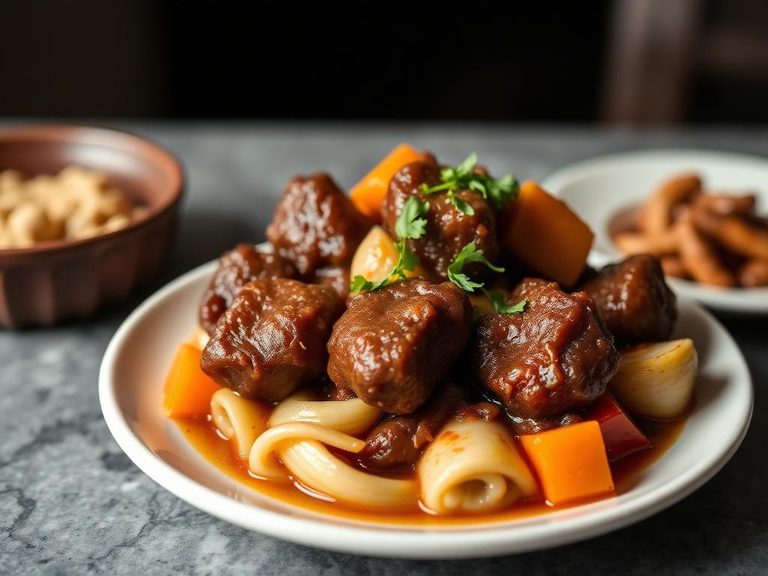
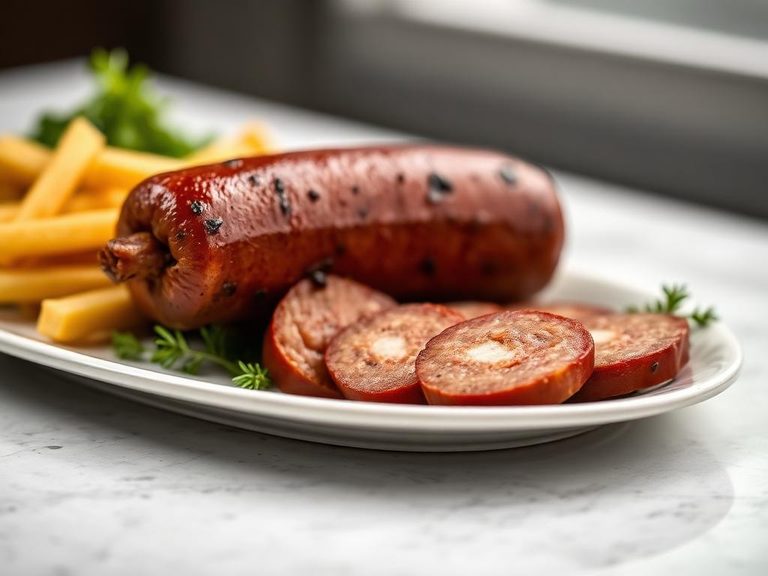
People cherish bear meat for its profound, complex flavor that connects them to wild landscapes and traditional hunting cultures. Its versatility in slow-cooked dishes like stews and sausages allows its unique taste to shine while becoming tender.
⚠️ Watch-outs & how to enjoy it better
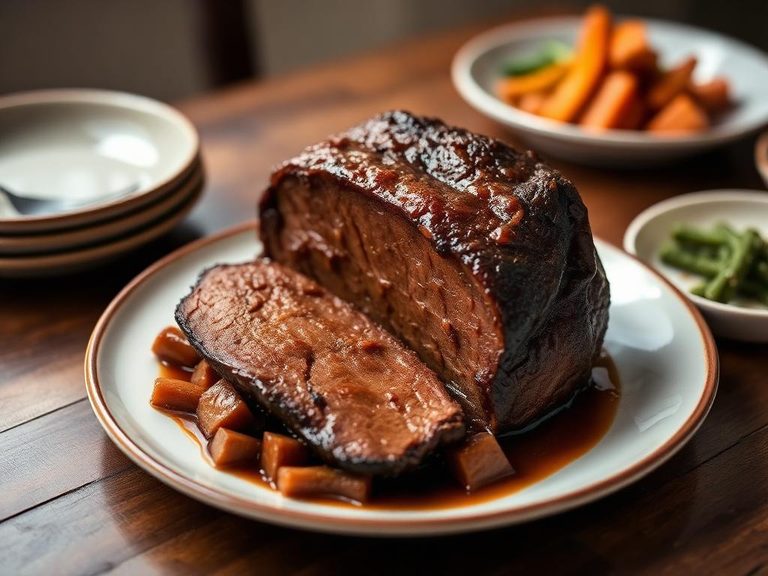
Bear meat can have a strong, gamey flavor that is not to everyone's taste, and improper handling or cooking can pose health risks. It is also a lean meat that can become tough if overcooked. To counteract toughness, use slow, moist cooking methods like simmering or braising. To temper the strong flavor, marinate it or pair it with bold ingredients like red wine, juniper berries, or mushrooms.
Key benefits
- Extremely high in protein per calorie
- Virtually zero carbohydrates or sugars
- Rich source of iron and B vitamins
- Lean fat profile compared to many red meats
- A traditional, wild-sourced protein
🍽️ Popular dishes
🌍 Where it's eaten
💡 Did you know?
In some regions, the fat of the bear (bear grease) has historically been rendered and used not just for cooking, but as a waterproofing agent for leather and a base for traditional salves.
Full nutrition (USDA data · scales with serving)
| Water | 53.5 g |
| Energy | 259 kcal |
| Energy | 1084 kj |
| Protein | 32.4 g |
| Total lipid (fat) | 13.4 g |
| Ash | 1.1 g |
| Carbohydrate, by difference | 0.00 g |
| Fiber, total dietary | 0.00 g |
| Total Sugars | 0.00 g |
| Calcium, Ca | 5.0 mg |
| Iron, Fe | 10.7 mg |
| Magnesium, Mg | 23.0 mg |
| Phosphorus, P | 170 mg |
| Potassium, K | 263 mg |
| Sodium, Na | 71.0 mg |
| Zinc, Zn | 10.3 mg |
| Copper, Cu | 0.15 mg |
| Selenium, Se | 11.2 ug |
| Vitamin C, total ascorbic acid | 0.00 mg |
| Thiamin | 0.10 mg |
| Riboflavin | 0.82 mg |
| Niacin | 3.4 mg |
| Vitamin B-6 | 0.29 mg |
| Folate, total | 6.0 ug |
| Folic acid | 0.00 ug |
| Folate, food | 6.0 ug |
| Folate, DFE | 6.0 ug |
| Choline, total | 122 mg |
| Betaine | 16.1 mg |
| Vitamin B-12 | 2.5 ug |
| Vitamin B-12, added | 0.00 ug |
| Vitamin A, RAE | 0.00 ug |
| Retinol | 0.00 ug |
| Carotene, beta | 0.00 ug |
| Carotene, alpha | 0.00 ug |
| Cryptoxanthin, beta | 0.00 ug |
| Vitamin A, IU | 0.00 iu |
| Lycopene | 0.00 ug |
| Lutein + zeaxanthin | 0.00 ug |
| Vitamin E (alpha-tocopherol) | 0.49 mg |
| Vitamin E, added | 0.00 mg |
| Vitamin D (D2 + D3), International Units | 0.00 iu |
| Vitamin D (D2 + D3) | 0.00 ug |
| Vitamin D3 (cholecalciferol) | 0.00 ug |
| Vitamin K (phylloquinone) | 1.8 ug |
| Vitamin K (Dihydrophylloquinone) | 0.00 ug |
| Alcohol, ethyl | 0.00 g |
| Caffeine | 0.00 mg |
| Theobromine | 0.00 mg |
Fat & fatty acid profile (per 100g)
| Fatty acids, total saturated | 3.5 g |
| SFA 4:0 | 0.00 g |
| SFA 6:0 | 0.00 g |
| SFA 8:0 | 0.00 g |
| SFA 10:0 | 0.00 g |
| SFA 12:0 | 0.00 g |
| SFA 14:0 | 0.19 g |
| SFA 16:0 | 2.1 g |
| SFA 18:0 | 0.77 g |
| Fatty acids, total monounsaturated | 5.7 g |
| MUFA 16:1 | 0.72 g |
| MUFA 18:1 | 4.1 g |
| MUFA 20:1 | 0.06 g |
| MUFA 22:1 | 0.00 g |
| Fatty acids, total polyunsaturated | 2.4 g |
| PUFA 18:2 | 1.6 g |
| PUFA 18:3 | 0.05 g |
| PUFA 18:4 | 0.00 g |
| PUFA 20:4 | 0.32 g |
| PUFA 20:5 n-3 (EPA) | 0.00 g |
| PUFA 22:5 n-3 (DPA) | 0.03 g |
| PUFA 22:6 n-3 (DHA) | 0.04 g |
| Cholesterol | 98.0 mg |
Amino acid profile (per 100g)
Estimated from Game meat, deer, cooked, roasted — USDA does not publish this profile for Game meat.
| Threonine | 1.4 g |
| Isoleucine | 1.2 g |
| Leucine | 2.6 g |
| Lysine | 2.6 g |
| Methionine | 0.74 g |
| Cystine | 0.34 g |
| Phenylalanine | 1.2 g |
| Tyrosine | 1.1 g |
| Valine | 1.4 g |
| Arginine | 2.2 g |
| Histidine | 1.5 g |
| Alanine | 1.9 g |
| Aspartic acid | 2.8 g |
| Glutamic acid | 4.4 g |
| Glycine | 1.5 g |
| Proline | 1.6 g |
| Serine | 1.3 g |
FAQ
Is bear meat safe to eat?
When properly handled and cooked to a safe internal temperature (160°F / 71°C), bear meat is safe. The primary concern is trichinosis, a parasite, so thorough cooking is essential. It should be sourced from regulated, legal hunts.
What does bear meat taste like?
It is often compared to a very lean, dark red meat with a strong, gamey flavor similar to venison or wild boar, but deeper. The taste can vary based on the bear's diet; those eating berries and fish may have a different flavor than those eating primarily vegetation.
How do you cook bear meat to make it tender?
Due to its leanness, bear meat is best cooked with moist heat methods like simmering, braising, or stewing for several hours. Quick, dry-heat cooking like grilling can easily make it tough and chewy.
Nutrient density (calculated · NRF9.3)
Nutrient Rich Foods index: beneficial nutrients (protein, fiber, vitamins, minerals) minus saturated fat, added sugar & sodium, per 100 kcal.
NRF9.3 index — Fulgoni, Keast & Drewnowski, 2009. Computed from USDA nutrients.
Weight-loss friendliness (composite index)
Energy density 2.59 kcal/g · 50% calories from protein · 0.0 g fiber · 0.0 g sugar per 100 g.
Composite of energy density (Rolls et al., 1999), protein & fiber satiety, minus sugar. A calculated heuristic — ranks satiety-per-calorie, not a clinical measure.
Dietary load (calculated from USDA values)
Potential renal acid load. Positive = acid-forming, negative = alkaline-forming.
Sodium-to-potassium ratio: 0.27 (lower is better — aim for ≤ 1)
Sodium:potassium per WHO potassium guidance. Computed from USDA nutrients.