

Game meat, deer, cooked, roasted
Whole food · Lamb, Veal, and Game Products

Photo: Wikipedia
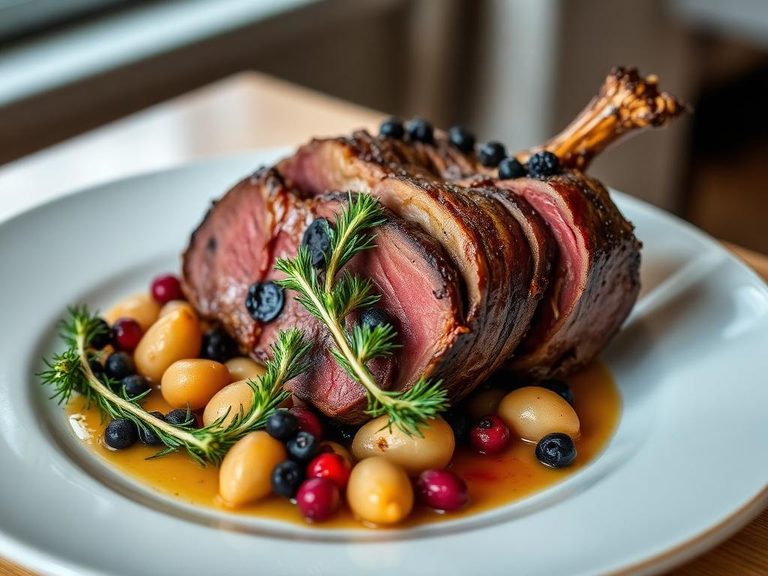
Roasted deer meat, or venison, is a lean, deeply flavorful game meat with a firm, dense texture and a rich, slightly sweet, earthy taste. Nutritionally, it is a powerhouse, offering an exceptionally high protein content of over 30g per 100g with virtually no carbohydrates and very little fat, making it a top choice for high-protein, low-carb diets.
Calorie split: 81% protein · 0% carbs · 19% fat
↓ Full nutrition💚 Why it's loved
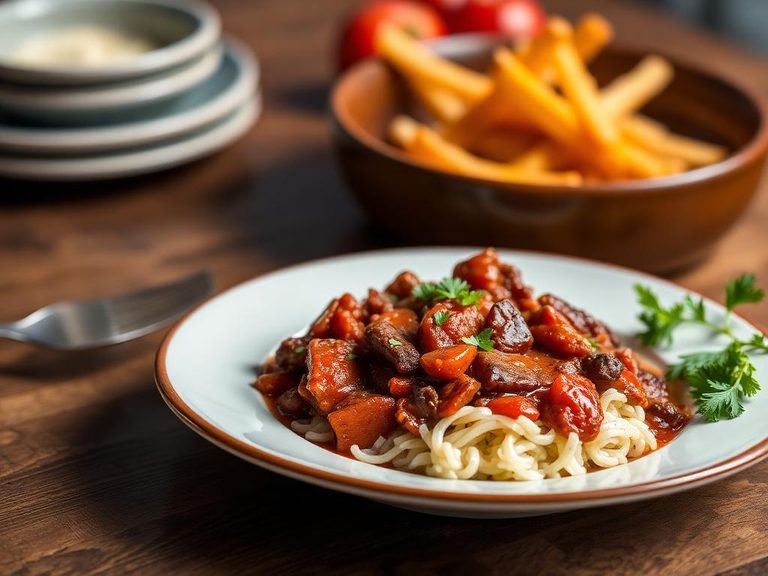
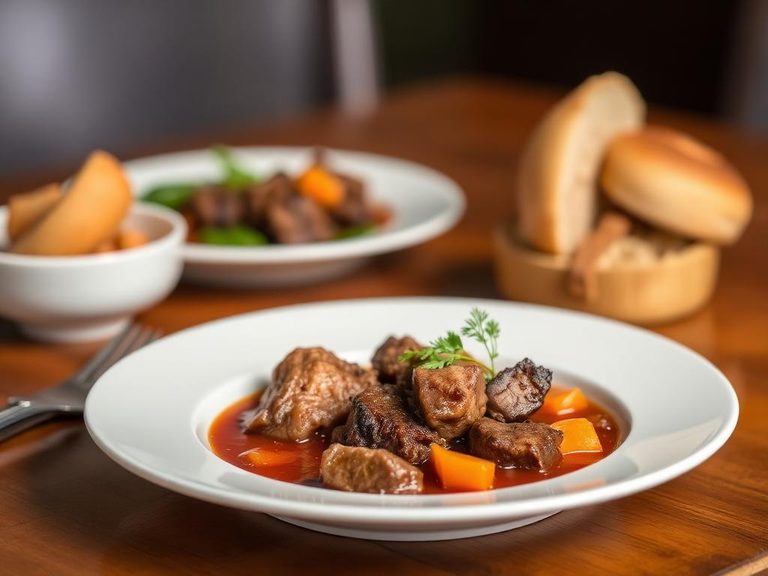
People love venison for its complex, robust flavor that is more nuanced than conventional beef, often described as a blend of rich meatiness with a subtle, sweet, and herbal note from the animal's wild diet. Its versatility allows it to shine in everything from elegant roasts to hearty stews, making it a prized ingredient in both rustic and gourmet cooking.
⚠️ Watch-outs & how to enjoy it better
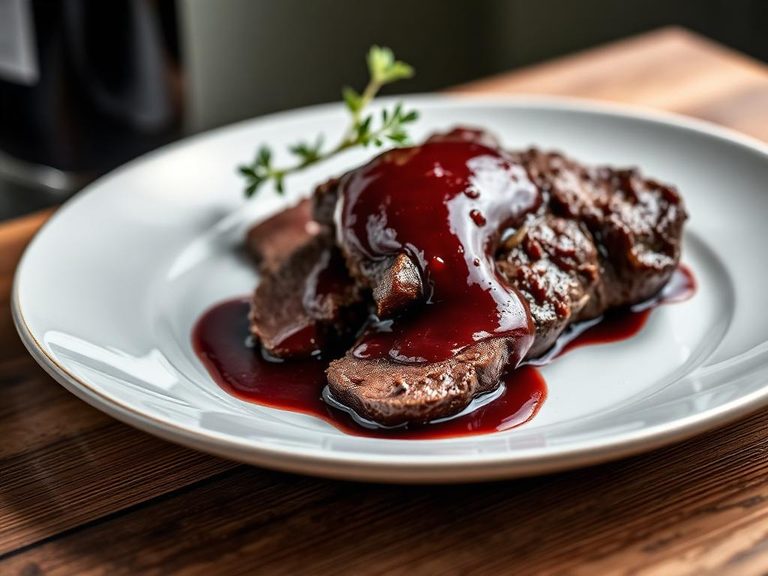
The primary downside is its leanness, which can lead to a dry, tough texture if overcooked, a common pitfall for those accustomed to fattier meats. To counteract this, use slow, moist cooking methods like braising or stewing, or pair roasted cuts with a flavorful sauce or fat like butter or oil. Those with gout should be cautious due to its high purine content; limiting portion size and ensuring adequate hydration can help manage this.
Key benefits
- Exceptionally high in protein for muscle maintenance and satiety
- Very low in fat, especially saturated fat, compared to beef
- Naturally carbohydrate-free, ideal for keto and low-carb diets
- Rich in iron, zinc, and B vitamins like B12
- Often sourced from wild or free-range animals, potentially higher in omega-3s
🍽️ Popular dishes
🌍 Where it's eaten
💡 Did you know?
Venison has fewer calories and less fat than a skinless chicken breast, making it one of the leanest red meats available.
Full nutrition (USDA data · scales with serving)
| Water | 65.2 g |
| Energy | 158 kcal |
| Energy | 661 kj |
| Protein | 30.2 g |
| Total lipid (fat) | 3.2 g |
| Ash | 1.5 g |
| Carbohydrate, by difference | 0.00 g |
| Fiber, total dietary | 0.00 g |
| Calcium, Ca | 7.0 mg |
| Iron, Fe | 4.5 mg |
| Magnesium, Mg | 24.0 mg |
| Phosphorus, P | 226 mg |
| Potassium, K | 335 mg |
| Sodium, Na | 54.0 mg |
| Zinc, Zn | 2.8 mg |
| Copper, Cu | 0.30 mg |
| Manganese, Mn | 0.05 mg |
| Selenium, Se | 12.9 ug |
| Vitamin C, total ascorbic acid | 0.00 mg |
| Thiamin | 0.18 mg |
| Riboflavin | 0.60 mg |
| Niacin | 6.7 mg |
| Vitamin A, RAE | 0.00 ug |
| Retinol | 0.00 ug |
| Vitamin A, IU | 0.00 iu |
Fat & fatty acid profile (per 100g)
| Fatty acids, total saturated | 1.3 g |
| SFA 10:0 | 0.00 g |
| SFA 12:0 | 0.00 g |
| SFA 14:0 | 0.03 g |
| SFA 16:0 | 0.54 g |
| SFA 18:0 | 0.67 g |
| Fatty acids, total monounsaturated | 0.88 g |
| MUFA 16:1 | 0.04 g |
| MUFA 18:1 | 0.83 g |
| MUFA 20:1 | 0.00 g |
| Fatty acids, total polyunsaturated | 0.62 g |
| PUFA 18:2 | 0.40 g |
| PUFA 18:3 | 0.09 g |
| PUFA 20:4 | 0.13 g |
| Cholesterol | 112 mg |
Amino acid profile (per 100g)
| Threonine | 1.4 g |
| Isoleucine | 1.2 g |
| Leucine | 2.6 g |
| Lysine | 2.6 g |
| Methionine | 0.74 g |
| Cystine | 0.34 g |
| Phenylalanine | 1.2 g |
| Tyrosine | 1.1 g |
| Valine | 1.4 g |
| Arginine | 2.2 g |
| Histidine | 1.5 g |
| Alanine | 1.9 g |
| Aspartic acid | 2.8 g |
| Glutamic acid | 4.4 g |
| Glycine | 1.5 g |
| Proline | 1.6 g |
| Serine | 1.3 g |
FAQ
How do I prevent roasted venison from becoming dry and tough?
The key is to not overcook it. Use a meat thermometer and aim for an internal temperature of 135°F (57°C) for medium-rare. Let it rest for 10 minutes after cooking to allow juices to redistribute. For tougher cuts, use slow, moist cooking methods like braising.
What does venison taste like compared to beef?
Venison has a richer, more complex flavor than beef. It's often described as having a slightly sweet, earthy, or gamey note from the animal's natural diet of grasses, herbs, and acorns. The texture is typically denser and leaner.
Is venison a healthy meat choice?
Yes, it is considered very healthy. It is extremely high in protein, low in fat (especially saturated fat), and a good source of iron, zinc, and B vitamins. Its lack of carbohydrates makes it suitable for many specialized diets.
Nutrient density (calculated · NRF9.3)
Nutrient Rich Foods index: beneficial nutrients (protein, fiber, vitamins, minerals) minus saturated fat, added sugar & sodium, per 100 kcal.
NRF9.3 index — Fulgoni, Keast & Drewnowski, 2009. Computed from USDA nutrients.
Weight-loss friendliness (composite index)
Energy density 1.58 kcal/g · 76% calories from protein · 0.0 g fiber · 0.0 g sugar per 100 g.
Composite of energy density (Rolls et al., 1999), protein & fiber satiety, minus sugar. A calculated heuristic — ranks satiety-per-calorie, not a clinical measure.
Dietary load (calculated from USDA values)
Potential renal acid load. Positive = acid-forming, negative = alkaline-forming.
Sodium-to-potassium ratio: 0.16 (lower is better — aim for ≤ 1)
Sodium:potassium per WHO potassium guidance. Computed from USDA nutrients.