Bear Jerky
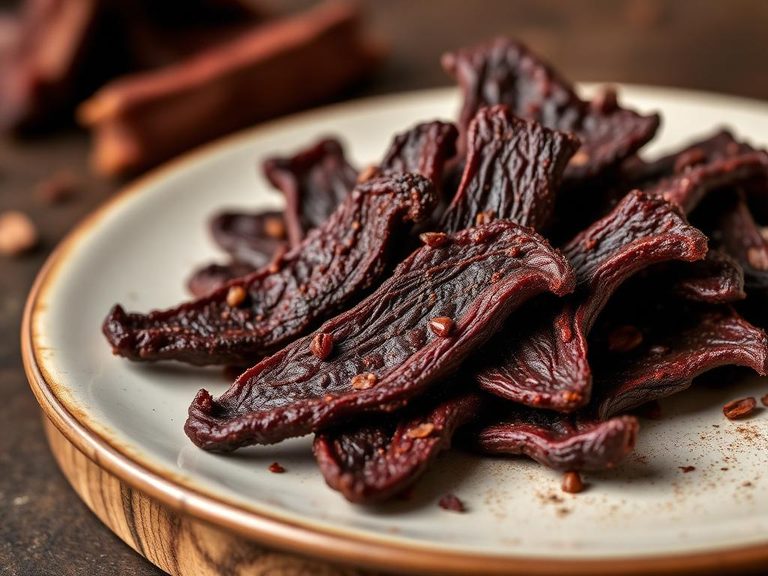
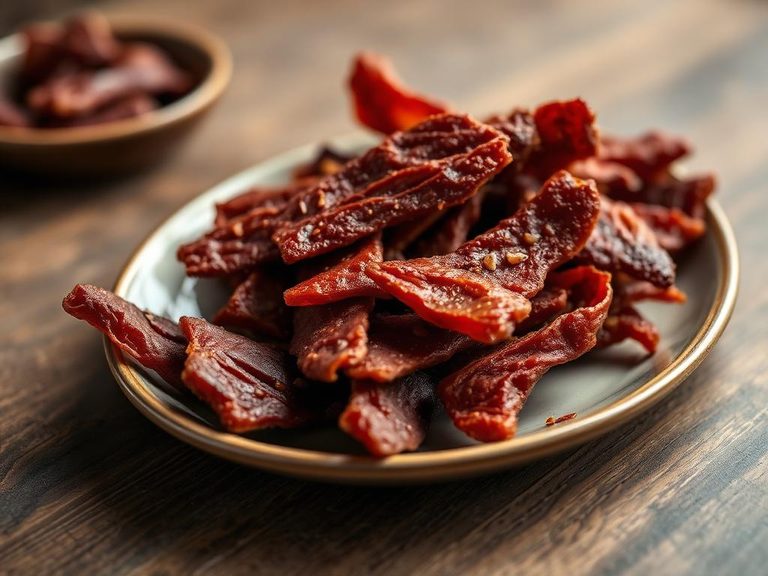
Bear jerky is a traditional, preserved meat snack made from the lean muscle of bears, typically black or grizzly bears. The meat is sliced thin, marinated in a blend of salt, sugar, and spices, then dried or smoked. It is a specialty food historically associated with hunting cultures in North America, particularly in rural and wilderness regions.
🍽️ Nutrition at a glance
Bear jerky is an extremely high-protein, low-carbohydrate food, providing a dense source of energy. It is rich in essential minerals like iron and zinc, with a single serving containing roughly 150-200 calories.
Nutrition breakdown
| Calories | 170 kcal |
| Protein | 25 g |
| Carbs | 4 g |
| Fat | 6 g |
| Fiber | 0 g |
| Sugar | 2 g |
| Sodium | 550 mg |
| Iron | 2.5 mg |
| Zinc | 4.0 mg |
| Potassium | 300 mg |
| Phosphorus | 200 mg |
| Niacin (B3) | 6.0 mg |
| Vitamin B6 | 0.4 mg |
| Selenium | 15 mcg |
| Cholesterol | 60 mg |
Per 1 oz (28 g) · estimated, varies by recipe
💡 What's interesting
Culturally, bear jerky is a heritage food linked to subsistence hunting and survival in remote areas. Nutritionally, wild bear meat is notably lean and can be a source of omega-3 fatty acids if the animal had a natural, varied diet.