

Gummy Bears
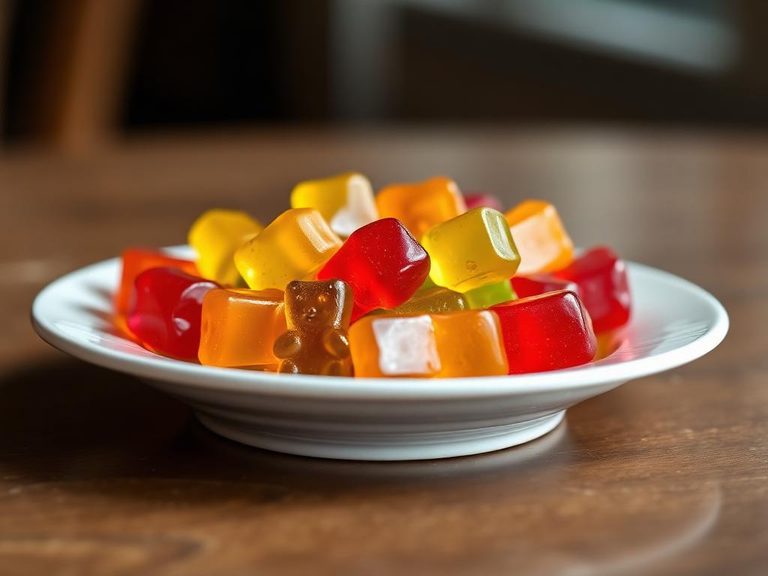
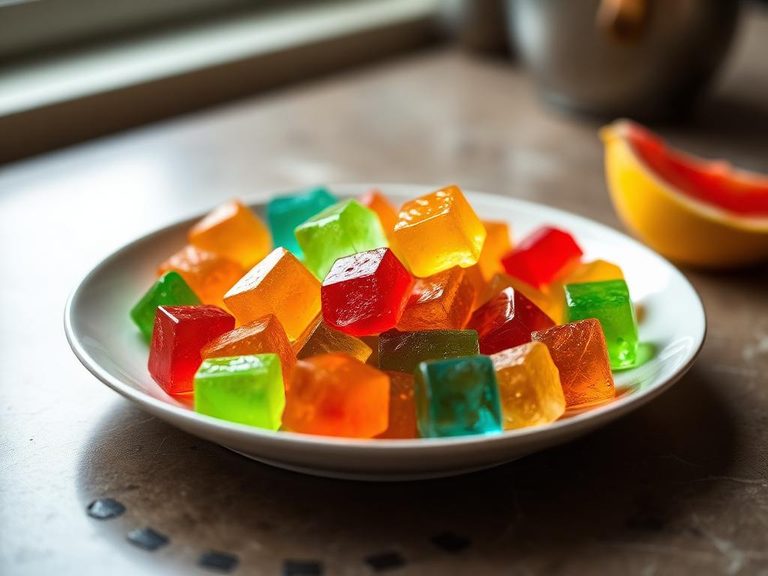
Gummy bears are small, bear-shaped fruit-flavored candies known for their chewy, gelatin-based texture. They typically contain sugar, gelatin, corn syrup, and fruit flavorings, often with vibrant colors. Originating in Germany, they have become a globally popular confectionery treat.
🍳 View the full Gummy Bears recipe →
🍽️ Nutrition at a glance
Gummy bears are primarily high in carbohydrates from sugar and corn syrup, with negligible fat and protein. A standard serving (about 17-20 bears) provides around 150-200 calories, mainly from simple sugars, and offers little nutritional value beyond quick energy.
Nutrition breakdown
| Calories | 480 kcal |
| Protein | 0 g |
| Carbs | 112 g |
| Fat | 0 g |
| Fiber | 0 g |
| Sugar | 84 g |
| Sodium | 25 mg |
| Vitamin C | 0 mg |
| Calcium | 10 mg |
| Iron | 0.1 mg |
| Potassium | 10 mg |
| Magnesium | 3 mg |
| Phosphorus | 10 mg |
| Zinc | 0.1 mg |
| Sodium | 25 mg |
Per 1 cup (140 g) · estimated, varies by recipe
💡 What's interesting
Culturally, gummy bears are a staple of German candy-making innovation, with the Haribo brand credited for popularizing them in the 1920s. Nutritionally, they are notable for being a gelatin-based snack, which means they contain animal-derived protein but in a form that's mostly processed as sugar in the diet.
🍽️ Related dishes



AI estimate may be inaccurate · Terms