

Syrups, corn, high-fructose
Whole food · Sweets
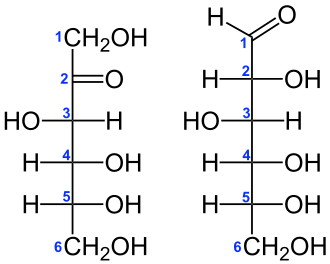
Photo: Wikipedia
High-fructose corn syrup (HFCS) is a liquid sweetener made from corn starch, where enzymes convert some glucose into fructose, typically in a 55/45 or 42/58 ratio. It has a thick, syrupy texture and a clean, intensely sweet taste without a distinct aftertaste. Nutritionally, it is a pure carbohydrate source, providing 281 kcal and 76g of carbs (almost entirely as sugar) per 100g, with no protein, fat, or fiber.
Calorie split: 0% protein · 100% carbs · 0% fat
↓ Full nutrition💚 Why it's loved
People love it for its powerful, clean sweetness that enhances flavors in sodas, candies, and baked goods without adding extra bulk. Its liquid form makes it incredibly versatile for industrial food production, enabling the consistent texture and taste we expect in many everyday treats.
⚠️ Watch-outs & how to enjoy it better
Its high concentration of free fructose can contribute to rapid blood-sugar spikes and, in excess, may strain liver metabolism. For those monitoring calorie or sugar intake, it offers 'empty calories' with no nutritional benefit. To counteract this, pair sugary HFCS-containing foods with protein, healthy fats, or fiber to slow absorption, practice strict portion control, and prioritize whole-food snacks over processed sweets.
Key benefits
- Highly cost-effective sweetener for food manufacturers
- Liquid form is easy to mix and blend into beverages and processed foods
- Helps maintain moisture and freshness in baked goods
- Provides a consistent, reliable sweetness level in mass production
- Extends shelf life in some products by inhibiting microbial growth
🍽️ Popular dishes






🌍 Where it's eaten
💡 Did you know?
HFCS was first mass-produced for commercial use in the United States in the late 1960s, but it didn't become widespread until the 1980s, partly due to a temporary shortage and high price of sucrose (table sugar).
Full nutrition (USDA data · scales with serving)
| Water | 24.0 g |
| Energy | 281 kcal |
| Energy | 1176 kj |
| Protein | 0.00 g |
| Total lipid (fat) | 0.00 g |
| Ash | 0.00 g |
| Carbohydrate, by difference | 76.0 g |
| Fiber, total dietary | 0.00 g |
| Total Sugars | 75.7 g |
| Calcium, Ca | 0.00 mg |
| Iron, Fe | 0.03 mg |
| Magnesium, Mg | 0.00 mg |
| Phosphorus, P | 0.00 mg |
| Potassium, K | 0.00 mg |
| Sodium, Na | 2.0 mg |
| Zinc, Zn | 0.02 mg |
| Copper, Cu | 0.03 mg |
| Manganese, Mn | 0.09 mg |
| Selenium, Se | 0.70 ug |
| Vitamin C, total ascorbic acid | 0.00 mg |
| Thiamin | 0.00 mg |
| Riboflavin | 0.02 mg |
| Niacin | 0.00 mg |
| Pantothenic acid | 0.01 mg |
| Vitamin B-6 | 0.00 mg |
| Folate, total | 0.00 ug |
| Folic acid | 0.00 ug |
| Folate, food | 0.00 ug |
| Folate, DFE | 0.00 ug |
| Choline, total | 0.00 mg |
| Vitamin B-12 | 0.00 ug |
| Vitamin B-12, added | 0.00 ug |
| Vitamin A, RAE | 0.00 ug |
| Retinol | 0.00 ug |
| Carotene, beta | 0.00 ug |
| Carotene, alpha | 0.00 ug |
| Cryptoxanthin, beta | 0.00 ug |
| Vitamin A, IU | 0.00 iu |
| Lycopene | 0.00 ug |
| Lutein + zeaxanthin | 0.00 ug |
| Vitamin E (alpha-tocopherol) | 0.00 mg |
| Vitamin E, added | 0.00 mg |
| Vitamin D (D2 + D3), International Units | 0.00 iu |
| Vitamin D (D2 + D3) | 0.00 ug |
| Vitamin K (phylloquinone) | 0.00 ug |
| Alcohol, ethyl | 0.00 g |
| Caffeine | 0.00 mg |
| Theobromine | 0.00 mg |
Fat & fatty acid profile (per 100g)
| Fatty acids, total saturated | 0.00 g |
| SFA 4:0 | 0.00 g |
| SFA 6:0 | 0.00 g |
| SFA 8:0 | 0.00 g |
| SFA 10:0 | 0.00 g |
| SFA 12:0 | 0.00 g |
| SFA 14:0 | 0.00 g |
| SFA 16:0 | 0.00 g |
| SFA 18:0 | 0.00 g |
| Fatty acids, total monounsaturated | 0.00 g |
| MUFA 16:1 | 0.00 g |
| MUFA 18:1 | 0.00 g |
| MUFA 20:1 | 0.00 g |
| MUFA 22:1 | 0.00 g |
| Fatty acids, total polyunsaturated | 0.00 g |
| PUFA 18:2 | 0.00 g |
| PUFA 18:3 | 0.00 g |
| PUFA 18:4 | 0.00 g |
| PUFA 20:4 | 0.00 g |
| PUFA 20:5 n-3 (EPA) | 0.00 g |
| PUFA 22:5 n-3 (DPA) | 0.00 g |
| PUFA 22:6 n-3 (DHA) | 0.00 g |
| Cholesterol | 0.00 mg |
Amino acid profile (per 100g)
Estimated from Syrups, malt — USDA does not publish this profile for Syrups.
| Tryptophan | 0.07 g |
| Threonine | 0.21 g |
| Isoleucine | 0.21 g |
| Leucine | 0.38 g |
| Lysine | 0.27 g |
| Methionine | 0.11 g |
| Cystine | 0.07 g |
| Phenylalanine | 0.26 g |
| Tyrosine | 0.17 g |
| Valine | 0.30 g |
| Arginine | 0.28 g |
| Histidine | 0.13 g |
| Alanine | 0.27 g |
| Aspartic acid | 0.56 g |
| Glutamic acid | 1.0 g |
| Glycine | 0.25 g |
| Proline | 0.46 g |
| Serine | 0.23 g |
FAQ
Is high-fructose corn syrup worse than table sugar?
Metabolically, the body processes the fructose and glucose in HFCS very similarly to the fructose and glucose in table sugar (sucrose). The primary health concern is the overconsumption of added sugars in general, regardless of the source.
Why is it used so often in processed foods?
Food manufacturers favor it because it is cheaper than sucrose, easier to blend in liquid form, and helps with moisture retention, browning, and flavor stability in products like bread and sauces.
Can I cook with it at home?
Yes, it can be used in recipes for glazes, sauces, or baked goods where a liquid sweetener is called for. However, it is primarily an industrial ingredient, so finding it in retail grocery stores can be difficult.
Nutrient density (calculated · NRF9.3)
Nutrient Rich Foods index: beneficial nutrients (protein, fiber, vitamins, minerals) minus saturated fat, added sugar & sodium, per 100 kcal.
NRF9.3 index — Fulgoni, Keast & Drewnowski, 2009. Computed from USDA nutrients.
Weight-loss friendliness (composite index)
Energy density 2.81 kcal/g · 0% calories from protein · 0.0 g fiber · 75.7 g sugar per 100 g.
Composite of energy density (Rolls et al., 1999), protein & fiber satiety, minus sugar. A calculated heuristic — ranks satiety-per-calorie, not a clinical measure.
Dietary load (calculated from USDA values)
Potential renal acid load. Positive = acid-forming, negative = alkaline-forming.
Sodium:potassium per WHO potassium guidance. Computed from USDA nutrients.