

Gummy Bear Cake Decorations
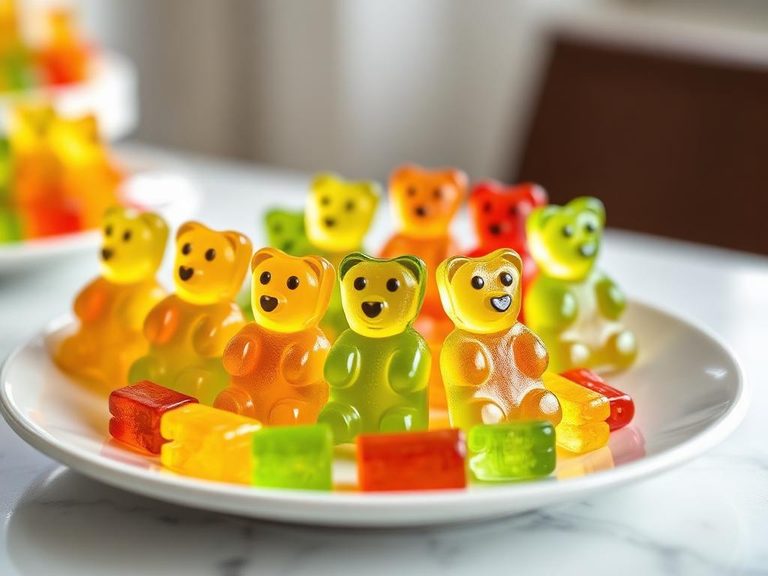
Gummy bear cake decorations are small, bear-shaped confections made primarily from gelatin, sugar, and fruit flavorings, used to add a playful and colorful touch to cakes, cupcakes, and other desserts. They are a popular decorative element in Western baking, especially for children's parties and celebrations. While not a traditional dish, they are a widely recognized and fun addition to modern confectionery.
🍳 View the full Gummy Bear Cake Decorations recipe →
🍽️ Nutrition at a glance
These decorations are high in carbohydrates and sugar, providing a quick source of energy but minimal nutritional value in terms of protein or fat. A typical serving of about 10 gummy bears contains roughly 70-80 calories, with the majority coming from simple sugars.
Nutrition breakdown
| Calories | 140 kcal |
| Protein | 0 g |
| Carbs | 34 g |
| Fat | 0 g |
| Fiber | 0 g |
| Sugar | 24 g |
| Sodium | 15 mg |
| Sodium | 15 mg |
| Potassium | 5 mg |
| Vitamin C | 0 mg |
| Calcium | 0 mg |
| Iron | 0 mg |
| Vitamin A | 0 IU |
| Vitamin D | 0 IU |
| Vitamin B12 | 0 µg |
Per 1 package (40 g) · estimated, varies by recipe
💡 What's interesting
Gummy bear cake decorations are culturally interesting as they reflect the playful and creative side of modern baking, often used to enhance the visual appeal of desserts for festive occasions. Nutritionally, they are unique in their use of gelatin, which provides a small amount of protein, though they are primarily considered a treat rather than a nutritional source.
🍽️ Related dishes
AI estimate may be inaccurate · Terms