

Fish, pollock, Alaska, cooked, dry heat (may contain additives to retain moisture)
Whole food · Finfish and Shellfish Products

Photo: Wikipedia
Alaska pollock, cooked by dry heat, is a lean, snow-white fish with a mild, slightly sweet flavor and a delicate, flaky texture. It's a nutritional powerhouse, delivering an impressive 23.48 grams of high-quality protein for just 111 calories per 100g, with virtually no fat or carbohydrates.
Calorie split: 90% protein · 0% carbs · 10% fat
↓ Full nutrition💚 Why it's loved
People love it for its incredibly mild, non-fishy taste and versatile texture that absorbs seasonings beautifully, making it a family-friendly staple. It's the affordable, everyday workhorse of the seafood world, perfect for quick weeknight meals.
⚠️ Watch-outs & how to enjoy it better
Its mild flavor can be perceived as bland if overcooked, and it's a common fish allergen. To counteract dryness, avoid overcooking; cook just until it flakes easily. For added flavor and healthy fats, pair it with a lemon-herb sauce, a drizzle of olive oil, or serve it alongside vegetables.
Key benefits
- Excellent source of lean, complete protein
- Very low in calories and fat
- Rich in essential nutrients like selenium and vitamin B12
- Supports muscle maintenance and satiety
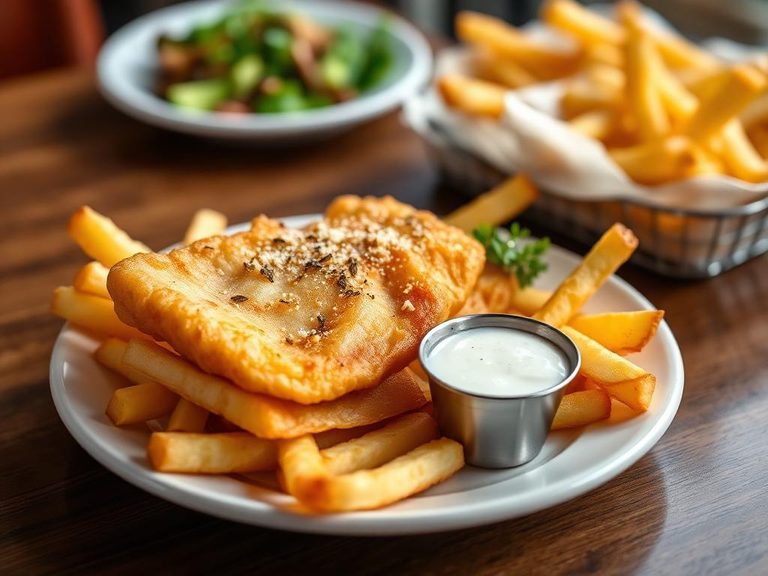
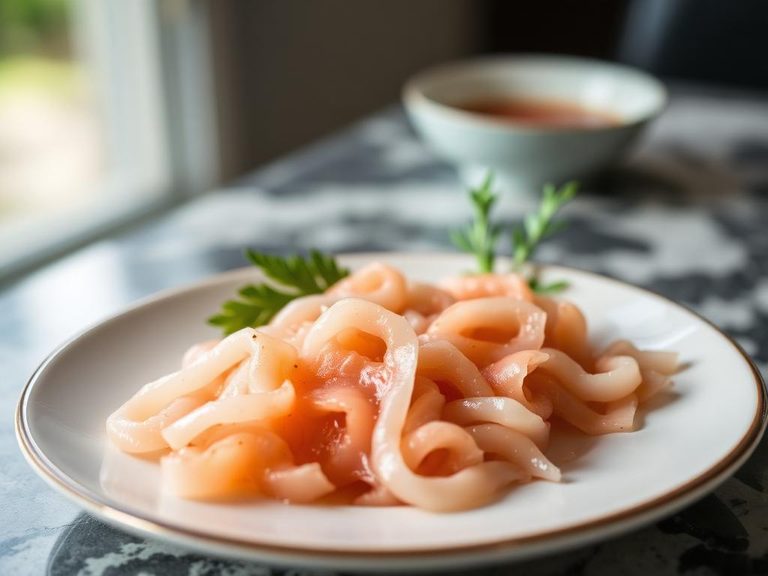
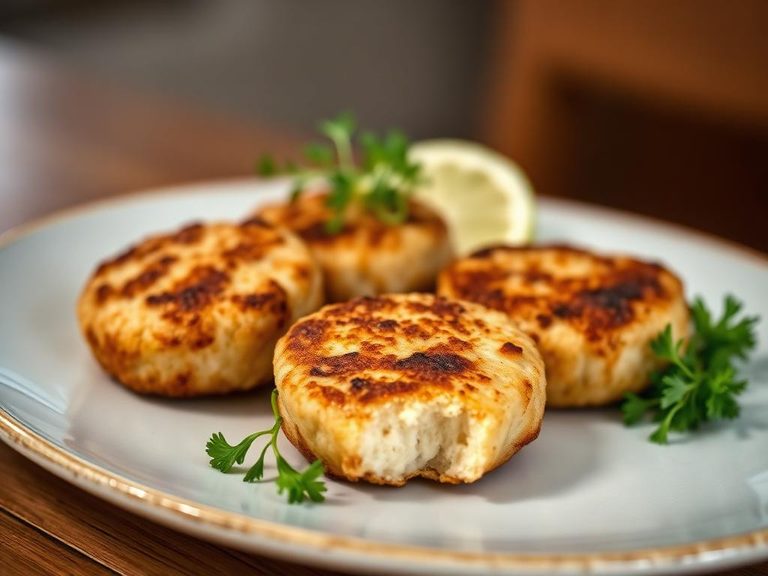
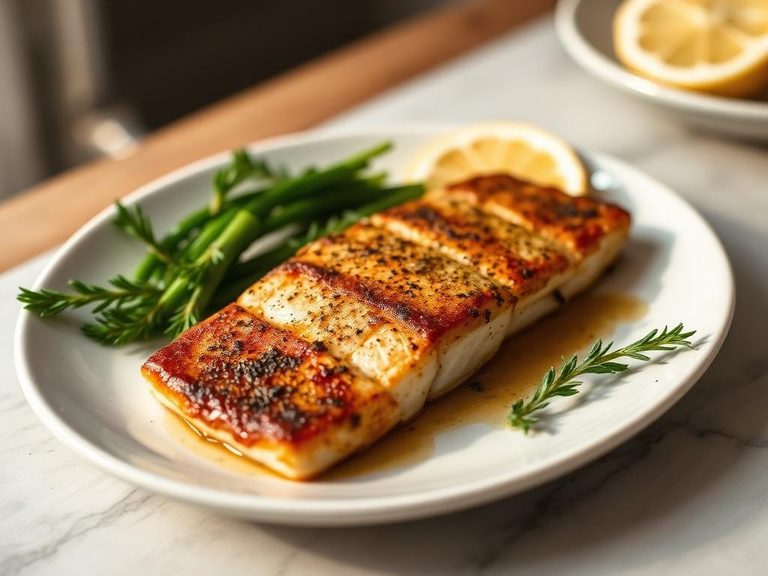
🍽️ Popular dishes
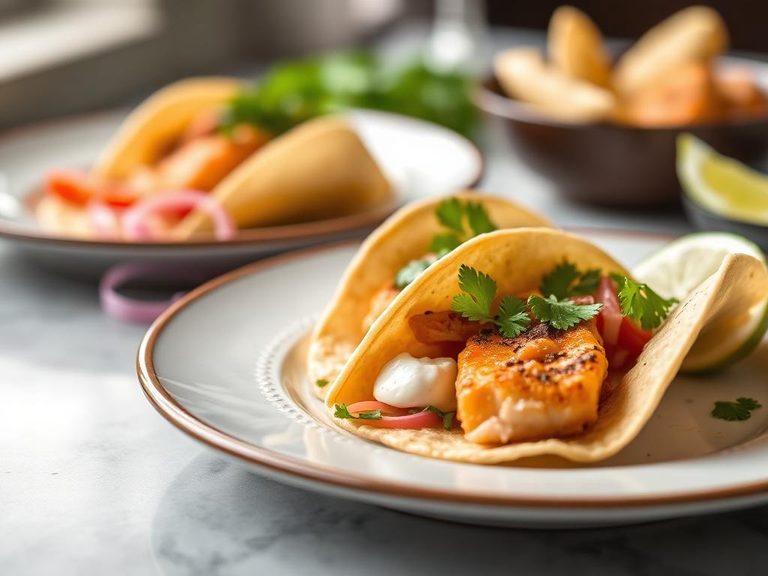
🌍 Where it's eaten
💡 Did you know?
Alaska pollock is the primary fish used to make surimi, the processed seafood paste that is shaped and flavored to create imitation crab sticks and other seafood analogs found worldwide.
Full nutrition (USDA data · scales with serving)
| Water | 73.7 g |
| Energy | 111 kcal |
| Energy | 464 kj |
| Protein | 23.5 g |
| Total lipid (fat) | 1.2 g |
| Ash | 1.7 g |
| Carbohydrate, by difference | 0.00 g |
| Fiber, total dietary | 0.00 g |
| Total Sugars | 0.00 g |
| Calcium, Ca | 72.0 mg |
| Iron, Fe | 0.56 mg |
| Magnesium, Mg | 81.0 mg |
| Phosphorus, P | 267 mg |
| Potassium, K | 430 mg |
| Sodium, Na | 419 mg |
| Zinc, Zn | 0.57 mg |
| Copper, Cu | 0.06 mg |
| Manganese, Mn | 0.02 mg |
| Selenium, Se | 44.1 ug |
| Vitamin C, total ascorbic acid | 0.00 mg |
| Thiamin | 0.05 mg |
| Riboflavin | 0.22 mg |
| Niacin | 3.9 mg |
| Pantothenic acid | 0.43 mg |
| Vitamin B-6 | 0.33 mg |
| Folate, total | 3.0 ug |
| Folic acid | 0.00 ug |
| Folate, food | 3.0 ug |
| Folate, DFE | 3.0 ug |
| Choline, total | 91.6 mg |
| Vitamin B-12 | 3.7 ug |
| Vitamin B-12, added | 0.00 ug |
| Vitamin A, RAE | 17.0 ug |
| Retinol | 17.0 ug |
| Carotene, beta | 0.00 ug |
| Carotene, alpha | 0.00 ug |
| Cryptoxanthin, beta | 0.00 ug |
| Vitamin A, IU | 51.0 iu |
| Lycopene | 0.00 ug |
| Lutein + zeaxanthin | 0.00 ug |
| Vitamin E (alpha-tocopherol) | 0.28 mg |
| Vitamin E, added | 0.00 mg |
| Vitamin D (D2 + D3), International Units | 51.0 iu |
| Vitamin D (D2 + D3) | 1.3 ug |
| Vitamin D3 (cholecalciferol) | 1.3 ug |
| Vitamin K (phylloquinone) | 0.10 ug |
| Alcohol, ethyl | 0.00 g |
| Caffeine | 0.00 mg |
| Theobromine | 0.00 mg |
Fat & fatty acid profile (per 100g)
| Fatty acids, total saturated | 0.16 g |
| SFA 4:0 | 0.00 g |
| SFA 6:0 | 0.00 g |
| SFA 8:0 | 0.00 g |
| SFA 10:0 | 0.00 g |
| SFA 12:0 | 0.00 g |
| SFA 14:0 | 0.01 g |
| SFA 16:0 | 0.10 g |
| SFA 18:0 | 0.05 g |
| Fatty acids, total monounsaturated | 0.13 g |
| MUFA 16:1 | 0.01 g |
| MUFA 18:1 | 0.08 g |
| MUFA 20:1 | 0.03 g |
| MUFA 22:1 | 0.01 g |
| Fatty acids, total polyunsaturated | 0.58 g |
| PUFA 18:2 | 0.01 g |
| PUFA 18:3 | 0.00 g |
| PUFA 18:4 | 0.01 g |
| PUFA 20:4 | 0.03 g |
| PUFA 20:5 n-3 (EPA) | 0.09 g |
| PUFA 22:5 n-3 (DPA) | 0.03 g |
| PUFA 22:6 n-3 (DHA) | 0.42 g |
| Cholesterol | 86.0 mg |
Amino acid profile (per 100g)
| Tryptophan | 0.26 g |
| Threonine | 1.0 g |
| Isoleucine | 1.1 g |
| Leucine | 1.9 g |
| Lysine | 2.2 g |
| Methionine | 0.70 g |
| Cystine | 0.25 g |
| Phenylalanine | 0.92 g |
| Tyrosine | 0.79 g |
| Valine | 1.2 g |
| Arginine | 1.4 g |
| Histidine | 0.69 g |
| Alanine | 1.4 g |
| Aspartic acid | 2.4 g |
| Glutamic acid | 3.5 g |
| Glycine | 1.1 g |
| Proline | 0.83 g |
| Serine | 0.96 g |
FAQ
Is pollock a healthy fish to eat regularly?
Yes, it's an excellent choice. It's low in calories and fat, high in protein, and a good source of nutrients like selenium and vitamin B12. Its sustainability status varies by fishery, so looking for certifications like MSC can be a good practice.
How does pollock differ from cod?
Pollock is generally milder in flavor, slightly less firm, and more affordable than cod. Nutritionally, they are very similar, both being lean, white fish. Pollock is often used as a substitute for cod in recipes.
What does 'may contain additives to retain moisture' mean?
This typically refers to a process called 'soaking' or 'glazing' where the fish is treated with a solution (often containing phosphates) to help it retain water during freezing and cooking, resulting in a juicier final product.
Nutrient density (calculated · NRF9.3)
Nutrient Rich Foods index: beneficial nutrients (protein, fiber, vitamins, minerals) minus saturated fat, added sugar & sodium, per 100 kcal.
NRF9.3 index — Fulgoni, Keast & Drewnowski, 2009. Computed from USDA nutrients.
Weight-loss friendliness (composite index)
Energy density 1.11 kcal/g · 85% calories from protein · 0.0 g fiber · 0.0 g sugar per 100 g.
Composite of energy density (Rolls et al., 1999), protein & fiber satiety, minus sugar. A calculated heuristic — ranks satiety-per-calorie, not a clinical measure.
Dietary load (calculated from USDA values)
Potential renal acid load. Positive = acid-forming, negative = alkaline-forming.
Sodium-to-potassium ratio: 0.97 (lower is better — aim for ≤ 1)
Sodium:potassium per WHO potassium guidance. Computed from USDA nutrients.