

Cream, half and half, fat free
Whole food · Dairy and Egg Products
Fat-free half and half is a light, pourable dairy product that mimics the richness of cream with a fraction of the fat, achieved by blending skim milk and milk solids. It has a thin, smooth texture and a mildly sweet, milky taste that lacks the buttery depth of full-fat cream. Nutritionally, it's a low-calorie, low-fat option that provides a small boost of protein and carbohydrates.
Calorie split: 18% protein · 61% carbs · 21% fat
↓ Full nutrition💚 Why it's loved
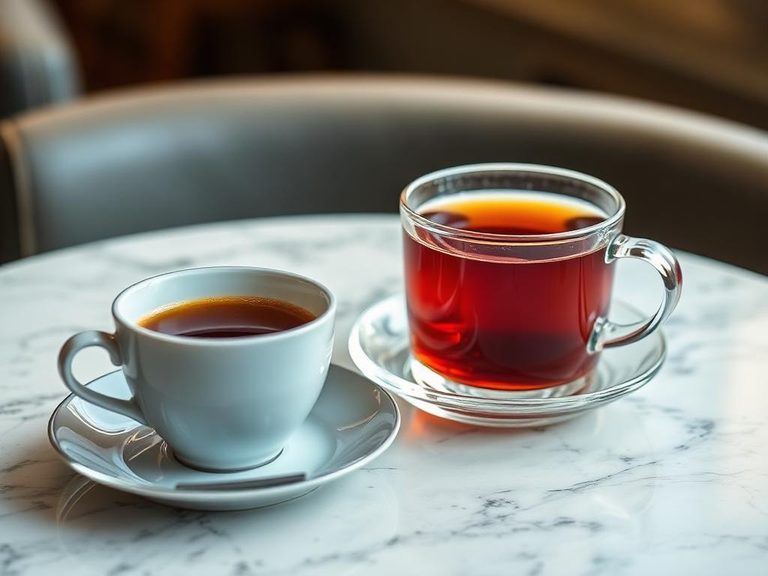
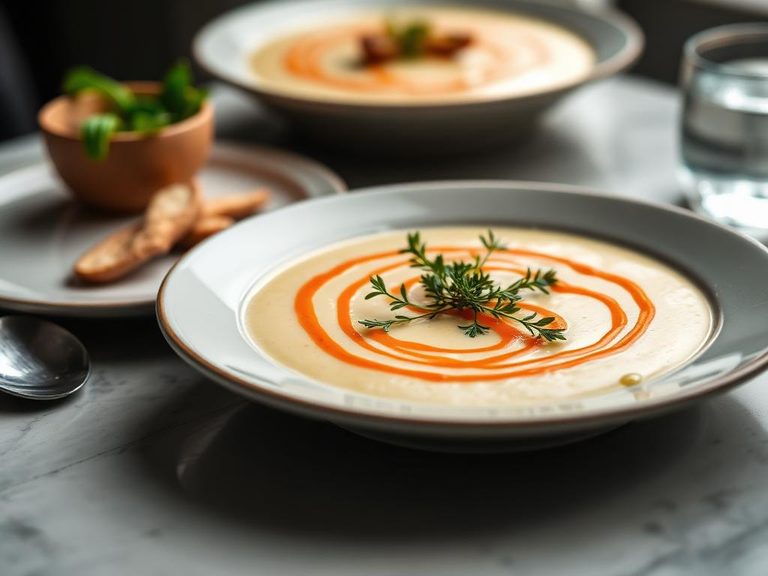
People love it for its ability to lighten up coffee, soups, and sauces while still offering a creamy mouthfeel and a touch of sweetness. Its versatility makes it a staple for those seeking a lower-fat dairy option without completely sacrificing richness.
⚠️ Watch-outs & how to enjoy it better
The primary downside is its higher carbohydrate and sugar content compared to heavy cream, which can contribute to blood sugar spikes, especially for those with diabetes or insulin resistance. To counteract this, pair it with protein-rich foods (like nuts or eggs) or fiber-rich ingredients (like oats or berries) to slow sugar absorption. It also lacks the emulsifying properties of full-fat cream, so it may curdle in very acidic or high-heat dishes.
Key benefits
- Low in calories and fat, making it a lighter alternative to cream.
- Provides a source of protein and calcium.
- Adds creaminess to beverages and dishes without the saturated fat of full-fat cream.
- Helps reduce overall saturated fat intake in cooking and baking.
🍽️ Popular dishes
🌍 Where it's eaten
💡 Did you know?
The term 'half and half' originally referred to a 50/50 blend of whole milk and cream, but fat-free versions are made by combining skim milk with milk solids or a fat-replacer to mimic the texture without the fat.
Full nutrition (USDA data · scales with serving)
| Water | 86.0 g |
| Energy | 59.0 kcal |
| Energy | 247 kj |
| Protein | 2.6 g |
| Total lipid (fat) | 1.4 g |
| Ash | 1.0 g |
| Carbohydrate, by difference | 9.0 g |
| Fiber, total dietary | 0.00 g |
| Total Sugars | 5.0 g |
| Starch | 0.00 g |
| Calcium, Ca | 96.0 mg |
| Iron, Fe | 0.00 mg |
| Magnesium, Mg | 16.0 mg |
| Phosphorus, P | 151 mg |
| Potassium, K | 206 mg |
| Sodium, Na | 100 mg |
| Zinc, Zn | 0.81 mg |
| Copper, Cu | 0.02 mg |
| Manganese, Mn | 0.00 mg |
| Selenium, Se | 2.9 ug |
| Fluoride, F | 3.0 ug |
| Vitamin C, total ascorbic acid | 0.70 mg |
| Thiamin | 0.06 mg |
| Riboflavin | 0.24 mg |
| Niacin | 0.12 mg |
| Pantothenic acid | 0.46 mg |
| Vitamin B-6 | 0.06 mg |
| Folate, total | 4.0 ug |
| Folic acid | 0.00 ug |
| Folate, food | 4.0 ug |
| Folate, DFE | 4.0 ug |
| Choline, total | 15.0 mg |
| Betaine | 0.70 mg |
| Vitamin B-12 | 0.52 ug |
| Vitamin B-12, added | 0.00 ug |
| Vitamin A, RAE | 12.0 ug |
| Retinol | 12.0 ug |
| Carotene, beta | 3.0 ug |
| Carotene, alpha | 0.00 ug |
| Cryptoxanthin, beta | 0.00 ug |
| Vitamin A, IU | 43.0 iu |
| Lycopene | 0.00 ug |
| Lutein + zeaxanthin | 0.00 ug |
| Vitamin E (alpha-tocopherol) | 0.04 mg |
| Vitamin E, added | 0.00 mg |
| Vitamin D (D2 + D3), International Units | 0.00 iu |
| Vitamin D (D2 + D3) | 0.00 ug |
| Vitamin K (phylloquinone) | 0.20 ug |
| Alcohol, ethyl | 0.00 g |
| Caffeine | 0.00 mg |
| Theobromine | 0.00 mg |
Fat & fatty acid profile (per 100g)
| Fatty acids, total saturated | 0.84 g |
| SFA 4:0 | 0.04 g |
| SFA 6:0 | 0.03 g |
| SFA 8:0 | 0.02 g |
| SFA 10:0 | 0.04 g |
| SFA 12:0 | 0.04 g |
| SFA 14:0 | 0.14 g |
| SFA 16:0 | 0.37 g |
| SFA 18:0 | 0.17 g |
| Fatty acids, total monounsaturated | 0.38 g |
| MUFA 16:1 | 0.03 g |
| MUFA 18:1 | 0.35 g |
| MUFA 20:1 | 0.00 g |
| MUFA 22:1 | 0.00 g |
| Fatty acids, total polyunsaturated | 0.05 g |
| PUFA 18:2 | 0.03 g |
| PUFA 18:3 | 0.02 g |
| PUFA 18:4 | 0.00 g |
| PUFA 20:4 | 0.00 g |
| PUFA 20:5 n-3 (EPA) | 0.00 g |
| PUFA 22:5 n-3 (DPA) | 0.00 g |
| PUFA 22:6 n-3 (DHA) | 0.00 g |
| Cholesterol | 5.0 mg |
Amino acid profile (per 100g)
Estimated from Cream, fluid, light (coffee cream or table cream) — USDA does not publish this profile for Cream.
| Tryptophan | 0.07 g |
| Threonine | 0.13 g |
| Isoleucine | 0.15 g |
| Leucine | 0.24 g |
| Lysine | 0.13 g |
| Methionine | 0.07 g |
| Cystine | 0.01 g |
| Phenylalanine | 0.14 g |
| Tyrosine | 0.14 g |
| Valine | 0.18 g |
| Arginine | 0.07 g |
| Histidine | 0.07 g |
| Alanine | 0.09 g |
| Aspartic acid | 0.22 g |
| Glutamic acid | 0.59 g |
| Glycine | 0.07 g |
| Proline | 0.31 g |
| Serine | 0.10 g |
FAQ
What is the difference between fat-free half and half and skim milk?
Fat-free half and half is made from skim milk and milk solids (or sometimes a fat replacer) to create a thicker, creamier texture and a slightly sweeter taste than plain skim milk. It has more carbohydrates and protein per serving.
Can I use fat-free half and half in baking?
Yes, it can be used in baking, but it may not provide the same richness or browning as full-fat cream. It works well in recipes where a lighter texture is desired, such as in pancakes, muffins, or light cakes.
Is fat-free half and half suitable for a low-carb diet?
Not ideally. It contains about 9g of carbohydrates per 100g, which is higher than heavy cream (about 3g per 100g). For a low-carb diet, heavy cream or a low-carb milk alternative might be a better choice.
Nutrient density (calculated · NRF9.3)
Nutrient Rich Foods index: beneficial nutrients (protein, fiber, vitamins, minerals) minus saturated fat, added sugar & sodium, per 100 kcal.
NRF9.3 index — Fulgoni, Keast & Drewnowski, 2009. Computed from USDA nutrients.
Weight-loss friendliness (composite index)
Energy density 0.59 kcal/g · 18% calories from protein · 0.0 g fiber · 5.0 g sugar per 100 g.
Composite of energy density (Rolls et al., 1999), protein & fiber satiety, minus sugar. A calculated heuristic — ranks satiety-per-calorie, not a clinical measure.
Dietary load (calculated from USDA values)
Potential renal acid load. Positive = acid-forming, negative = alkaline-forming.
Sodium-to-potassium ratio: 0.49 (lower is better — aim for ≤ 1)
Sodium:potassium per WHO potassium guidance. Computed from USDA nutrients.