

Cream, fluid, light whipping
Whole food · Dairy and Egg Products

Photo: Wikipedia
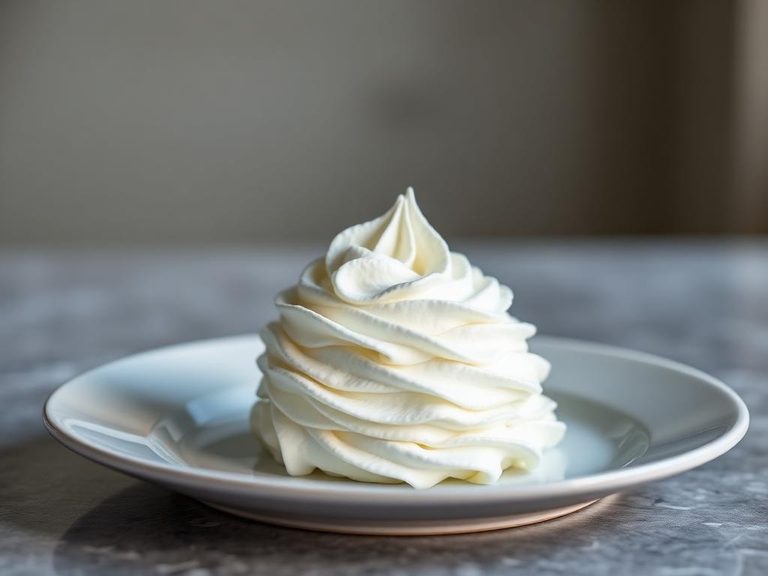
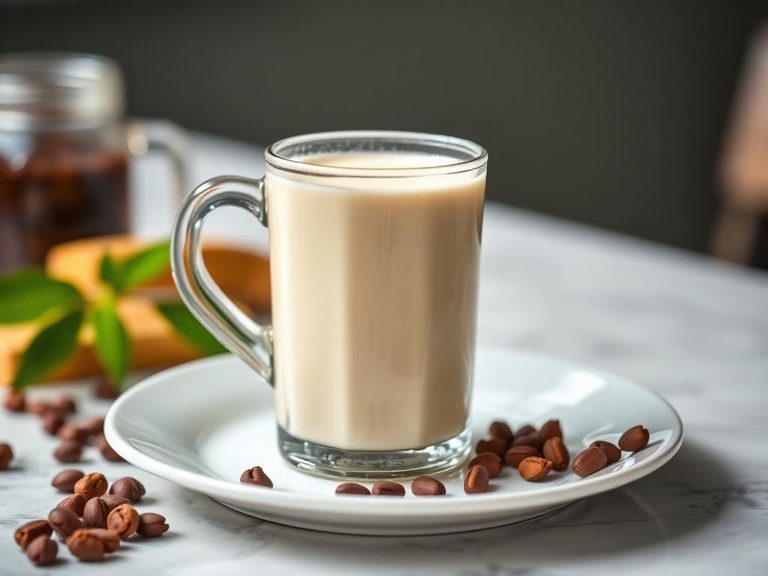
Light whipping cream is a rich, pourable dairy product with a silky texture and a delicate, sweet-milky flavor. It's essentially a lighter version of heavy cream, designed to hold a soft, airy peak when whipped. Nutritionally, it's a concentrated source of energy and fat, providing a luxurious mouthfeel to dishes.
Calorie split: 3% protein · 4% carbs · 93% fat
↓ Full nutrition💚 Why it's loved
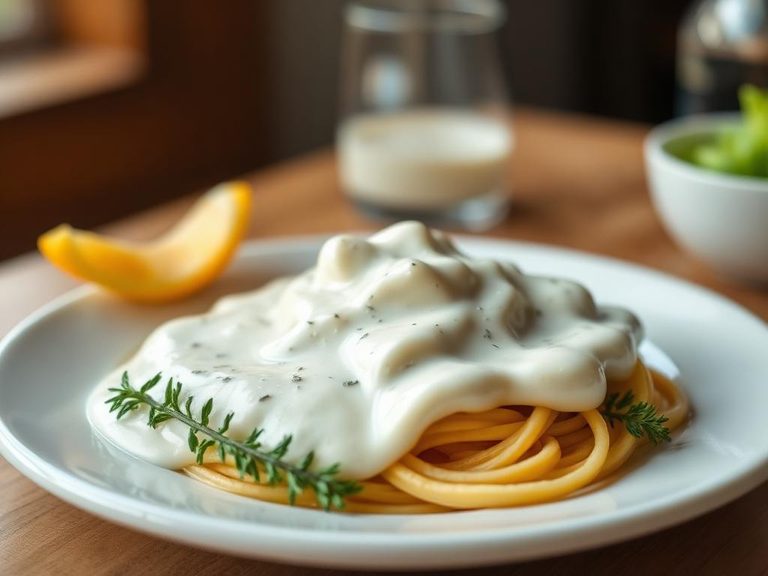
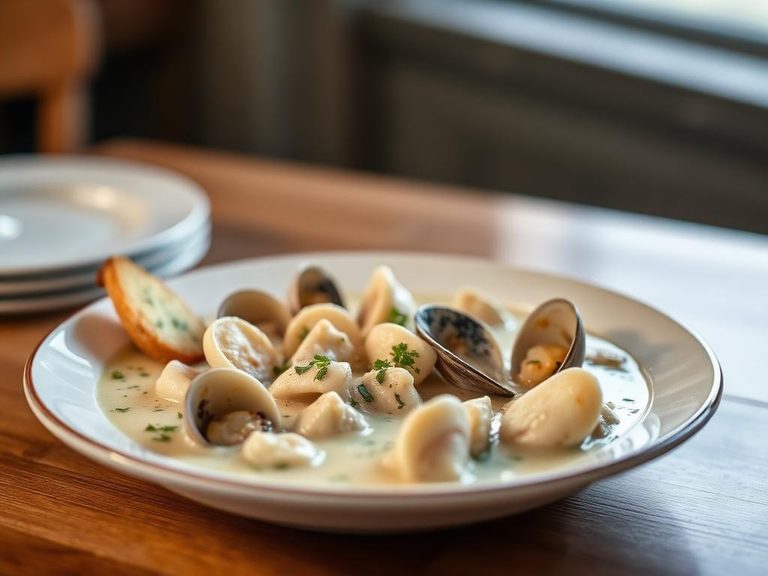
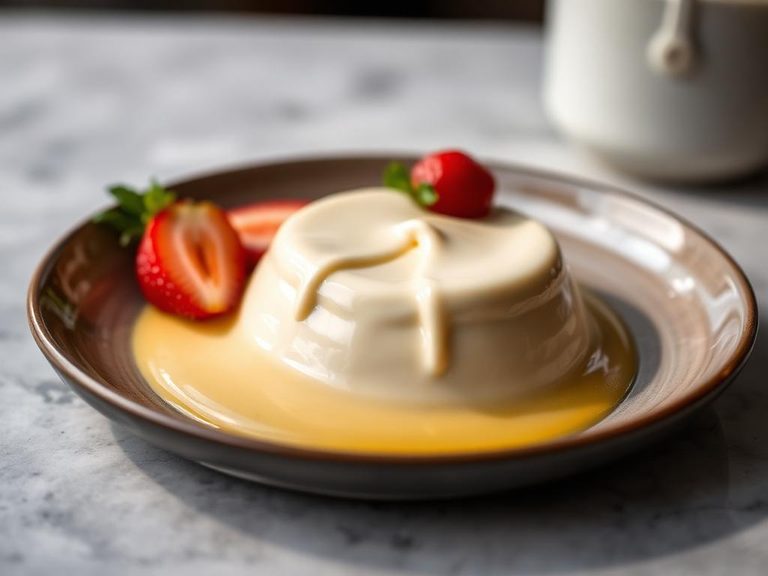
People adore it for its transformative ability to add instant creaminess, a subtle sweetness, and a luxurious finish to everything from coffee and pasta sauces to fruit and pies. It's a versatile staple that bridges the gap between everyday cooking and indulgent baking.
⚠️ Watch-outs & how to enjoy it better
Its high saturated fat and calorie content can be a concern for heart health and weight management if used excessively. For those monitoring blood sugar, its natural lactose can contribute to intake, though it's low in carbs. A practical tip is to use it as a small, flavorful accent rather than a base, and to balance it with high-fiber, protein-rich ingredients in a meal.
Key benefits
- Excellent source of fat-soluble vitamins A and D.
- Provides a quick source of energy from its high fat content.
- Enhances the texture and richness of sauces, soups, and desserts.
- Contains conjugated linoleic acid (CLA), a naturally occurring fatty acid.
🍽️ Popular dishes

🌍 Where it's eaten
💡 Did you know?
The 'light' in light whipping cream refers to its lower milkfat content (around 30-36%) compared to heavy whipping cream (36%+), making it slightly less stable when whipped but still capable of forming soft, billowy peaks.
Full nutrition (USDA data · scales with serving)
| Water | 63.5 g |
| Energy | 292 kcal |
| Energy | 1223 kj |
| Protein | 2.2 g |
| Total lipid (fat) | 30.9 g |
| Ash | 0.46 g |
| Carbohydrate, by difference | 3.0 g |
| Fiber, total dietary | 0.00 g |
| Total Sugars | 3.0 g |
| Calcium, Ca | 69.0 mg |
| Iron, Fe | 0.03 mg |
| Magnesium, Mg | 7.0 mg |
| Phosphorus, P | 61.0 mg |
| Potassium, K | 97.0 mg |
| Sodium, Na | 34.0 mg |
| Zinc, Zn | 0.25 mg |
| Copper, Cu | 0.01 mg |
| Manganese, Mn | 0.00 mg |
| Selenium, Se | 0.50 ug |
| Fluoride, F | 3.0 ug |
| Vitamin C, total ascorbic acid | 0.60 mg |
| Thiamin | 0.02 mg |
| Riboflavin | 0.13 mg |
| Niacin | 0.04 mg |
| Pantothenic acid | 0.26 mg |
| Vitamin B-6 | 0.03 mg |
| Folate, total | 4.0 ug |
| Folic acid | 0.00 ug |
| Folate, food | 4.0 ug |
| Folate, DFE | 4.0 ug |
| Choline, total | 16.8 mg |
| Vitamin B-12 | 0.20 ug |
| Vitamin B-12, added | 0.00 ug |
| Vitamin A, RAE | 279 ug |
| Retinol | 274 ug |
| Carotene, beta | 60.0 ug |
| Carotene, alpha | 0.00 ug |
| Cryptoxanthin, beta | 0.00 ug |
| Vitamin A, IU | 1013 iu |
| Lycopene | 0.00 ug |
| Lutein + zeaxanthin | 0.00 ug |
| Vitamin E (alpha-tocopherol) | 0.88 mg |
| Vitamin E, added | 0.00 mg |
| Vitamin D (D2 + D3), International Units | 23.0 iu |
| Vitamin D (D2 + D3) | 0.60 ug |
| Vitamin D3 (cholecalciferol) | 0.60 ug |
| Vitamin K (phylloquinone) | 2.7 ug |
| Alcohol, ethyl | 0.00 g |
| Caffeine | 0.00 mg |
| Theobromine | 0.00 mg |
Fat & fatty acid profile (per 100g)
| Fatty acids, total saturated | 19.3 g |
| SFA 4:0 | 1.1 g |
| SFA 6:0 | 0.30 g |
| SFA 8:0 | 0.31 g |
| SFA 10:0 | 0.63 g |
| SFA 12:0 | 0.37 g |
| SFA 14:0 | 3.3 g |
| SFA 16:0 | 8.8 g |
| SFA 18:0 | 3.4 g |
| Fatty acids, total monounsaturated | 9.1 g |
| MUFA 16:1 | 1.0 g |
| MUFA 18:1 | 7.7 g |
| MUFA 20:1 | 0.00 g |
| MUFA 22:1 | 0.00 g |
| Fatty acids, total polyunsaturated | 0.88 g |
| PUFA 18:2 | 0.62 g |
| PUFA 18:3 | 0.27 g |
| PUFA 18:4 | 0.00 g |
| PUFA 20:4 | 0.00 g |
| PUFA 20:5 n-3 (EPA) | 0.00 g |
| PUFA 22:5 n-3 (DPA) | 0.00 g |
| PUFA 22:6 n-3 (DHA) | 0.00 g |
| Cholesterol | 111 mg |
Amino acid profile (per 100g)
| Tryptophan | 0.03 g |
| Threonine | 0.10 g |
| Isoleucine | 0.13 g |
| Leucine | 0.21 g |
| Lysine | 0.17 g |
| Methionine | 0.05 g |
| Cystine | 0.02 g |
| Phenylalanine | 0.10 g |
| Tyrosine | 0.10 g |
| Valine | 0.14 g |
| Arginine | 0.08 g |
| Histidine | 0.06 g |
| Alanine | 0.07 g |
| Aspartic acid | 0.17 g |
| Glutamic acid | 0.45 g |
| Glycine | 0.05 g |
| Proline | 0.21 g |
| Serine | 0.12 g |
FAQ
What's the difference between light whipping cream and heavy whipping cream?
The main difference is milkfat content. Light whipping cream has 30-36% fat, while heavy whipping cream has 36% or more. This makes heavy cream stiffer and more stable for stiff peaks, while light cream yields softer, more delicate whipped cream.
Can I use light whipping cream in hot dishes like pasta sauce?
Yes, but it's more prone to curdling or separating at high heat than heavy cream. To prevent this, add it at the end of cooking, reduce the heat, and stir gently. Tempering it with a bit of hot liquid from the dish first can also help.
Is light whipping cream the same as half-and-half?
No. Half-and-half is a blend of whole milk and light cream, with a much lower fat content (10-18%). Light whipping cream is significantly richer and will whip, while half-and-half will not.
Nutrient density (calculated · NRF9.3)
Nutrient Rich Foods index: beneficial nutrients (protein, fiber, vitamins, minerals) minus saturated fat, added sugar & sodium, per 100 kcal.
NRF9.3 index — Fulgoni, Keast & Drewnowski, 2009. Computed from USDA nutrients.
Weight-loss friendliness (composite index)
Energy density 2.92 kcal/g · 3% calories from protein · 0.0 g fiber · 3.0 g sugar per 100 g.
Composite of energy density (Rolls et al., 1999), protein & fiber satiety, minus sugar. A calculated heuristic — ranks satiety-per-calorie, not a clinical measure.
Dietary load (calculated from USDA values)
Potential renal acid load. Positive = acid-forming, negative = alkaline-forming.
Sodium-to-potassium ratio: 0.35 (lower is better — aim for ≤ 1)
Sodium:potassium per WHO potassium guidance. Computed from USDA nutrients.