

Cookies, brownies, commercially prepared, reduced fat, with added fiber
Whole food · Baked Products
A commercially prepared, reduced-fat brownie or cookie designed for a lighter indulgence, it offers a soft, cake-like texture with a deep chocolate flavor, often enhanced by a subtle chewiness from added fiber. Nutritionally, it's a high-carb, high-sugar treat, but the significant fiber content (over 11g per 100g) is a standout feature, helping to moderate its glycemic impact compared to standard versions.
Calorie split: 3% protein · 71% carbs · 25% fat
↓ Full nutrition💚 Why it's loved
People love it for delivering the classic, comforting chocolate brownie experience—rich, fudgy, and sweet—while offering a perceived 'better-for-you' angle through reduced fat and added fiber. It's a convenient, portable treat that fits into a modern, on-the-go lifestyle.
⚠️ Watch-outs & how to enjoy it better
The primary downside is its high sugar content (38.73g per 100g), which can lead to blood sugar spikes, especially for those with insulin sensitivity or diabetes. To counteract this, pair a small portion with a source of protein or healthy fat (like nuts or Greek yogurt) to slow sugar absorption, and practice strict portion control. Also, check the ingredient list for common allergens like wheat, soy, or milk derivatives.
Key benefits
- Provides a substantial 11.1g of dietary fiber per 100g serving.
- Offers a lower-fat alternative to traditional brownies (9.68g fat per 100g).
- Delivers a quick source of energy from its carbohydrate content.
- Can satisfy sweet cravings with a more fiber-inclusive profile.
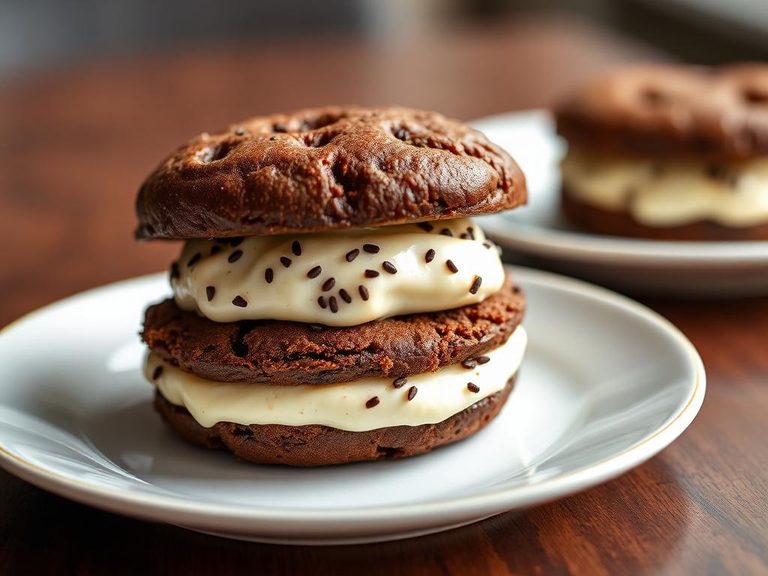
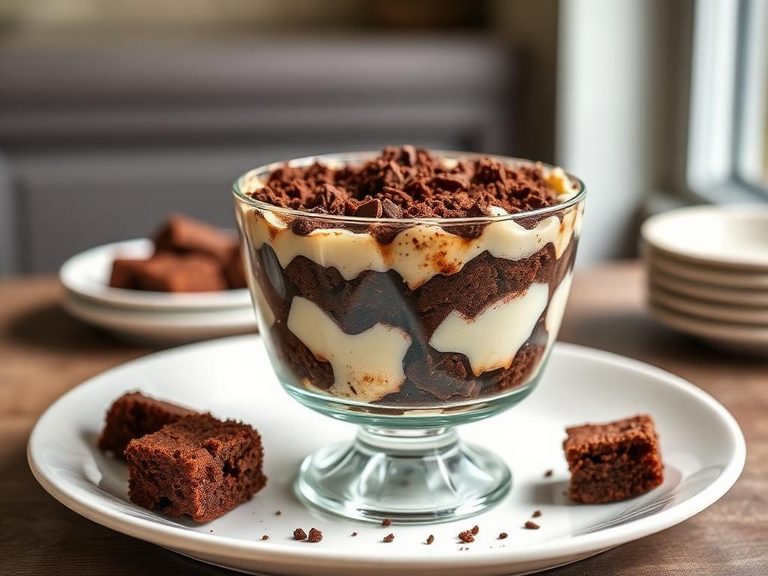
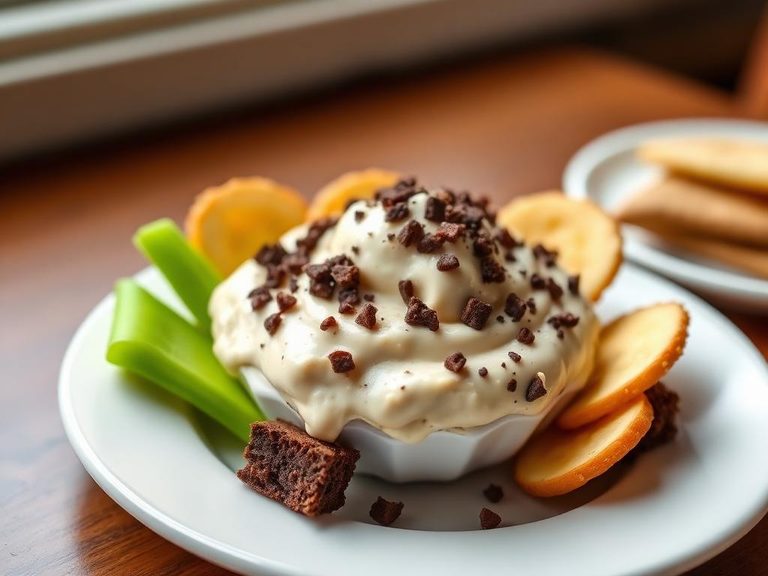
🍽️ Popular dishes

🌍 Where it's eaten
💡 Did you know?
The 'reduced fat' label in commercial baked goods often means the fat is replaced with carbohydrates and sugars to maintain texture and taste, which is why the sugar content here is exceptionally high.
Full nutrition (USDA data · scales with serving)
| Water | 24.8 g |
| Energy | 345 kcal |
| Energy | 1441 kj |
| Protein | 2.8 g |
| Total lipid (fat) | 9.7 g |
| Ash | 1.1 g |
| Carbohydrate, by difference | 61.6 g |
| Fiber, total dietary | 11.1 g |
| Total Sugars | 38.7 g |
| Calcium, Ca | 0.00 mg |
| Iron, Fe | 2.0 mg |
| Magnesium, Mg | 31.0 mg |
| Phosphorus, P | 59.0 mg |
| Potassium, K | 143 mg |
| Sodium, Na | 290 mg |
| Zinc, Zn | 0.46 mg |
| Copper, Cu | 0.18 mg |
| Selenium, Se | 12.9 ug |
| Vitamin C, total ascorbic acid | 0.00 mg |
| Thiamin | 0.18 mg |
| Riboflavin | 0.25 mg |
| Niacin | 1.4 mg |
| Vitamin B-6 | 0.02 mg |
| Folate, total | 42.0 ug |
| Folic acid | 34.0 ug |
| Folate, food | 8.0 ug |
| Folate, DFE | 66.0 ug |
| Choline, total | 13.9 mg |
| Vitamin B-12 | 0.02 ug |
| Vitamin B-12, added | 0.00 ug |
| Vitamin A, RAE | 0.00 ug |
| Retinol | 0.00 ug |
| Carotene, beta | 0.00 ug |
| Carotene, alpha | 0.00 ug |
| Cryptoxanthin, beta | 0.00 ug |
| Vitamin A, IU | 0.00 iu |
| Lycopene | 0.00 ug |
| Lutein + zeaxanthin | 7.0 ug |
| Vitamin E (alpha-tocopherol) | 0.59 mg |
| Vitamin E, added | 0.00 mg |
| Vitamin D (D2 + D3), International Units | 0.00 iu |
| Vitamin D (D2 + D3) | 0.00 ug |
| Vitamin K (phylloquinone) | 8.0 ug |
| Alcohol, ethyl | 0.00 g |
| Caffeine | 10.0 mg |
| Theobromine | 97.0 mg |
Fat & fatty acid profile (per 100g)
| Fatty acids, total saturated | 2.8 g |
| SFA 4:0 | 0.00 g |
| SFA 6:0 | 0.00 g |
| SFA 8:0 | 0.00 g |
| SFA 10:0 | 0.00 g |
| SFA 12:0 | 0.00 g |
| SFA 14:0 | 0.01 g |
| SFA 15:0 | 0.00 g |
| SFA 16:0 | 1.4 g |
| SFA 17:0 | 0.00 g |
| SFA 18:0 | 1.4 g |
| SFA 20:0 | 0.01 g |
| SFA 22:0 | 0.01 g |
| Fatty acids, total monounsaturated | 3.4 g |
| MUFA 14:1 | 0.00 g |
| MUFA 15:1 | 0.00 g |
| MUFA 16:1 | 0.02 g |
| MUFA 17:1 | 0.00 g |
| MUFA 18:1 | 3.4 g |
| MUFA 20:1 | 0.03 g |
| MUFA 22:1 | 0.00 g |
| Fatty acids, total polyunsaturated | 2.6 g |
| PUFA 18:2 | 2.2 g |
| PUFA 18:3 | 0.38 g |
| PUFA 18:4 | 0.00 g |
| PUFA 20:2 n-6 c,c | 0.00 g |
| PUFA 20:3 | 0.00 g |
| PUFA 20:4 | 0.00 g |
| PUFA 20:5 n-3 (EPA) | 0.00 g |
| PUFA 22:5 n-3 (DPA) | 0.00 g |
| PUFA 22:6 n-3 (DHA) | 0.00 g |
| Fatty acids, total trans | 0.00 g |
| Cholesterol | 0.00 mg |
Amino acid profile (per 100g)
Estimated from Cookies, animal crackers (includes arrowroot, tea biscuits) — USDA does not publish this profile for Cookies.
| Tryptophan | 0.10 g |
| Threonine | 0.19 g |
| Isoleucine | 0.26 g |
| Leucine | 0.47 g |
| Lysine | 0.24 g |
| Methionine | 0.12 g |
| Cystine | 0.15 g |
| Phenylalanine | 0.32 g |
| Tyrosine | 0.20 g |
| Valine | 0.30 g |
| Arginine | 0.26 g |
| Histidine | 0.14 g |
| Alanine | 0.21 g |
| Aspartic acid | 0.29 g |
| Glutamic acid | 2.3 g |
| Glycine | 0.23 g |
| Proline | 0.76 g |
| Serine | 0.36 g |
FAQ
How does the added fiber affect the texture?
The added fiber, often from sources like inulin or oat fiber, can contribute to a softer, more cake-like texture and help retain moisture, preventing the brownie from becoming too dry despite the reduced fat.
Is this a good post-workout snack?
While it provides quick carbs for energy replenishment, its high sugar and low protein content make it a suboptimal choice. A snack with a better balance of protein and complex carbs would be more effective for muscle recovery.
Why is the protein content so low?
Brownies are primarily a carbohydrate and fat-based dessert. The main ingredients are flour, sugar, and fat (even if reduced), with minimal protein sources like eggs or flour contributing only a small amount.
Nutrient density (calculated · NRF9.3)
Nutrient Rich Foods index: beneficial nutrients (protein, fiber, vitamins, minerals) minus saturated fat, added sugar & sodium, per 100 kcal.
NRF9.3 index — Fulgoni, Keast & Drewnowski, 2009. Computed from USDA nutrients.
Weight-loss friendliness (composite index)
Energy density 3.45 kcal/g · 3% calories from protein · 11.1 g fiber · 38.7 g sugar per 100 g.
Composite of energy density (Rolls et al., 1999), protein & fiber satiety, minus sugar. A calculated heuristic — ranks satiety-per-calorie, not a clinical measure.
Dietary load (calculated from USDA values)
Potential renal acid load. Positive = acid-forming, negative = alkaline-forming.
Sodium-to-potassium ratio: 2.03 (lower is better — aim for ≤ 1)
Sodium:potassium per WHO potassium guidance. Computed from USDA nutrients.