

Chicken, broilers or fryers, meat and skin, cooked, fried, flour
Whole food · Poultry Products
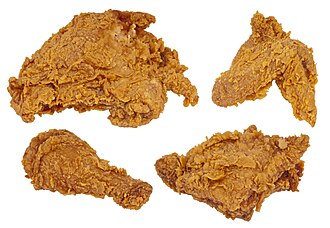
Photo: Wikipedia
This is the quintessential golden-brown fried chicken, where a seasoned flour coating crisps up to protect the juicy, savory meat and skin underneath. The texture is a satisfying crunch followed by tender, flavorful flesh, making it a comfort food staple. Nutritionally, it delivers a substantial protein punch (28.56g per 100g) with a moderate calorie count, though the frying process adds significant fat.
Calorie split: 44% protein · 5% carbs · 51% fat
↓ Full nutrition💚 Why it's loved
People adore it for the irresistible contrast between the crispy, seasoned crust and the succulent, juicy meat inside. It's a versatile comfort food that can be enjoyed on its own, in sandwiches, or as part of a larger meal, deeply rooted in many culinary traditions.
⚠️ Watch-outs & how to enjoy it better
The frying process increases fat content, which can be a concern for those monitoring calorie or fat intake. To mitigate this, consider baking or air-frying for a lighter version, or pairing it with fiber-rich vegetables to balance the meal. Those with gluten sensitivities should be aware of the flour coating.
Key benefits
- High-quality protein source for muscle maintenance
- Rich in B vitamins, especially niacin and B6
- Provides essential minerals like selenium and phosphorus
- The skin adds flavor and helps retain moisture during cooking
🍽️ Popular dishes
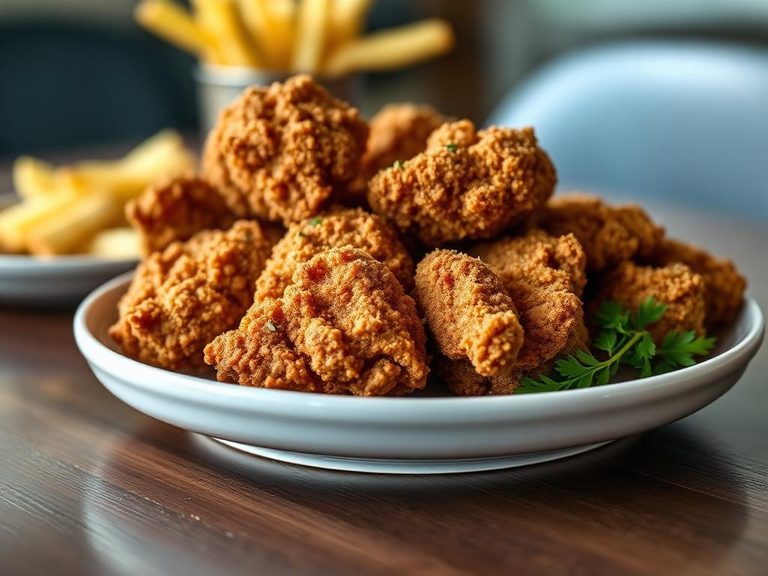
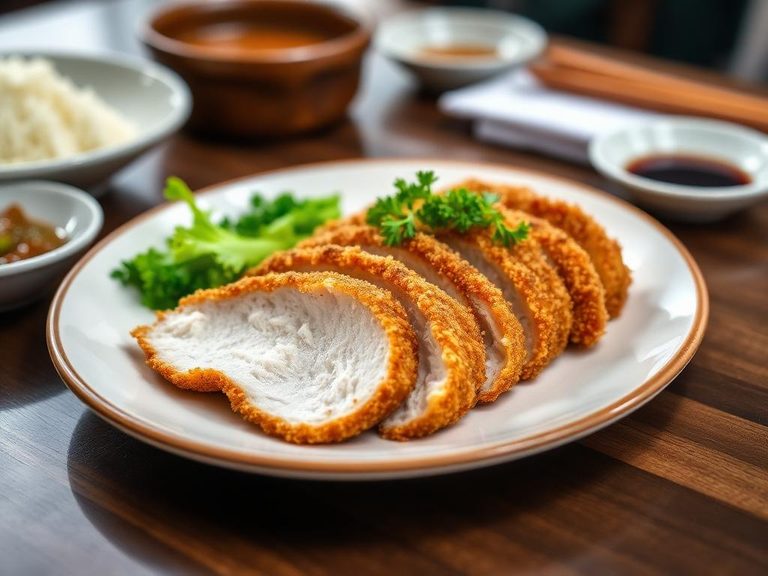
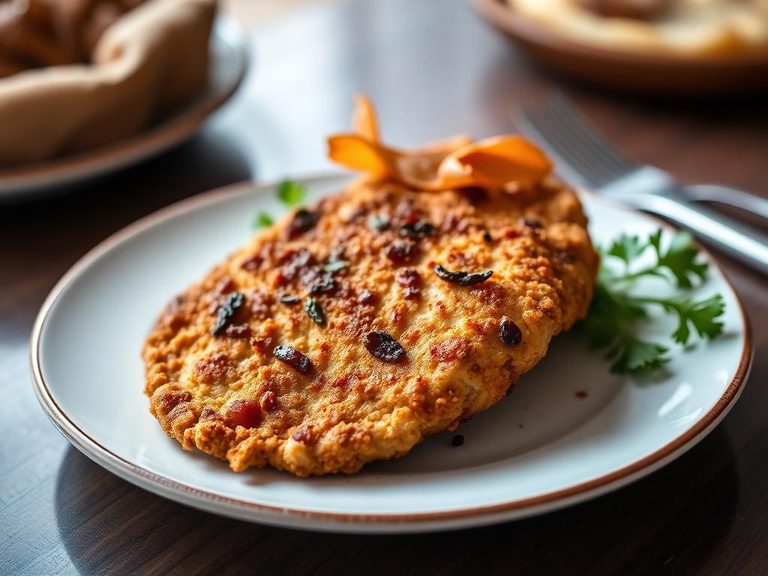
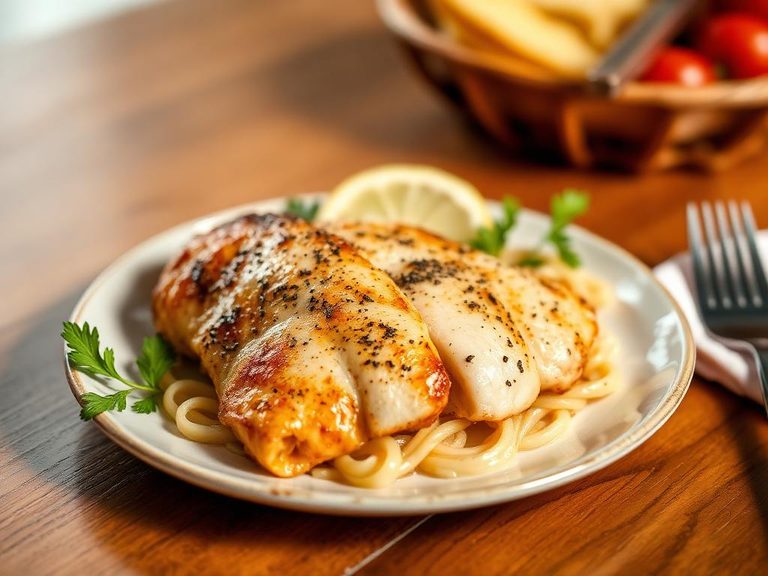
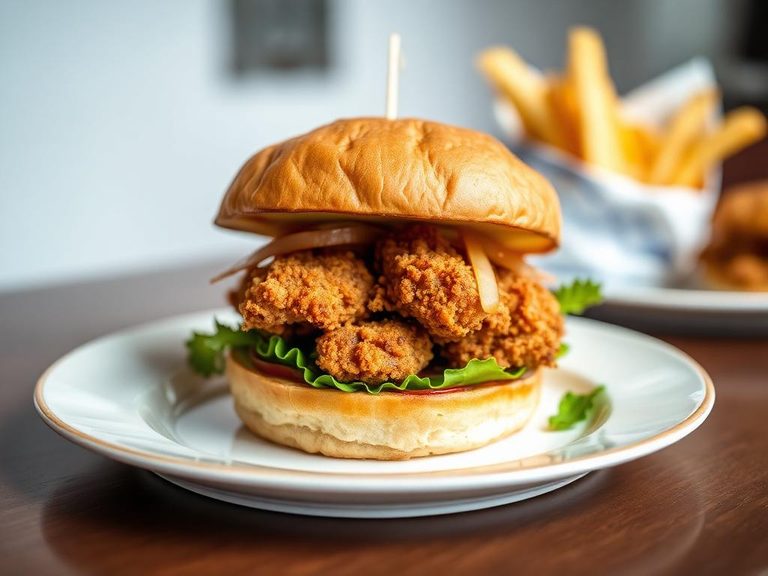

🌍 Where it's eaten
💡 Did you know?
The technique of frying chicken in a flour coating is believed to have been brought to the American South by Scottish immigrants, while the use of spices and frying in lard was influenced by West African cooking traditions.
Full nutrition (USDA data · scales with serving)
| Water | 52.4 g |
| Energy | 269 kcal |
| Energy | 1125 kj |
| Protein | 28.6 g |
| Total lipid (fat) | 14.9 g |
| Ash | 0.98 g |
| Carbohydrate, by difference | 3.1 g |
| Fiber, total dietary | 0.10 g |
| Total Sugars | 0.00 g |
| Calcium, Ca | 17.0 mg |
| Iron, Fe | 1.4 mg |
| Magnesium, Mg | 25.0 mg |
| Phosphorus, P | 191 mg |
| Potassium, K | 234 mg |
| Sodium, Na | 84.0 mg |
| Zinc, Zn | 2.0 mg |
| Copper, Cu | 0.07 mg |
| Manganese, Mn | 0.03 mg |
| Selenium, Se | 21.7 ug |
| Fluoride, F | 14.7 ug |
| Vitamin C, total ascorbic acid | 0.00 mg |
| Thiamin | 0.09 mg |
| Riboflavin | 0.19 mg |
| Niacin | 9.0 mg |
| Pantothenic acid | 1.1 mg |
| Vitamin B-6 | 0.41 mg |
| Folate, total | 9.0 ug |
| Folic acid | 3.0 ug |
| Folate, food | 6.0 ug |
| Folate, DFE | 11.0 ug |
| Choline, total | 79.8 mg |
| Betaine | 6.8 mg |
| Vitamin B-12 | 0.31 ug |
| Vitamin B-12, added | 0.00 ug |
| Vitamin A, RAE | 27.0 ug |
| Retinol | 27.0 ug |
| Carotene, beta | 0.00 ug |
| Carotene, alpha | 0.00 ug |
| Cryptoxanthin, beta | 0.00 ug |
| Vitamin A, IU | 89.0 iu |
| Lycopene | 0.00 ug |
| Lutein + zeaxanthin | 0.00 ug |
| Vitamin E (alpha-tocopherol) | 0.63 mg |
| Vitamin E, added | 0.00 mg |
| Vitamin D (D2 + D3), International Units | 6.0 iu |
| Vitamin D (D2 + D3) | 0.10 ug |
| Vitamin D3 (cholecalciferol) | 0.10 ug |
| Vitamin K (phylloquinone) | 2.4 ug |
| Alcohol, ethyl | 0.00 g |
| Caffeine | 0.00 mg |
| Theobromine | 0.00 mg |
Fat & fatty acid profile (per 100g)
| Fatty acids, total saturated | 4.1 g |
| SFA 4:0 | 0.00 g |
| SFA 6:0 | 0.00 g |
| SFA 8:0 | 0.00 g |
| SFA 10:0 | 0.00 g |
| SFA 12:0 | 0.02 g |
| SFA 14:0 | 0.11 g |
| SFA 16:0 | 2.8 g |
| SFA 18:0 | 0.99 g |
| Fatty acids, total monounsaturated | 5.9 g |
| MUFA 16:1 | 0.65 g |
| MUFA 18:1 | 5.1 g |
| MUFA 20:1 | 0.11 g |
| MUFA 22:1 | 0.00 g |
| Fatty acids, total polyunsaturated | 3.4 g |
| PUFA 18:2 | 3.0 g |
| PUFA 18:3 | 0.15 g |
| PUFA 18:4 | 0.00 g |
| PUFA 20:4 | 0.12 g |
| PUFA 20:5 n-3 (EPA) | 0.01 g |
| PUFA 22:5 n-3 (DPA) | 0.02 g |
| PUFA 22:6 n-3 (DHA) | 0.05 g |
| Cholesterol | 90.0 mg |
Amino acid profile (per 100g)
| Tryptophan | 0.32 g |
| Threonine | 1.2 g |
| Isoleucine | 1.4 g |
| Leucine | 2.1 g |
| Lysine | 2.3 g |
| Methionine | 0.76 g |
| Cystine | 0.38 g |
| Phenylalanine | 1.1 g |
| Tyrosine | 0.93 g |
| Valine | 1.4 g |
| Arginine | 1.8 g |
| Histidine | 0.84 g |
| Alanine | 1.6 g |
| Aspartic acid | 2.5 g |
| Glutamic acid | 4.3 g |
| Glycine | 1.7 g |
| Proline | 1.4 g |
| Serine | 1.0 g |
FAQ
Is fried chicken healthy?
It can be part of a balanced diet in moderation. It's high in protein but also in fat and calories due to frying. Choosing skinless or baked versions can reduce fat content.
How can I make fried chicken healthier?
Use an air fryer or bake it in the oven with a light coating of oil. Use whole-grain flour or breadcrumbs for added fiber, and serve with vegetables instead of high-carb sides.
What's the best way to reheat fried chicken?
Reheat in an oven at 350°F (175°C) for 10-15 minutes to maintain crispiness. Avoid microwaving, as it can make the coating soggy.
Nutrient density (calculated · NRF9.3)
Nutrient Rich Foods index: beneficial nutrients (protein, fiber, vitamins, minerals) minus saturated fat, added sugar & sodium, per 100 kcal.
NRF9.3 index — Fulgoni, Keast & Drewnowski, 2009. Computed from USDA nutrients.
Weight-loss friendliness (composite index)
Energy density 2.69 kcal/g · 42% calories from protein · 0.1 g fiber · 0.0 g sugar per 100 g.
Composite of energy density (Rolls et al., 1999), protein & fiber satiety, minus sugar. A calculated heuristic — ranks satiety-per-calorie, not a clinical measure.
Dietary load (calculated from USDA values)
Potential renal acid load. Positive = acid-forming, negative = alkaline-forming.
Sodium-to-potassium ratio: 0.36 (lower is better — aim for ≤ 1)
Sodium:potassium per WHO potassium guidance. Computed from USDA nutrients.