

Chicken, broilers or fryers, meat and skin and giblets and neck, roasted
Whole food · Poultry Products
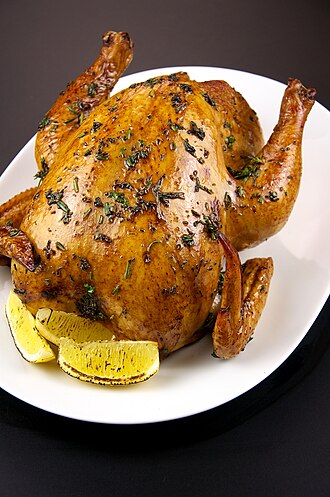
Photo: Wikipedia
This is a whole roasted bird, a classic comfort food where the meat, skin, and giblets are cooked together, creating a rich, savory, and deeply satisfying meal. The texture varies from tender, juicy meat to crispy, flavorful skin, with the giblets and neck adding a more intense, mineral-like depth. It's a protein powerhouse with virtually no carbohydrates, making it a staple for low-carb and ketogenic diets.
Calorie split: 47% protein · 0% carbs · 53% fat
↓ Full nutrition💚 Why it's loved
People adore it for its unparalleled savory flavor and the comforting aroma of a whole bird roasting in the oven, which evokes a sense of home and celebration. Its versatility is unmatched, serving as a centerpiece for a feast or a simple weeknight meal with endless possibilities for repurposing.
⚠️ Watch-outs & how to enjoy it better
The skin and dark meat are high in saturated fat, which should be consumed in moderation by those managing heart health. The giblets, while nutritious, can be high in cholesterol and purines, which some individuals may need to limit. To counteract this, enjoy the skin in moderation, pair the meal with fiber-rich vegetables like roasted Brussels sprouts or a leafy salad, and ensure the giblets are part of a balanced diet, not an everyday indulgence.
Key benefits
- Excellent source of high-quality complete protein
- Very low in carbohydrates and sugars
- Rich in essential nutrients like B vitamins, selenium, and phosphorus
- The skin and dark meat provide healthy fats and iron
- Versatile base for numerous global cuisines and leftovers
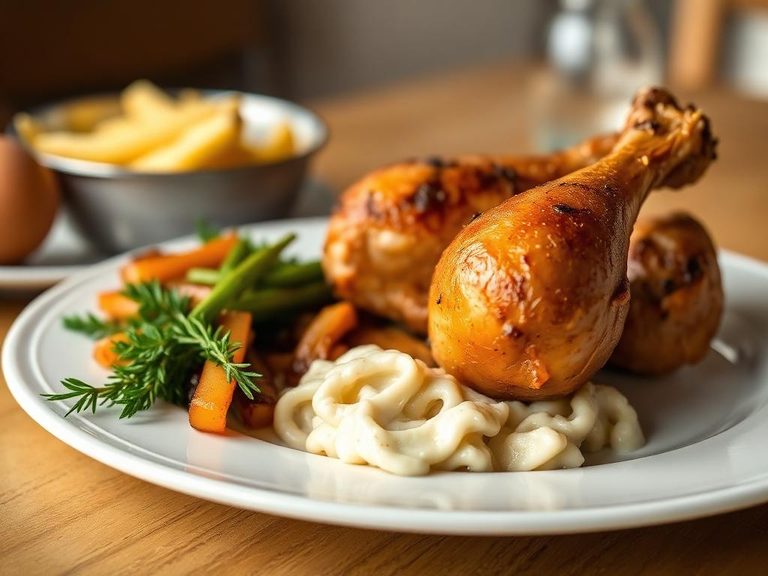
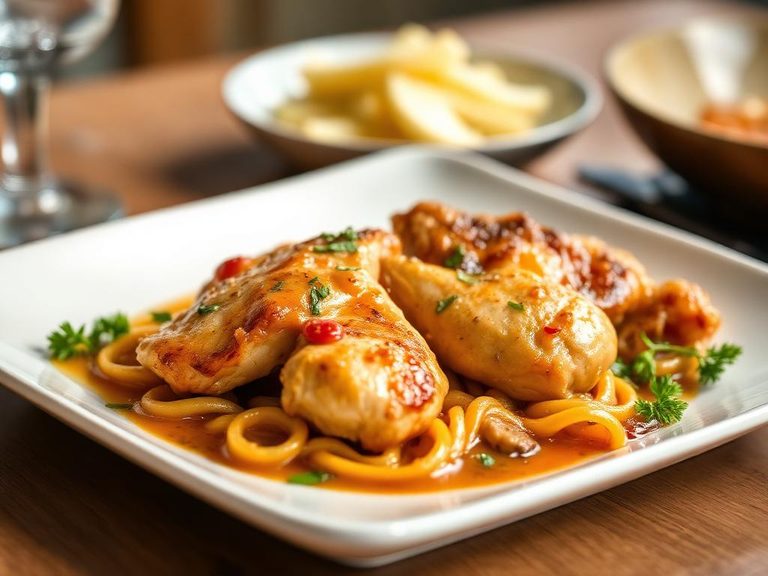
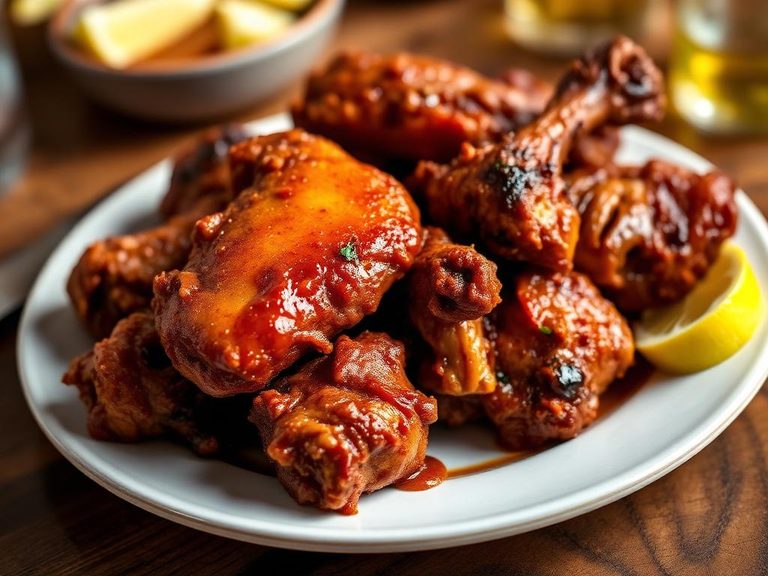
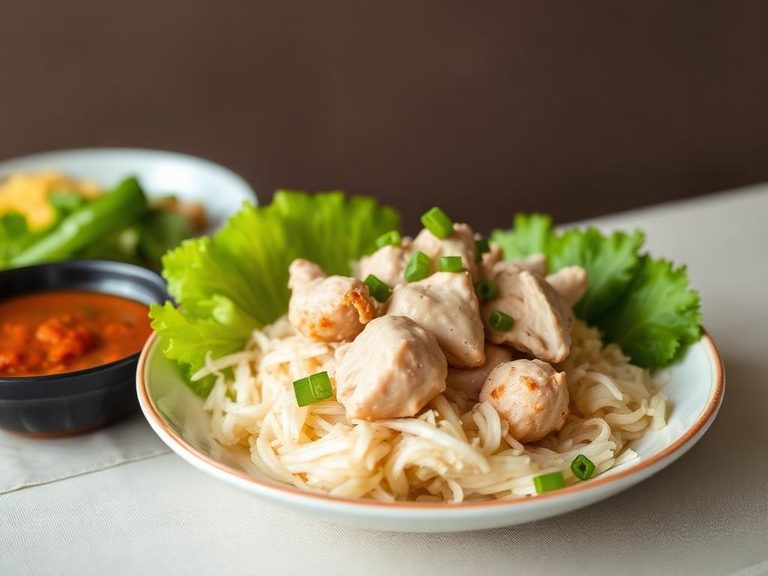
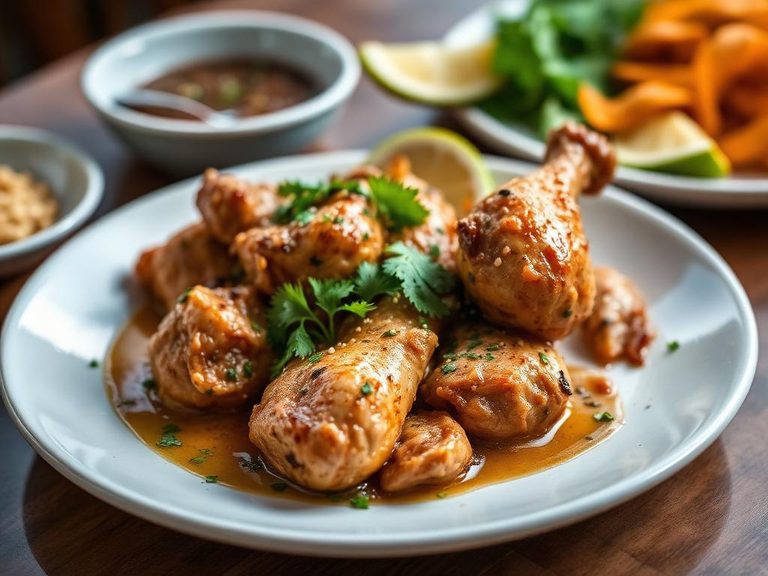
🍽️ Popular dishes

🌍 Where it's eaten
💡 Did you know?
The term 'broiler' refers to a chicken bred specifically for meat production, typically slaughtered at a young age (around 7 weeks) for its tender texture, while a 'fryer' is a slightly older bird suited for various cooking methods.
Full nutrition (USDA data · scales with serving)
| Water | 60.1 g |
| Energy | 234 kcal |
| Energy | 979 kj |
| Protein | 26.8 g |
| Total lipid (fat) | 13.3 g |
| Ash | 0.90 g |
| Carbohydrate, by difference | 0.06 g |
| Fiber, total dietary | 0.00 g |
| Total Sugars | 0.00 g |
| Calcium, Ca | 15.0 mg |
| Iron, Fe | 1.7 mg |
| Magnesium, Mg | 23.0 mg |
| Phosphorus, P | 182 mg |
| Potassium, K | 212 mg |
| Sodium, Na | 79.0 mg |
| Zinc, Zn | 2.2 mg |
| Copper, Cu | 0.08 mg |
| Manganese, Mn | 0.03 mg |
| Selenium, Se | 15.9 ug |
| Vitamin C, total ascorbic acid | 0.50 mg |
| Thiamin | 0.06 mg |
| Riboflavin | 0.22 mg |
| Niacin | 7.9 mg |
| Pantothenic acid | 1.1 mg |
| Vitamin B-6 | 0.38 mg |
| Folate, total | 29.0 ug |
| Folic acid | 0.00 ug |
| Folate, food | 29.0 ug |
| Folate, DFE | 29.0 ug |
| Choline, total | 73.3 mg |
| Betaine | 5.7 mg |
| Vitamin B-12 | 0.94 ug |
| Vitamin B-12, added | 0.00 ug |
| Vitamin A, RAE | 191 ug |
| Retinol | 191 ug |
| Carotene, beta | 0.00 ug |
| Carotene, alpha | 0.00 ug |
| Cryptoxanthin, beta | 0.00 ug |
| Vitamin A, IU | 636 iu |
| Lycopene | 0.00 ug |
| Lutein + zeaxanthin | 0.00 ug |
| Vitamin E (alpha-tocopherol) | 0.33 mg |
| Vitamin E, added | 0.00 mg |
| Vitamin D (D2 + D3), International Units | 1.0 iu |
| Vitamin D (D2 + D3) | 0.00 ug |
| Vitamin D3 (cholecalciferol) | 0.00 ug |
| Vitamin K (phylloquinone) | 2.4 ug |
| Alcohol, ethyl | 0.00 g |
| Caffeine | 0.00 mg |
| Theobromine | 0.00 mg |
Fat & fatty acid profile (per 100g)
| Fatty acids, total saturated | 3.7 g |
| SFA 4:0 | 0.00 g |
| SFA 6:0 | 0.00 g |
| SFA 8:0 | 0.00 g |
| SFA 10:0 | 0.00 g |
| SFA 12:0 | 0.02 g |
| SFA 14:0 | 0.10 g |
| SFA 16:0 | 2.7 g |
| SFA 18:0 | 0.77 g |
| Fatty acids, total monounsaturated | 5.2 g |
| MUFA 16:1 | 0.71 g |
| MUFA 18:1 | 4.3 g |
| MUFA 20:1 | 0.13 g |
| MUFA 22:1 | 0.00 g |
| Fatty acids, total polyunsaturated | 2.9 g |
| PUFA 18:2 | 2.5 g |
| PUFA 18:3 | 0.11 g |
| PUFA 18:4 | 0.00 g |
| PUFA 20:4 | 0.12 g |
| PUFA 20:5 n-3 (EPA) | 0.01 g |
| PUFA 22:5 n-3 (DPA) | 0.02 g |
| PUFA 22:6 n-3 (DHA) | 0.04 g |
| Cholesterol | 107 mg |
Amino acid profile (per 100g)
| Tryptophan | 0.30 g |
| Threonine | 1.1 g |
| Isoleucine | 1.3 g |
| Leucine | 2.0 g |
| Lysine | 2.2 g |
| Methionine | 0.71 g |
| Cystine | 0.36 g |
| Phenylalanine | 1.1 g |
| Tyrosine | 0.86 g |
| Valine | 1.3 g |
| Arginine | 1.7 g |
| Histidine | 0.77 g |
| Alanine | 1.6 g |
| Aspartic acid | 2.4 g |
| Glutamic acid | 3.9 g |
| Glycine | 1.7 g |
| Proline | 1.3 g |
| Serine | 0.96 g |
FAQ
What's the difference between broilers and fryers?
Broilers are young chickens (6-8 weeks) bred for tender meat, ideal for roasting, grilling, or frying. Fryers are slightly older but still young, versatile for most cooking methods. Nutritionally, they are very similar.
Is it healthy to eat the skin?
The skin adds significant flavor and contains some nutrients, but it's also high in saturated fat and calories. For a healthier option, you can remove the skin before eating or limit portions. Roasting or air-frying can help render out some fat.
How should I store leftovers safely?
Refrigerate leftovers in shallow airtight containers within 2 hours of cooking. They'll keep for 3-4 days. For longer storage, freeze portions for up to 4 months. Always reheat to an internal temperature of 165°F (74°C).
Nutrient density (calculated · NRF9.3)
Nutrient Rich Foods index: beneficial nutrients (protein, fiber, vitamins, minerals) minus saturated fat, added sugar & sodium, per 100 kcal.
NRF9.3 index — Fulgoni, Keast & Drewnowski, 2009. Computed from USDA nutrients.
Weight-loss friendliness (composite index)
Energy density 2.34 kcal/g · 46% calories from protein · 0.0 g fiber · 0.0 g sugar per 100 g.
Composite of energy density (Rolls et al., 1999), protein & fiber satiety, minus sugar. A calculated heuristic — ranks satiety-per-calorie, not a clinical measure.
Dietary load (calculated from USDA values)
Potential renal acid load. Positive = acid-forming, negative = alkaline-forming.
Sodium-to-potassium ratio: 0.37 (lower is better — aim for ≤ 1)
Sodium:potassium per WHO potassium guidance. Computed from USDA nutrients.