

Chicken, broilers or fryers, light meat, meat and skin, cooked, fried, flour
Whole food · Poultry Products
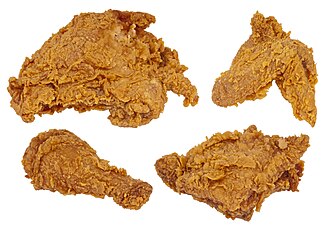
Photo: Wikipedia
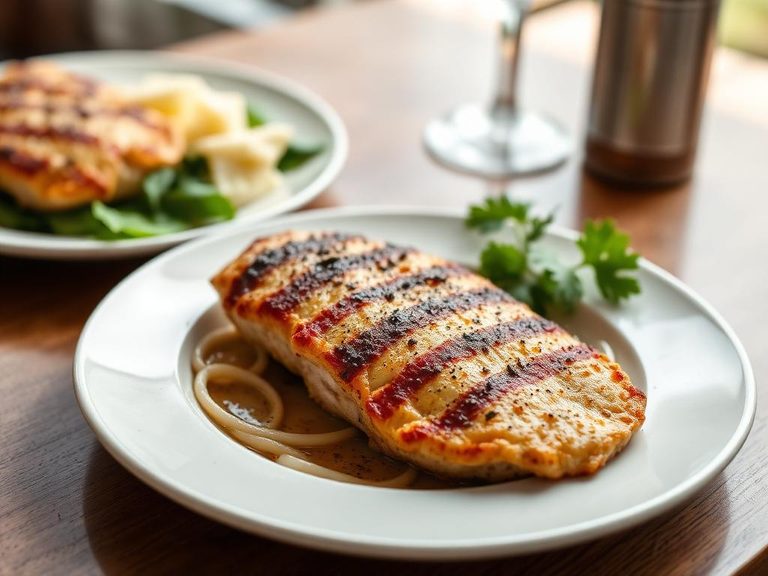
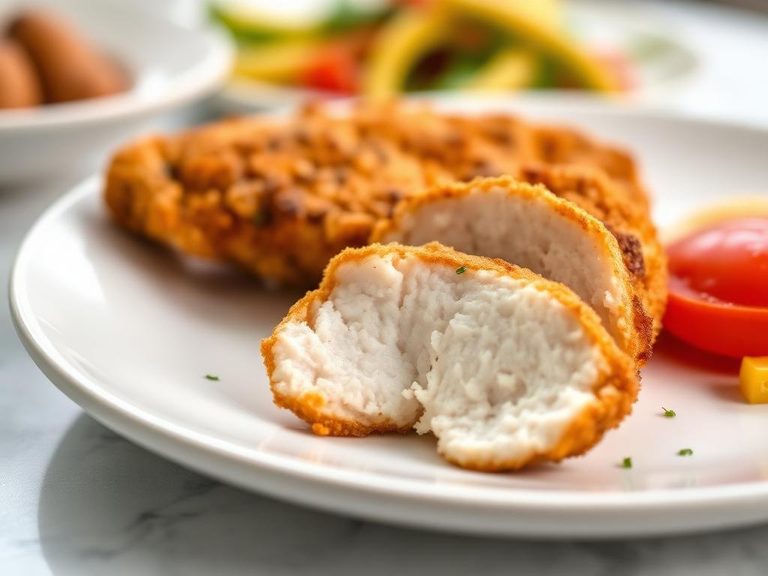
This is a classic piece of fried chicken: tender, juicy light meat (breast or tenderloin) with the skin on, dredged in seasoned flour and pan-fried or deep-fried to a golden, crispy crust. The interior is lean and moist, while the skin provides a savory, crunchy contrast. Nutritionally, it's a high-protein, low-carb powerhouse, packing over 30g of protein per 100g with minimal carbohydrates.
Calorie split: 51% protein · 3% carbs · 46% fat
↓ Full nutrition💚 Why it's loved
People adore it for the irresistible contrast between the juicy, tender meat and the crispy, flavorful coating—a comforting, savory satisfaction. Its versatility makes it a beloved centerpiece for everything from weeknight dinners to picnics and fast-food favorites across cultures.
⚠️ Watch-outs & how to enjoy it better
The frying process adds significant calories and fat, particularly saturated fat from the skin and cooking oil. Those monitoring sodium intake should be cautious, as pre-seasoned flours or brines can be high in salt. To enjoy it more healthfully, consider baking or air-frying as alternatives, using a light flour dredge, and pairing it with fiber-rich vegetables or a salad to balance the meal.
Key benefits
- Excellent source of complete, high-quality protein for muscle maintenance.
- Very low in carbohydrates, making it suitable for low-carb diets.
- Provides essential B vitamins like niacin and B6 for energy metabolism.
- Contains minerals like selenium and phosphorus.
🍽️ Popular dishes
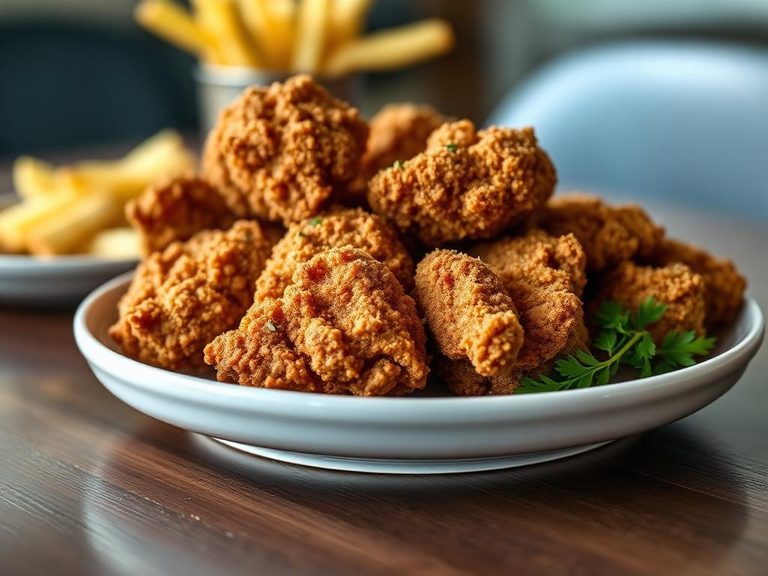
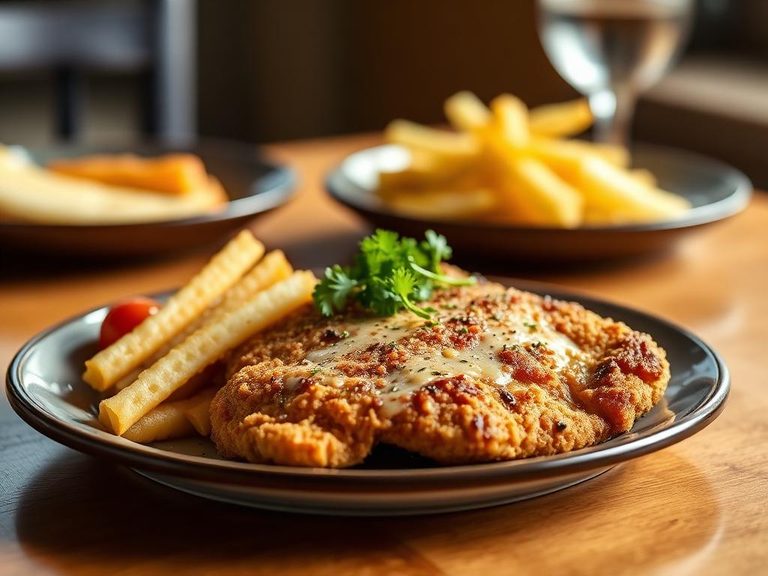
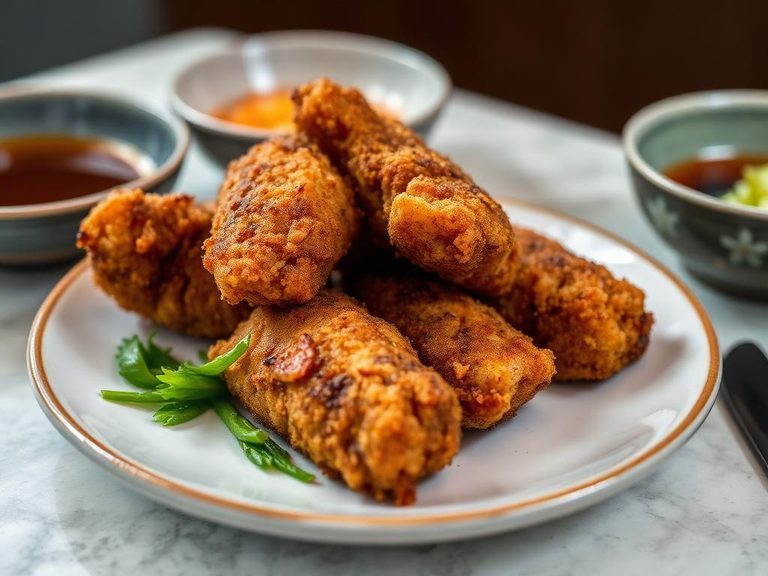

🌍 Where it's eaten
💡 Did you know?
The term 'broiler' refers to a chicken bred and raised specifically for meat production, typically reaching market weight in just 6-7 weeks, a stark contrast to older heritage breeds.
Full nutrition (USDA data · scales with serving)
| Water | 54.7 g |
| Energy | 246 kcal |
| Energy | 1029 kj |
| Protein | 30.4 g |
| Total lipid (fat) | 12.1 g |
| Ash | 0.98 g |
| Carbohydrate, by difference | 1.8 g |
| Fiber, total dietary | 0.10 g |
| Total Sugars | 0.00 g |
| Calcium, Ca | 16.0 mg |
| Iron, Fe | 1.2 mg |
| Magnesium, Mg | 27.0 mg |
| Phosphorus, P | 213 mg |
| Potassium, K | 239 mg |
| Sodium, Na | 77.0 mg |
| Zinc, Zn | 1.3 mg |
| Copper, Cu | 0.06 mg |
| Manganese, Mn | 0.03 mg |
| Selenium, Se | 29.1 ug |
| Vitamin C, total ascorbic acid | 0.00 mg |
| Thiamin | 0.08 mg |
| Riboflavin | 0.13 mg |
| Niacin | 12.0 mg |
| Pantothenic acid | 0.97 mg |
| Vitamin B-6 | 0.54 mg |
| Folate, total | 7.0 ug |
| Folic acid | 3.0 ug |
| Folate, food | 4.0 ug |
| Folate, DFE | 9.0 ug |
| Choline, total | 81.3 mg |
| Betaine | 6.9 mg |
| Vitamin B-12 | 0.33 ug |
| Vitamin B-12, added | 0.00 ug |
| Vitamin A, RAE | 20.0 ug |
| Retinol | 20.0 ug |
| Carotene, beta | 0.00 ug |
| Carotene, alpha | 0.00 ug |
| Cryptoxanthin, beta | 0.00 ug |
| Vitamin A, IU | 68.0 iu |
| Lycopene | 0.00 ug |
| Lutein + zeaxanthin | 0.00 ug |
| Vitamin E (alpha-tocopherol) | 0.57 mg |
| Vitamin E, added | 0.00 mg |
| Vitamin D (D2 + D3), International Units | 5.0 iu |
| Vitamin D (D2 + D3) | 0.10 ug |
| Vitamin D3 (cholecalciferol) | 0.10 ug |
| Vitamin K (phylloquinone) | 2.4 ug |
| Alcohol, ethyl | 0.00 g |
| Caffeine | 0.00 mg |
| Theobromine | 0.00 mg |
Fat & fatty acid profile (per 100g)
| Fatty acids, total saturated | 3.3 g |
| SFA 4:0 | 0.00 g |
| SFA 6:0 | 0.00 g |
| SFA 8:0 | 0.00 g |
| SFA 10:0 | 0.00 g |
| SFA 12:0 | 0.01 g |
| SFA 14:0 | 0.09 g |
| SFA 16:0 | 2.4 g |
| SFA 18:0 | 0.80 g |
| Fatty acids, total monounsaturated | 4.8 g |
| MUFA 16:1 | 0.51 g |
| MUFA 18:1 | 4.1 g |
| MUFA 20:1 | 0.10 g |
| MUFA 22:1 | 0.00 g |
| Fatty acids, total polyunsaturated | 2.7 g |
| PUFA 18:2 | 2.3 g |
| PUFA 18:3 | 0.11 g |
| PUFA 18:4 | 0.00 g |
| PUFA 20:4 | 0.09 g |
| PUFA 20:5 n-3 (EPA) | 0.01 g |
| PUFA 22:5 n-3 (DPA) | 0.02 g |
| PUFA 22:6 n-3 (DHA) | 0.03 g |
| Cholesterol | 87.0 mg |
Amino acid profile (per 100g)
| Tryptophan | 0.34 g |
| Threonine | 1.3 g |
| Isoleucine | 1.5 g |
| Leucine | 2.2 g |
| Lysine | 2.5 g |
| Methionine | 0.81 g |
| Cystine | 0.41 g |
| Phenylalanine | 1.2 g |
| Tyrosine | 0.99 g |
| Valine | 1.5 g |
| Arginine | 1.9 g |
| Histidine | 0.90 g |
| Alanine | 1.7 g |
| Aspartic acid | 2.7 g |
| Glutamic acid | 4.5 g |
| Glycine | 1.9 g |
| Proline | 1.4 g |
| Serine | 1.1 g |
FAQ
Is the skin the main source of fat in this preparation?
Yes, the skin and the subcutaneous fat layer beneath it contribute a significant portion of the total fat content. Removing the skin before eating reduces both fat and calorie intake substantially.
How does the flour coating affect the nutrition?
The thin flour dredge adds a small amount of carbohydrates (about 1-2g per 100g of cooked chicken) and can absorb some cooking oil during frying, contributing to the total fat content.
Is this a good option for a post-workout meal?
Absolutely. Its high protein content (30g per 100g) is ideal for muscle repair and recovery. Pairing it with a complex carbohydrate source like sweet potatoes or brown rice would make it a more complete post-workout meal.
Nutrient density (calculated · NRF9.3)
Nutrient Rich Foods index: beneficial nutrients (protein, fiber, vitamins, minerals) minus saturated fat, added sugar & sodium, per 100 kcal.
NRF9.3 index — Fulgoni, Keast & Drewnowski, 2009. Computed from USDA nutrients.
Weight-loss friendliness (composite index)
Energy density 2.46 kcal/g · 50% calories from protein · 0.1 g fiber · 0.0 g sugar per 100 g.
Composite of energy density (Rolls et al., 1999), protein & fiber satiety, minus sugar. A calculated heuristic — ranks satiety-per-calorie, not a clinical measure.
Dietary load (calculated from USDA values)
Potential renal acid load. Positive = acid-forming, negative = alkaline-forming.
Sodium-to-potassium ratio: 0.32 (lower is better — aim for ≤ 1)
Sodium:potassium per WHO potassium guidance. Computed from USDA nutrients.