

Chicken, broilers or fryers, back, meat and skin, cooked, roasted
Whole food · Poultry Products

Photo: Wikipedia
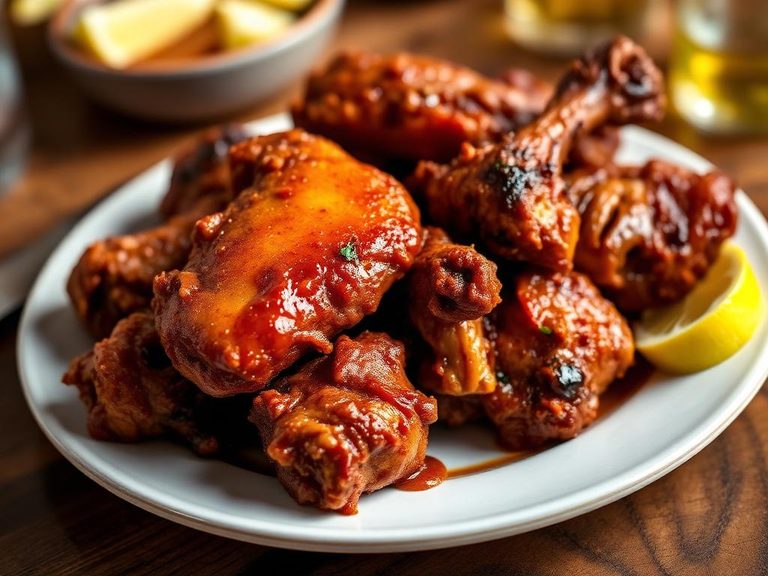
This is the roasted back portion of a broiler chicken, including the skin, delivering a rich, savory flavor with a satisfyingly crisp skin and tender, juicy meat. Nutritionally, it's a dense source of protein and fat, providing substantial energy with zero carbohydrates. The cooking method caramelizes the skin, creating a deep, umami-rich taste that is a hallmark of classic roast chicken.
Calorie split: 35% protein · 0% carbs · 65% fat
↓ Full nutrition💚 Why it's loved
People adore the irresistible combination of crispy, salty skin and succulent meat, which is a centerpiece of comforting home cooking. Its versatility allows it to be seasoned in countless ways, making it a beloved staple in family meals and celebrations across cultures.
⚠️ Watch-outs & how to enjoy it better
The high fat content, especially from the skin, makes it a calorie-dense choice that may not align with low-fat dietary goals. To enjoy it mindfully, consider portion control, pairing it with a large portion of non-starchy vegetables to add volume and fiber, or occasionally removing some of the skin after cooking.
Key benefits
- Excellent source of complete protein for muscle maintenance
- Provides essential B vitamins like niacin and B6
- Contains minerals like selenium and phosphorus
- Zero carbohydrates, suitable for low-carb diets
- The skin adds flavor and helps retain moisture during cooking
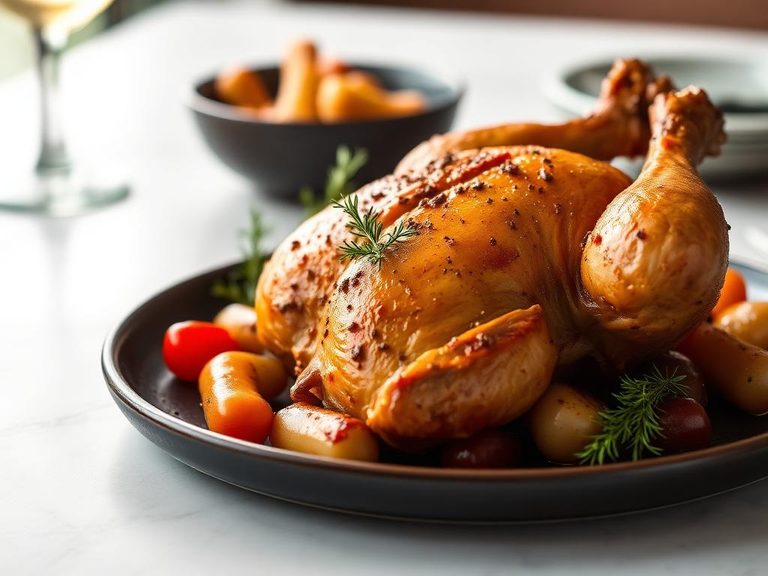
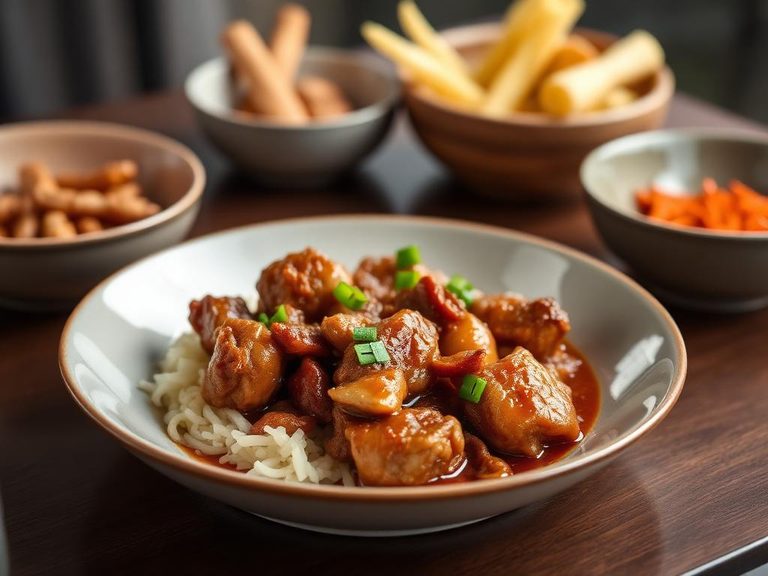
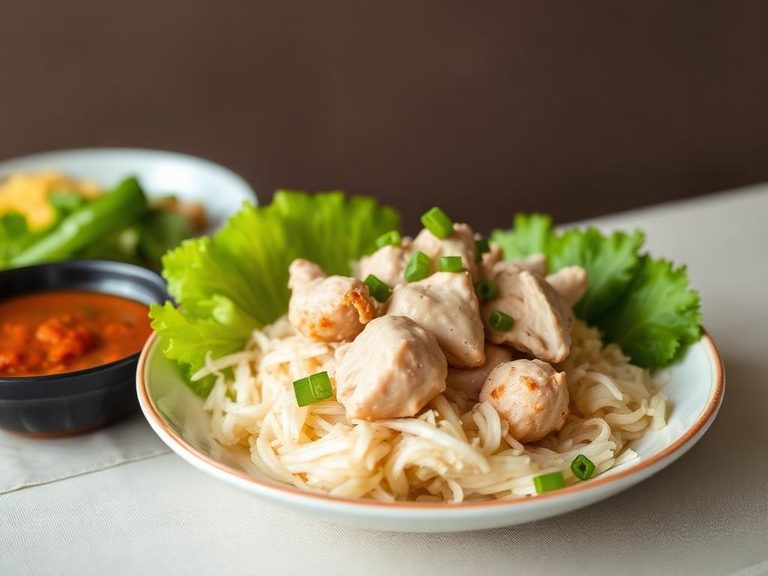
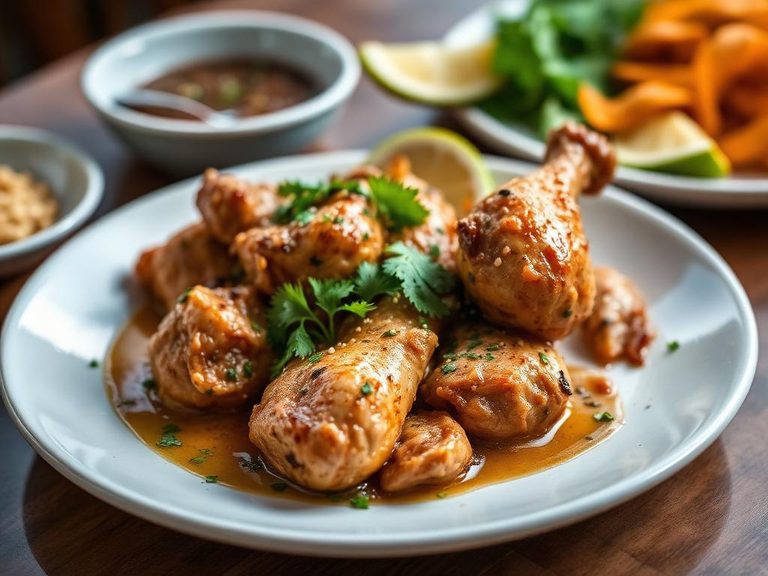
🍽️ Popular dishes
🌍 Where it's eaten
💡 Did you know?
The back is considered a 'chef's cut' because it's packed with flavor from the bones and connective tissue, making it ideal for stocks and soups, but it's less commonly sold pre-packaged in supermarkets compared to breasts or thighs.
Full nutrition (USDA data · scales with serving)
| Water | 53.5 g |
| Energy | 300 kcal |
| Energy | 1255 kj |
| Protein | 25.9 g |
| Total lipid (fat) | 21.0 g |
| Ash | 0.92 g |
| Carbohydrate, by difference | 0.00 g |
| Fiber, total dietary | 0.00 g |
| Total Sugars | 0.00 g |
| Calcium, Ca | 21.0 mg |
| Iron, Fe | 1.4 mg |
| Magnesium, Mg | 20.0 mg |
| Phosphorus, P | 154 mg |
| Potassium, K | 210 mg |
| Sodium, Na | 87.0 mg |
| Zinc, Zn | 2.3 mg |
| Copper, Cu | 0.08 mg |
| Manganese, Mn | 0.02 mg |
| Selenium, Se | 22.5 ug |
| Vitamin C, total ascorbic acid | 0.00 mg |
| Thiamin | 0.06 mg |
| Riboflavin | 0.20 mg |
| Niacin | 6.7 mg |
| Pantothenic acid | 1.0 mg |
| Vitamin B-6 | 0.27 mg |
| Folate, total | 6.0 ug |
| Folic acid | 0.00 ug |
| Folate, food | 6.0 ug |
| Folate, DFE | 6.0 ug |
| Choline, total | 62.3 mg |
| Betaine | 5.3 mg |
| Vitamin B-12 | 0.27 ug |
| Vitamin B-12, added | 0.00 ug |
| Vitamin A, RAE | 105 ug |
| Retinol | 105 ug |
| Carotene, beta | 0.00 ug |
| Carotene, alpha | 0.00 ug |
| Cryptoxanthin, beta | 0.00 ug |
| Vitamin A, IU | 348 iu |
| Lycopene | 0.00 ug |
| Lutein + zeaxanthin | 0.00 ug |
| Vitamin E (alpha-tocopherol) | 0.27 mg |
| Vitamin E, added | 0.00 mg |
| Vitamin D (D2 + D3), International Units | 2.0 iu |
| Vitamin D (D2 + D3) | 0.10 ug |
| Vitamin D3 (cholecalciferol) | 0.10 ug |
| Vitamin K (phylloquinone) | 4.9 ug |
| Vitamin K (Dihydrophylloquinone) | 0.00 ug |
| Alcohol, ethyl | 0.00 g |
| Caffeine | 0.00 mg |
| Theobromine | 0.00 mg |
Fat & fatty acid profile (per 100g)
| Fatty acids, total saturated | 5.8 g |
| SFA 4:0 | 0.00 g |
| SFA 6:0 | 0.00 g |
| SFA 8:0 | 0.00 g |
| SFA 10:0 | 0.00 g |
| SFA 12:0 | 0.04 g |
| SFA 14:0 | 0.16 g |
| SFA 16:0 | 4.3 g |
| SFA 18:0 | 1.2 g |
| Fatty acids, total monounsaturated | 8.3 g |
| MUFA 16:1 | 1.1 g |
| MUFA 18:1 | 6.8 g |
| MUFA 20:1 | 0.20 g |
| MUFA 22:1 | 0.00 g |
| Fatty acids, total polyunsaturated | 4.6 g |
| PUFA 18:2 | 4.0 g |
| PUFA 18:3 | 0.18 g |
| PUFA 18:4 | 0.00 g |
| PUFA 20:4 | 0.17 g |
| PUFA 20:5 n-3 (EPA) | 0.02 g |
| PUFA 22:5 n-3 (DPA) | 0.03 g |
| PUFA 22:6 n-3 (DHA) | 0.06 g |
| Cholesterol | 88.0 mg |
Amino acid profile (per 100g)
| Tryptophan | 0.28 g |
| Threonine | 1.1 g |
| Isoleucine | 1.3 g |
| Leucine | 1.9 g |
| Lysine | 2.1 g |
| Methionine | 0.68 g |
| Cystine | 0.35 g |
| Phenylalanine | 1.00 g |
| Tyrosine | 0.81 g |
| Valine | 1.2 g |
| Arginine | 1.7 g |
| Histidine | 0.74 g |
| Alanine | 1.6 g |
| Aspartic acid | 2.3 g |
| Glutamic acid | 3.7 g |
| Glycine | 1.9 g |
| Proline | 1.4 g |
| Serine | 0.93 g |
FAQ
Is chicken back meat and skin healthy?
It can be part of a balanced diet. It's a great source of protein and nutrients but is higher in fat and calories than skinless breast. Enjoying it in moderation and balancing it with vegetables is key.
How do I get the skin extra crispy when roasting?
Pat the chicken completely dry with paper towels before seasoning. Roast at a high temperature (around 425°F / 220°C) and ensure the pieces aren't crowded on the pan.
What's the best way to use leftover roasted chicken back?
Shred the meat for tacos, salads, or sandwiches. The bones and skin can be simmered with vegetables to make a rich, flavorful homemade chicken stock.
Nutrient density (calculated · NRF9.3)
Nutrient Rich Foods index: beneficial nutrients (protein, fiber, vitamins, minerals) minus saturated fat, added sugar & sodium, per 100 kcal.
NRF9.3 index — Fulgoni, Keast & Drewnowski, 2009. Computed from USDA nutrients.
Weight-loss friendliness (composite index)
Energy density 3.00 kcal/g · 35% calories from protein · 0.0 g fiber · 0.0 g sugar per 100 g.
Composite of energy density (Rolls et al., 1999), protein & fiber satiety, minus sugar. A calculated heuristic — ranks satiety-per-calorie, not a clinical measure.
Dietary load (calculated from USDA values)
Potential renal acid load. Positive = acid-forming, negative = alkaline-forming.
Sodium-to-potassium ratio: 0.41 (lower is better — aim for ≤ 1)
Sodium:potassium per WHO potassium guidance. Computed from USDA nutrients.