

Cheese, swiss, low fat
Whole food · Dairy and Egg Products
Low-fat Swiss cheese delivers the iconic nutty, slightly sweet flavor and satisfyingly firm, elastic texture of its full-fat counterpart, but with a significantly lighter nutritional profile. It's a powerhouse of lean protein, packing over 28 grams per 100 grams while keeping fat and calories remarkably low. This makes it a standout choice for anyone seeking the classic Swiss cheese experience in a more diet-conscious form.
Calorie split: 66% protein · 8% carbs · 27% fat
↓ Full nutrition💚 Why it's loved
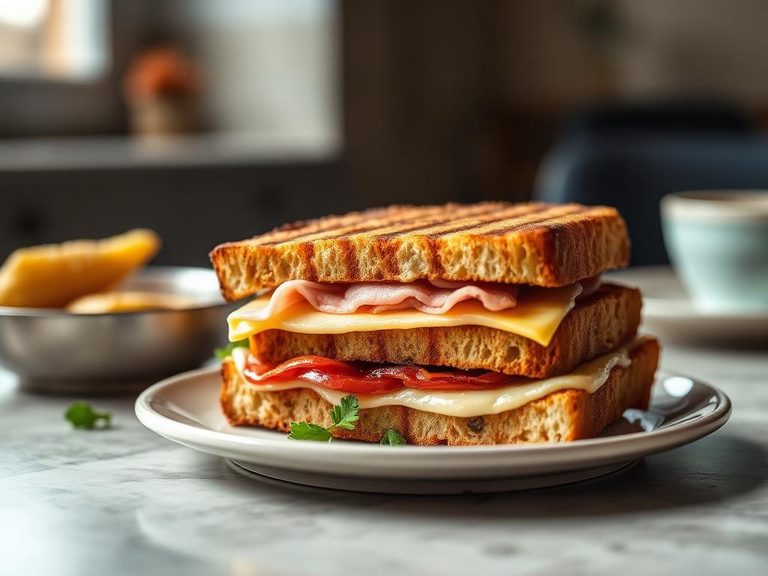
People love it for delivering the authentic, complex flavor of Swiss cheese—the nutty, slightly tangy notes—without the associated guilt of high fat and calories. Its firm texture makes it incredibly versatile for slicing, dicing, and melting into a wide array of dishes.
⚠️ Watch-outs & how to enjoy it better
As a cheese, it can be high in sodium, which may be a concern for those monitoring blood pressure. Its strong flavor can be overpowering if used excessively. To counteract sodium intake, pair it with potassium-rich foods like leafy greens or tomatoes, and practice portion control by using it as a flavor accent rather than the main ingredient.
Key benefits
- Excellent source of high-quality protein for muscle maintenance.
- Very low in fat and calories compared to traditional Swiss cheese.
- Provides calcium and phosphorus for bone health.
- Contains vitamin B12, essential for nerve function and red blood cell formation.
- Low in carbohydrates, making it suitable for low-carb diets.
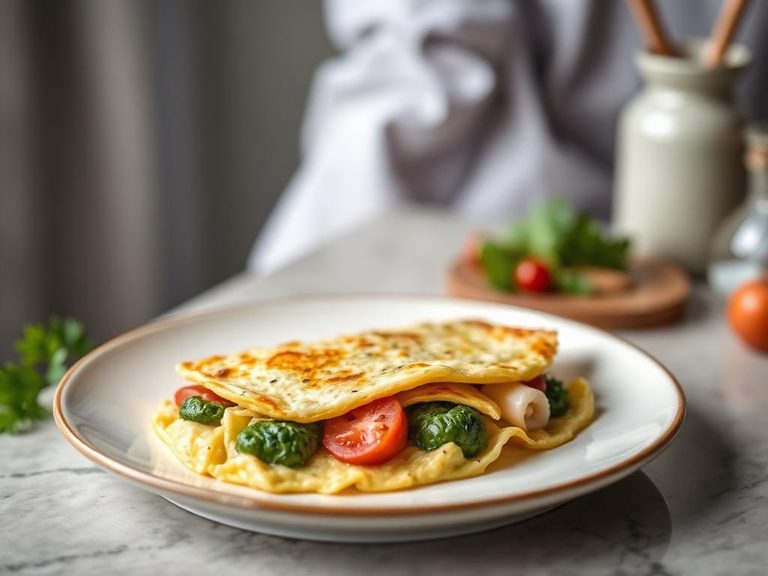
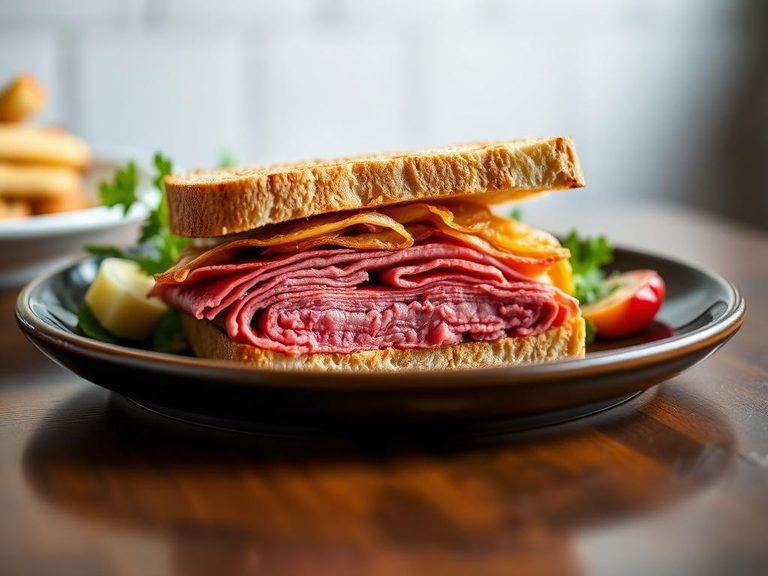
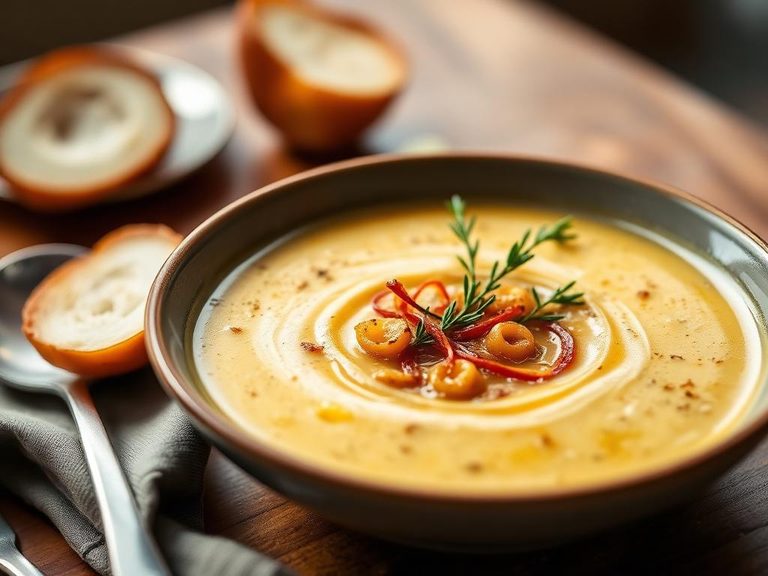
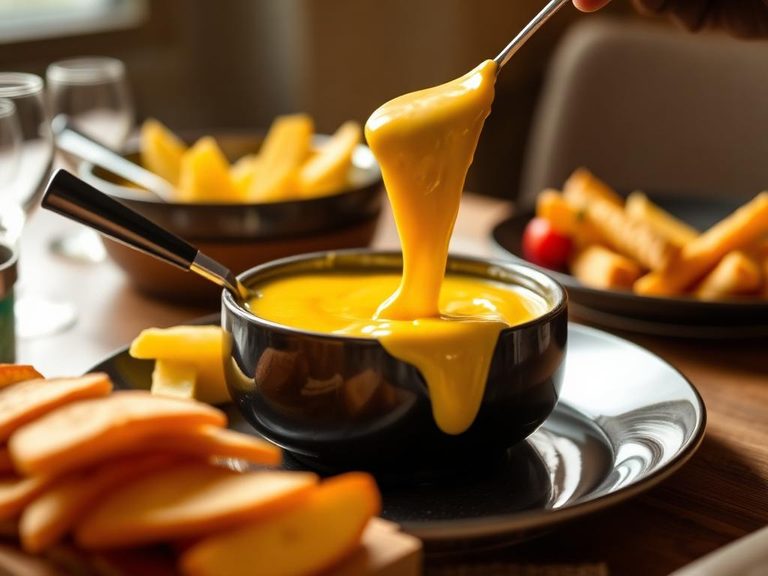
🍽️ Popular dishes
🌍 Where it's eaten
💡 Did you know?
The characteristic holes, or 'eyes,' in Swiss cheese are formed by carbon dioxide gas released by specific bacteria during the fermentation process.
Full nutrition (USDA data · scales with serving)
| Water | 59.6 g |
| Energy | 179 kcal |
| Energy | 749 kj |
| Protein | 28.4 g |
| Total lipid (fat) | 5.1 g |
| Ash | 3.5 g |
| Carbohydrate, by difference | 3.4 g |
| Fiber, total dietary | 0.00 g |
| Total Sugars | 1.3 g |
| Calcium, Ca | 961 mg |
| Iron, Fe | 0.17 mg |
| Magnesium, Mg | 36.0 mg |
| Phosphorus, P | 605 mg |
| Potassium, K | 111 mg |
| Sodium, Na | 199 mg |
| Zinc, Zn | 3.9 mg |
| Copper, Cu | 0.03 mg |
| Selenium, Se | 12.7 ug |
| Vitamin C, total ascorbic acid | 0.00 mg |
| Thiamin | 0.02 mg |
| Riboflavin | 0.36 mg |
| Niacin | 0.09 mg |
| Vitamin B-6 | 0.08 mg |
| Folate, total | 6.0 ug |
| Folic acid | 0.00 ug |
| Folate, food | 6.0 ug |
| Folate, DFE | 6.0 ug |
| Choline, total | 15.4 mg |
| Vitamin B-12 | 1.7 ug |
| Vitamin B-12, added | 0.00 ug |
| Vitamin A, RAE | 40.0 ug |
| Retinol | 39.0 ug |
| Carotene, beta | 13.0 ug |
| Carotene, alpha | 0.00 ug |
| Cryptoxanthin, beta | 0.00 ug |
| Vitamin A, IU | 152 iu |
| Lycopene | 0.00 ug |
| Lutein + zeaxanthin | 0.00 ug |
| Vitamin E (alpha-tocopherol) | 0.07 mg |
| Vitamin E, added | 0.00 mg |
| Vitamin D (D2 + D3), International Units | 4.0 iu |
| Vitamin D (D2 + D3) | 0.10 ug |
| Vitamin D3 (cholecalciferol) | 0.10 ug |
| Vitamin K (phylloquinone) | 0.50 ug |
| Alcohol, ethyl | 0.00 g |
| Caffeine | 0.00 mg |
| Theobromine | 0.00 mg |
Fat & fatty acid profile (per 100g)
| Fatty acids, total saturated | 3.3 g |
| SFA 4:0 | 0.20 g |
| SFA 6:0 | 0.09 g |
| SFA 8:0 | 0.05 g |
| SFA 10:0 | 0.12 g |
| SFA 12:0 | 0.10 g |
| SFA 14:0 | 0.57 g |
| SFA 16:0 | 1.4 g |
| SFA 18:0 | 0.60 g |
| Fatty acids, total monounsaturated | 1.4 g |
| MUFA 16:1 | 0.16 g |
| MUFA 18:1 | 1.1 g |
| MUFA 20:1 | 0.00 g |
| MUFA 22:1 | 0.00 g |
| Fatty acids, total polyunsaturated | 0.18 g |
| PUFA 18:2 | 0.12 g |
| PUFA 18:3 | 0.07 g |
| PUFA 18:4 | 0.00 g |
| PUFA 20:4 | 0.00 g |
| PUFA 20:5 n-3 (EPA) | 0.00 g |
| PUFA 22:5 n-3 (DPA) | 0.00 g |
| PUFA 22:6 n-3 (DHA) | 0.00 g |
| Cholesterol | 35.0 mg |
Amino acid profile (per 100g)
Estimated from Cheese, cottage, with vegetables — USDA does not publish this profile for Cheese.
| Tryptophan | 0.13 g |
| Threonine | 0.53 g |
| Isoleucine | 0.70 g |
| Leucine | 1.2 g |
| Lysine | 0.97 g |
| Methionine | 0.36 g |
| Cystine | 0.11 g |
| Phenylalanine | 0.65 g |
| Tyrosine | 0.64 g |
| Valine | 0.74 g |
| Arginine | 0.55 g |
| Histidine | 0.40 g |
| Alanine | 0.62 g |
| Aspartic acid | 0.82 g |
| Glutamic acid | 2.6 g |
| Glycine | 0.27 g |
| Proline | 1.4 g |
| Serine | 0.67 g |
FAQ
How does low-fat Swiss cheese taste compared to regular Swiss?
It retains the signature nutty and slightly sweet flavor profile but can be milder and less rich. The texture is often firmer and less creamy due to the reduced fat content.
Is low-fat Swiss cheese a good option for people with lactose intolerance?
Hard, aged cheeses like Swiss are naturally very low in lactose. The aging process consumes most of the lactose, making it generally tolerable for many with lactose sensitivity, though individual tolerance varies.
Can I use low-fat Swiss cheese for melting in dishes like grilled cheese or fondue?
Yes, it melts reasonably well, though it may not be as smooth or oily as full-fat versions. For fondue, it's often blended with other melting cheeses to improve texture and flavor complexity.
Nutrient density (calculated · NRF9.3)
Nutrient Rich Foods index: beneficial nutrients (protein, fiber, vitamins, minerals) minus saturated fat, added sugar & sodium, per 100 kcal.
NRF9.3 index — Fulgoni, Keast & Drewnowski, 2009. Computed from USDA nutrients.
Weight-loss friendliness (composite index)
Energy density 1.79 kcal/g · 63% calories from protein · 0.0 g fiber · 1.3 g sugar per 100 g.
Composite of energy density (Rolls et al., 1999), protein & fiber satiety, minus sugar. A calculated heuristic — ranks satiety-per-calorie, not a clinical measure.
Dietary load (calculated from USDA values)
Potential renal acid load. Positive = acid-forming, negative = alkaline-forming.
Sodium-to-potassium ratio: 1.79 (lower is better — aim for ≤ 1)
Sodium:potassium per WHO potassium guidance. Computed from USDA nutrients.