

Candies, Tamarind
Whole food · Sweets

Photo: Wikipedia
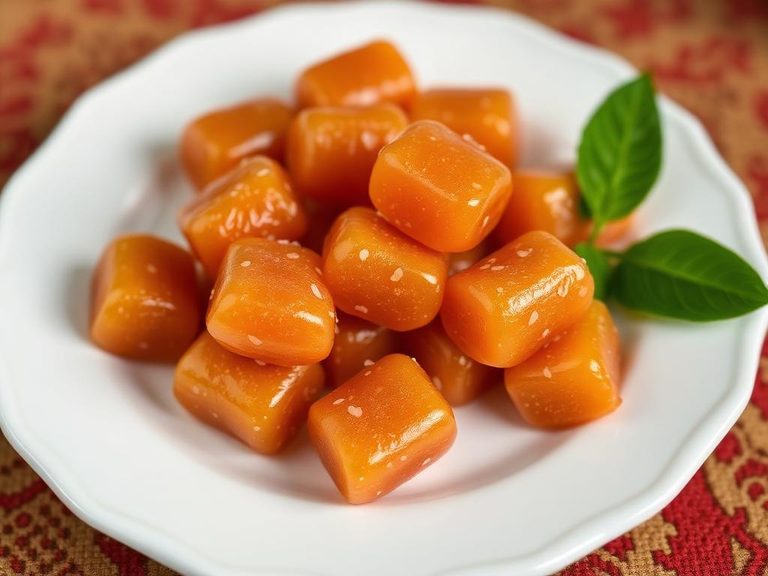
Tamarind candy is a chewy, sticky confection made from the tangy pulp of the tamarind fruit, often rolled in sugar or chili powder. It delivers an intense, mouth-puckering sourness that quickly gives way to deep, caramel-like sweetness. Nutritionally, it is a concentrated source of quick energy, being almost entirely carbohydrate from sugars.
Calorie split: 0% protein · 100% carbs · 0% fat
↓ Full nutrition💚 Why it's loved
People love it for the thrilling, complex dance of extreme sour followed by rich sweetness, a flavor profile unlike most candies. It's also cherished as a nostalgic, portable treat that evokes cultural memories and street-food traditions across Asia and Latin America.
⚠️ Watch-outs & how to enjoy it better
The extremely high sugar content (nearly 79g per 100g) can cause rapid blood-sugar spikes, making it unsuitable for diabetics or those monitoring glycemic impact. To mitigate, consume only a small piece and pair it with a source of protein or fat (like nuts) to slow sugar absorption. Some varieties are coated in salt or chili, which can be a concern for those with high blood pressure.
Key benefits
- Provides a quick source of energy from natural fruit sugars.
- Contains dietary fiber which can aid digestion.
- Offers a small amount of antioxidants from the tamarind pulp.
- Serves as a traditional digestive aid in some cultures after meals.
- Its intense flavor can satisfy strong sweet or sour cravings in small amounts.
🍽️ Popular dishes
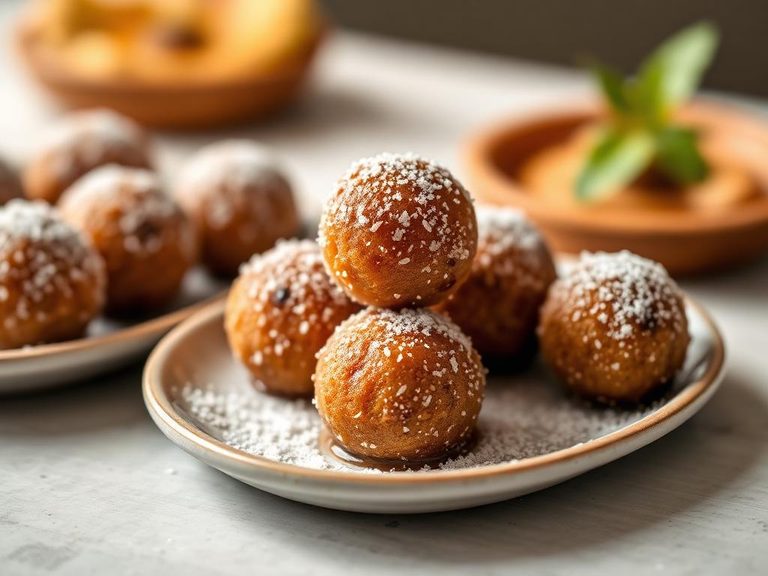
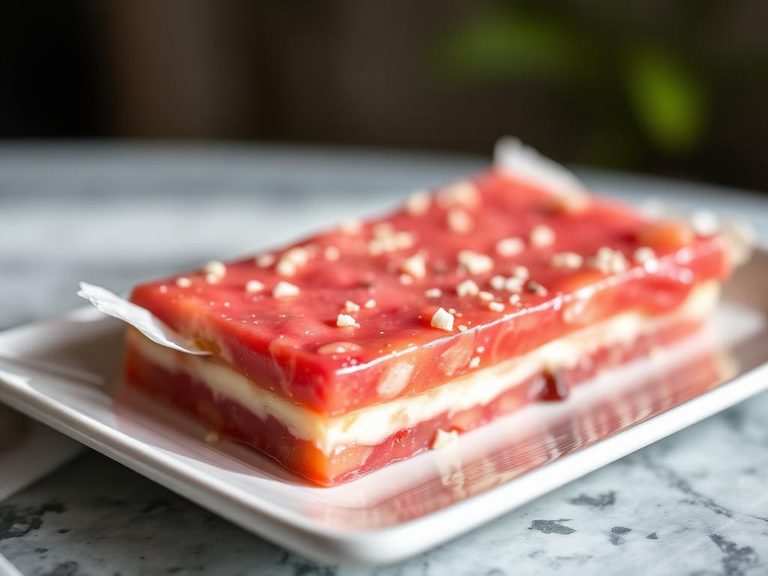
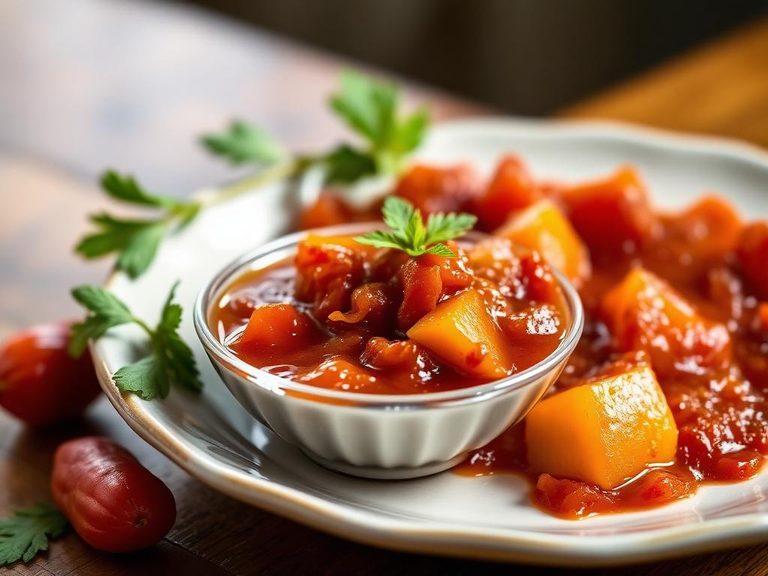
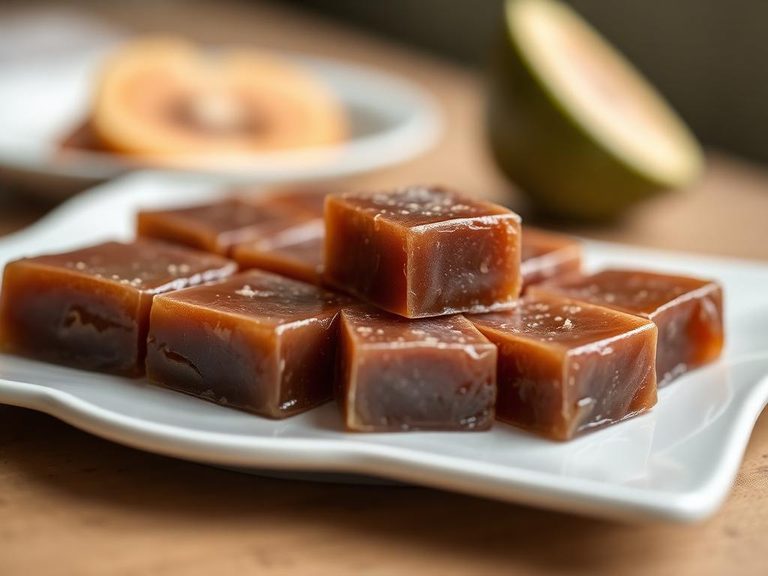
🌍 Where it's eaten
💡 Did you know?
The tamarind tree is sometimes called the 'date palm of India,' and its fruit pod was historically used as a natural laxative and polish for brass instruments before becoming a candy staple.
Full nutrition (USDA data · scales with serving)
| Water | 2.5 g |
| Energy | 331 kcal |
| Energy | 1385 kj |
| Protein | 0.00 g |
| Total lipid (fat) | 0.00 g |
| Ash | 5.5 g |
| Carbohydrate, by difference | 92.0 g |
| Fiber, total dietary | 2.5 g |
| Total Sugars | 78.6 g |
| Calcium, Ca | 0.00 mg |
| Iron, Fe | 0.00 mg |
| Magnesium, Mg | 45.0 mg |
| Phosphorus, P | 56.0 mg |
| Potassium, K | 309 mg |
| Sodium, Na | 1643 mg |
| Zinc, Zn | 0.08 mg |
| Copper, Cu | 0.05 mg |
| Manganese, Mn | 0.01 mg |
| Selenium, Se | 1.0 ug |
| Fluoride, F | 0.10 ug |
| Vitamin C, total ascorbic acid | 0.00 mg |
| Thiamin | 0.21 mg |
| Riboflavin | 0.09 mg |
| Niacin | 0.95 mg |
| Pantothenic acid | 0.07 mg |
| Vitamin B-6 | 0.03 mg |
| Folate, total | 7.0 ug |
| Folic acid | 0.00 ug |
| Folate, food | 7.0 ug |
| Folate, DFE | 7.0 ug |
| Choline, total | 4.2 mg |
| Betaine | 0.00 mg |
| Vitamin B-12 | 0.00 ug |
| Vitamin B-12, added | 0.00 ug |
| Vitamin A, RAE | 1.0 ug |
| Retinol | 0.00 ug |
| Carotene, beta | 9.0 ug |
| Carotene, alpha | 0.00 ug |
| Cryptoxanthin, beta | 0.00 ug |
| Vitamin A, IU | 15.0 iu |
| Lycopene | 0.00 ug |
| Lutein + zeaxanthin | 0.00 ug |
| Vitamin E (alpha-tocopherol) | 0.05 mg |
| Vitamin E, added | 0.00 mg |
| Vitamin D (D2 + D3), International Units | 0.00 iu |
| Vitamin D (D2 + D3) | 0.00 ug |
| Vitamin K (phylloquinone) | 1.4 ug |
| Alcohol, ethyl | 0.00 g |
| Caffeine | 0.00 mg |
| Theobromine | 0.00 mg |
Fat & fatty acid profile (per 100g)
| Fatty acids, total saturated | 0.00 g |
| SFA 4:0 | 0.00 g |
| SFA 6:0 | 0.00 g |
| SFA 8:0 | 0.00 g |
| SFA 10:0 | 0.00 g |
| SFA 12:0 | 0.00 g |
| SFA 14:0 | 0.00 g |
| SFA 16:0 | 0.00 g |
| SFA 18:0 | 0.00 g |
| Fatty acids, total monounsaturated | 0.00 g |
| MUFA 16:1 | 0.00 g |
| MUFA 18:1 | 0.00 g |
| MUFA 20:1 | 0.00 g |
| MUFA 22:1 | 0.00 g |
| Fatty acids, total polyunsaturated | 0.00 g |
| PUFA 18:2 | 0.00 g |
| PUFA 18:3 | 0.00 g |
| PUFA 18:4 | 0.00 g |
| PUFA 20:4 | 0.00 g |
| PUFA 20:5 n-3 (EPA) | 0.00 g |
| PUFA 22:5 n-3 (DPA) | 0.00 g |
| PUFA 22:6 n-3 (DHA) | 0.00 g |
| Cholesterol | 0.00 mg |
| Phytosterols | 0.00 mg |
Amino acid profile (per 100g)
Estimated from Candies, honey-combed, with peanut butter — USDA does not publish this profile for Candies.
| Tryptophan | 0.09 g |
| Threonine | 0.21 g |
| Isoleucine | 0.24 g |
| Leucine | 0.61 g |
| Lysine | 0.27 g |
| Methionine | 0.10 g |
| Cystine | 0.09 g |
| Phenylalanine | 0.47 g |
| Tyrosine | 0.33 g |
| Valine | 0.31 g |
| Arginine | 1.1 g |
| Histidine | 0.22 g |
| Alanine | 0.36 g |
| Aspartic acid | 1.2 g |
| Glutamic acid | 2.0 g |
| Glycine | 0.56 g |
| Proline | 0.55 g |
| Serine | 0.58 g |
FAQ
Is tamarind candy vegan?
Most traditional tamarind candies are vegan, made from fruit pulp, sugar, and spices. However, always check labels for ingredients like gelatin or dairy derivatives in some commercial brands.
Why is it so sour?
The intense sourness comes from the high concentration of tartaric acid naturally present in the tamarind fruit pulp, which is the main ingredient.
Can I eat tamarind candy on a keto diet?
No. With over 90g of carbohydrates per 100g, primarily from sugar, tamarind candy is incompatible with a ketogenic diet.
Nutrient density (calculated · NRF9.3)
Nutrient Rich Foods index: beneficial nutrients (protein, fiber, vitamins, minerals) minus saturated fat, added sugar & sodium, per 100 kcal.
NRF9.3 index — Fulgoni, Keast & Drewnowski, 2009. Computed from USDA nutrients.
Weight-loss friendliness (composite index)
Energy density 3.31 kcal/g · 0% calories from protein · 2.5 g fiber · 78.6 g sugar per 100 g.
Composite of energy density (Rolls et al., 1999), protein & fiber satiety, minus sugar. A calculated heuristic — ranks satiety-per-calorie, not a clinical measure.
Dietary load (calculated from USDA values)
Potential renal acid load. Positive = acid-forming, negative = alkaline-forming.
Sodium-to-potassium ratio: 5.32 (lower is better — aim for ≤ 1)
Sodium:potassium per WHO potassium guidance. Computed from USDA nutrients.