

Tamarind balls
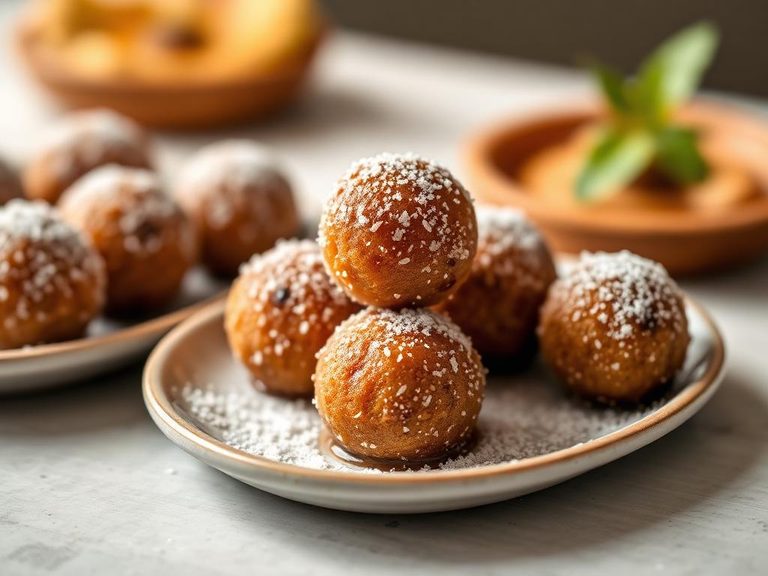
Tamarind balls are a popular sweet and sour treat made by rolling a paste of tamarind pulp, sugar, and sometimes a pinch of salt into small balls, which are then coated in granulated sugar for a crunchy exterior. Originating from tropical regions where tamarind is abundant, they are a beloved confection in many parts of Asia, Africa, and Latin America.
🍳 View the full Tamarind balls recipe →
🍽️ Nutrition at a glance
This candy is high in carbohydrates, primarily from sugar and the natural sugars in tamarind, and provides a quick energy boost. It is not a significant source of protein or fat, but tamarind does contribute some key minerals like potassium and magnesium, with a typical serving containing around 100-150 calories.
Nutrition breakdown
| Calories | 180 kcal |
| Protein | 0.5 g |
| Carbs | 45 g |
| Fat | 0.2 g |
| Fiber | 1.5 g |
| Sugar | 40 g |
| Sodium | 15 mg |
| Potassium | 120 mg |
| Magnesium | 15 mg |
| Iron | 1.5 mg |
| Vitamin C | 5 mg |
| Phosphorus | 20 mg |
| Calcium | 15 mg |
| Vitamin B1 (Thiamine) | 0.05 mg |
| Niacin (Vitamin B3) | 0.5 mg |
Per 3 pieces (approx. 60 g) · estimated, varies by recipe
💡 What's interesting
Culturally, tamarind balls are a classic example of a simple, portable confection that transforms a tart, fibrous fruit into a shelf-stable treat. Nutritionally, they are interesting because they pair a concentrated source of simple sugars with the tangy, digestive-friendly properties of tamarind, which has been used traditionally in many cuisines to aid digestion.
🍽️ Related dishes



AI estimate may be inaccurate · Terms