

Candies, soft fruit and nut squares
Whole food · Sweets
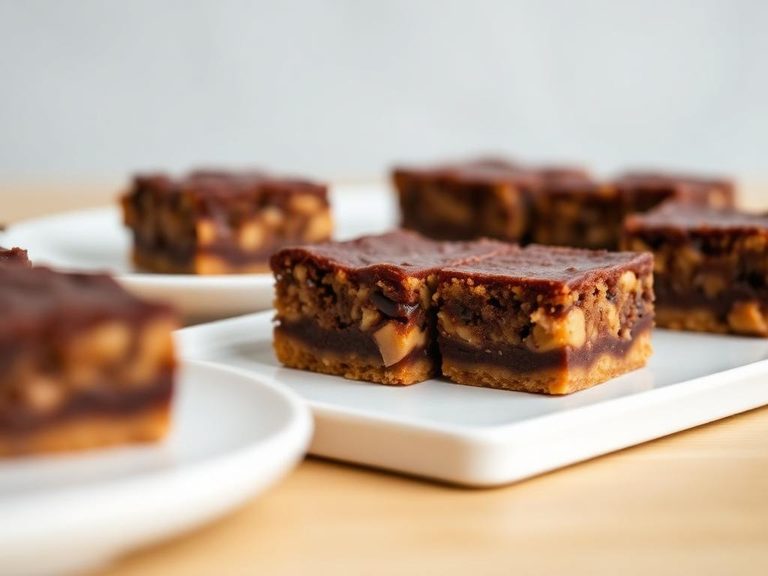
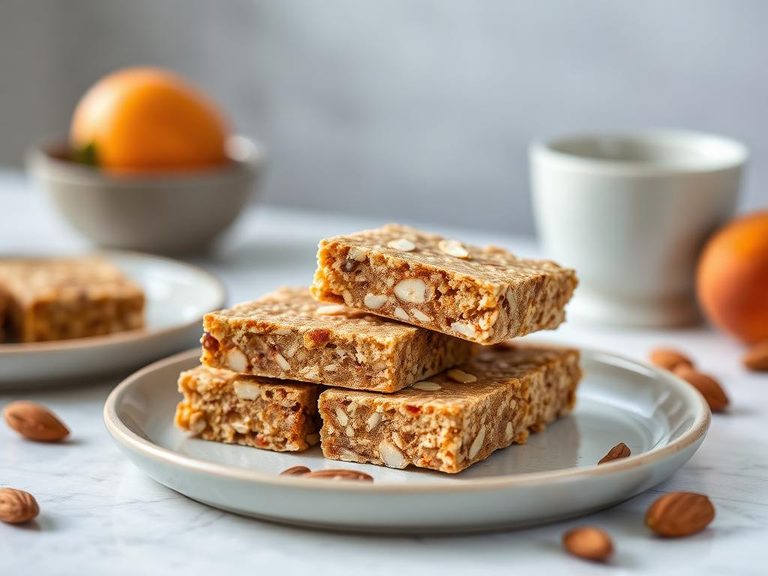
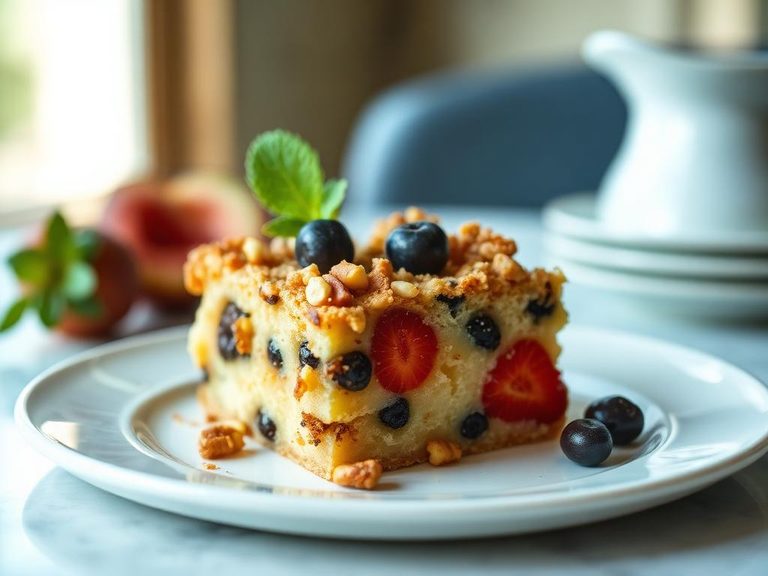
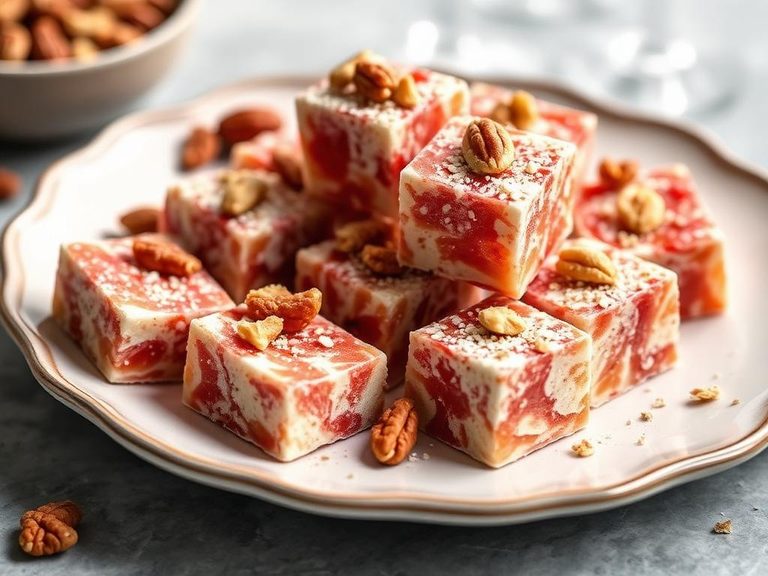
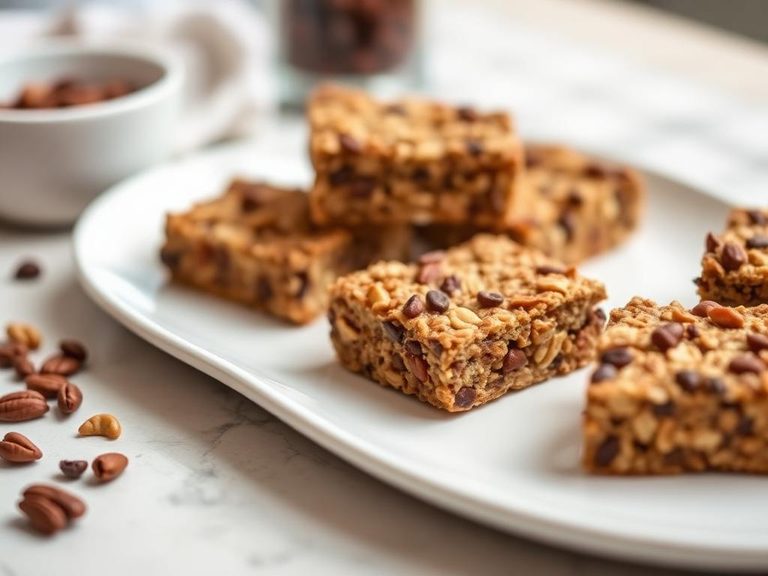
Soft fruit and nut squares are chewy, dense confections made from a base of dried fruits like dates or apricots, mixed with nuts such as almonds or cashews, and often bound with a sticky syrup or honey. They offer a sweet, fruity flavor with a satisfyingly crunchy texture from the nuts, providing a quick energy boost with 390 kcal per 100g, primarily from carbohydrates (73.81g) and natural sugars (45.95g).
Calorie split: 2% protein · 76% carbs · 22% fat
↓ Full nutrition💚 Why it's loved
People love these squares for their delightful balance of chewy and crunchy textures, combined with the natural sweetness of fruit and the richness of nuts. They are a convenient, portable snack that satisfies sweet cravings while providing a sense of wholesome indulgence, often associated with homemade treats or health-conscious confectionery.
⚠️ Watch-outs & how to enjoy it better
The high sugar content (45.95g per 100g) can cause rapid blood-sugar spikes, making them unsuitable for diabetics or those monitoring glycemic intake. To mitigate this, pair a small portion with a source of protein or fat (like Greek yogurt or cheese) to slow sugar absorption, and practice strict portion control (e.g., one small square). Additionally, common allergens like tree nuts are prevalent, so those with allergies should avoid them.
Key benefits
- Quick energy source from natural sugars and carbs
- Contains dietary fiber (2.4g) for digestive support
- Provides some plant-based protein (2.31g)
- Offers healthy fats from nuts (9.52g)
- No artificial colors or flavors in traditional versions
🍽️ Popular dishes

🌍 Where it's eaten
💡 Did you know?
The concept of fruit and nut confections dates back to ancient Persia, where dried fruits and nuts were combined with honey to create early energy-dense snacks for travelers and soldiers.
Full nutrition (USDA data · scales with serving)
| Water | 13.9 g |
| Energy | 390 kcal |
| Energy | 1633 kj |
| Protein | 2.3 g |
| Total lipid (fat) | 9.5 g |
| Ash | 0.40 g |
| Carbohydrate, by difference | 73.8 g |
| Fiber, total dietary | 2.4 g |
| Total Sugars | 46.0 g |
| Calcium, Ca | 17.0 mg |
| Iron, Fe | 0.93 mg |
| Magnesium, Mg | 25.0 mg |
| Phosphorus, P | 54.0 mg |
| Potassium, K | 82.0 mg |
| Sodium, Na | 131 mg |
| Zinc, Zn | 0.53 mg |
| Copper, Cu | 0.30 mg |
| Manganese, Mn | 0.54 mg |
| Selenium, Se | 1.4 ug |
| Vitamin C, total ascorbic acid | 0.20 mg |
| Thiamin | 0.05 mg |
| Riboflavin | 0.04 mg |
| Niacin | 0.18 mg |
| Pantothenic acid | 0.11 mg |
| Vitamin B-6 | 0.08 mg |
| Folate, total | 12.0 ug |
| Folic acid | 0.00 ug |
| Folate, food | 11.0 ug |
| Folate, DFE | 11.0 ug |
| Choline, total | 5.5 mg |
| Vitamin B-12 | 0.00 ug |
| Vitamin B-12, added | 0.00 ug |
| Vitamin A, RAE | 0.00 ug |
| Retinol | 0.00 ug |
| Carotene, beta | 2.0 ug |
| Carotene, alpha | 0.00 ug |
| Cryptoxanthin, beta | 0.00 ug |
| Vitamin A, IU | 3.0 iu |
| Lycopene | 0.00 ug |
| Lutein + zeaxanthin | 3.0 ug |
| Vitamin E (alpha-tocopherol) | 0.10 mg |
| Vitamin E, added | 0.00 mg |
| Vitamin D (D2 + D3), International Units | 0.00 iu |
| Vitamin D (D2 + D3) | 0.00 ug |
| Vitamin K (phylloquinone) | 0.40 ug |
| Alcohol, ethyl | 0.00 g |
| Caffeine | 0.00 mg |
| Theobromine | 0.00 mg |
Fat & fatty acid profile (per 100g)
| Fatty acids, total saturated | 0.90 g |
| SFA 4:0 | 0.00 g |
| SFA 6:0 | 0.00 g |
| SFA 8:0 | 0.00 g |
| SFA 10:0 | 0.00 g |
| SFA 12:0 | 0.00 g |
| SFA 13:0 | 0.00 g |
| SFA 14:0 | 0.00 g |
| SFA 15:0 | 0.00 g |
| SFA 16:0 | 0.65 g |
| SFA 17:0 | 0.00 g |
| SFA 18:0 | 0.24 g |
| SFA 20:0 | 0.01 g |
| SFA 22:0 | 0.00 g |
| SFA 24:0 | 0.00 g |
| Fatty acids, total monounsaturated | 1.3 g |
| MUFA 14:1 | 0.00 g |
| MUFA 16:1 | 0.00 g |
| MUFA 18:1 | 1.3 g |
| MUFA 20:1 | 0.02 g |
| MUFA 22:1 | 0.00 g |
| MUFA 24:1 c | 0.00 g |
| Fatty acids, total polyunsaturated | 6.8 g |
| PUFA 18:2 | 5.5 g |
| PUFA 18:3 | 1.3 g |
| PUFA 18:4 | 0.00 g |
| PUFA 20:2 n-6 c,c | 0.00 g |
| PUFA 20:3 | 0.00 g |
| PUFA 20:4 | 0.00 g |
| PUFA 20:5 n-3 (EPA) | 0.00 g |
| PUFA 22:5 n-3 (DPA) | 0.00 g |
| PUFA 22:6 n-3 (DHA) | 0.00 g |
| Cholesterol | 0.00 mg |
Amino acid profile (per 100g)
Estimated from Candies, honey-combed, with peanut butter — USDA does not publish this profile for Candies.
| Tryptophan | 0.09 g |
| Threonine | 0.21 g |
| Isoleucine | 0.24 g |
| Leucine | 0.61 g |
| Lysine | 0.27 g |
| Methionine | 0.10 g |
| Cystine | 0.09 g |
| Phenylalanine | 0.47 g |
| Tyrosine | 0.33 g |
| Valine | 0.31 g |
| Arginine | 1.1 g |
| Histidine | 0.22 g |
| Alanine | 0.36 g |
| Aspartic acid | 1.2 g |
| Glutamic acid | 2.0 g |
| Glycine | 0.56 g |
| Proline | 0.55 g |
| Serine | 0.58 g |
FAQ
Are soft fruit and nut squares considered healthy?
They can be a better alternative to candy due to natural ingredients and some fiber, but their high sugar and calorie content means they should be enjoyed in moderation as an occasional treat, not a health food.
How should I store them?
Store in an airtight container at room temperature for up to a week, or refrigerate for up to a month to maintain freshness and prevent the fruit from becoming too sticky.
Can I make them vegan?
Yes, traditional recipes using dried fruits, nuts, and natural sweeteners like maple syrup or date paste are naturally vegan; just avoid honey if strict veganism is required.
Nutrient density (calculated · NRF9.3)
Nutrient Rich Foods index: beneficial nutrients (protein, fiber, vitamins, minerals) minus saturated fat, added sugar & sodium, per 100 kcal.
NRF9.3 index — Fulgoni, Keast & Drewnowski, 2009. Computed from USDA nutrients.
Weight-loss friendliness (composite index)
Energy density 3.90 kcal/g · 2% calories from protein · 2.4 g fiber · 46.0 g sugar per 100 g.
Composite of energy density (Rolls et al., 1999), protein & fiber satiety, minus sugar. A calculated heuristic — ranks satiety-per-calorie, not a clinical measure.
Dietary load (calculated from USDA values)
Potential renal acid load. Positive = acid-forming, negative = alkaline-forming.
Sodium-to-potassium ratio: 1.60 (lower is better — aim for ≤ 1)
Sodium:potassium per WHO potassium guidance. Computed from USDA nutrients.