

Bologna, turkey
Whole food · Sausages and Luncheon Meats

Photo: Wikipedia
Turkey bologna is a finely ground, emulsified sausage made from turkey meat, offering a leaner, milder alternative to traditional pork bologna. It has a smooth, uniform texture and a subtly savory, slightly smoky flavor. Per 100g, it provides a solid protein boost (11.42g) with significantly less fat (16.05g) than its pork counterpart.
Calorie split: 22% protein · 9% carbs · 69% fat
↓ Full nutrition💚 Why it's loved
People love it for its familiar, comforting taste and incredible convenience—it's a classic for quick sandwiches, kids' lunchboxes, and simple charcuterie boards, embodying a nostalgic, no-fuss American deli staple.
⚠️ Watch-outs & how to enjoy it better
It is a processed meat typically high in sodium and may contain additives like nitrates; individuals monitoring blood pressure or sodium intake should be cautious. To counteract, pair it with potassium-rich foods like leafy greens or avocado, choose low-sodium varieties when available, and practice portion control.
Key benefits
- Good source of lean protein for muscle maintenance
- Lower in saturated fat than traditional pork bologna
- Convenient, ready-to-eat protein source
- Versatile for quick meals and snacks
🍽️ Popular dishes
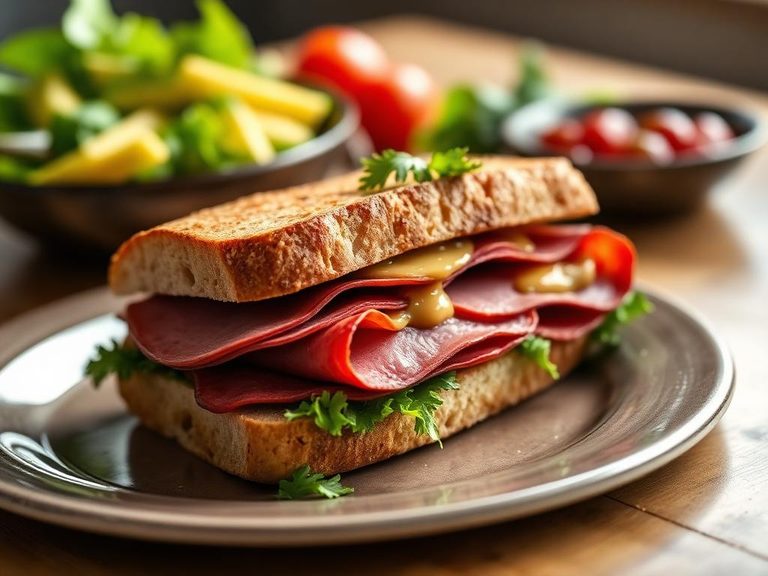
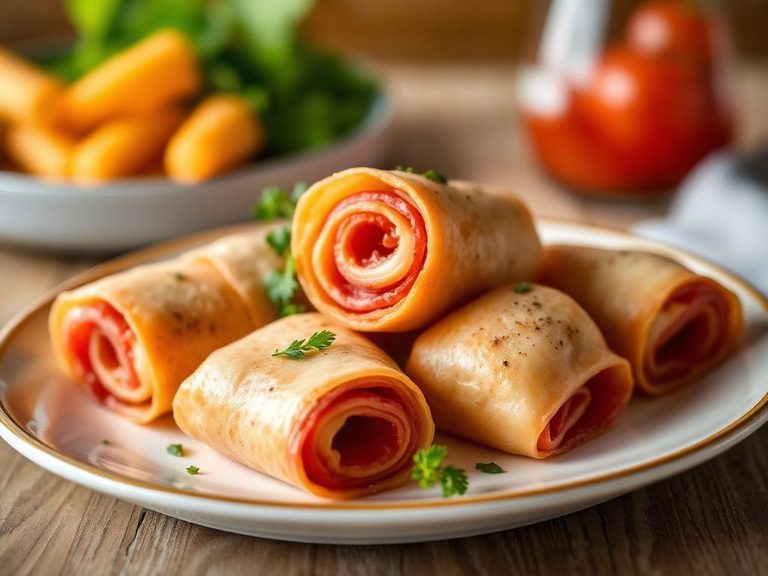
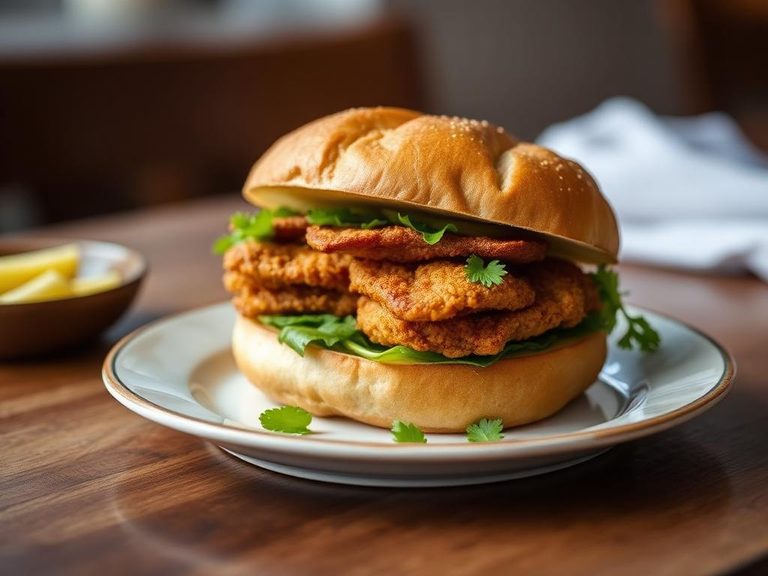
🌍 Where it's eaten
💡 Did you know?
The name 'bologna' comes from the Italian city of Bologna, where a similar pork sausage, mortadella, originated, though American-style bologna is a distinct product.
Full nutrition (USDA data · scales with serving)
| Water | 64.5 g |
| Energy | 209 kcal |
| Energy | 874 kj |
| Protein | 11.4 g |
| Total lipid (fat) | 16.1 g |
| Ash | 3.3 g |
| Carbohydrate, by difference | 4.7 g |
| Fiber, total dietary | 0.50 g |
| Total Sugars | 2.9 g |
| Calcium, Ca | 123 mg |
| Iron, Fe | 3.0 mg |
| Magnesium, Mg | 16.0 mg |
| Phosphorus, P | 114 mg |
| Potassium, K | 135 mg |
| Sodium, Na | 1071 mg |
| Zinc, Zn | 1.3 mg |
| Copper, Cu | 0.07 mg |
| Manganese, Mn | 0.05 mg |
| Selenium, Se | 15.4 ug |
| Fluoride, F | 36.0 ug |
| Vitamin C, total ascorbic acid | 13.3 mg |
| Thiamin | 0.05 mg |
| Riboflavin | 0.10 mg |
| Niacin | 2.6 mg |
| Pantothenic acid | 0.47 mg |
| Vitamin B-6 | 0.24 mg |
| Folate, total | 9.0 ug |
| Folic acid | 0.00 ug |
| Folate, food | 9.0 ug |
| Folate, DFE | 9.0 ug |
| Choline, total | 54.0 mg |
| Betaine | 4.8 mg |
| Vitamin B-12 | 0.23 ug |
| Vitamin B-12, added | 0.00 ug |
| Vitamin A, RAE | 9.0 ug |
| Retinol | 9.0 ug |
| Carotene, beta | 0.00 ug |
| Carotene, alpha | 0.00 ug |
| Cryptoxanthin, beta | 0.00 ug |
| Vitamin A, IU | 32.0 iu |
| Lycopene | 0.00 ug |
| Lutein + zeaxanthin | 0.00 ug |
| Vitamin E (alpha-tocopherol) | 0.45 mg |
| Vitamin E, added | 0.00 mg |
| Vitamin D (D2 + D3), International Units | 26.0 iu |
| Vitamin D (D2 + D3) | 0.60 ug |
| Vitamin D3 (cholecalciferol) | 0.60 ug |
| Vitamin K (phylloquinone) | 0.30 ug |
| Alcohol, ethyl | 0.00 g |
| Caffeine | 0.00 mg |
| Theobromine | 0.00 mg |
Fat & fatty acid profile (per 100g)
| Fatty acids, total saturated | 4.4 g |
| SFA 4:0 | 0.00 g |
| SFA 6:0 | 0.00 g |
| SFA 8:0 | 0.00 g |
| SFA 10:0 | 0.00 g |
| SFA 12:0 | 0.01 g |
| SFA 14:0 | 0.13 g |
| SFA 16:0 | 3.2 g |
| SFA 18:0 | 0.96 g |
| Fatty acids, total monounsaturated | 6.8 g |
| MUFA 16:1 | 0.95 g |
| MUFA 18:1 | 5.7 g |
| MUFA 20:1 | 0.13 g |
| MUFA 22:1 | 0.01 g |
| Fatty acids, total polyunsaturated | 3.9 g |
| PUFA 18:2 | 3.6 g |
| PUFA 18:3 | 0.20 g |
| PUFA 18:4 | 0.00 g |
| PUFA 20:4 | 0.07 g |
| PUFA 20:5 n-3 (EPA) | 0.00 g |
| PUFA 22:5 n-3 (DPA) | 0.01 g |
| PUFA 22:6 n-3 (DHA) | 0.01 g |
| Fatty acids, total trans | 0.12 g |
| Cholesterol | 75.0 mg |
| Phytosterols | 2.0 mg |
Amino acid profile (per 100g)
| Tryptophan | 0.13 g |
| Threonine | 0.50 g |
| Isoleucine | 0.57 g |
| Leucine | 0.89 g |
| Lysine | 1.0 g |
| Methionine | 0.32 g |
| Cystine | 0.14 g |
| Phenylalanine | 0.46 g |
| Tyrosine | 0.43 g |
| Valine | 0.60 g |
| Arginine | 0.83 g |
| Histidine | 0.34 g |
| Alanine | 0.74 g |
| Aspartic acid | 1.1 g |
| Glutamic acid | 1.9 g |
| Glycine | 0.75 g |
| Proline | 0.60 g |
| Serine | 0.51 g |
FAQ
Is turkey bologna healthier than regular bologna?
Generally, yes. It is made from leaner turkey meat, resulting in lower total and saturated fat content. However, it can still be high in sodium and is still a processed meat product.
What's the best way to eat it?
It's most commonly sliced for sandwiches, but it can also be pan-fried until crispy, diced into salads or omelets, or used as a pizza topping.
Does it need to be cooked?
No, turkey bologna is pre-cooked and ready to eat straight from the package. Heating is optional and done mainly for taste or texture, like when frying.
Nutrient density (calculated · NRF9.3)
Nutrient Rich Foods index: beneficial nutrients (protein, fiber, vitamins, minerals) minus saturated fat, added sugar & sodium, per 100 kcal.
NRF9.3 index — Fulgoni, Keast & Drewnowski, 2009. Computed from USDA nutrients.
Weight-loss friendliness (composite index)
Energy density 2.09 kcal/g · 22% calories from protein · 0.5 g fiber · 2.9 g sugar per 100 g.
Composite of energy density (Rolls et al., 1999), protein & fiber satiety, minus sugar. A calculated heuristic — ranks satiety-per-calorie, not a clinical measure.
Dietary load (calculated from USDA values)
Potential renal acid load. Positive = acid-forming, negative = alkaline-forming.
Sodium-to-potassium ratio: 7.93 (lower is better — aim for ≤ 1)
Sodium:potassium per WHO potassium guidance. Computed from USDA nutrients.