

Blackberries, raw
Whole food · Fruits and Fruit Juices

Photo: Wikipedia
A glossy, deep-purple aggregate fruit composed of tiny, juice-filled drupelets, raw blackberries offer a complex sweet-tart flavor with an earthy, slightly floral note and a distinctive seedy crunch. Nutritionally, they are a standout source of dietary fiber, providing over 5 grams per 100g, which is nearly 20% of the daily value, while being very low in calories.
Calorie split: 11% protein · 79% carbs · 9% fat
↓ Full nutrition💚 Why it's loved
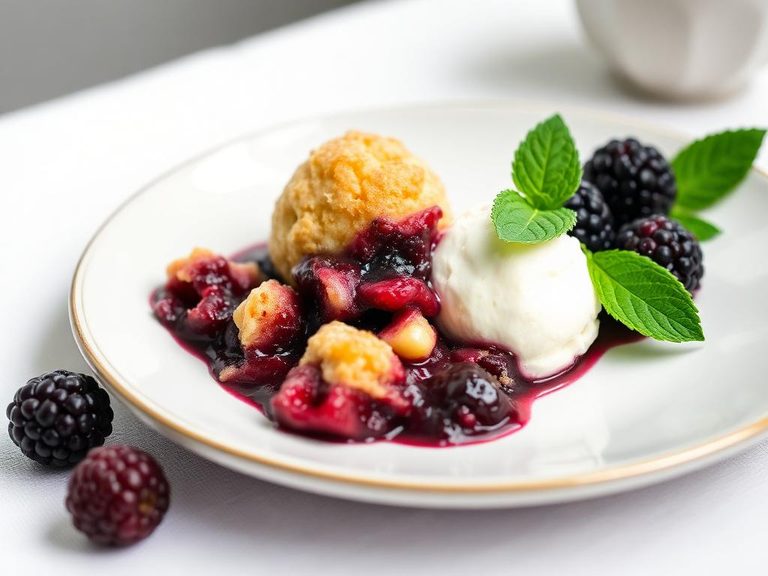
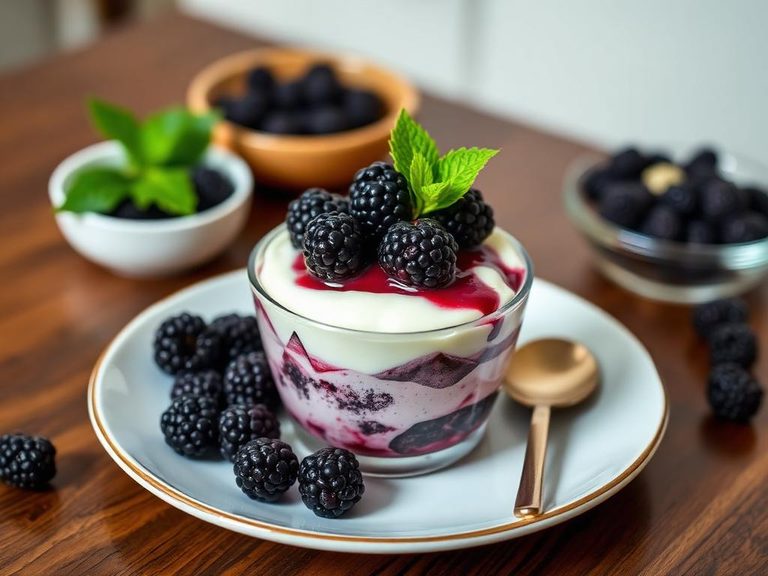
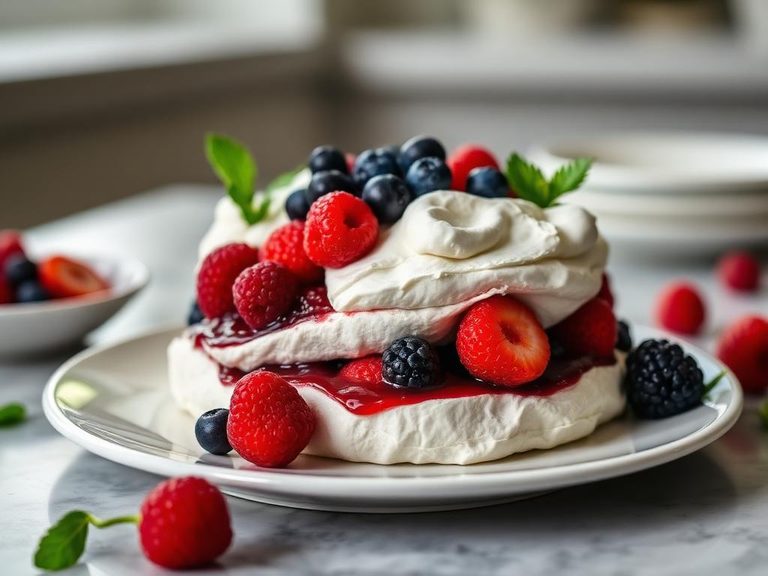
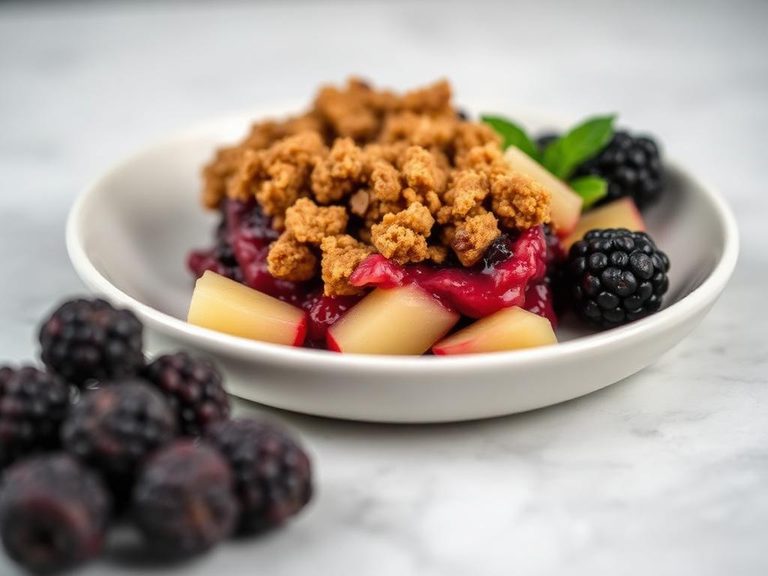
People love blackberries for their intense, wild flavor that perfectly balances sweetness with a bright, tangy acidity, making them feel like a luxurious treat from nature. Their versatility is key—they shine equally well in simple bowls, baked into desserts, or blended into savory sauces.
⚠️ Watch-outs & how to enjoy it better
The tiny seeds can be unpleasant or irritating for some, particularly those with diverticulitis or sensitive digestive tracts. To mitigate this, you can blend and strain the berries to make a seedless purée, or cook them down into jams or compotes where the seeds soften. Their natural sugars, while healthy, still count toward carbohydrate intake for those monitoring blood sugar.
Key benefits
- Excellent source of dietary fiber (5.3g per 100g).
- High in vitamin C, an antioxidant that supports immune function.
- Contains manganese, essential for bone health and metabolism.
- Rich in polyphenols like anthocyanins, which give them their dark color.
- Low in calories and naturally low in fat.
🍽️ Popular dishes

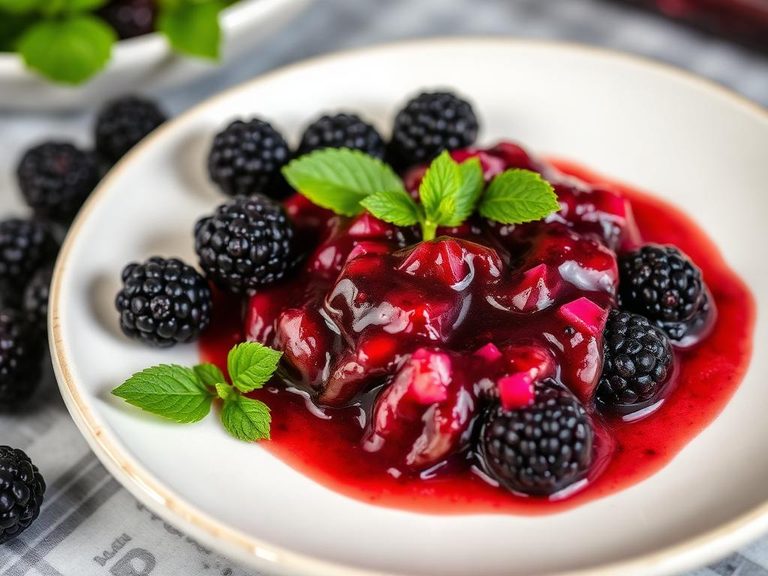
🌍 Where it's eaten
💡 Did you know?
The blackberry plant is a 'bramble' (genus Rubus), and its stems can root where they touch the ground, allowing a single plant to form dense, thorny thickets that can last for decades.
Full nutrition (USDA data · scales with serving)
| Water | 88.2 g |
| Energy | 43.0 kcal |
| Energy | 181 kj |
| Protein | 1.4 g |
| Total lipid (fat) | 0.49 g |
| Ash | 0.37 g |
| Carbohydrate, by difference | 9.6 g |
| Fiber, total dietary | 5.3 g |
| Total Sugars | 4.9 g |
| Sucrose | 0.07 g |
| Glucose | 2.3 g |
| Fructose | 2.4 g |
| Lactose | 0.00 g |
| Maltose | 0.07 g |
| Galactose | 0.03 g |
| Starch | 0.00 g |
| Calcium, Ca | 29.0 mg |
| Iron, Fe | 0.62 mg |
| Magnesium, Mg | 20.0 mg |
| Phosphorus, P | 22.0 mg |
| Potassium, K | 162 mg |
| Sodium, Na | 1.0 mg |
| Zinc, Zn | 0.53 mg |
| Copper, Cu | 0.17 mg |
| Manganese, Mn | 0.65 mg |
| Selenium, Se | 0.40 ug |
| Vitamin C, total ascorbic acid | 21.0 mg |
| Thiamin | 0.02 mg |
| Riboflavin | 0.03 mg |
| Niacin | 0.65 mg |
| Pantothenic acid | 0.28 mg |
| Vitamin B-6 | 0.03 mg |
| Folate, total | 25.0 ug |
| Folic acid | 0.00 ug |
| Folate, food | 25.0 ug |
| Folate, DFE | 25.0 ug |
| Choline, total | 8.5 mg |
| Betaine | 0.30 mg |
| Vitamin B-12 | 0.00 ug |
| Vitamin B-12, added | 0.00 ug |
| Vitamin A, RAE | 11.0 ug |
| Retinol | 0.00 ug |
| Carotene, beta | 128 ug |
| Carotene, alpha | 0.00 ug |
| Cryptoxanthin, beta | 0.00 ug |
| Vitamin A, IU | 214 iu |
| Lycopene | 0.00 ug |
| Lutein + zeaxanthin | 118 ug |
| Vitamin E (alpha-tocopherol) | 1.2 mg |
| Vitamin E, added | 0.00 mg |
| Tocopherol, beta | 0.04 mg |
| Tocopherol, gamma | 1.3 mg |
| Tocopherol, delta | 0.90 mg |
| Tocotrienol, alpha | 0.00 mg |
| Tocotrienol, beta | 0.00 mg |
| Tocotrienol, gamma | 0.00 mg |
| Tocotrienol, delta | 0.00 mg |
| Vitamin D (D2 + D3), International Units | 0.00 iu |
| Vitamin D (D2 + D3) | 0.00 ug |
| Vitamin K (phylloquinone) | 19.8 ug |
| Vitamin K (Dihydrophylloquinone) | 0.00 ug |
| Alcohol, ethyl | 0.00 g |
| Caffeine | 0.00 mg |
| Theobromine | 0.00 mg |
Fat & fatty acid profile (per 100g)
| Fatty acids, total saturated | 0.01 g |
| SFA 4:0 | 0.00 g |
| SFA 6:0 | 0.00 g |
| SFA 8:0 | 0.00 g |
| SFA 10:0 | 0.00 g |
| SFA 12:0 | 0.00 g |
| SFA 14:0 | 0.00 g |
| SFA 16:0 | 0.01 g |
| SFA 18:0 | 0.00 g |
| Fatty acids, total monounsaturated | 0.05 g |
| MUFA 16:1 | 0.00 g |
| MUFA 18:1 | 0.04 g |
| MUFA 20:1 | 0.00 g |
| MUFA 22:1 | 0.00 g |
| Fatty acids, total polyunsaturated | 0.28 g |
| PUFA 18:2 | 0.19 g |
| PUFA 18:3 | 0.09 g |
| PUFA 18:4 | 0.00 g |
| PUFA 20:4 | 0.00 g |
| PUFA 20:5 n-3 (EPA) | 0.00 g |
| PUFA 22:5 n-3 (DPA) | 0.00 g |
| PUFA 22:6 n-3 (DHA) | 0.00 g |
| Fatty acids, total trans | 0.00 g |
| Cholesterol | 0.00 mg |
FAQ
Are blackberry seeds edible?
Yes, blackberry seeds are edible and contribute to the fruit's high fiber content. However, their hard texture can be unpleasant for some, and they are generally advised against for people with certain digestive conditions.
How do I pick and store fresh blackberries?
Choose plump, firm, uniformly dark berries with no red or moldy spots. Store them unwashed in a single layer on a paper towel in the refrigerator for 2-3 days. Wash just before eating to prevent mold.
What's the difference between blackberries and raspberries?
When picked, a raspberry leaves its white core (receptacle) on the plant, creating a hollow fruit. A blackberry retains its core, making it solid inside. Blackberries also tend to be larger, darker, and have a more robust, tart flavor.
Nutrient density (calculated · NRF9.3)
Nutrient Rich Foods index: beneficial nutrients (protein, fiber, vitamins, minerals) minus saturated fat, added sugar & sodium, per 100 kcal.
NRF9.3 index — Fulgoni, Keast & Drewnowski, 2009. Computed from USDA nutrients.
Weight-loss friendliness (composite index)
Energy density 0.43 kcal/g · 13% calories from protein · 5.3 g fiber · 4.9 g sugar per 100 g.
Composite of energy density (Rolls et al., 1999), protein & fiber satiety, minus sugar. A calculated heuristic — ranks satiety-per-calorie, not a clinical measure.
Dietary load (calculated from USDA values)
Potential renal acid load. Positive = acid-forming, negative = alkaline-forming.
Sodium-to-potassium ratio: 0.01 (lower is better — aim for ≤ 1)
Sodium:potassium per WHO potassium guidance. Computed from USDA nutrients.