

Beverages, tea, hibiscus, brewed
Whole food · Beverages

Photo: Wikipedia
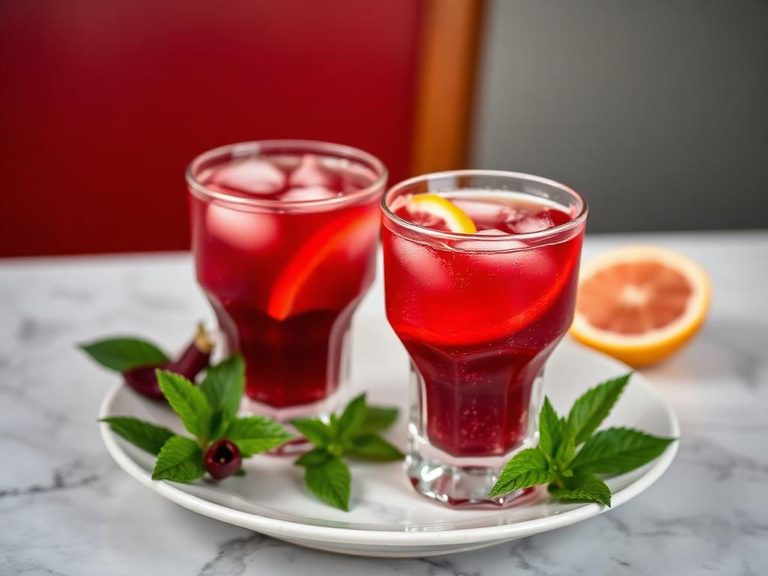
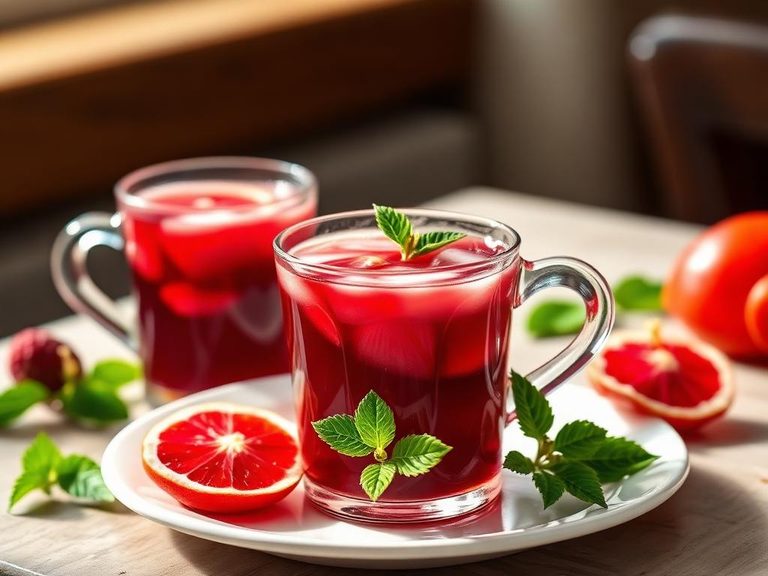
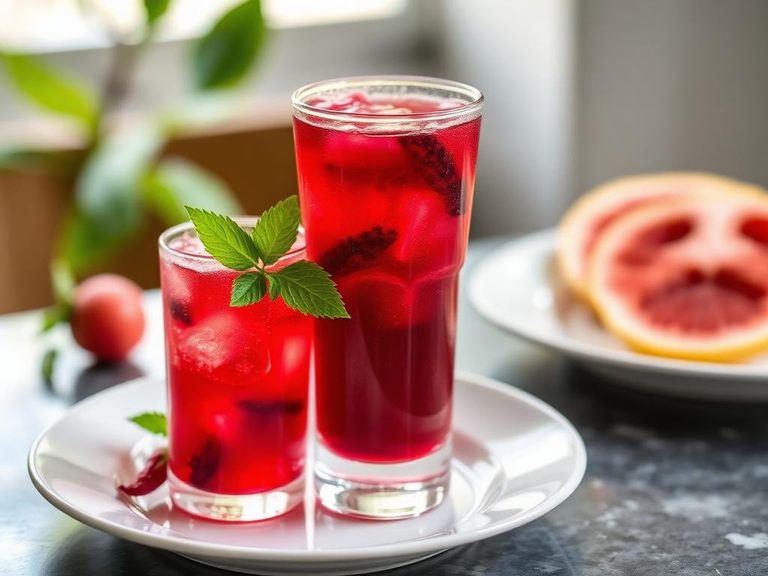
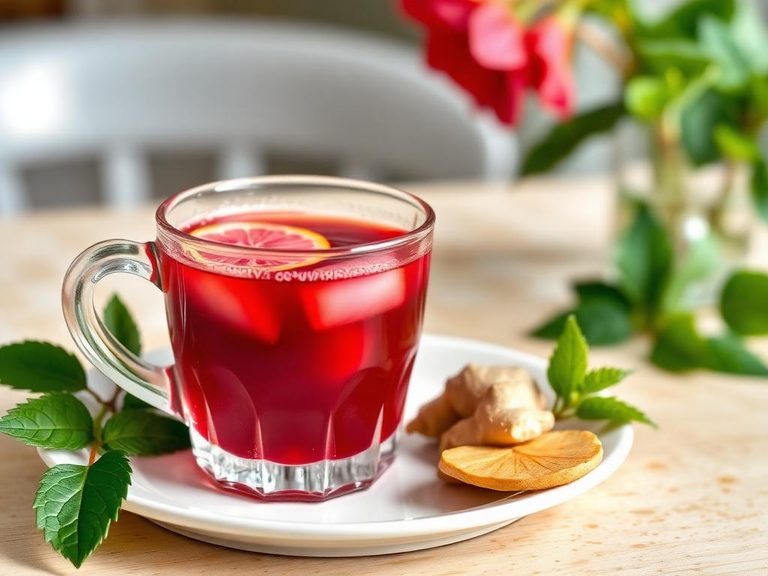
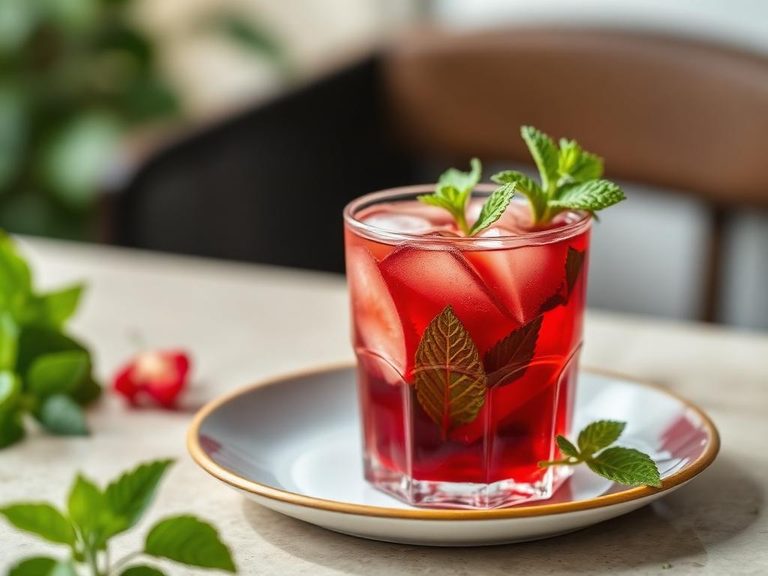
Hibiscus tea is a tart, cranberry-like infusion made from the dried calyces of the Hibiscus sabdariffa flower, resulting in a vibrant, deep ruby-red beverage. Its flavor is distinctly tangy and refreshing, often enjoyed hot or cold, with a texture that is light and watery, similar to other herbal teas. Nutritionally, it is calorie-free and contains no macronutrients, making it a hydrating, zero-calorie beverage option.
💚 Why it's loved
People love hibiscus tea for its vibrant, tart flavor that can be enjoyed hot or cold, making it a versatile base for cocktails, mocktails, and infused waters. It holds cultural significance in many regions, such as being a traditional drink in Egypt (karkadé) and Mexico (agua de jamaica), often associated with social gatherings and celebrations.
⚠️ Watch-outs & how to enjoy it better
Some individuals may experience digestive discomfort or a laxative effect due to its natural diuretic properties, and it may interact with certain medications, such as those for blood pressure or diabetes. To counteract potential issues, it is advisable to consume it in moderation, avoid excessive intake if you have low blood pressure, and consult a healthcare provider if you are on medication. Additionally, its high acidity can erode tooth enamel, so rinsing your mouth with water after drinking is recommended.
Key benefits
- Rich in antioxidants, particularly anthocyanins, which may support cellular health
- May help support healthy blood pressure levels when consumed regularly
- Naturally caffeine-free, making it suitable for evening consumption
- Contains vitamin C, which supports immune function
- May aid in digestion and provide a natural diuretic effect
🍽️ Popular dishes
🌍 Where it's eaten
💡 Did you know?
Hibiscus tea is known as 'sour tea' in some cultures due to its tartness, and in Nigeria, it is used to make a popular drink called 'zobo,' which is often served at weddings and celebrations.
Full nutrition (USDA data · scales with serving)
| Water | 99.6 g |
| Energy | 0.00 kcal |
| Energy | 0.00 kj |
| Protein | 0.00 g |
| Total lipid (fat) | 0.00 g |
| Ash | 0.42 g |
| Carbohydrate, by difference | 0.00 g |
| Fiber, total dietary | 0.00 g |
| Total Sugars | 0.00 g |
| Sucrose | 0.00 g |
| Glucose | 0.00 g |
| Fructose | 0.00 g |
| Lactose | 0.00 g |
| Maltose | 0.00 g |
| Galactose | 0.00 g |
| Calcium, Ca | 8.0 mg |
| Iron, Fe | 0.08 mg |
| Magnesium, Mg | 3.0 mg |
| Phosphorus, P | 1.0 mg |
| Potassium, K | 20.0 mg |
| Sodium, Na | 4.0 mg |
| Zinc, Zn | 0.04 mg |
| Copper, Cu | 0.00 mg |
| Manganese, Mn | 0.48 mg |
| Selenium, Se | 0.00 ug |
| Vitamin C, total ascorbic acid | 0.00 mg |
| Thiamin | 0.00 mg |
| Riboflavin | 0.00 mg |
| Niacin | 0.04 mg |
| Pantothenic acid | 0.00 mg |
| Vitamin B-6 | 0.00 mg |
| Folate, total | 1.0 ug |
| Folic acid | 0.00 ug |
| Folate, food | 1.0 ug |
| Folate, DFE | 1.0 ug |
| Choline, total | 0.40 mg |
| Vitamin B-12 | 0.00 ug |
| Vitamin B-12, added | 0.00 ug |
| Vitamin A, RAE | 0.00 ug |
| Retinol | 0.00 ug |
| Carotene, beta | 0.00 ug |
| Carotene, alpha | 0.00 ug |
| Cryptoxanthin, beta | 0.00 ug |
| Vitamin A, IU | 0.00 iu |
| Lycopene | 0.00 ug |
| Lutein + zeaxanthin | 0.00 ug |
| Vitamin E (alpha-tocopherol) | 0.00 mg |
| Vitamin E, added | 0.00 mg |
| Vitamin D (D2 + D3), International Units | 0.00 iu |
| Vitamin D (D2 + D3) | 0.00 ug |
| Vitamin K (phylloquinone) | 0.00 ug |
| Alcohol, ethyl | 0.00 g |
| Caffeine | 0.00 mg |
| Theobromine | 0.00 mg |
Fat & fatty acid profile (per 100g)
| Fatty acids, total saturated | 0.00 g |
| SFA 4:0 | 0.00 g |
| SFA 6:0 | 0.00 g |
| SFA 8:0 | 0.00 g |
| SFA 10:0 | 0.00 g |
| SFA 12:0 | 0.00 g |
| SFA 14:0 | 0.00 g |
| SFA 16:0 | 0.00 g |
| SFA 18:0 | 0.00 g |
| Fatty acids, total monounsaturated | 0.00 g |
| MUFA 16:1 | 0.00 g |
| MUFA 18:1 | 0.00 g |
| MUFA 20:1 | 0.00 g |
| MUFA 22:1 | 0.00 g |
| Fatty acids, total polyunsaturated | 0.00 g |
| PUFA 18:2 | 0.00 g |
| PUFA 18:3 | 0.00 g |
| PUFA 18:4 | 0.00 g |
| PUFA 20:4 | 0.00 g |
| PUFA 20:5 n-3 (EPA) | 0.00 g |
| PUFA 22:5 n-3 (DPA) | 0.00 g |
| PUFA 22:6 n-3 (DHA) | 0.00 g |
| Fatty acids, total trans | 0.00 g |
| Cholesterol | 0.00 mg |
Amino acid profile (per 100g)
Estimated from Beverages, carbonated, tonic water — USDA does not publish this profile for Beverages.
| Tryptophan | 0.00 g |
| Threonine | 0.00 g |
| Isoleucine | 0.00 g |
| Leucine | 0.00 g |
| Lysine | 0.00 g |
| Methionine | 0.00 g |
| Cystine | 0.00 g |
| Phenylalanine | 0.00 g |
| Tyrosine | 0.00 g |
| Valine | 0.00 g |
| Arginine | 0.00 g |
| Histidine | 0.00 g |
| Alanine | 0.00 g |
| Aspartic acid | 0.00 g |
| Glutamic acid | 0.00 g |
| Glycine | 0.00 g |
| Proline | 0.00 g |
| Serine | 0.00 g |
FAQ
Is hibiscus tea caffeine-free?
Yes, hibiscus tea is naturally caffeine-free, making it a suitable beverage for those avoiding caffeine, especially in the evening.
Can hibiscus tea be consumed hot or cold?
Absolutely, hibiscus tea is versatile and can be enjoyed hot, cold, or even as a base for cocktails and mocktails.
Are there any side effects of drinking hibiscus tea?
While generally safe, some people may experience digestive issues or a laxative effect due to its diuretic properties. It may also interact with certain medications, so consult a healthcare provider if you have concerns.
Dietary load (calculated from USDA values)
Potential renal acid load. Positive = acid-forming, negative = alkaline-forming.
Sodium-to-potassium ratio: 0.20 (lower is better — aim for ≤ 1)
Sodium:potassium per WHO potassium guidance. Computed from USDA nutrients.