

Karkadé
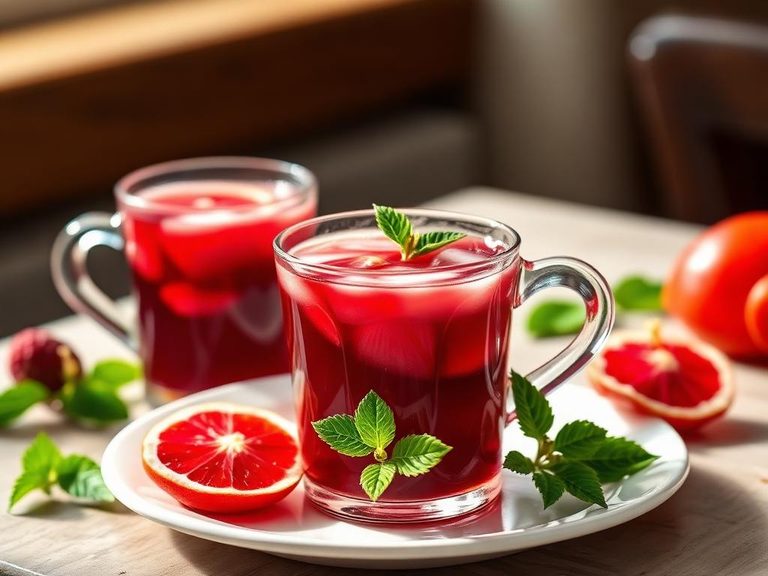
Karkadé is a vibrant, ruby-red herbal tea made from the dried calyces of the hibiscus flower (Hibiscus sabdariffa). It is a beloved and traditional beverage in Egypt, often served both hot and chilled, and is a staple in homes, markets, and social gatherings. The drink is typically brewed by steeping the dried calyces in hot water, sometimes sweetened with sugar or served plain.
🍳 View the full Karkadé recipe →
🍽️ Nutrition at a glance
Karkadé is naturally very low in calories, carbohydrates, fat, and protein, making it a hydrating, virtually calorie-free beverage when unsweetened. It is a notable source of antioxidants, particularly anthocyanins, which give it its deep red color, and also provides small amounts of vitamin C and other minerals.
Nutrition breakdown
| Calories | 3 kcal |
| Protein | 0.1 g |
| Carbs | 0.7 g |
| Fat | 0 g |
| Fiber | 0 g |
| Sugar | 0.5 g |
| Sodium | 5 mg |
| Vitamin C | 2.4 mg |
| Iron | 0.1 mg |
| Calcium | 5 mg |
| Magnesium | 3 mg |
| Potassium | 20 mg |
| Manganese | 0.1 mg |
| Niacin (B3) | 0.1 mg |
| Riboflavin (B2) | 0.01 mg |
Per 1 cup (240 g) · estimated, varies by recipe
💡 What's interesting
Culturally, Karkadé is more than just a drink in Egypt; it's a symbol of hospitality and is often served at celebrations, religious occasions, and to welcome guests. Nutritionally, its high antioxidant content has made it a subject of interest for its potential health benefits, and it's traditionally consumed for its refreshing and cooling properties in the hot climate.
AI estimate may be inaccurate · Terms