

Beef, tenderloin, roast, separable lean and fat, trimmed to 1/8" fat, prime, cooked, roasted
Whole food · Beef Products

Photo: Wikipedia
This is the pinnacle of beef cuts: a prime-grade tenderloin roast, trimmed to a whisper of fat, then roasted to a buttery, melt-in-your-mouth finish. Its texture is exceptionally fine-grained and velvety, with a rich, clean beef flavor that is luxurious without being gamey. Nutritionally, it's a powerhouse of high-quality protein with virtually no carbohydrates.
Calorie split: 29% protein · 0% carbs · 71% fat
↓ Full nutrition💚 Why it's loved
People adore it for its unmatched tenderness and buttery, delicate beef flavor that feels like a true indulgence. It's the centerpiece of celebratory meals, from holiday roasts to elegant dinner parties, symbolizing both luxury and culinary skill.
⚠️ Watch-outs & how to enjoy it better
Its high fat and calorie density (26.67g fat per 100g) can be a concern for those monitoring saturated fat intake or overall calories. To counteract, practice strict portion control (see portions below) and pair it with large servings of fibrous, non-starchy vegetables like roasted asparagus or a crisp salad to add volume and nutrients without significant calories.
Key benefits
- Excellent source of complete, high-quality protein for muscle maintenance.
- Very low in carbohydrates, suitable for ketogenic and low-carb diets.
- Rich in bioavailable iron and zinc, essential minerals for energy and immunity.
- Contains B vitamins, particularly B12, crucial for nerve function.
- Leaner than many other prime cuts due to careful trimming.
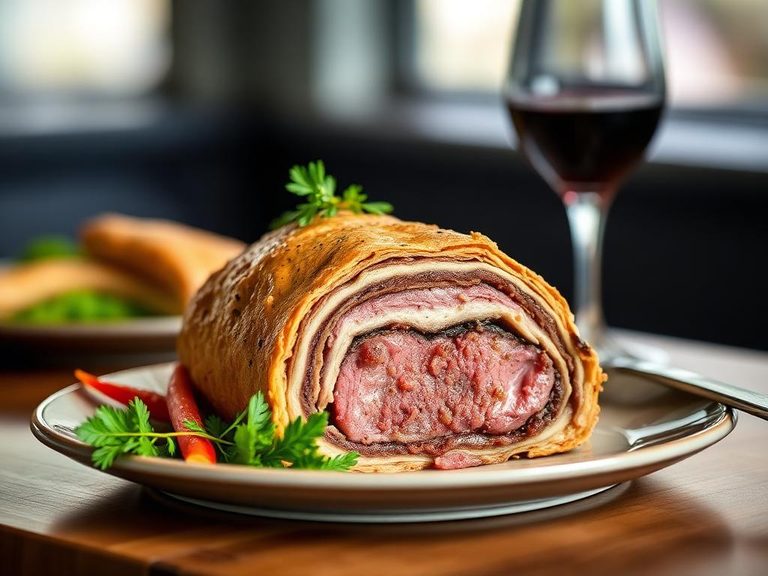
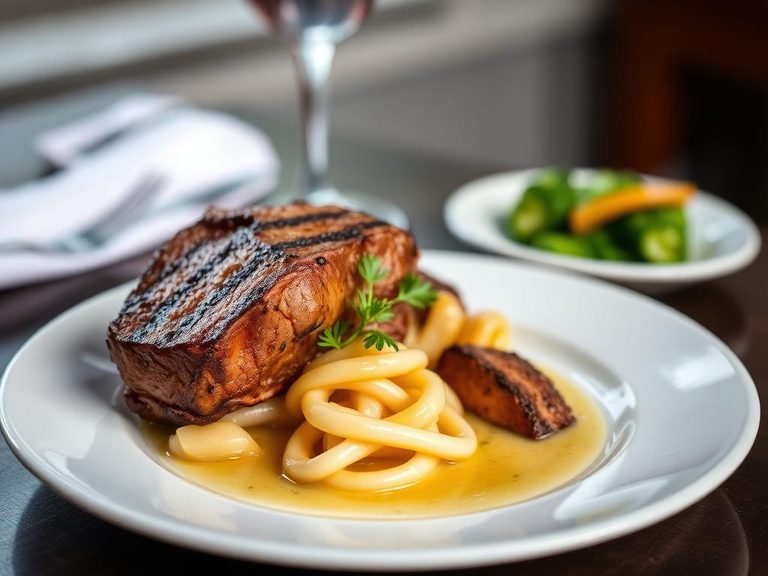
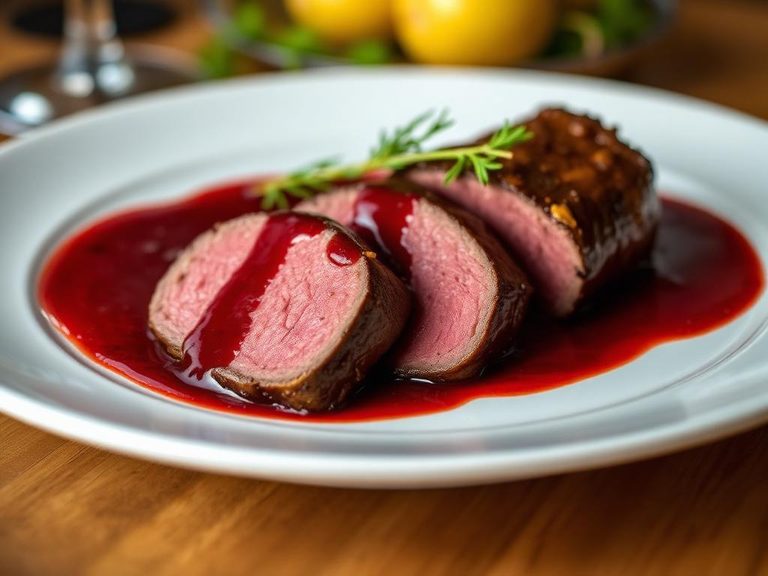
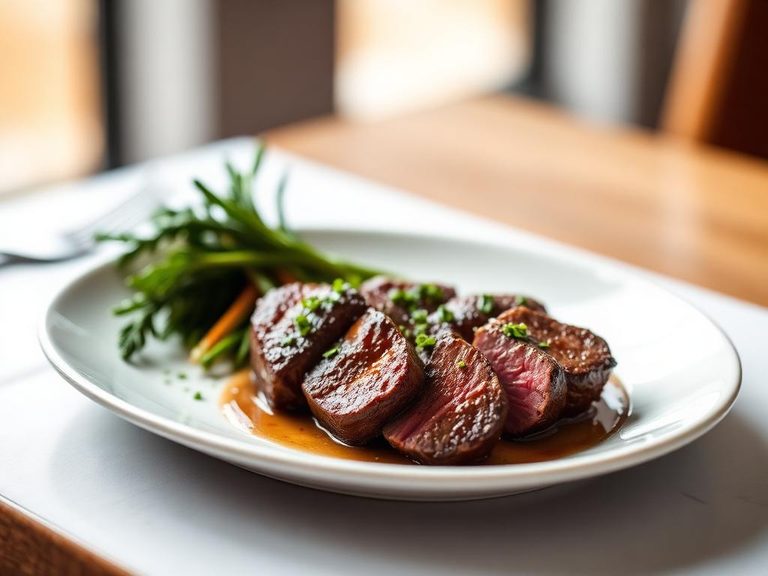
🍽️ Popular dishes
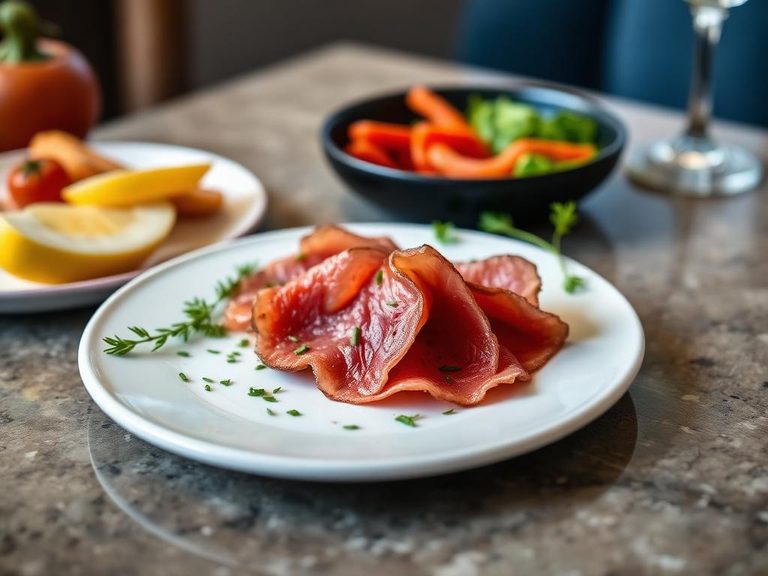
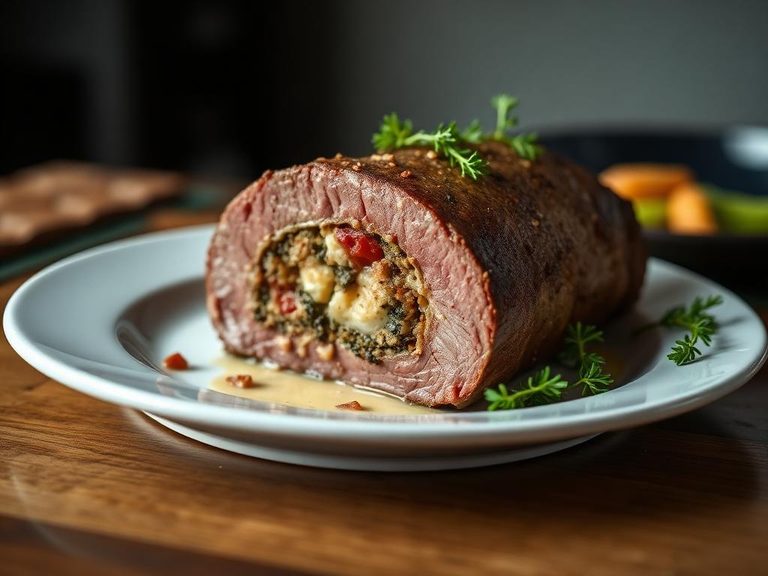
🌍 Where it's eaten
💡 Did you know?
A whole beef tenderloin is a long, narrow muscle that does very little work, which is why it's so tender; it's often called the 'butcher's prize' because trimming it down to the final roast results in significant waste, contributing to its premium price.
Full nutrition (USDA data · scales with serving)
| Water | 48.3 g |
| Energy | 343 kcal |
| Energy | 1435 kj |
| Protein | 24.0 g |
| Total lipid (fat) | 26.7 g |
| Ash | 1.0 g |
| Carbohydrate, by difference | 0.00 g |
| Fiber, total dietary | 0.00 g |
| Total Sugars | 0.00 g |
| Calcium, Ca | 8.0 mg |
| Iron, Fe | 3.1 mg |
| Magnesium, Mg | 23.0 mg |
| Phosphorus, P | 203 mg |
| Potassium, K | 336 mg |
| Sodium, Na | 55.0 mg |
| Zinc, Zn | 4.4 mg |
| Copper, Cu | 0.14 mg |
| Manganese, Mn | 0.01 mg |
| Selenium, Se | 23.1 ug |
| Vitamin C, total ascorbic acid | 0.00 mg |
| Thiamin | 0.09 mg |
| Riboflavin | 0.27 mg |
| Niacin | 3.0 mg |
| Pantothenic acid | 0.39 mg |
| Vitamin B-6 | 0.33 mg |
| Folate, total | 7.0 ug |
| Folic acid | 0.00 ug |
| Folate, food | 7.0 ug |
| Folate, DFE | 7.0 ug |
| Choline, total | 91.6 mg |
| Vitamin B-12 | 2.5 ug |
| Vitamin B-12, added | 0.00 ug |
| Vitamin A, RAE | 0.00 ug |
| Retinol | 0.00 ug |
| Carotene, beta | 0.00 ug |
| Carotene, alpha | 0.00 ug |
| Cryptoxanthin, beta | 0.00 ug |
| Vitamin A, IU | 0.00 iu |
| Lycopene | 0.00 ug |
| Lutein + zeaxanthin | 0.00 ug |
| Vitamin E (alpha-tocopherol) | 0.55 mg |
| Vitamin E, added | 0.00 mg |
| Vitamin D (D2 + D3), International Units | 17.0 iu |
| Vitamin D (D2 + D3) | 0.40 ug |
| Vitamin D3 (cholecalciferol) | 0.40 ug |
| Vitamin K (phylloquinone) | 2.0 ug |
| Alcohol, ethyl | 0.00 g |
| Caffeine | 0.00 mg |
| Theobromine | 0.00 mg |
Fat & fatty acid profile (per 100g)
| Fatty acids, total saturated | 10.6 g |
| SFA 4:0 | 0.00 g |
| SFA 6:0 | 0.00 g |
| SFA 8:0 | 0.00 g |
| SFA 10:0 | 0.06 g |
| SFA 12:0 | 0.06 g |
| SFA 14:0 | 0.80 g |
| SFA 16:0 | 6.3 g |
| SFA 18:0 | 3.2 g |
| Fatty acids, total monounsaturated | 11.0 g |
| MUFA 16:1 | 0.98 g |
| MUFA 18:1 | 9.8 g |
| MUFA 20:1 | 0.04 g |
| MUFA 22:1 | 0.00 g |
| Fatty acids, total polyunsaturated | 1.0 g |
| PUFA 18:2 | 0.71 g |
| PUFA 18:3 | 0.25 g |
| PUFA 18:4 | 0.00 g |
| PUFA 20:4 | 0.06 g |
| PUFA 20:5 n-3 (EPA) | 0.00 g |
| PUFA 22:5 n-3 (DPA) | 0.02 g |
| PUFA 22:6 n-3 (DHA) | 0.00 g |
| Cholesterol | 88.0 mg |
Amino acid profile (per 100g)
| Tryptophan | 0.27 g |
| Threonine | 1.1 g |
| Isoleucine | 1.1 g |
| Leucine | 1.9 g |
| Lysine | 2.0 g |
| Methionine | 0.61 g |
| Cystine | 0.27 g |
| Phenylalanine | 0.94 g |
| Tyrosine | 0.81 g |
| Valine | 1.2 g |
| Arginine | 1.5 g |
| Histidine | 0.82 g |
| Alanine | 1.4 g |
| Aspartic acid | 2.2 g |
| Glutamic acid | 3.6 g |
| Glycine | 1.3 g |
| Proline | 1.1 g |
| Serine | 0.92 g |
FAQ
What's the difference between 'prime' and 'choice' tenderloin?
Prime grade has the highest degree of marbling (intramuscular fat), which melts during cooking for superior juiciness, flavor, and tenderness. Choice grade has less marbling but is still high quality and more affordable.
How do I prevent my roast from drying out?
The key is using a meat thermometer to pull it from the oven at exactly 130-135°F (54-57°C) for medium-rare, then letting it rest for 10-15 minutes. The internal temperature will rise 5-10 degrees as it rests, ensuring a juicy result.
Is the nutritional info for raw or cooked beef?
The provided data (343 kcal, 24.04g protein per 100g) is for the cooked product. Cooking concentrates nutrients as water is lost, so cooked beef has more protein and calories per gram than raw.
Nutrient density (calculated · NRF9.3)
Nutrient Rich Foods index: beneficial nutrients (protein, fiber, vitamins, minerals) minus saturated fat, added sugar & sodium, per 100 kcal.
NRF9.3 index — Fulgoni, Keast & Drewnowski, 2009. Computed from USDA nutrients.
Weight-loss friendliness (composite index)
Energy density 3.43 kcal/g · 28% calories from protein · 0.0 g fiber · 0.0 g sugar per 100 g.
Composite of energy density (Rolls et al., 1999), protein & fiber satiety, minus sugar. A calculated heuristic — ranks satiety-per-calorie, not a clinical measure.
Dietary load (calculated from USDA values)
Potential renal acid load. Positive = acid-forming, negative = alkaline-forming.
Sodium-to-potassium ratio: 0.16 (lower is better — aim for ≤ 1)
Sodium:potassium per WHO potassium guidance. Computed from USDA nutrients.