

Beef, flank, steak, separable lean and fat, trimmed to 0" fat, all grades, cooked, broiled
Whole food · Beef Products
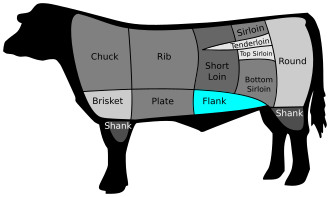
Photo: Wikipedia
Beef flank steak, when broiled to perfection, offers a deeply savory, beefy flavor with a distinct, satisfying chew. This lean cut, trimmed of all visible fat, presents a rich, dark red meat that cooks quickly over high heat. Nutritionally, it's a powerhouse of complete protein with minimal fat and zero carbohydrates.
Calorie split: 60% protein · 0% carbs · 40% fat
↓ Full nutrition💚 Why it's loved
People adore flank steak for its intense, concentrated beef flavor and its remarkable versatility—it's equally at home in a quick stir-fry, sliced thin in a salad, or as the star of a fajita. Its long, flat shape makes it ideal for marinating and grilling, yielding impressive results with minimal effort.
⚠️ Watch-outs & how to enjoy it better
The primary downside is its pronounced grain and leanness, which can make it tough and chewy if overcooked or sliced incorrectly. To counteract this, always marinate it for at least 30 minutes, cook it to medium-rare (130-135°F), and slice it thinly *against the grain* just before serving.
Key benefits
- Excellent source of high-quality, complete protein
- Very low in carbohydrates and sugar
- Rich in iron, zinc, and B vitamins like B12
- Provides conjugated linoleic acid (CLA) in small amounts
🍽️ Popular dishes
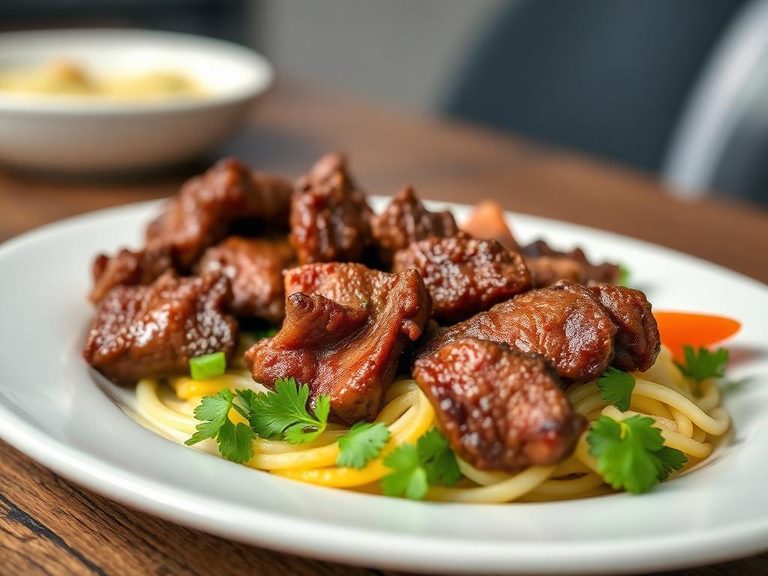
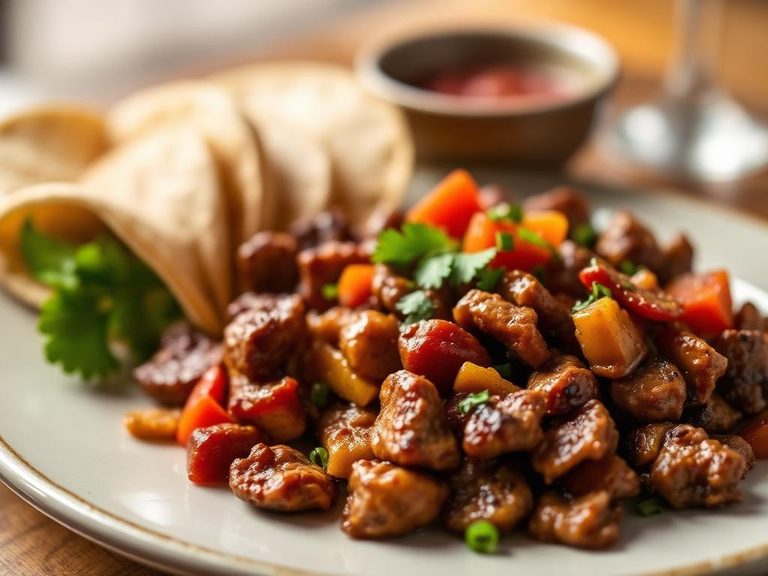
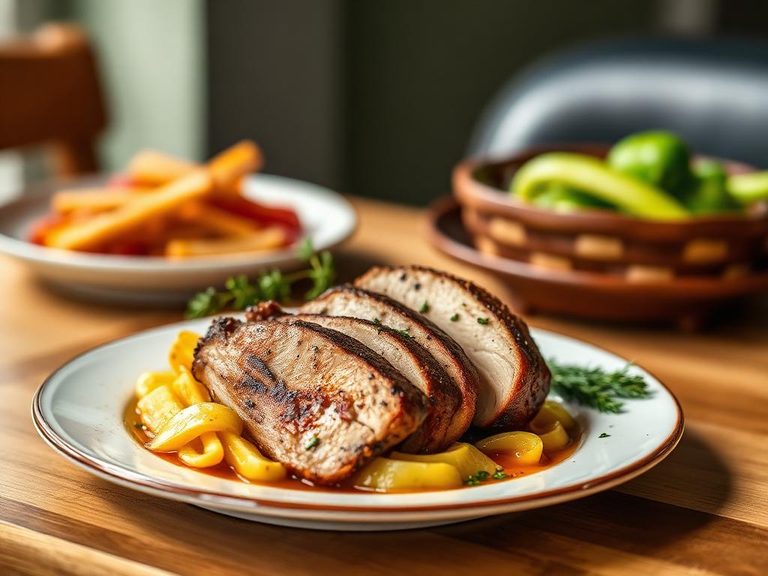
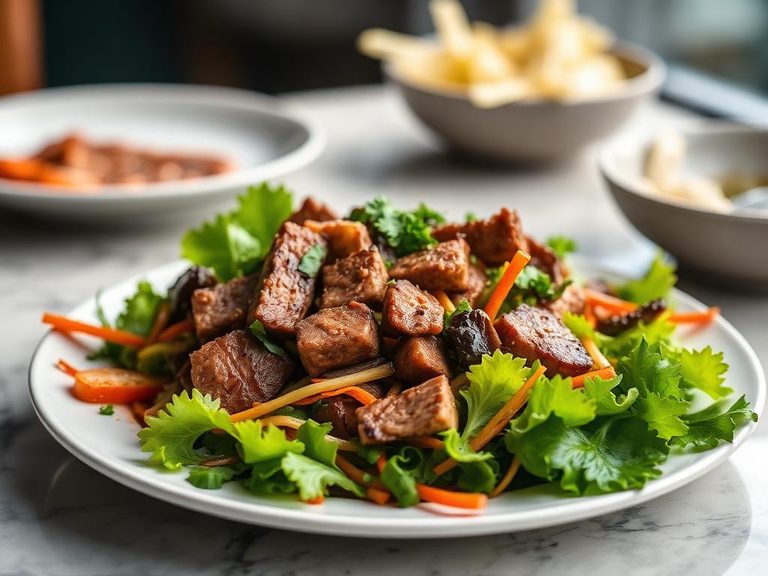
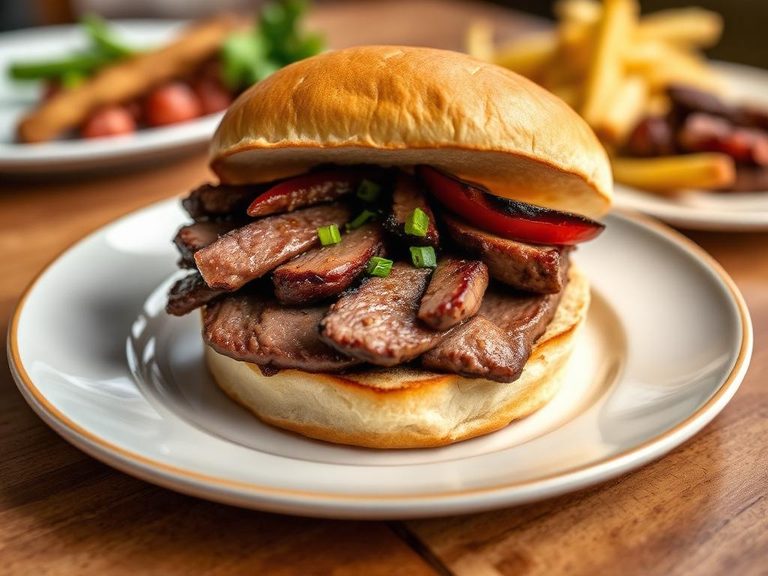
🌍 Where it's eaten
💡 Did you know?
The 'London Broil' you see on menus isn't a cut of meat at all, but a cooking method—typically broiling or grilling a marinated flank steak, then slicing it thinly against the grain.
Full nutrition (USDA data · scales with serving)
| Water | 64.2 g |
| Energy | 192 kcal |
| Energy | 805 kj |
| Protein | 27.7 g |
| Total lipid (fat) | 8.2 g |
| Ash | 1.1 g |
| Carbohydrate, by difference | 0.00 g |
| Fiber, total dietary | 0.00 g |
| Total Sugars | 0.00 g |
| Calcium, Ca | 20.0 mg |
| Iron, Fe | 1.7 mg |
| Magnesium, Mg | 23.0 mg |
| Phosphorus, P | 210 mg |
| Potassium, K | 339 mg |
| Sodium, Na | 56.0 mg |
| Zinc, Zn | 4.9 mg |
| Copper, Cu | 0.08 mg |
| Manganese, Mn | 0.01 mg |
| Selenium, Se | 29.4 ug |
| Vitamin C, total ascorbic acid | 0.00 mg |
| Thiamin | 0.07 mg |
| Riboflavin | 0.13 mg |
| Niacin | 7.4 mg |
| Pantothenic acid | 0.55 mg |
| Vitamin B-6 | 0.58 mg |
| Folate, total | 9.0 ug |
| Folic acid | 0.00 ug |
| Folate, food | 9.0 ug |
| Folate, DFE | 9.0 ug |
| Choline, total | 105 mg |
| Betaine | 13.8 mg |
| Vitamin B-12 | 1.6 ug |
| Vitamin B-12, added | 0.00 ug |
| Vitamin A, RAE | 0.00 ug |
| Retinol | 0.00 ug |
| Carotene, beta | 0.00 ug |
| Carotene, alpha | 0.00 ug |
| Cryptoxanthin, beta | 0.00 ug |
| Vitamin A, IU | 0.00 iu |
| Lycopene | 0.00 ug |
| Lutein + zeaxanthin | 0.00 ug |
| Vitamin E (alpha-tocopherol) | 0.38 mg |
| Vitamin E, added | 0.00 mg |
| Tocopherol, beta | 0.00 mg |
| Tocopherol, gamma | 0.00 mg |
| Tocopherol, delta | 0.00 mg |
| Vitamin K (phylloquinone) | 1.4 ug |
| Alcohol, ethyl | 0.00 g |
| Caffeine | 0.00 mg |
| Theobromine | 0.00 mg |
Fat & fatty acid profile (per 100g)
| Fatty acids, total saturated | 3.4 g |
| SFA 4:0 | 0.00 g |
| SFA 6:0 | 0.00 g |
| SFA 8:0 | 0.00 g |
| SFA 10:0 | 0.01 g |
| SFA 12:0 | 0.01 g |
| SFA 14:0 | 0.24 g |
| SFA 16:0 | 2.2 g |
| SFA 18:0 | 0.95 g |
| Fatty acids, total monounsaturated | 3.3 g |
| MUFA 16:1 | 0.30 g |
| MUFA 18:1 | 3.0 g |
| MUFA 20:1 | 0.01 g |
| MUFA 22:1 | 0.00 g |
| Fatty acids, total polyunsaturated | 0.32 g |
| PUFA 18:2 | 0.20 g |
| PUFA 18:3 | 0.09 g |
| PUFA 18:4 | 0.00 g |
| PUFA 20:4 | 0.03 g |
| PUFA 20:5 n-3 (EPA) | 0.00 g |
| PUFA 22:5 n-3 (DPA) | 0.00 g |
| PUFA 22:6 n-3 (DHA) | 0.00 g |
| Cholesterol | 79.0 mg |
Amino acid profile (per 100g)
| Tryptophan | 0.18 g |
| Threonine | 1.1 g |
| Isoleucine | 1.3 g |
| Leucine | 2.2 g |
| Lysine | 2.3 g |
| Methionine | 0.72 g |
| Cystine | 0.36 g |
| Phenylalanine | 1.1 g |
| Tyrosine | 0.88 g |
| Valine | 1.4 g |
| Arginine | 1.8 g |
| Histidine | 0.88 g |
| Alanine | 1.7 g |
| Aspartic acid | 2.5 g |
| Glutamic acid | 4.2 g |
| Glycine | 1.7 g |
| Proline | 1.3 g |
| Serine | 1.1 g |
| Hydroxyproline | 0.29 g |
FAQ
What is the best way to cook flank steak so it's not tough?
The key is high heat for a short time (grilling or broiling) to medium-rare, followed by a crucial 10-minute rest. Most importantly, slice it thinly against the grain before serving to break up the long muscle fibers.
How long should I marinate flank steak?
For flavor and tenderizing, 30 minutes to 2 hours is ideal. An acidic marinade (with citrus, vinegar, or yogurt) helps, but don't exceed 4 hours or the texture can become mushy.
Is flank steak a healthy choice?
Yes, it's one of the leaner beef cuts. It's an excellent source of protein, iron, and B12 while being low in fat and containing zero carbs, making it suitable for low-carb and high-protein diets.
Nutrient density (calculated · NRF9.3)
Nutrient Rich Foods index: beneficial nutrients (protein, fiber, vitamins, minerals) minus saturated fat, added sugar & sodium, per 100 kcal.
NRF9.3 index — Fulgoni, Keast & Drewnowski, 2009. Computed from USDA nutrients.
Weight-loss friendliness (composite index)
Energy density 1.92 kcal/g · 58% calories from protein · 0.0 g fiber · 0.0 g sugar per 100 g.
Composite of energy density (Rolls et al., 1999), protein & fiber satiety, minus sugar. A calculated heuristic — ranks satiety-per-calorie, not a clinical measure.
Dietary load (calculated from USDA values)
Potential renal acid load. Positive = acid-forming, negative = alkaline-forming.
Sodium-to-potassium ratio: 0.17 (lower is better — aim for ≤ 1)
Sodium:potassium per WHO potassium guidance. Computed from USDA nutrients.