

Beef, chuck, blade roast, separable lean and fat, trimmed to 0" fat, all grades, cooked, braised
Whole food · Beef Products

Photo: Wikipedia
Beef chuck blade roast, when braised, transforms from a tough, marbled cut into a meltingly tender, deeply savory centerpiece. The slow, moist cooking process breaks down connective tissue, yielding a rich, beefy flavor and a succulent, fork-tender texture. It's a powerhouse of protein and fat, delivering substantial energy and satiety without any carbohydrates.
Calorie split: 33% protein · 0% carbs · 67% fat
↓ Full nutrition💚 Why it's loved
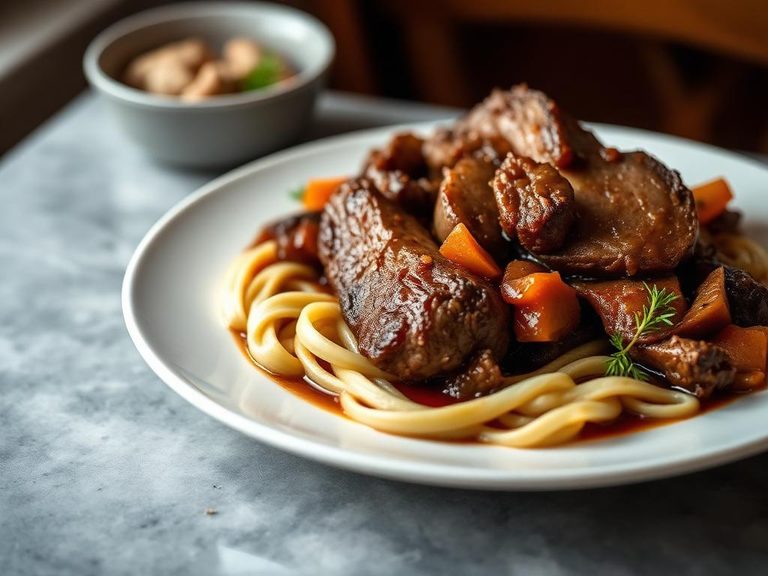
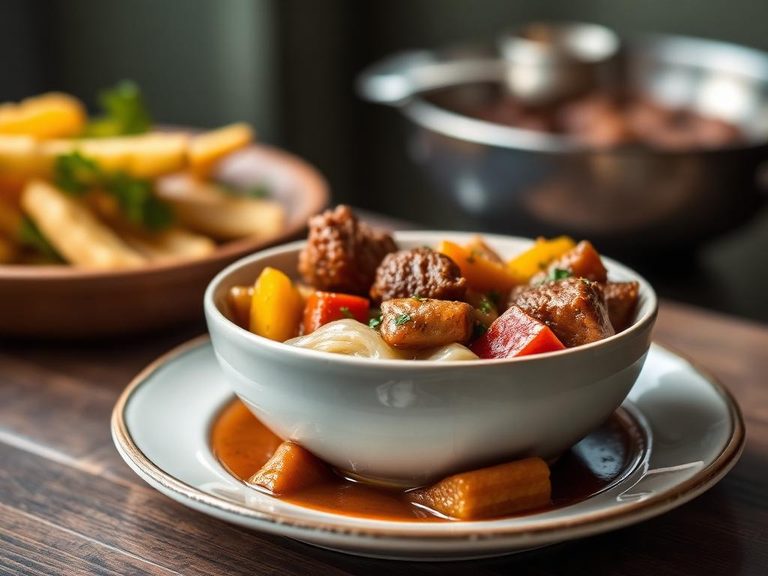
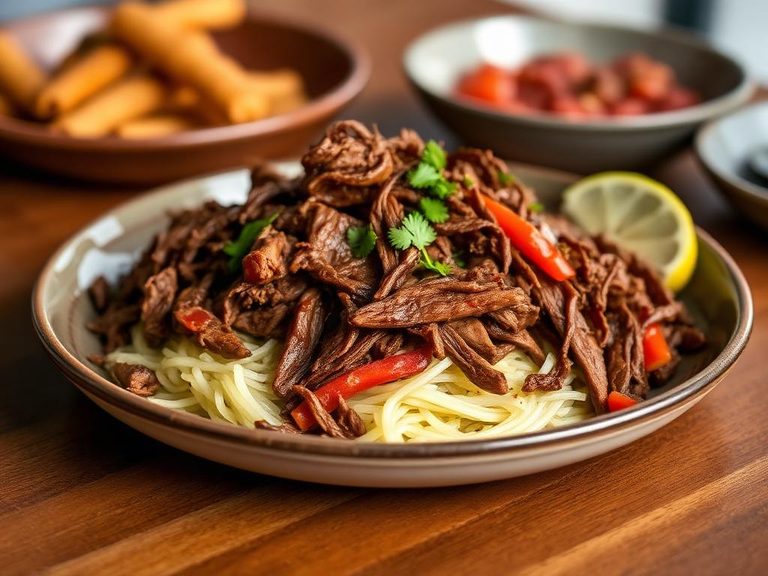
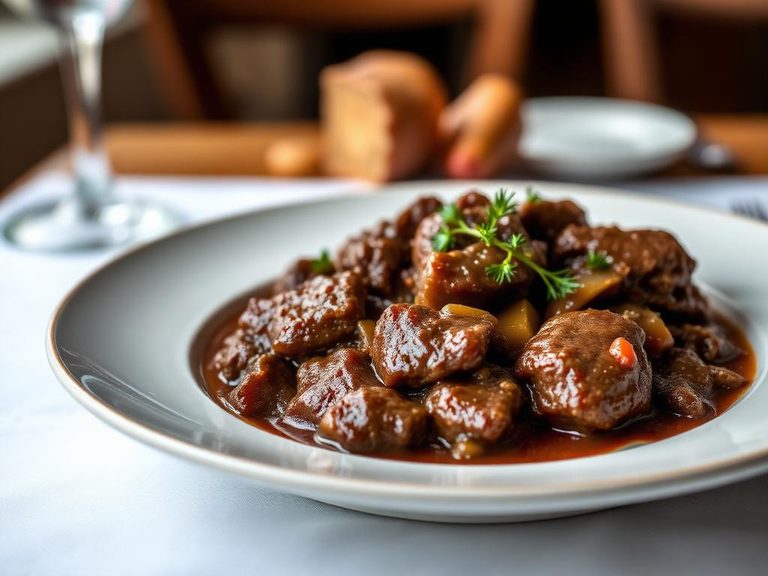
People adore braised chuck for its profound, comforting flavor and the way it falls apart at the touch of a fork, making it the ultimate comfort food. Its versatility allows it to be the star of rustic stews, elegant pot roasts, or shredded for tacos and sandwiches.
⚠️ Watch-outs & how to enjoy it better
The high fat content (24g per 100g) can be a concern for those monitoring saturated fat intake or calorie density. To mitigate this, choose a leaner grade, trim visible fat before cooking, and pair it with fiber-rich vegetables like carrots, celery, and potatoes to balance the meal and promote satiety.
Key benefits
- Excellent source of complete protein for muscle maintenance and repair
- Rich in bioavailable iron and zinc, crucial for immune function
- Provides B vitamins like B12 and niacin for energy metabolism
- High in conjugated linoleic acid (CLA), a naturally occurring fatty acid
🍽️ Popular dishes
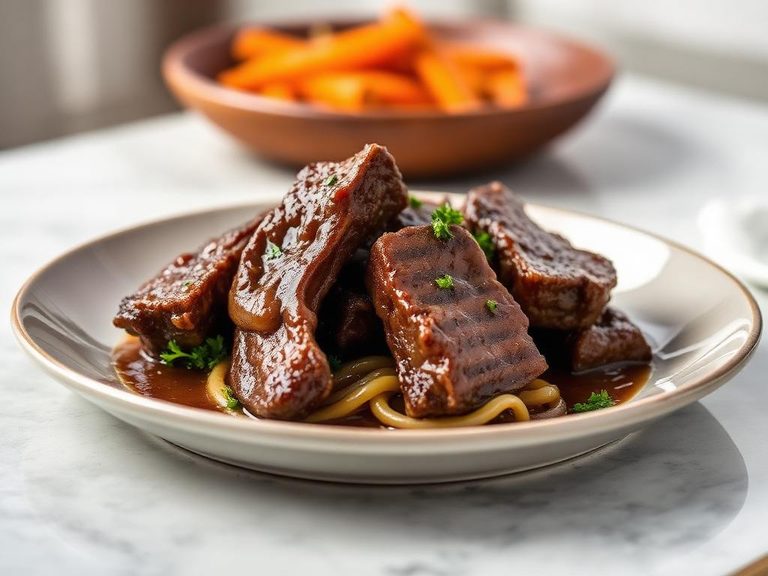
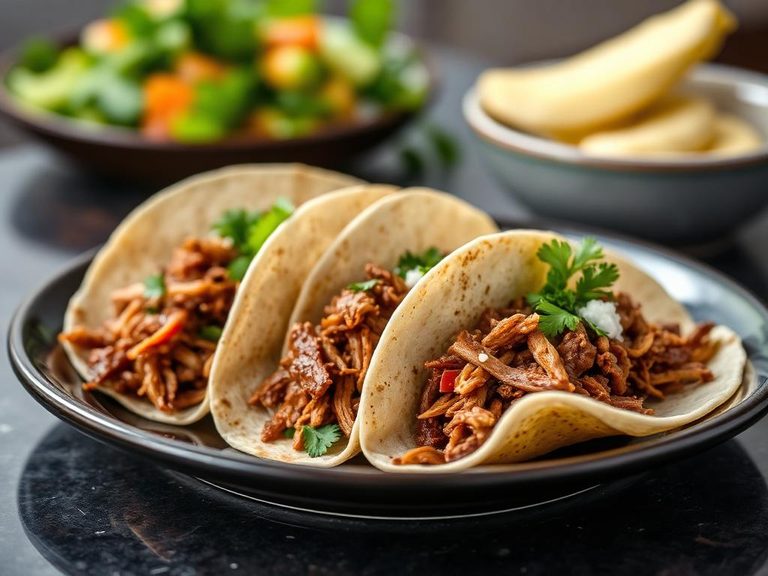
🌍 Where it's eaten
💡 Did you know?
The chuck blade roast gets its name from the shoulder blade bone it's cut around, and it's the same cut used for the classic 'chicken fried steak' in the American South.
Full nutrition (USDA data · scales with serving)
| Water | 47.9 g |
| Energy | 334 kcal |
| Energy | 1397 kj |
| Protein | 27.2 g |
| Total lipid (fat) | 24.1 g |
| Ash | 0.89 g |
| Carbohydrate, by difference | 0.00 g |
| Fiber, total dietary | 0.00 g |
| Total Sugars | 0.00 g |
| Calcium, Ca | 13.0 mg |
| Iron, Fe | 3.2 mg |
| Magnesium, Mg | 20.0 mg |
| Phosphorus, P | 205 mg |
| Potassium, K | 236 mg |
| Sodium, Na | 65.0 mg |
| Zinc, Zn | 8.6 mg |
| Copper, Cu | 0.13 mg |
| Manganese, Mn | 0.02 mg |
| Selenium, Se | 25.0 ug |
| Vitamin C, total ascorbic acid | 0.00 mg |
| Thiamin | 0.07 mg |
| Riboflavin | 0.25 mg |
| Niacin | 2.5 mg |
| Pantothenic acid | 0.31 mg |
| Vitamin B-6 | 0.26 mg |
| Folate, total | 5.0 ug |
| Folic acid | 0.00 ug |
| Folate, food | 5.0 ug |
| Folate, DFE | 5.0 ug |
| Vitamin B-12 | 2.3 ug |
| Vitamin B-12, added | 0.00 ug |
| Vitamin A, RAE | 0.00 ug |
| Retinol | 0.00 ug |
| Carotene, beta | 0.00 ug |
| Carotene, alpha | 0.00 ug |
| Cryptoxanthin, beta | 0.00 ug |
| Vitamin A, IU | 0.00 iu |
| Lycopene | 0.00 ug |
| Lutein + zeaxanthin | 0.00 ug |
| Vitamin E (alpha-tocopherol) | 0.20 mg |
| Vitamin E, added | 0.00 mg |
| Vitamin D (D2 + D3), International Units | 16.0 iu |
| Vitamin D (D2 + D3) | 0.40 ug |
| Vitamin D3 (cholecalciferol) | 0.40 ug |
| Vitamin K (phylloquinone) | 2.0 ug |
| Vitamin K (Dihydrophylloquinone) | 0.00 ug |
| Alcohol, ethyl | 0.00 g |
| Caffeine | 0.00 mg |
| Theobromine | 0.00 mg |
Fat & fatty acid profile (per 100g)
| Fatty acids, total saturated | 9.6 g |
| SFA 4:0 | 0.00 g |
| SFA 6:0 | 0.00 g |
| SFA 8:0 | 0.00 g |
| SFA 10:0 | 0.06 g |
| SFA 12:0 | 0.05 g |
| SFA 14:0 | 0.76 g |
| SFA 16:0 | 5.8 g |
| SFA 18:0 | 2.9 g |
| Fatty acids, total monounsaturated | 10.4 g |
| MUFA 16:1 | 0.97 g |
| MUFA 18:1 | 9.4 g |
| MUFA 20:1 | 0.04 g |
| MUFA 22:1 | 0.00 g |
| Fatty acids, total polyunsaturated | 0.86 g |
| PUFA 18:2 | 0.60 g |
| PUFA 18:3 | 0.23 g |
| PUFA 18:4 | 0.00 g |
| PUFA 20:4 | 0.04 g |
| PUFA 20:5 n-3 (EPA) | 0.00 g |
| PUFA 22:5 n-3 (DPA) | 0.00 g |
| PUFA 22:6 n-3 (DHA) | 0.00 g |
| Cholesterol | 104 mg |
Amino acid profile (per 100g)
| Tryptophan | 0.18 g |
| Threonine | 1.1 g |
| Isoleucine | 1.2 g |
| Leucine | 2.2 g |
| Lysine | 2.3 g |
| Methionine | 0.71 g |
| Cystine | 0.35 g |
| Phenylalanine | 1.1 g |
| Tyrosine | 0.87 g |
| Valine | 1.3 g |
| Arginine | 1.8 g |
| Histidine | 0.87 g |
| Alanine | 1.7 g |
| Aspartic acid | 2.5 g |
| Glutamic acid | 4.1 g |
| Glycine | 1.7 g |
| Proline | 1.3 g |
| Serine | 1.1 g |
| Hydroxyproline | 0.29 g |
FAQ
What's the best way to cook a chuck blade roast to make it tender?
Low and slow is key. Braise it in liquid (like broth or wine) in a covered pot at a low temperature (around 300°F/150°C) for several hours until the connective tissue breaks down and the meat is fork-tender.
Is this cut the same as a chuck roast or pot roast?
It's a specific sub-primal cut from the chuck (shoulder). 'Pot roast' is a cooking method, not a specific cut, but chuck blade roast is one of the most popular and ideal cuts for making it.
How does the nutrition compare to a leaner cut like sirloin?
Chuck blade roast is significantly higher in fat and calories (334 kcal vs. ~200 kcal per 100g for lean sirloin) but also richer in flavor and collagen, which converts to gelatin during braising, adding body to sauces.
Nutrient density (calculated · NRF9.3)
Nutrient Rich Foods index: beneficial nutrients (protein, fiber, vitamins, minerals) minus saturated fat, added sugar & sodium, per 100 kcal.
NRF9.3 index — Fulgoni, Keast & Drewnowski, 2009. Computed from USDA nutrients.
Weight-loss friendliness (composite index)
Energy density 3.34 kcal/g · 33% calories from protein · 0.0 g fiber · 0.0 g sugar per 100 g.
Composite of energy density (Rolls et al., 1999), protein & fiber satiety, minus sugar. A calculated heuristic — ranks satiety-per-calorie, not a clinical measure.
Dietary load (calculated from USDA values)
Potential renal acid load. Positive = acid-forming, negative = alkaline-forming.
Sodium-to-potassium ratio: 0.28 (lower is better — aim for ≤ 1)
Sodium:potassium per WHO potassium guidance. Computed from USDA nutrients.