

Beef, brisket, flat half, separable lean only, trimmed to 1/8" fat, select, raw
Whole food · Beef Products

Photo: Wikipedia
This is the lean, flat half of a beef brisket, trimmed to a minimal 1/8-inch fat cap and sold raw. It offers a robust, beefy flavor with a firm, lean texture that becomes tender and succulent when slow-cooked. Nutritionally, it's a powerhouse of protein with very low fat and zero carbohydrates.
Calorie split: 73% protein · 0% carbs · 27% fat
↓ Full nutrition💚 Why it's loved
People love it for its deep, meaty flavor that serves as a canvas for bold seasonings and slow-cooking methods, yielding tender, pull-apart results. It's a cultural staple in barbecue and braising traditions, celebrated for its ability to feed a crowd with rich, satisfying meat.
⚠️ Watch-outs & how to enjoy it better
As a lean cut, it can become tough and dry if overcooked or not prepared with low-and-slow methods; its lack of marbling requires careful technique. To counteract dryness, always cook it with moist heat (braising, smoking) and consider pairing it with a flavorful sauce or jus to add moisture and richness.
Key benefits
- Excellent source of complete protein for muscle maintenance.
- Very low in fat, especially saturated fat, compared to untrimmed cuts.
- Zero carbohydrates, making it ideal for low-carb and ketogenic diets.
- Rich in essential minerals like iron, zinc, and selenium.
- Provides B vitamins, particularly B12, crucial for nerve function.
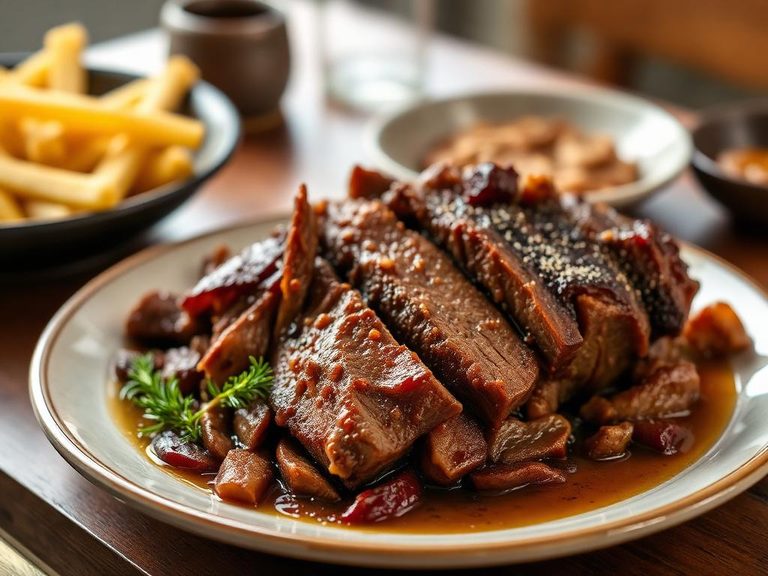
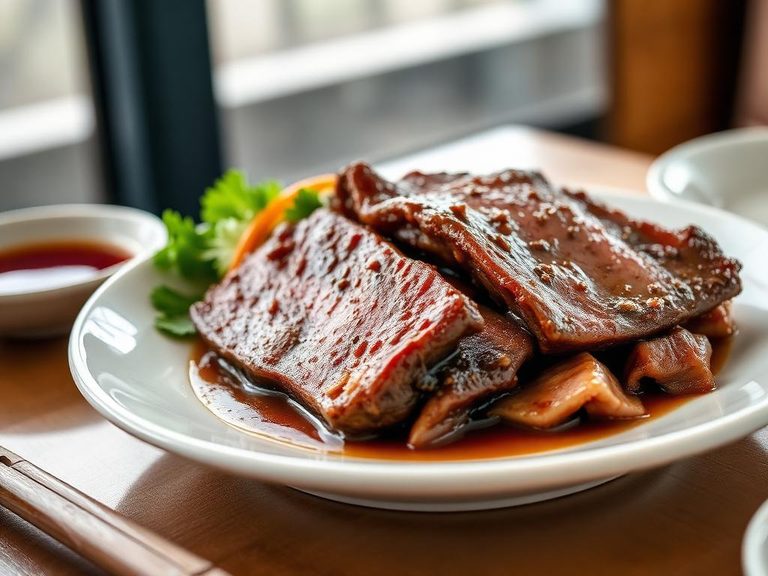
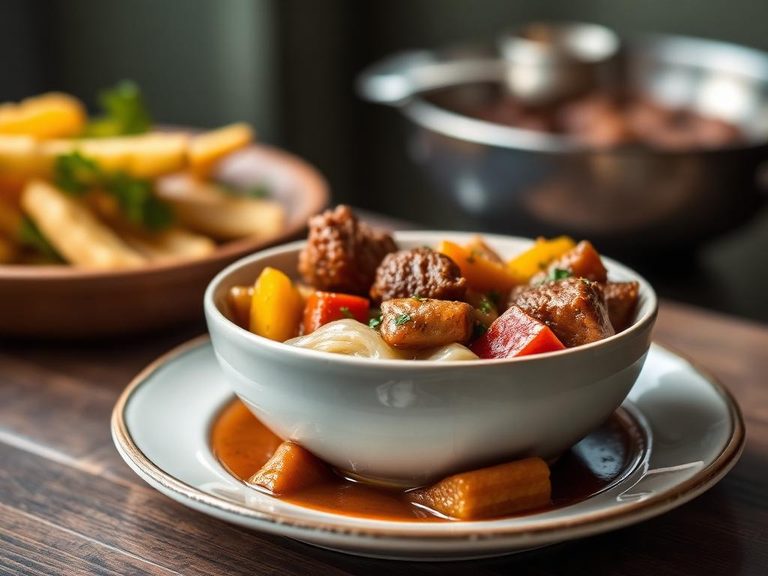
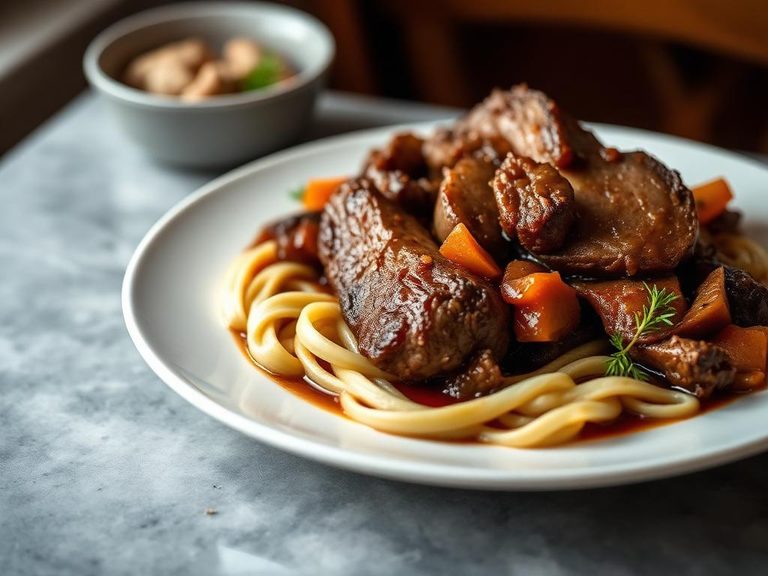
🍽️ Popular dishes

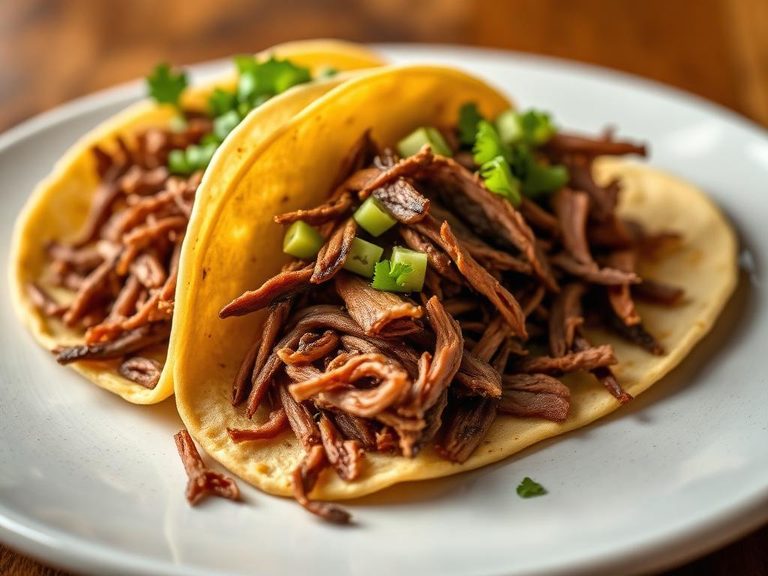
🌍 Where it's eaten
💡 Did you know?
The flat half of the brisket is the more uniform, leaner portion, while the 'point' or 'deckle' is the fattier, more marbled half; together they form the full brisket cut from the breast of the cow.
Full nutrition (USDA data · scales with serving)
| Water | 74.3 g |
| Energy | 124 kcal |
| Energy | 519 kj |
| Protein | 21.4 g |
| Total lipid (fat) | 3.6 g |
| Ash | 1.0 g |
| Carbohydrate, by difference | 0.00 g |
| Fiber, total dietary | 0.00 g |
| Total Sugars | 0.00 g |
| Calcium, Ca | 18.0 mg |
| Iron, Fe | 1.8 mg |
| Magnesium, Mg | 22.0 mg |
| Phosphorus, P | 200 mg |
| Potassium, K | 333 mg |
| Sodium, Na | 76.0 mg |
| Zinc, Zn | 5.6 mg |
| Copper, Cu | 0.09 mg |
| Manganese, Mn | 0.01 mg |
| Selenium, Se | 27.1 ug |
| Vitamin C, total ascorbic acid | 0.00 mg |
| Thiamin | 0.08 mg |
| Riboflavin | 0.14 mg |
| Niacin | 4.7 mg |
| Pantothenic acid | 0.63 mg |
| Vitamin B-6 | 0.54 mg |
| Folate, total | 13.0 ug |
| Folic acid | 0.00 ug |
| Folate, food | 13.0 ug |
| Folate, DFE | 13.0 ug |
| Choline, total | 89.6 mg |
| Betaine | 13.2 mg |
| Vitamin B-12 | 1.7 ug |
| Vitamin B-12, added | 0.00 ug |
| Vitamin A, RAE | 0.00 ug |
| Retinol | 0.00 ug |
| Carotene, beta | 0.00 ug |
| Carotene, alpha | 0.00 ug |
| Cryptoxanthin, beta | 0.00 ug |
| Vitamin A, IU | 0.00 iu |
| Lycopene | 0.00 ug |
| Lutein + zeaxanthin | 0.00 ug |
| Vitamin E (alpha-tocopherol) | 0.27 mg |
| Vitamin E, added | 0.00 mg |
| Tocopherol, beta | 0.00 mg |
| Tocopherol, gamma | 0.00 mg |
| Tocopherol, delta | 0.00 mg |
| Vitamin K (phylloquinone) | 1.1 ug |
| Alcohol, ethyl | 0.00 g |
| Caffeine | 0.00 mg |
| Theobromine | 0.00 mg |
Fat & fatty acid profile (per 100g)
| Fatty acids, total saturated | 1.3 g |
| SFA 4:0 | 0.00 g |
| SFA 6:0 | 0.00 g |
| SFA 8:0 | 0.00 g |
| SFA 10:0 | 0.00 g |
| SFA 12:0 | 0.00 g |
| SFA 14:0 | 0.10 g |
| SFA 16:0 | 0.80 g |
| SFA 18:0 | 0.44 g |
| Fatty acids, total monounsaturated | 1.5 g |
| MUFA 16:1 | 0.13 g |
| MUFA 18:1 | 1.4 g |
| MUFA 20:1 | 0.00 g |
| MUFA 22:1 | 0.00 g |
| Fatty acids, total polyunsaturated | 0.16 g |
| PUFA 18:2 | 0.13 g |
| PUFA 18:3 | 0.01 g |
| PUFA 18:4 | 0.00 g |
| PUFA 20:4 | 0.02 g |
| PUFA 20:5 n-3 (EPA) | 0.00 g |
| PUFA 22:5 n-3 (DPA) | 0.00 g |
| PUFA 22:6 n-3 (DHA) | 0.00 g |
| Cholesterol | 66.0 mg |
Amino acid profile (per 100g)
| Tryptophan | 0.14 g |
| Threonine | 0.86 g |
| Isoleucine | 0.98 g |
| Leucine | 1.7 g |
| Lysine | 1.8 g |
| Methionine | 0.56 g |
| Cystine | 0.28 g |
| Phenylalanine | 0.85 g |
| Tyrosine | 0.68 g |
| Valine | 1.1 g |
| Arginine | 1.4 g |
| Histidine | 0.69 g |
| Alanine | 1.3 g |
| Aspartic acid | 2.0 g |
| Glutamic acid | 3.2 g |
| Glycine | 1.3 g |
| Proline | 1.0 g |
| Serine | 0.84 g |
| Hydroxyproline | 0.23 g |
FAQ
What is the difference between the flat and point of a brisket?
The flat is the leaner, more uniform half with less fat, while the point (or deckle) is the fattier, more marbled half. The flat is often preferred for slicing, while the point is prized for its rich flavor and is commonly used for burnt ends.
How do I cook this lean brisket to avoid it becoming tough?
The key is low-and-slow cooking methods like braising, smoking, or slow-roasting. Cooking it in liquid (like broth or wine) or at a low temperature (around 225°F/107°C) for several hours breaks down connective tissue and ensures tenderness.
Is this cut suitable for grilling?
It's not ideal for direct, high-heat grilling due to its leanness, which can make it dry. If grilling, use indirect heat and a marinade, or consider a quick sear after slow-cooking to add a flavorful crust.
Nutrient density (calculated · NRF9.3)
Nutrient Rich Foods index: beneficial nutrients (protein, fiber, vitamins, minerals) minus saturated fat, added sugar & sodium, per 100 kcal.
NRF9.3 index — Fulgoni, Keast & Drewnowski, 2009. Computed from USDA nutrients.
Weight-loss friendliness (composite index)
Energy density 1.24 kcal/g · 69% calories from protein · 0.0 g fiber · 0.0 g sugar per 100 g.
Composite of energy density (Rolls et al., 1999), protein & fiber satiety, minus sugar. A calculated heuristic — ranks satiety-per-calorie, not a clinical measure.
Dietary load (calculated from USDA values)
Potential renal acid load. Positive = acid-forming, negative = alkaline-forming.
Sodium-to-potassium ratio: 0.23 (lower is better — aim for ≤ 1)
Sodium:potassium per WHO potassium guidance. Computed from USDA nutrients.