

Beef, brisket, flat half, separable lean only, trimmed to 1/8" fat, select, cooked, braised
Whole food · Beef Products

Photo: Wikipedia
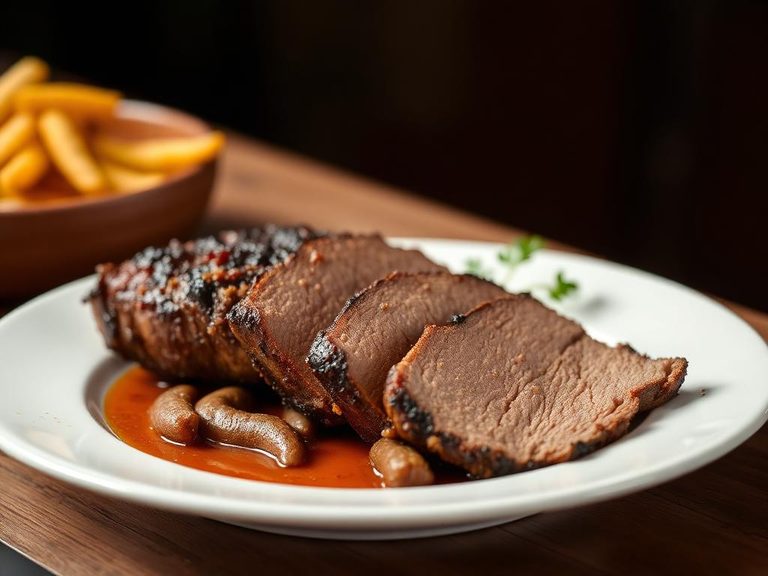
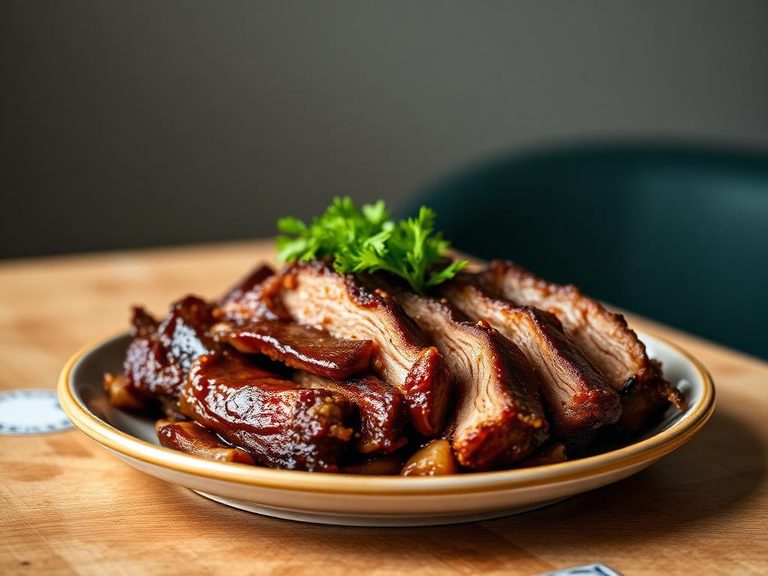
This is a lean, flat cut from the beef brisket, meticulously trimmed to a thin 1/8-inch fat cap and then slow-braised until fork-tender. The result is a deeply savory, beefy flavor with a melt-in-your-mouth texture that's firm yet yielding, perfect for slicing. It's a protein powerhouse, delivering over 33 grams per 100g with virtually no carbohydrates.
Calorie split: 74% protein · 0% carbs · 26% fat
↓ Full nutrition💚 Why it's loved
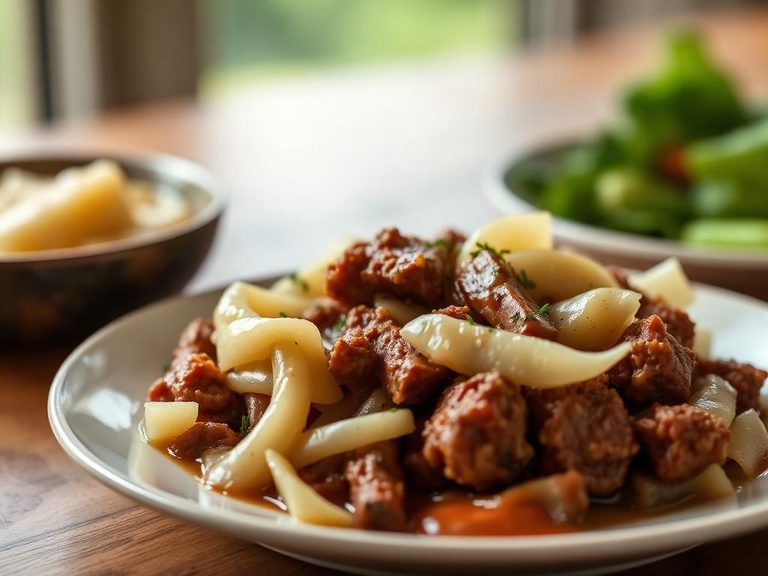
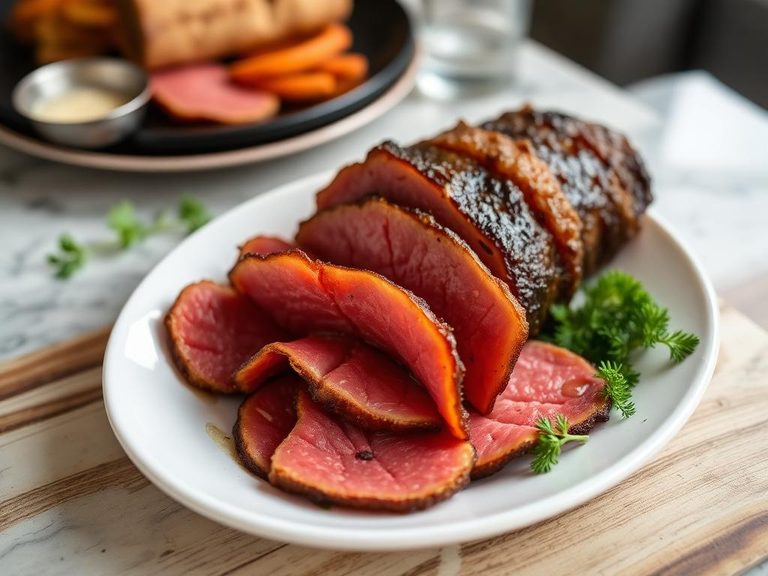
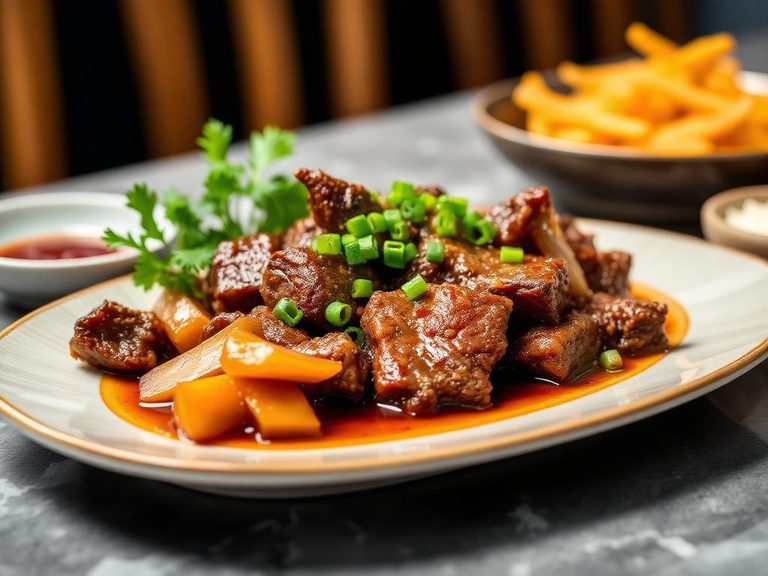
People adore it for its profound beefy flavor that develops during the long, slow braise, transforming a tough cut into something luxuriously tender. Its versatility shines in everything from hearty sandwiches to elegant plated dinners, making it a beloved comfort food across many cultures.
⚠️ Watch-outs & how to enjoy it better
While lean, the cut can be perceived as dry if overcooked or not braised properly, as it lacks the intramuscular fat of other cuts. Those monitoring sodium intake should be cautious, as braising often involves salty stocks or sauces. To counteract dryness, ensure it's cooked low and slow in a flavorful liquid until just tender, and consider using a low-sodium broth or seasoning the braising liquid yourself.
Key benefits
- Excellent source of complete, high-quality protein for muscle maintenance and satiety.
- Very low in carbohydrates, making it suitable for low-carb and ketogenic diets.
- Provides essential minerals like zinc and iron, crucial for immune function and oxygen transport.
- The braising process can break down connective tissue into gelatin, which may support gut lining health.
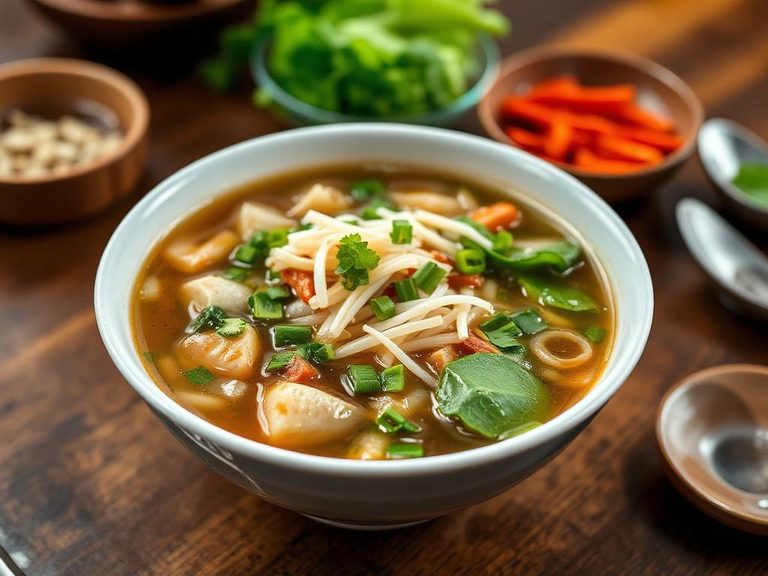
🍽️ Popular dishes
🌍 Where it's eaten
💡 Did you know?
The flat half of the brisket is anatomically the upper portion of the chest muscle, which works harder and has more connective tissue than the lower 'point' half, making the braising method not just a choice, but a necessity for tenderness.
Full nutrition (USDA data · scales with serving)
| Water | 61.4 g |
| Energy | 189 kcal |
| Energy | 789 kj |
| Protein | 33.2 g |
| Total lipid (fat) | 5.2 g |
| Ash | 1.1 g |
| Carbohydrate, by difference | 0.00 g |
| Fiber, total dietary | 0.00 g |
| Total Sugars | 0.00 g |
| Calcium, Ca | 17.0 mg |
| Iron, Fe | 2.8 mg |
| Magnesium, Mg | 22.0 mg |
| Phosphorus, P | 209 mg |
| Potassium, K | 273 mg |
| Sodium, Na | 55.0 mg |
| Zinc, Zn | 8.2 mg |
| Copper, Cu | 0.11 mg |
| Manganese, Mn | 0.01 mg |
| Selenium, Se | 38.3 ug |
| Vitamin C, total ascorbic acid | 0.00 mg |
| Thiamin | 0.07 mg |
| Riboflavin | 0.20 mg |
| Niacin | 4.8 mg |
| Pantothenic acid | 0.65 mg |
| Vitamin B-6 | 0.31 mg |
| Folate, total | 11.0 ug |
| Folic acid | 0.00 ug |
| Folate, food | 11.0 ug |
| Folate, DFE | 11.0 ug |
| Choline, total | 126 mg |
| Betaine | 16.6 mg |
| Vitamin B-12 | 2.2 ug |
| Vitamin B-12, added | 0.00 ug |
| Vitamin A, RAE | 0.00 ug |
| Retinol | 0.00 ug |
| Carotene, beta | 0.00 ug |
| Carotene, alpha | 0.00 ug |
| Cryptoxanthin, beta | 0.00 ug |
| Vitamin A, IU | 0.00 iu |
| Lycopene | 0.00 ug |
| Lutein + zeaxanthin | 0.00 ug |
| Vitamin E (alpha-tocopherol) | 0.41 mg |
| Vitamin E, added | 0.00 mg |
| Tocopherol, beta | 0.00 mg |
| Tocopherol, gamma | 0.00 mg |
| Tocopherol, delta | 0.00 mg |
| Vitamin K (phylloquinone) | 1.5 ug |
| Alcohol, ethyl | 0.00 g |
| Caffeine | 0.00 mg |
| Theobromine | 0.00 mg |
Fat & fatty acid profile (per 100g)
| Fatty acids, total saturated | 2.0 g |
| SFA 4:0 | 0.00 g |
| SFA 6:0 | 0.00 g |
| SFA 8:0 | 0.00 g |
| SFA 10:0 | 0.00 g |
| SFA 12:0 | 0.01 g |
| SFA 14:0 | 0.15 g |
| SFA 16:0 | 1.2 g |
| SFA 18:0 | 0.65 g |
| Fatty acids, total monounsaturated | 2.2 g |
| MUFA 16:1 | 0.18 g |
| MUFA 18:1 | 2.0 g |
| MUFA 20:1 | 0.00 g |
| MUFA 22:1 | 0.00 g |
| Fatty acids, total polyunsaturated | 0.18 g |
| PUFA 18:2 | 0.15 g |
| PUFA 18:3 | 0.01 g |
| PUFA 18:4 | 0.00 g |
| PUFA 20:4 | 0.02 g |
| PUFA 20:5 n-3 (EPA) | 0.00 g |
| PUFA 22:5 n-3 (DPA) | 0.00 g |
| PUFA 22:6 n-3 (DHA) | 0.00 g |
| Cholesterol | 98.0 mg |
Amino acid profile (per 100g)
| Tryptophan | 0.22 g |
| Threonine | 1.3 g |
| Isoleucine | 1.5 g |
| Leucine | 2.6 g |
| Lysine | 2.8 g |
| Methionine | 0.86 g |
| Cystine | 0.43 g |
| Phenylalanine | 1.3 g |
| Tyrosine | 1.1 g |
| Valine | 1.6 g |
| Arginine | 2.1 g |
| Histidine | 1.1 g |
| Alanine | 2.0 g |
| Aspartic acid | 3.0 g |
| Glutamic acid | 5.0 g |
| Glycine | 2.0 g |
| Proline | 1.6 g |
| Serine | 1.3 g |
| Hydroxyproline | 0.35 g |
FAQ
What's the difference between the flat and point cuts of brisket?
The flat is leaner, more uniform in shape, and has a thick layer of fat on only one side. The point (or 'deckle') is fattier, more marbled, and tapers to a point. The flat is often preferred for slicing, while the point is ideal for burning ends or chopped beef.
How do I prevent my braised brisket from drying out?
The key is low and slow cooking in a covered pot with sufficient liquid (like broth, wine, or tomatoes) to create a moist environment. Cook until a fork slides in with little resistance, but not so long that the fibers completely fall apart. Letting it rest in the braising liquid before slicing also helps retain moisture.
Is this cut suitable for grilling?
Generally, no. Due to its lean nature and dense connective tissue, direct high-heat grilling would likely make it tough and chewy. It's best suited for moist-heat methods like braising, or for smoking at very low temperatures for many hours.
Nutrient density (calculated · NRF9.3)
Nutrient Rich Foods index: beneficial nutrients (protein, fiber, vitamins, minerals) minus saturated fat, added sugar & sodium, per 100 kcal.
NRF9.3 index — Fulgoni, Keast & Drewnowski, 2009. Computed from USDA nutrients.
Weight-loss friendliness (composite index)
Energy density 1.89 kcal/g · 70% calories from protein · 0.0 g fiber · 0.0 g sugar per 100 g.
Composite of energy density (Rolls et al., 1999), protein & fiber satiety, minus sugar. A calculated heuristic — ranks satiety-per-calorie, not a clinical measure.
Dietary load (calculated from USDA values)
Potential renal acid load. Positive = acid-forming, negative = alkaline-forming.
Sodium-to-potassium ratio: 0.20 (lower is better — aim for ≤ 1)
Sodium:potassium per WHO potassium guidance. Computed from USDA nutrients.