

Beef, brisket, flat half, separable lean only, trimmed to 0" fat, all grades, cooked, braised
Whole food · Beef Products

Photo: Wikipedia
This is the lean, flat portion of a beef brisket, meticulously trimmed of all visible fat and then slow-braised until fork-tender. The result is a deeply savory, beefy flavor with a texture that is firm yet yielding, perfect for slicing against the grain. Nutritionally, it's a powerhouse of complete protein with minimal fat, making it a lean choice for red meat lovers.
Calorie split: 68% protein · 0% carbs · 32% fat
↓ Full nutrition💚 Why it's loved
People cherish this cut for its profound, beefy flavor that develops beautifully through slow cooking, and its remarkable versatility—it can be the star of a hearty stew, sliced for sandwiches, or diced into chili. It's a cornerstone of comfort food traditions from Jewish delis to Brazilian churrascarias.
⚠️ Watch-outs & how to enjoy it better
While lean, it's still red meat, so those monitoring saturated fat or cholesterol intake should enjoy it in moderation. Its dense muscle fibers can become tough if not cooked low-and-slow; a pressure cooker or Dutch oven is your best friend to guarantee tenderness. Pair it with a fiber-rich vegetable like broccoli or a leafy salad to balance the meal.
Key benefits
- Excellent source of high-quality, complete protein for muscle maintenance.
- Very low in fat, especially saturated fat, when prepared this way.
- Rich in essential minerals like iron (heme, highly absorbable) and zinc.
- Provides B vitamins, notably B12, crucial for nerve function and energy.
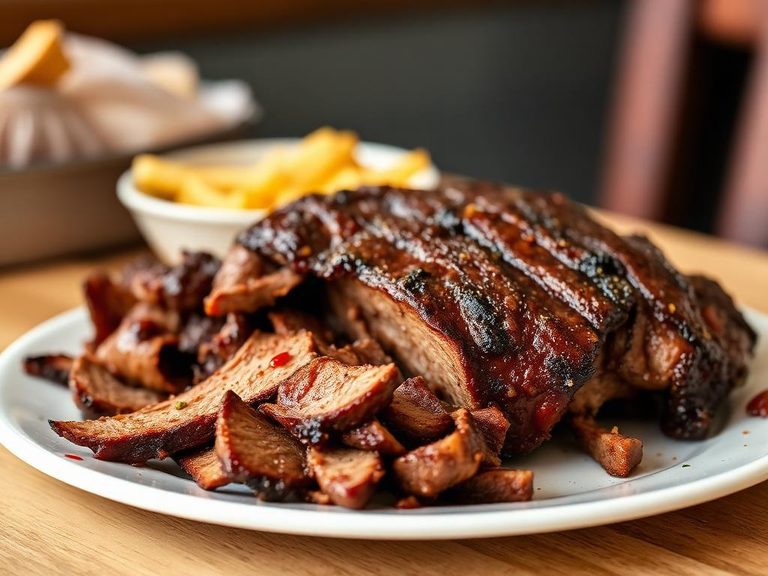
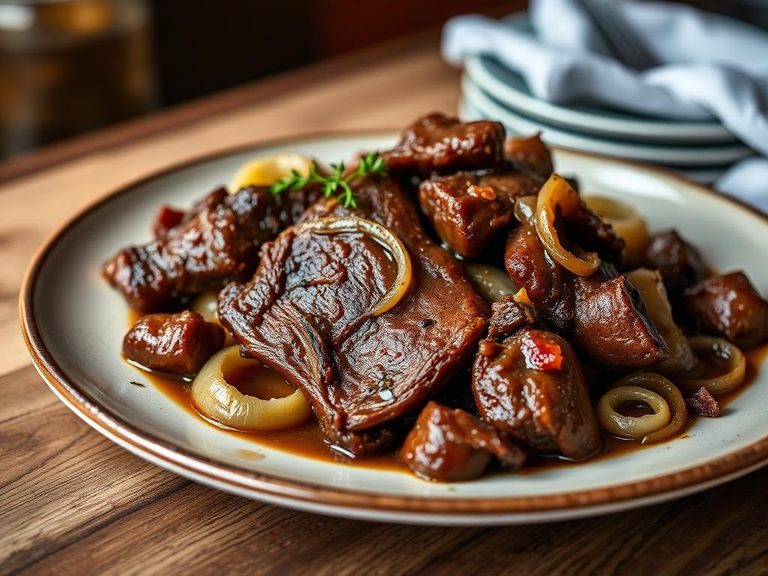
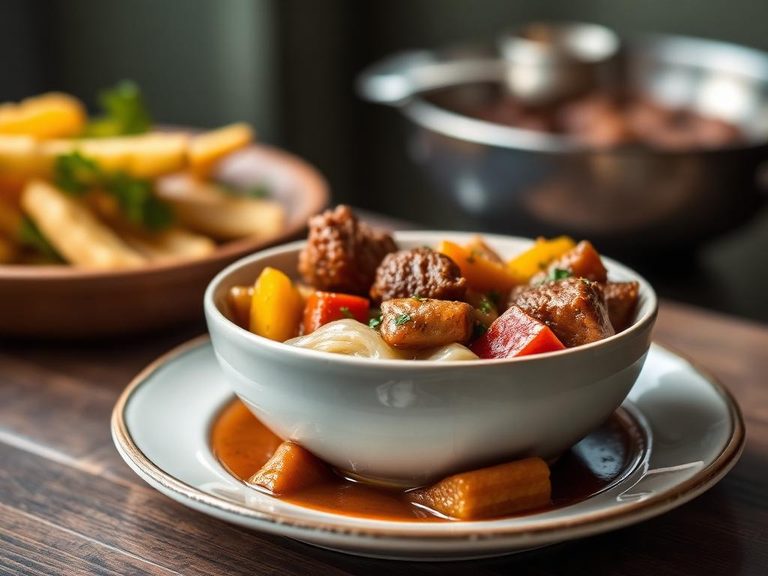
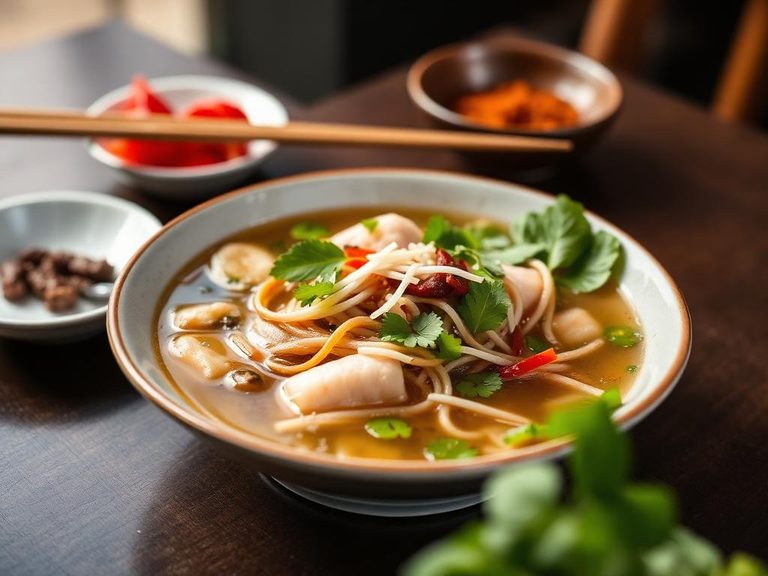
🍽️ Popular dishes
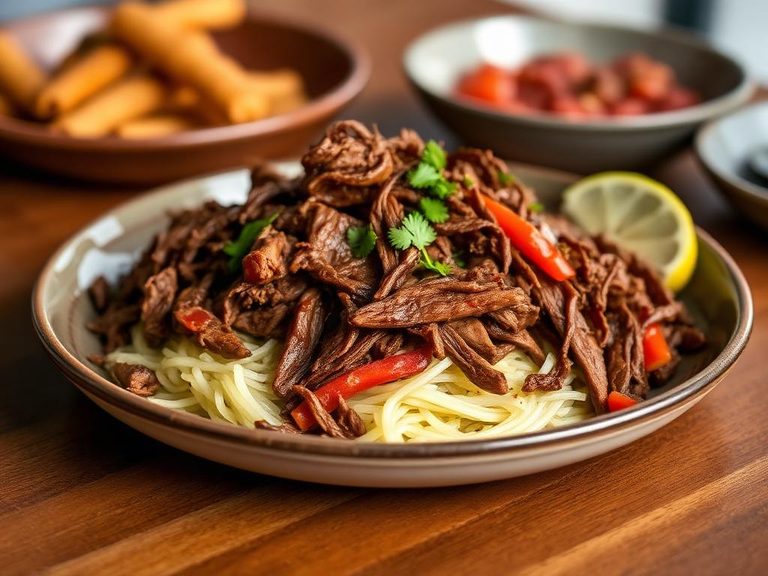
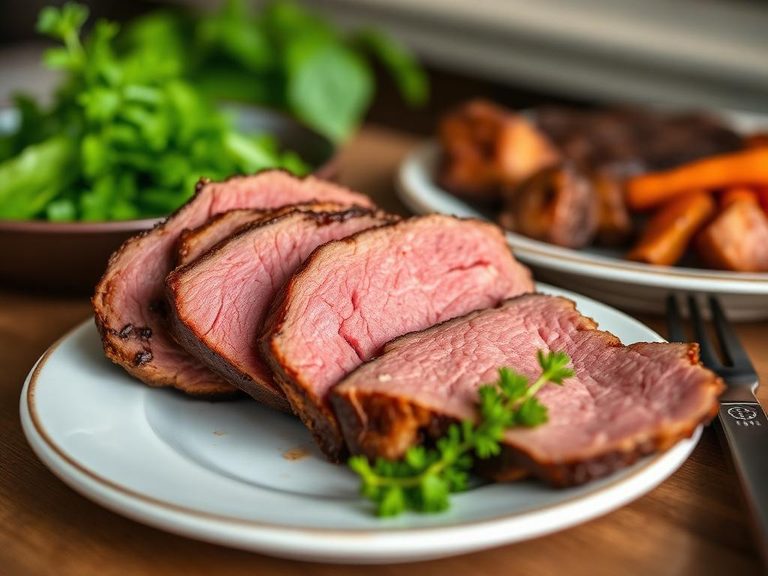
🌍 Where it's eaten
💡 Did you know?
The brisket comes from the breast or lower chest of the cow, a muscle group that does a lot of work supporting the animal's weight, which is why it's naturally tough and requires slow, moist cooking methods to break down its abundant collagen into gelatin.
Full nutrition (USDA data · scales with serving)
| Water | 59.5 g |
| Energy | 205 kcal |
| Energy | 858 kj |
| Protein | 33.3 g |
| Total lipid (fat) | 7.0 g |
| Ash | 1.0 g |
| Carbohydrate, by difference | 0.00 g |
| Fiber, total dietary | 0.00 g |
| Total Sugars | 0.00 g |
| Calcium, Ca | 16.0 mg |
| Iron, Fe | 2.8 mg |
| Magnesium, Mg | 22.0 mg |
| Phosphorus, P | 205 mg |
| Potassium, K | 267 mg |
| Sodium, Na | 54.0 mg |
| Zinc, Zn | 8.0 mg |
| Copper, Cu | 0.12 mg |
| Manganese, Mn | 0.01 mg |
| Selenium, Se | 34.0 ug |
| Vitamin C, total ascorbic acid | 0.00 mg |
| Thiamin | 0.07 mg |
| Riboflavin | 0.21 mg |
| Niacin | 4.8 mg |
| Pantothenic acid | 0.65 mg |
| Vitamin B-6 | 0.32 mg |
| Folate, total | 11.0 ug |
| Folic acid | 0.00 ug |
| Folate, food | 11.0 ug |
| Folate, DFE | 11.0 ug |
| Choline, total | 127 mg |
| Betaine | 16.6 mg |
| Vitamin B-12 | 2.4 ug |
| Vitamin B-12, added | 0.00 ug |
| Vitamin A, RAE | 0.00 ug |
| Retinol | 0.00 ug |
| Carotene, beta | 0.00 ug |
| Carotene, alpha | 0.00 ug |
| Cryptoxanthin, beta | 0.00 ug |
| Vitamin A, IU | 0.00 iu |
| Lycopene | 0.00 ug |
| Lutein + zeaxanthin | 0.00 ug |
| Vitamin E (alpha-tocopherol) | 0.43 mg |
| Vitamin E, added | 0.00 mg |
| Tocopherol, beta | 0.00 mg |
| Tocopherol, gamma | 0.00 mg |
| Tocopherol, delta | 0.00 mg |
| Vitamin K (phylloquinone) | 1.5 ug |
| Alcohol, ethyl | 0.00 g |
| Caffeine | 0.00 mg |
| Theobromine | 0.00 mg |
Fat & fatty acid profile (per 100g)
| Fatty acids, total saturated | 2.6 g |
| SFA 4:0 | 0.00 g |
| SFA 6:0 | 0.00 g |
| SFA 8:0 | 0.00 g |
| SFA 10:0 | 0.00 g |
| SFA 12:0 | 0.01 g |
| SFA 14:0 | 0.20 g |
| SFA 16:0 | 1.6 g |
| SFA 18:0 | 0.88 g |
| Fatty acids, total monounsaturated | 3.0 g |
| MUFA 16:1 | 0.25 g |
| MUFA 18:1 | 2.7 g |
| MUFA 20:1 | 0.00 g |
| MUFA 22:1 | 0.00 g |
| Fatty acids, total polyunsaturated | 0.24 g |
| PUFA 18:2 | 0.20 g |
| PUFA 18:3 | 0.02 g |
| PUFA 18:4 | 0.00 g |
| PUFA 20:4 | 0.03 g |
| PUFA 20:5 n-3 (EPA) | 0.00 g |
| PUFA 22:5 n-3 (DPA) | 0.00 g |
| PUFA 22:6 n-3 (DHA) | 0.00 g |
| Cholesterol | 100 mg |
Amino acid profile (per 100g)
| Tryptophan | 0.22 g |
| Threonine | 1.3 g |
| Isoleucine | 1.5 g |
| Leucine | 2.6 g |
| Lysine | 2.8 g |
| Methionine | 0.87 g |
| Cystine | 0.43 g |
| Phenylalanine | 1.3 g |
| Tyrosine | 1.1 g |
| Valine | 1.6 g |
| Arginine | 2.2 g |
| Histidine | 1.1 g |
| Alanine | 2.0 g |
| Aspartic acid | 3.0 g |
| Glutamic acid | 5.0 g |
| Glycine | 2.0 g |
| Proline | 1.6 g |
| Serine | 1.3 g |
| Hydroxyproline | 0.35 g |
FAQ
How is this different from a regular brisket?
This specifies the 'flat half' which is leaner and more uniform in shape than the 'point' or 'deckle.' The key is it's 'separable lean only, trimmed to 0" fat,' meaning all external and intermuscular fat has been removed before cooking, resulting in a much leaner final product.
What's the best way to cook it to keep it tender?
Low-and-slow moist heat is essential. Braise it in liquid (broth, wine, tomatoes) in a covered pot at around 300-325°F (150-160°C) for several hours, or use a pressure cooker to achieve tenderness in a fraction of the time. Always slice against the grain to shorten the muscle fibers.
Can I eat this on a low-carb or keto diet?
Absolutely. With 0g of carbs and sugar, it's an ideal protein source for low-carb, keto, and carnivore diets. Just be mindful of any sauces or braising liquids you add, which may contain carbohydrates.
Nutrient density (calculated · NRF9.3)
Nutrient Rich Foods index: beneficial nutrients (protein, fiber, vitamins, minerals) minus saturated fat, added sugar & sodium, per 100 kcal.
NRF9.3 index — Fulgoni, Keast & Drewnowski, 2009. Computed from USDA nutrients.
Weight-loss friendliness (composite index)
Energy density 2.05 kcal/g · 65% calories from protein · 0.0 g fiber · 0.0 g sugar per 100 g.
Composite of energy density (Rolls et al., 1999), protein & fiber satiety, minus sugar. A calculated heuristic — ranks satiety-per-calorie, not a clinical measure.
Dietary load (calculated from USDA values)
Potential renal acid load. Positive = acid-forming, negative = alkaline-forming.
Sodium-to-potassium ratio: 0.20 (lower is better — aim for ≤ 1)
Sodium:potassium per WHO potassium guidance. Computed from USDA nutrients.