Fish, sardine, Pacific, canned in tomato sauce, drained solids with bone
Whole food · Finfish and Shellfish Products

Photo: Wikipedia
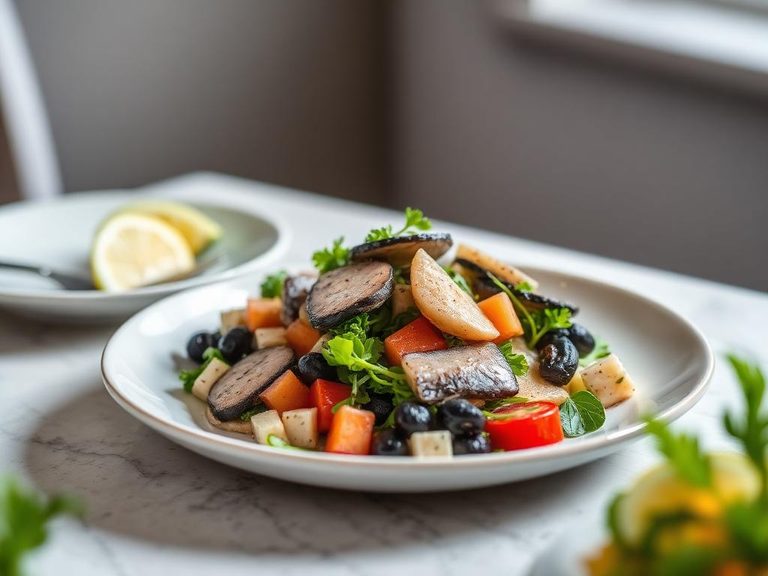
This is a tin of Pacific sardines, filleted and simmered in a tangy tomato sauce, then drained. The fish is tender but firm, with a mild, savory flavor and a soft, edible bone texture that adds a pleasant, subtle crunch. Nutritionally, it's a powerhouse of high-quality protein and healthy fats, with almost no carbohydrates.
💚 Why it's loved
People love it for its deep, savory umami flavor from the tomato sauce and its incredible versatility—it's ready to eat straight from the can, making it a beloved pantry staple for quick, nutritious meals.
⚠️ Watch-outs & how to enjoy it better
The strong fishy aroma and soft bones can be off-putting to some, and canned varieties can be high in sodium. To counteract this, rinse the sardines briefly under water to reduce salt, or pair them with fresh, crunchy vegetables like cucumber or celery to balance the texture and flavor.
Key benefits
- Excellent source of complete protein (20.86g per 100g)
- Rich in omega-3 fatty acids for heart and brain health
- Provides calcium and vitamin D from edible bones
- Very low in carbohydrates and sugars
- Convenient, shelf-stable source of lean protein
🍽️ Popular dishes

🌍 Where it's eaten
💡 Did you know?
The practice of canning sardines began in the 19th century in France, where the fish were named after the island of Sardinia, though they are found in oceans worldwide.
Full nutrition (scales with serving)
| Water | 66.9 g |
| Energy | 185 kcal |
| Energy | 774 kj |
| Protein | 20.9 g |
| Total lipid (fat) | 10.4 g |
| Ash | 1.9 g |
| Carbohydrate, by difference | 0.54 g |
| Fiber, total dietary | 0.10 g |
| Total Sugars | 0.43 g |
| Sucrose | 0.03 g |
| Glucose | 0.23 g |
| Fructose | 0.17 g |
| Lactose | 0.00 g |
| Maltose | 0.00 g |
| Galactose | 0.00 g |
| Calcium, Ca | 240 mg |
| Iron, Fe | 2.3 mg |
| Magnesium, Mg | 34.0 mg |
| Phosphorus, P | 366 mg |
| Potassium, K | 341 mg |
| Sodium, Na | 414 mg |
| Zinc, Zn | 1.4 mg |
| Copper, Cu | 0.27 mg |
| Manganese, Mn | 0.21 mg |
| Selenium, Se | 40.6 ug |
| Vitamin C, total ascorbic acid | 1.0 mg |
| Thiamin | 0.04 mg |
| Riboflavin | 0.23 mg |
| Niacin | 4.2 mg |
| Pantothenic acid | 0.73 mg |
| Vitamin B-6 | 0.12 mg |
| Folate, total | 24.0 ug |
| Folic acid | 0.00 ug |
| Folate, food | 24.0 ug |
| Folate, DFE | 24.0 ug |
| Choline, total | 76.0 mg |
| Betaine | 0.10 mg |
| Vitamin B-12 | 9.0 ug |
| Vitamin B-12, added | 0.00 ug |
| Vitamin A, RAE | 34.0 ug |
| Retinol | 32.0 ug |
| Carotene, beta | 26.0 ug |
| Carotene, alpha | 0.00 ug |
| Cryptoxanthin, beta | 0.00 ug |
| Vitamin A, IU | 151 iu |
| Lycopene | 1398 ug |
| Lutein + zeaxanthin | 2.0 ug |
| Vitamin E (alpha-tocopherol) | 1.4 mg |
| Vitamin E, added | 0.00 mg |
| Tocopherol, beta | 0.00 mg |
| Tocopherol, gamma | 0.01 mg |
| Tocopherol, delta | 0.00 mg |
| Vitamin D (D2 + D3), International Units | 193 iu |
| Vitamin D (D2 + D3) | 4.8 ug |
| Vitamin D3 (cholecalciferol) | 4.8 ug |
| Vitamin K (phylloquinone) | 0.40 ug |
| Vitamin K (Dihydrophylloquinone) | 0.00 ug |
| Alcohol, ethyl | 0.00 g |
| Caffeine | 0.00 mg |
| Theobromine | 0.00 mg |
Fat & fatty acid profile (per 100g)
| Fatty acids, total saturated | 2.7 g |
| SFA 4:0 | 0.00 g |
| SFA 6:0 | 0.00 g |
| SFA 8:0 | 0.00 g |
| SFA 10:0 | 0.00 g |
| SFA 12:0 | 0.00 g |
| SFA 14:0 | 0.70 g |
| SFA 16:0 | 1.7 g |
| SFA 18:0 | 0.24 g |
| Fatty acids, total monounsaturated | 4.8 g |
| MUFA 16:1 | 0.63 g |
| MUFA 18:1 | 1.9 g |
| MUFA 20:1 | 0.71 g |
| MUFA 22:1 | 1.6 g |
| Fatty acids, total polyunsaturated | 2.1 g |
| PUFA 18:2 | 0.12 g |
| PUFA 18:3 | 0.23 g |
| PUFA 18:4 | 0.00 g |
| PUFA 20:4 | 0.30 g |
| PUFA 20:5 n-3 (EPA) | 0.53 g |
| PUFA 22:5 n-3 (DPA) | 0.06 g |
| PUFA 22:6 n-3 (DHA) | 0.86 g |
| Cholesterol | 61.0 mg |
Amino acid profile (per 100g)
| Tryptophan | 0.16 g |
| Threonine | 0.80 g |
| Isoleucine | 0.80 g |
| Leucine | 1.4 g |
| Lysine | 1.4 g |
| Methionine | 0.48 g |
| Cystine | 0.14 g |
| Phenylalanine | 0.79 g |
| Tyrosine | 0.63 g |
| Valine | 0.93 g |
| Arginine | 1.0 g |
| Histidine | 0.68 g |
| Alanine | 1.0 g |
| Aspartic acid | 1.7 g |
| Glutamic acid | 2.3 g |
| Glycine | 0.83 g |
| Proline | 0.65 g |
| Serine | 0.73 g |
FAQ
Are the bones safe to eat?
Yes, the bones are cooked until very soft and are a great source of calcium and vitamin D. They are meant to be eaten and are a key nutritional benefit of canned sardines.
How does this differ from sardines in oil?
Sardines in tomato sauce have a tangy, slightly sweet flavor and lower fat content. Sardines in oil (like olive or soybean) are richer, higher in calories, and have a more pronounced fish flavor.
What is the best way to store leftovers?
Transfer any unused sardines and sauce to a sealed container and refrigerate. Consume within 2-3 days for best quality and safety.